Carbon Fiber Brittleness: Why It Cracks and How to Avoid It
When you see a carbon fiber, a lightweight composite material made of woven fibers bonded with resin, commonly used in car body kits and spoilers for its high strength-to-weight ratio. Also known as carbon fibre, it's popular for its sleek look and performance appeal. But here’s the catch: carbon fiber isn’t indestructible. It’s strong under tension, but it’s surprisingly brittle—especially when hit, flexed, or exposed to extreme cold. Unlike metal that bends before breaking, carbon fiber can snap without warning. That’s why a $500 aftermarket spoiler might look awesome on your car, but crack after one bad parking job.
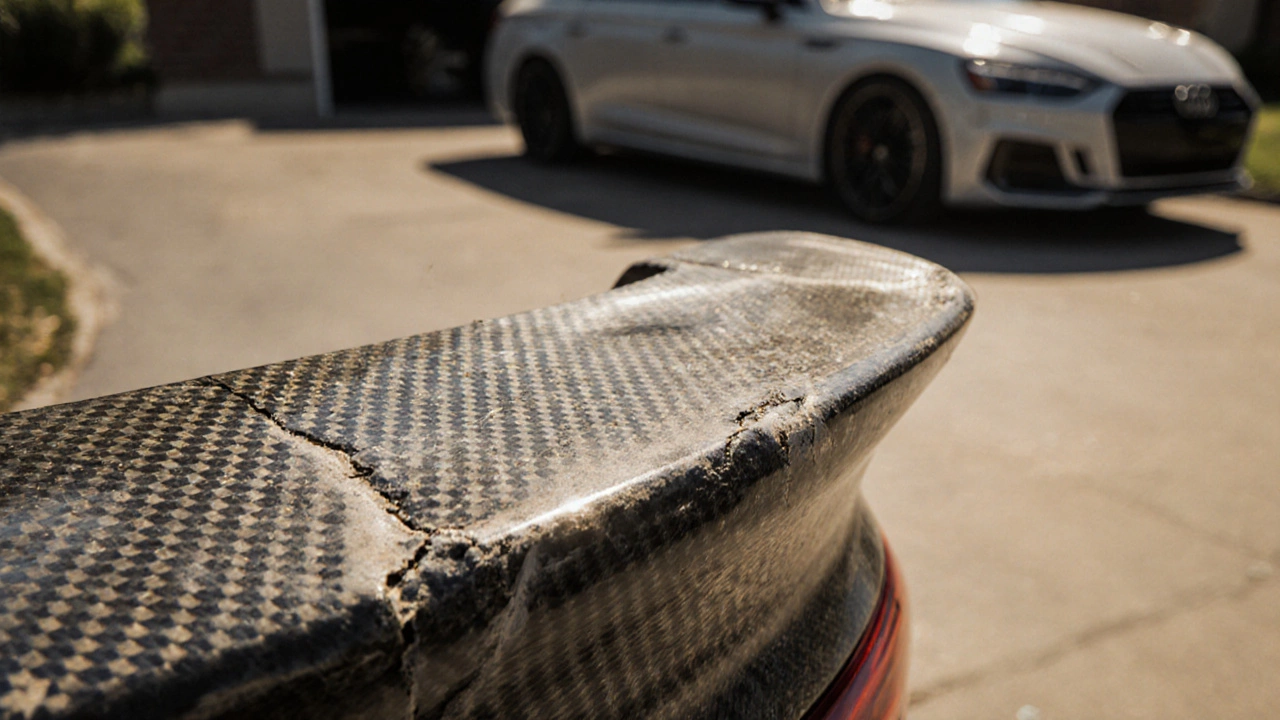
This brittleness isn’t a flaw in the material itself—it’s how it’s used. Most cheap carbon fiber parts are made with low-quality resin, thin layers, or poor curing processes. They’re designed to look good in a showroom, not survive real roads. A carbon fiber spoiler, a rear aerodynamic device often added to cars for style or minor downforce might look race-ready, but if it’s glued on without proper mounting points, even minor bumps can cause stress fractures. And if you’ve ever seen a carbon fiber hood with spiderweb cracks after a hailstorm, you know why this matters. The real issue isn’t the fiber—it’s the lack of engineering behind most aftermarket pieces. Factory carbon parts, like those on high-end BMWs or Audis, use multi-layer weaves and flexible resins that absorb impact. Aftermarket ones? Often just one layer of weave over a rigid plastic base.
It’s not just spoilers. carbon fiber car parts, including side skirts, mirror caps, and trim pieces, that are increasingly popular for cosmetic upgrades suffer the same fate. They look sharp until they don’t. And once they crack, they’re nearly impossible to repair properly without professional tools. Epoxy glue won’t cut it. You need heat, vacuum bags, and the right resin blend—things most DIYers don’t have. That’s why many people end up replacing the whole part instead of fixing it. If you’re thinking of adding carbon fiber to your car, ask: Is this part designed for impact, or just for Instagram? Look for parts with flex testing data, or better yet, stick with OEM or reputable brands that test under real-world conditions.
And don’t forget temperature. Carbon fiber gets even more brittle in freezing weather. A part that survived summer might shatter in winter if it’s already stressed. That’s why you’ll see more cracked carbon parts in places like the UK or Canada than in Arizona. It’s not the cold alone—it’s the combination of cold, vibration, and poor construction.
What you’ll find in the posts below aren’t just reviews of carbon fiber parts. They’re real-world stories of what happens when style meets physics. From how spoilers affect aerodynamics to why some aftermarket upgrades fail under pressure, these articles cut through the hype. You’ll learn what to look for before buying, how to spot a bad part, and when it’s smarter to skip carbon fiber altogether. No fluff. Just what works—and what doesn’t—on the road.
Does Carbon Fiber Get Brittle Over Time? Real-World Long-Term Performance
Carbon fiber spoilers look great but can degrade over time due to UV exposure and resin breakdown. Learn what really causes brittleness, how long they last, and how to protect them for decades.