Headlights in Downpour: What Works, What Doesn’t, and How to See Clearly
When it comes to headlights in downpour, the system that projects light onto the road during wet conditions. Also known as rain-ready lighting, it’s not just about brightness—it’s about how the light behaves when water is flying everywhere. A bright bulb doesn’t mean better visibility. In fact, the wrong type can turn rain into a blinding wall of glare. Factory-installed LED or HID systems with precise beam patterns and the right color temperature (around 4500K–5000K) cut through moisture cleanly. Cheap aftermarket LEDs? They scatter light like a flashlight in fog, reflecting off every raindrop and blinding you and everyone behind you.
It’s not just the bulb—it’s the headlight housing, the physical structure that holds and directs the light source. Also known as lens assembly, it’s what keeps the beam focused where it belongs: on the road, not in your eyes or the eyes of oncoming drivers. A cracked or yellowed lens scatters light even if the bulb is perfect. And then there’s the beam pattern, the shape and spread of light projected from the headlight. Also known as light distribution, it’s the difference between a sharp cutoff that illuminates the shoulder and a fuzzy blob that turns rain into a spotlight effect. You can have the brightest bulb on the market, but if the pattern is wrong, you’re driving blind.
Halogen bulbs still work fine in rain—because they’ve been tuned for decades. But if you’re upgrading, look for OEM-spec LEDs or HIDs designed for your exact car model. Aftermarket kits that claim "10,000 lumens" are usually just blue-tinted halogens with overpriced packaging. Real performance comes from engineering, not marketing numbers. Check if the bulb has a proper heat sink, a sealed housing, and is certified for road use. In Australia, ADR standards govern what’s legal. In the UK, it’s MOT compliance. Either way, if it’s not approved for your vehicle, it’s a liability.
And don’t forget the basics: clean lenses, proper alignment, and working wipers. A dirty headlight lens cuts light output by up to 40%. A misaligned beam can blind drivers two lanes over. Rain doesn’t make your headlights worse—it exposes their weaknesses. The best headlights in a downpour don’t try to outshine the storm. They cut through it with precision, not power.
Below, you’ll find real-world tests, comparisons, and fixes for everything from LED glare to legal brightness limits. Whether you’re driving home after work in a downpour or just want to see more than a blur at night, these guides give you the facts—no fluff, no hype, just what actually helps you see.
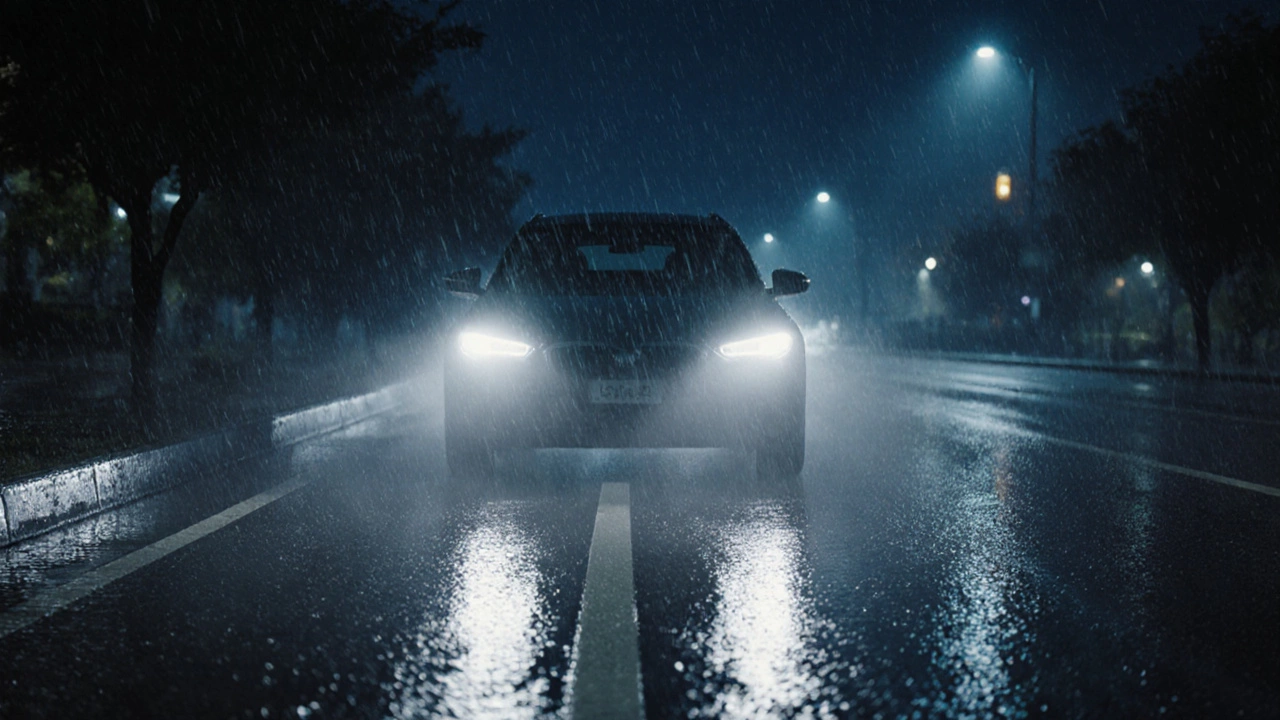
Are LED Headlights Good in the Rain? Real-World Performance Tested
LED headlights can struggle in rain due to glare from water droplets. Factory-installed LEDs with proper optics perform better than aftermarket kits. Learn why halogens still win in wet conditions and how to improve your LED visibility.