K&N vs OEM Air Filters: What’s the Real Deal?
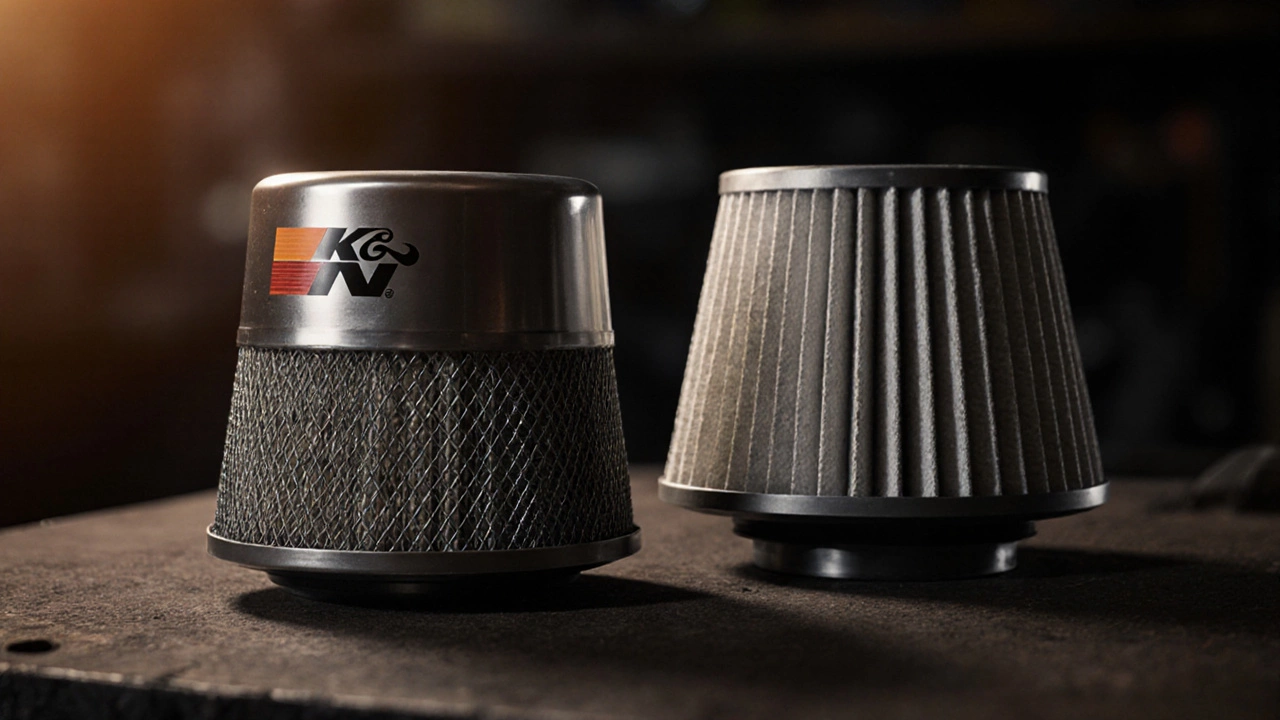
When comparing K&N vs OEM Air Filters, a side‑by‑side look at K&N high‑flow filters and original equipment manufacturer (OEM) filters. Also known as K&N filter vs stock filter, it helps drivers decide which unit fits their goals. The conversation usually drifts to high‑flow air filter, a filter designed to let more air reach the engine while still catching dust, the MAF sensor, the mass‑air‑flow sensor that measures incoming air for precise fuel delivery, and even the engine horsepower, the power output that determines acceleration and top speed. Understanding how these pieces fit together clears up the hype and shows what actually changes under the hood.
Airflow and Pressure Drop
At its core, a K&N vs OEM debate boils down to airflow versus restriction. A high‑flow filter often uses a cotton‑paper blend or foam that offers lower pressure drop than the paper‑based OEM unit. Lower pressure drop means the engine can breathe easier, which can translate into a modest boost in torque, especially at higher RPMs. The trade‑off is that the looser media might capture slightly less dust, so regular cleaning becomes part of the routine. In real‑world tests, the difference in airflow can range from 5% to 15% depending on engine size and filter condition, a figure that matters most to enthusiasts chasing every ounce of performance.
Beyond sheer volume, the filter’s design influences the MAF sensor’s reading. OEM filters are calibrated to the factory‑specified airflow, so the sensor gets a predictable signal. Switching to a high‑flow filter can cause the MAF to report a higher air mass, prompting the engine control unit to enrich the mixture. If the ECU can’t adapt, you might see a temporary lean condition or a check‑engine light. Most modern ECUs adjust on the fly, but it’s wise to monitor sensor data after the swap.
Fuel economy is another hot point. The logic goes: more air equals better combustion, which could improve miles per gallon. In practice, the gain is usually under 2% for daily drivers, but a track‑day car that runs at higher revs might see a slightly larger benefit. The bigger win is often the reduced filter replacement cost: a K&N filter can be washed and reused for years, whereas OEM filters are disposable.
Maintenance habits differ, too. A high‑flow filter needs a cleaning kit, a light oiling step, and periodic re‑inspection. OEM filters are a set‑and‑forget job until they’re replaced on the service schedule. If you’re comfortable with a bit of DIY, the reusable option pays off. If you prefer hands‑off upkeep, the OEM route stays simple.
Pulling all this together, the choice between K&N and OEM hinges on three factors: how much you value a small power bump, whether you’re okay with extra cleaning, and if you track fuel numbers closely. Below you’ll find articles that dive deeper into performance gains, sensor compatibility, cost analysis, and step‑by‑step installation tips, giving you everything needed to decide which filter fits your driving style.
Why K&N Performance Air Filters Cost So Much - Explained
Explore why K&N performance air filters carry a premium, covering materials, testing, branding, and whether the cost matches the performance gains.