Rain Visibility Headlights: What Works Best in Wet Conditions
When it comes to rain visibility headlights, headlights designed to cut through rain and reduce glare for clearer night driving. Also known as wet-weather headlights, they’re not just about brightness—it’s about how the light interacts with water droplets on the road and your windshield. Many drivers assume brighter means better, but that’s not true in the rain. LED headlights, for example, can scatter light off raindrops and create a blinding fog of glare, making it harder to see than older halogen bulbs with softer, more focused beams.
The real issue isn’t the bulb type alone—it’s the headlight optics, the design of the lens and reflector that shapes how light is projected. Factory-installed headlights, even if they use halogen, often have better beam patterns than aftermarket LED kits shoved into old housings. Poorly designed LED conversions don’t just waste energy—they turn rain into a light show you can’t see through. Meanwhile, halogen headlights, traditional incandescent bulbs with a tungsten filament and halogen gas fill, still win in heavy downpours because their warmer light scatters less and cuts through moisture more predictably.
It’s not just about what’s in the bulb—it’s about alignment, housing condition, and even how dirty your lenses are. A cracked or yellowed headlight lens can turn even the best bulb into a hazard. And while laser or HID lights sound impressive on paper, they’re often overkill and can be worse in rain than standard halogens if not paired with perfect optics. If you’re driving in wet conditions often, your best move isn’t upgrading to the shiniest bulb—it’s cleaning your lenses, checking alignment, and choosing a bulb with a color temperature under 4500K. Too blue, too white, too bright—those all make rain glare worse.
Below, you’ll find real-world tests, comparisons, and fixes from drivers who’ve been there. From why some LED kits fail in the rain to which bulbs actually made a difference on dark, wet roads, these posts cut through the marketing noise. No fluff. Just what works when visibility drops and the rain comes down hard.
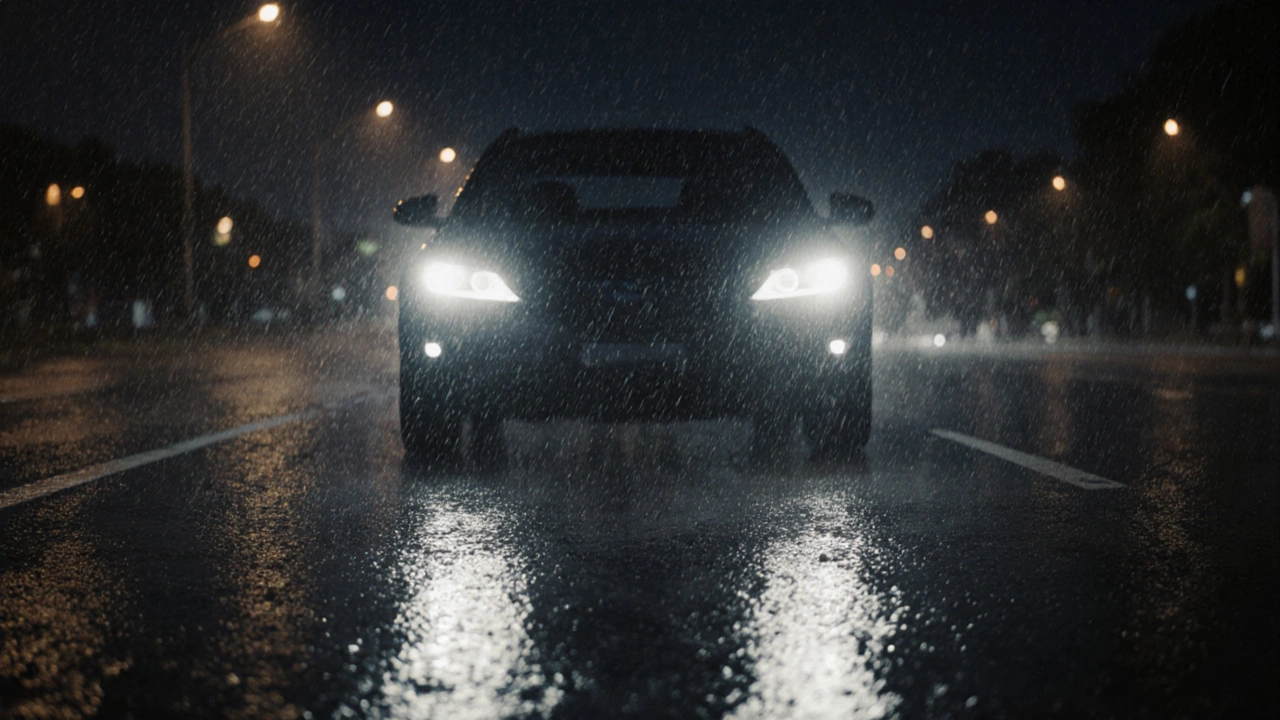
Are LED Headlights Good in the Rain? Real-World Performance Tested
LED headlights can be great in rain-if they're properly designed. Cheap aftermarket LEDs create dangerous glare, while factory systems with the right color temperature and beam pattern improve visibility. Here's what actually works.