LED Headlight Visibility Simulator
Adjust the settings below to see how different color temperatures perform under varying weather conditions. Remember: Kelvin measures color, not brightness.
You’re standing in the parking lot of an auto parts store, holding two boxes of LED headlights. One says 3000K, the other 6000K. You want brighter lights. But which box actually gives you more light?
Here’s the twist that trips up almost everyone: neither one is "brighter" just because of its number. The Kelvin rating doesn’t measure how much light hits the road; it measures what color that light looks like. A 3000K bulb and a 6000K bulb can have the exact same lumen output-the actual unit of brightness-but they will perform completely differently depending on where you drive.
The Myth of Color Temperature as Brightness
Let’s clear this up right now. When people ask if 3000K or 6000K is brighter, they are usually confusing color temperature with luminous flux. Color temperature, measured in Kelvin (K), describes the hue of the light source. Luminous flux, measured in lumens (lm), describes the total quantity of visible light emitted by a source.
If you buy a high-quality 3000K LED bulb rated at 10,000 lumens and a high-quality 6000K LED bulb rated at 10,000 lumens, they produce the same amount of light energy. However, your eyes perceive them differently. This is due to the Purkinje effect, where human vision becomes more sensitive to blue-green wavelengths in low-light conditions. Because 6000K leans toward blue-white, it often feels "sharper" or "crisper" to the driver, creating an illusion of higher brightness even when the raw output is identical.
| Attribute | 3000K LED | 6000K LED |
|---|---|---|
| Color Appearance | Warm White / Golden | Cool White / Daylight |
| Fog Penetration | Excellent | Poor |
| Perceived Sharpness | Low | High |
| Eye Strain (Night) | Lower | Higher |
| Best For | Rural roads, foggy climates | Urban driving, clear nights |
Why 3000K Dominates in Poor Weather
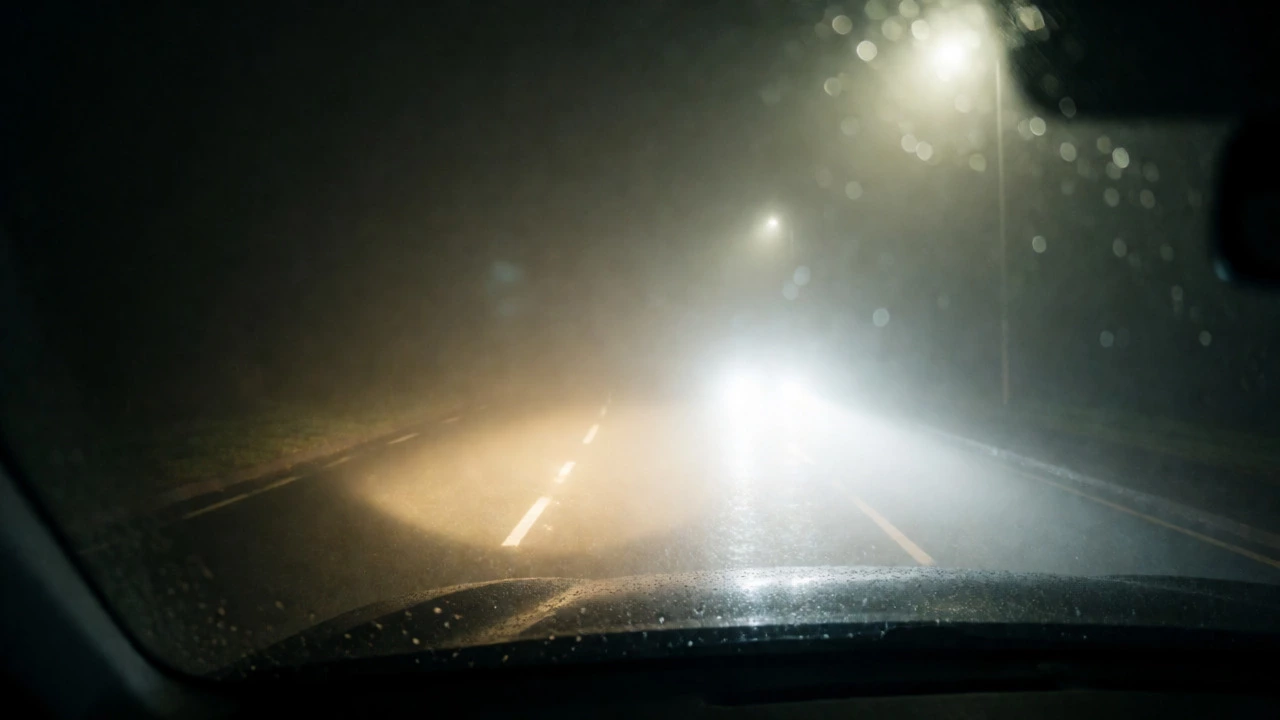
If you live in the Pacific Northwest, the UK, or anywhere with frequent fog, rain, or snow, 3000K is arguably the superior choice for visibility. Why? It comes down to physics. Fog consists of tiny water droplets suspended in the air. These droplets scatter light. Blue and violet wavelengths (found heavily in 6000K bulbs) have shorter wavelengths and scatter easily. This creates a "white wall" of glare directly in front of your car, blinding you and reducing visibility.
Yellow and amber wavelengths (dominant in 3000K bulbs) have longer wavelengths. They penetrate fog better rather than bouncing back into your eyes. Think of yellow fog lights on old rally cars or vintage Mercedes models. That wasn’t just a style choice; it was engineering. If you drive through heavy mist regularly, switching to 3000K LEDs can make you feel safer, not because the light is brighter, but because it actually reaches the road surface instead of reflecting off the moisture.
The Case for 6000K: Urban Clarity and Contrast
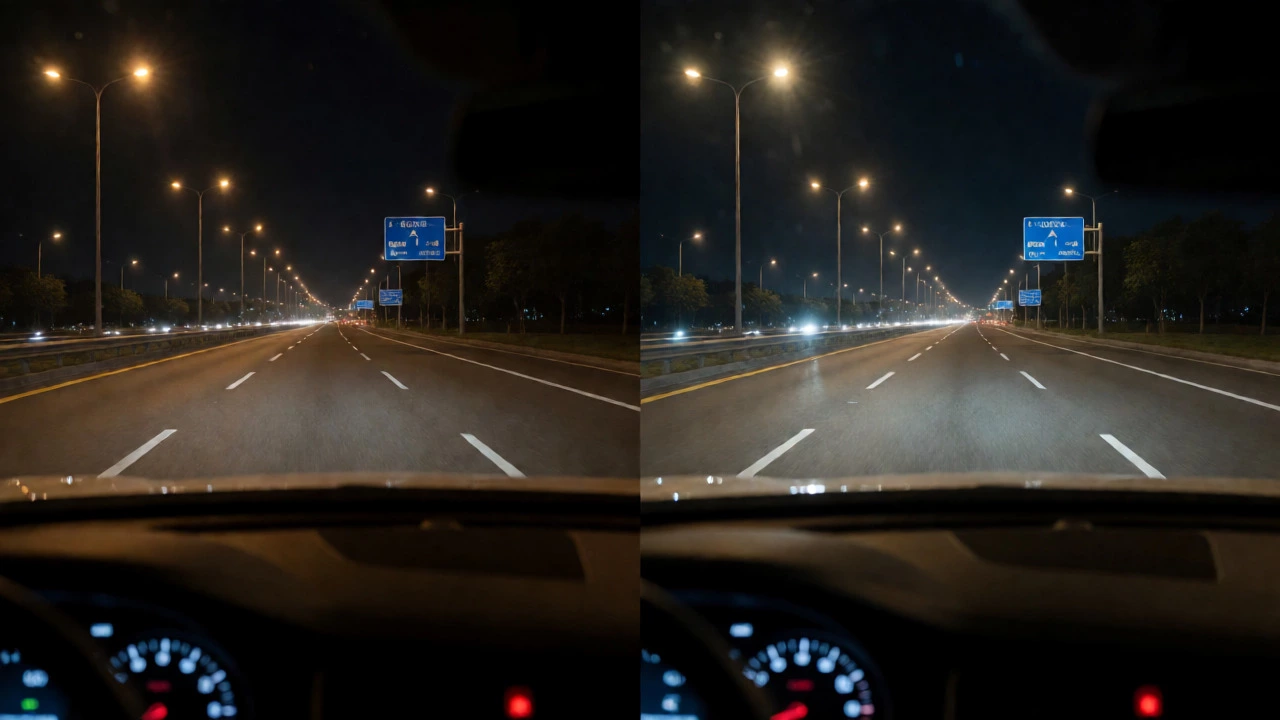
On the flip side, 6000K is the standard for modern luxury vehicles and aftermarket upgrades for a reason. In clear weather, especially in well-lit urban environments, cool white light provides better contrast against asphalt. Road signs, lane markers, and pedestrians often reflect cooler tones. A 6000K beam cuts through the ambient orange glow of streetlights, making objects appear sharper and more defined.
There is also a psychological component. Drivers often report feeling more alert with cooler lighting. It mimics daylight, suppressing melatonin production slightly more than warm light. If you do a lot of late-night highway driving in dry conditions, 6000K might feel "brighter" simply because it reduces the drowsiness associated with warm, cozy lighting. Just be aware that without proper lens design, 6000K can cause significant glare for oncoming traffic, which is why DOT-compliant housings matter more than the bulb itself.
Lumens Matter More Than Kelvin
Stop looking at the Kelvin number first. Look at the Lumens. A cheap 6000K bulb producing 4,000 lumens is dimmer than a premium 3000K bulb producing 8,000 lumens. Always check the manufacturer's lumen rating. Also, consider the beam pattern. A high-lumen bulb in a poorly designed reflector housing will scatter light everywhere except the road, wasting energy and annoying other drivers.
When shopping, look for these specs:
- Lumens per Bulb: Aim for 6,000-8,000+ lm for a noticeable upgrade over halogen.
- CRI (Color Rendering Index): Higher CRI means colors look more natural under the light. Most LEDs are around 70-80 CRI; halogens are near 100.
- Heat Dissipation: LEDs need cooling. Check if the bulb has a fan or heat sink. Overheating causes lumen depreciation, meaning your "bright" bulb gets dimmer after 500 hours.
Legal and Safety Implications
Before you swap your bulbs, check your local laws. Many regions restrict headlight color temperatures. While 6000K is generally accepted as "white," anything above 6500K starts looking blue. In many US states and European countries, blue-tinted headlights are illegal because they reduce visibility for older drivers whose eyes struggle with short-wavelength light.
3000K is sometimes restricted to fog lights only. Using 3000K as your primary headlight might fail vehicle inspection in some jurisdictions if the law specifies "white" light (typically defined as 5000K-6000K). Always verify with your local Department of Motor Vehicles or equivalent authority. A fine isn't worth the marginal gain in fog penetration.
How to Choose Based on Your Driving Habits
Make your decision based on geography and usage patterns. Here is a quick decision tree:
- Do you drive mostly in cities with streetlights? Go with 6000K. The extra contrast helps spot potholes and signage against dark backgrounds.
- Do you drive rural roads with no lighting? Consider 5000K as a middle ground, or 6000K if the weather is consistently dry.
- Do you face frequent fog, rain, or snow? Install 3000K for your main beams or keep 6000K for highs and add dedicated 3000K fog lights.
- Are you concerned about eye strain? Older drivers often find 3000K less glaring. Younger drivers often prefer 6000K.
Remember, installation quality matters. Even the best 6000K LED will perform poorly if the alignment is off. Use a wall test to ensure the beam pattern matches your factory halogen setup. If you cut off the top of the beam incorrectly, you’ll blind everyone ahead of you, regardless of whether you chose 3000K or 6000K.
Key Takeaways
- Kelvin measures color, not brightness. Lumens measure brightness.
- 3000K offers better visibility in fog and rain due to lower scattering.
- 6000K offers sharper contrast and perceived clarity in clear, dry conditions.
- Check lumen ratings and beam pattern compatibility before buying.
- Verify local regulations regarding headlight color temperature.
Is 6000K brighter than 3000K?
Not necessarily. Both can have the same lumen output (brightness). 6000K may appear brighter to the human eye because our vision is more sensitive to blue-white light in low-light conditions, but physically, they emit the same amount of light if their lumen ratings are equal.
Which is better for fog, 3000K or 6000K?
3000K is significantly better for fog. The warmer, yellower light penetrates water droplets more effectively and reflects less glare back at the driver compared to the blue-rich light of 6000K bulbs.
Are 6000K LED headlights legal?
Generally, yes. 6000K falls within the standard white range allowed in most countries. However, bulbs exceeding 6500K often appear blue and may be illegal in certain jurisdictions. Always check your local vehicle code.
Does color temperature affect battery life?
No, color temperature does not directly impact battery consumption. Power draw depends on the wattage of the LED bulb, not its Kelvin rating. A 55W 3000K bulb uses the same power as a 55W 6000K bulb.
Can I mix 3000K and 6000K bulbs?
Yes, many drivers use 6000K for low/high beams and 3000K for fog lights. This combination provides sharp visibility in clear weather and reliable penetration in poor weather. Ensure the mismatch doesn't violate local aesthetic or safety laws.