Suspension Upgrade Advisor
Answer three quick questions to find the best suspension upgrade for your vehicle.
Your Preferences
Recommended Option:
Perfect MatchOption Name
Description goes here...
Adjust settings to see recommendation
You want your car to sit lower. It looks aggressive, it handles better in corners, and frankly, it just feels right. But you’ve heard the horror stories about lowering springs: harsh rides, blown shocks, and a bumpy commute that leaves your back screaming by the time you reach the office. So, what’s the alternative? Is there a way to get that slammed look without sacrificing comfort or wrecking your budget?
The short answer is yes, but it depends entirely on what you value more: daily drivability, track performance, or visual flexibility. Most people think lowering springs are the only option because they’re cheap and easy to install. But they are often a compromise that fails at both extremes-too stiff for daily driving, too soft for serious track use. Let’s break down the real alternatives, from coilovers to air suspension, and help you decide which one actually fits your life.
Why People Ditch Lowering Springs
Before we look at alternatives, let’s be clear about why lowering springs frustrate people. They reduce the distance between your chassis and the ground by cutting spring rate or changing geometry. This sounds simple, but it disrupts the balance of your entire suspension system.
Most factory shock absorbers are tuned for the stock ride height. When you drop the car by two inches with a cheap set of springs, the shock’s travel range changes. You end up with a car that bounces over speed bumps or bottoms out when you hit a pothole. Worse, many cheap lowering kits don’t include new shocks, so you’re running worn-out dampers against stiffer springs. The result? A rough, noisy, and potentially unsafe ride.
If you’re looking for an alternative, you’re likely trying to solve one of three problems:
- Comfort: You want a lower stance but hate the jarring ride quality.
- Adjustability: You want to change ride height depending on whether you’re commuting or heading to a meet.
- Performance: You want predictable handling characteristics, not just a static drop.
Coilovers: The Performance Middle Ground
Coilovers are the most common upgrade path after lowering springs fail to satisfy. Unlike a simple spring swap, a coilover is a complete strut assembly that combines a shock absorber and a coil spring into one unit. The key feature here is adjustability. You can tweak the ride height independently of the spring preload, and higher-end models let you adjust damping stiffness too.
Why choose them over springs? Because they are engineered as a matched pair. The damper is valved specifically to work with that spring rate. This means you get a controlled, compliant ride even at low heights. If you drive in Adelaide, where road conditions vary wildly from smooth highways to patchy suburban streets, this control matters.
| Feature | Lowering Springs | Entry-Level Coilovers | Premium Coilovers |
|---|---|---|---|
| Average Cost (AUD) | $300 - $600 | $800 - $1,500 | $2,000+ |
| Ride Height Adjustability | Fixed | Threaded Collar (Limited) | Wide Range + Damping |
| Ride Comfort | Harsh | Moderate to Good | Excellent |
| Installation Complexity | Easy | Moderate | Moderate |
| Lifespan | Short (if shocks wear) | Medium | Long (Rebuildable) |
There is a catch, though. Cheap coilovers are often just lowering springs with a threaded collar glued onto a bad shock. If you buy a $400 kit, you might find yourself worse off than with good quality springs. Look for brands that offer rebuildable dampers and separate adjustment for rebound and compression if you plan to drive hard.
Air Suspension: The Ultimate Flexibility
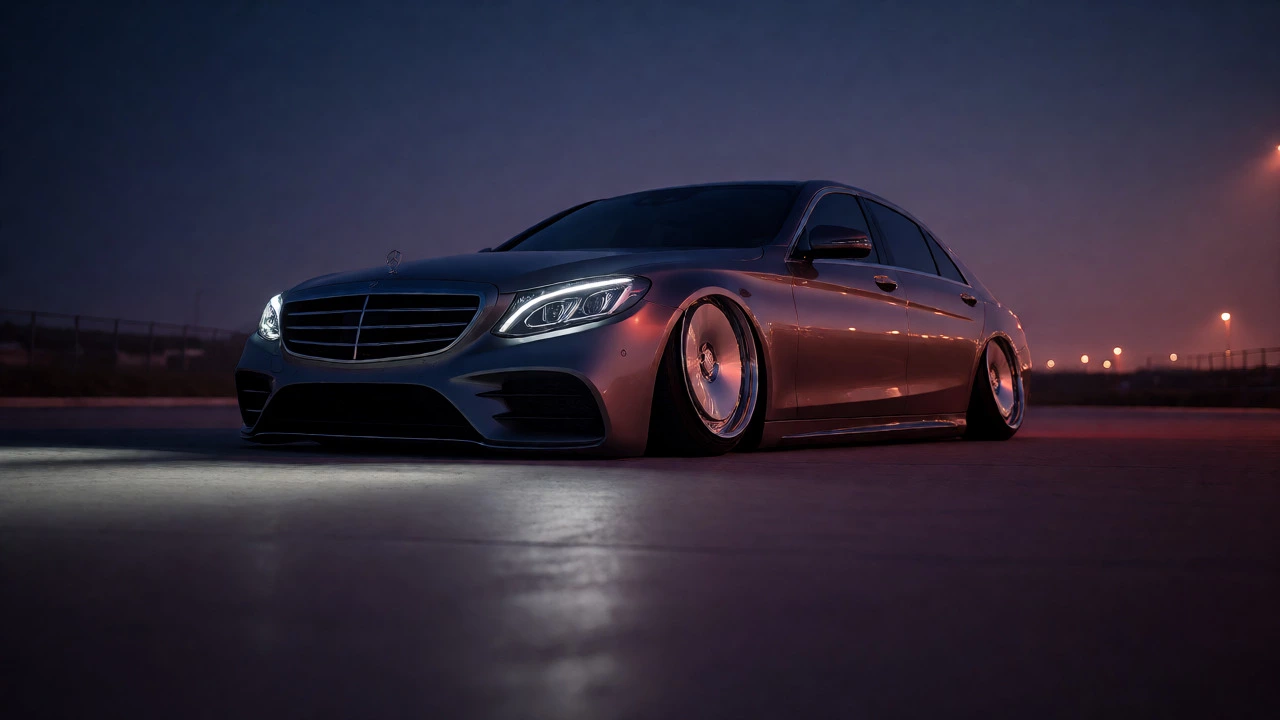
If money is less of an issue and you want maximum versatility, air suspension is the gold standard. Instead of metal springs, air bags inflate and deflate to support the car’s weight. You can raise the car to clear a steep driveway, lower it to scrape the pavement at a show, or set a comfortable cruise height for highway driving.
The main advantage here is dynamic adaptability. Your car isn’t stuck at one height forever. For enthusiasts who care about aesthetics but also need practicality, air ride solves the "parking lot scrapes" problem instantly. Just press a button, and the car lifts up.
However, air suspension introduces complexity. You now have compressors, tanks, lines, and electronic management systems. These components can fail. A leak in an air bag means your car sinks overnight. Compressors burn out if used too frequently. Maintenance is higher, and repairs are expensive. In Australia, humidity and heat can also degrade rubber air bags faster than in cooler climates, so factor in replacement costs every few years.
Torsion Bars and Leaf Springs: The Hidden Options
Not everyone drives a modern sedan with MacPherson struts. If you’re modifying a truck, SUV, or older muscle car, your options differ. Many trucks use leaf springs in the rear. Dropping these requires different techniques, such as flipping the axle or using shorter shackles. These methods are cheaper but can alter pinion angles, requiring correction bushings to prevent driveline vibration.
Some European cars, like certain BMWs or Citroëns, use torsion bars or hydropneumatic systems. Torsion bar adjustments are simple-you tighten the front bars to lift the nose-but going too tight causes a choppy ride. Hydropneumatic systems, found in older Peugeots or Citros, allow self-leveling and height adjustment via a switch, similar to air ride but using fluid pressure. These are rare now but worth considering if you own a classic French car.
Spacers and Shims: The Budget Hack
Do you just want a slight drop? Maybe half an inch? Installing suspension spacers is the cheapest alternative. These are aluminum discs placed between the spring perch and the strut body. They shorten the effective length of the spring, lowering the car slightly.
This method is great for maintaining stock ride quality because you’re keeping the original springs and shocks. However, spacers limit travel. If you go too thick, the strut bottom-outs easily. They also don’t improve handling; they just change appearance. Use them sparingly-usually no more than 10-15mm-to avoid stressing ball joints and CV boots.

Which Alternative Fits Your Lifestyle?
Choosing the right system isn’t about which is "best," but which fits your usage pattern. Here’s a quick decision guide:
- Daily Commuter: Go with high-quality entry-level coilovers. Brands like BC Racing or Tein Street Basis offer adjustable height with decent damping control. You get a lower look without turning your car into a jackhammer.
- Show Car / Weekend Cruiser: Air suspension wins here. You can slam it for photos and raise it for safety. The cost is justified by the flexibility and wow-factor.
- Track Day Enthusiast: Premium coilovers with adjustable damping (like KW Variant 3 or Öhlins). You need fine-tuning capability to dial in camber and toe for cornering grip.
- Budget-Conscious DIYer: Stick with lowering springs but buy matching shocks. Don’t mix old shocks with new springs. This combo gives you 80% of the benefit for 50% of the cost of coilovers.
Remember, alignment is non-negotiable. Any time you change ride height, your wheel alignment shifts. Camber and toe settings will be off, leading to uneven tire wear and poor steering response. Budget an extra $100-$150 AUD for a professional four-wheel alignment after installation.
Maintenance Tips for Modified Suspensions
Once you’ve installed your alternative, maintenance changes. Coilovers need occasional cleaning of the threads to prevent seizing, especially in coastal areas like Adelaide where salt air accelerates corrosion. Use anti-seize compound during installation.
Air suspensions require regular checks for leaks. Listen for hissing sounds after the compressor shuts off. Keep the air dryer clean to prevent moisture buildup in the lines, which can freeze or corrode valves. Check your battery health too; air compressors draw significant amperage, and a weak battery can cause slow inflation times.
For all setups, rotate tires regularly. Lowered cars often run wider tires or negative camber, which wears inner edges faster. Rotating helps extend tire life and maintains consistent handling.
Are coilovers always better than lowering springs?
Not always. High-quality lowering springs paired with matched shocks can offer a better daily ride than cheap, poorly valved coilovers. Coilovers are superior primarily due to adjustability and integrated damper tuning, but only if you buy a reputable brand.
Does air suspension ruin resale value?
It depends on the buyer. Purists may prefer stock suspension, while enthusiasts love the customization. A well-maintained air system can increase appeal to niche buyers, but a leaking or broken system significantly lowers value. Always keep the original parts if possible.
How much does it cost to install coilovers in Australia?
Labor costs typically range from $200 to $400 AUD per axle, depending on the shop and vehicle complexity. Parts vary widely: entry-level kits start around $800 AUD, while premium systems exceed $2,500 AUD. Always get a quote that includes alignment.
Can I use lowering springs on a car with air suspension?
No, they are mutually exclusive systems. You replace the air bags with coil springs, effectively converting the car to a static setup. This removes the ability to adjust height dynamically.
Will lowered cars wear out tires faster?
Yes, if alignment isn't corrected. Lowering changes camber angles, causing inner edge wear. Regular alignments and tire rotations mitigate this, but expect slightly shorter tire life compared to stock height.