Night Driving Window Tint Calculator
Check if your window tint meets legal requirements and is safe for night driving. Select your state and enter your tint's Visible Light Transmission (VLT) percentage to see if it's compliant and recommended.
For night driving: Always choose VLT between 35%-50% for optimal visibility. Darker tints reduce reaction time by 20% and increase accident risk. Ceramic tints provide the best clarity without glare.
Driving at night is already tough enough without blurry vision or glare from headlights. If you’ve got tinted windows and you’re struggling to see clearly after dark, you’re not alone. Many people think darker tint = better privacy or style, but when the sun goes down, that same tint can turn into a safety hazard. So what’s the best tint to see at night? It’s not about going as dark as possible. It’s about balancing heat rejection, glare reduction, and enough light transmission to keep you safe.
What Actually Matters for Night Vision
Window tint isn’t just about color. The real metric that affects night driving is Visible Light Transmission (VLT). This number tells you how much visible light passes through the film. A 5% VLT tint lets in almost no light - great for blocking sun during the day, terrible for seeing road signs, pedestrians, or other cars at night. A 70% VLT tint? It’s almost like having no tint at all. The sweet spot for night driving sits between 35% and 50% VLT.
Why? Because your eyes need enough light to adjust. Studies from the National Highway Traffic Safety Administration show drivers with VLT below 35% take 20% longer to recognize hazards in low-light conditions. That’s the difference between reacting in time and not reacting at all. Even if you’re not in a crash, poor visibility increases stress, eye strain, and reaction time - all of which make night driving more dangerous.
Dark Tints Are Illegal in Most Places
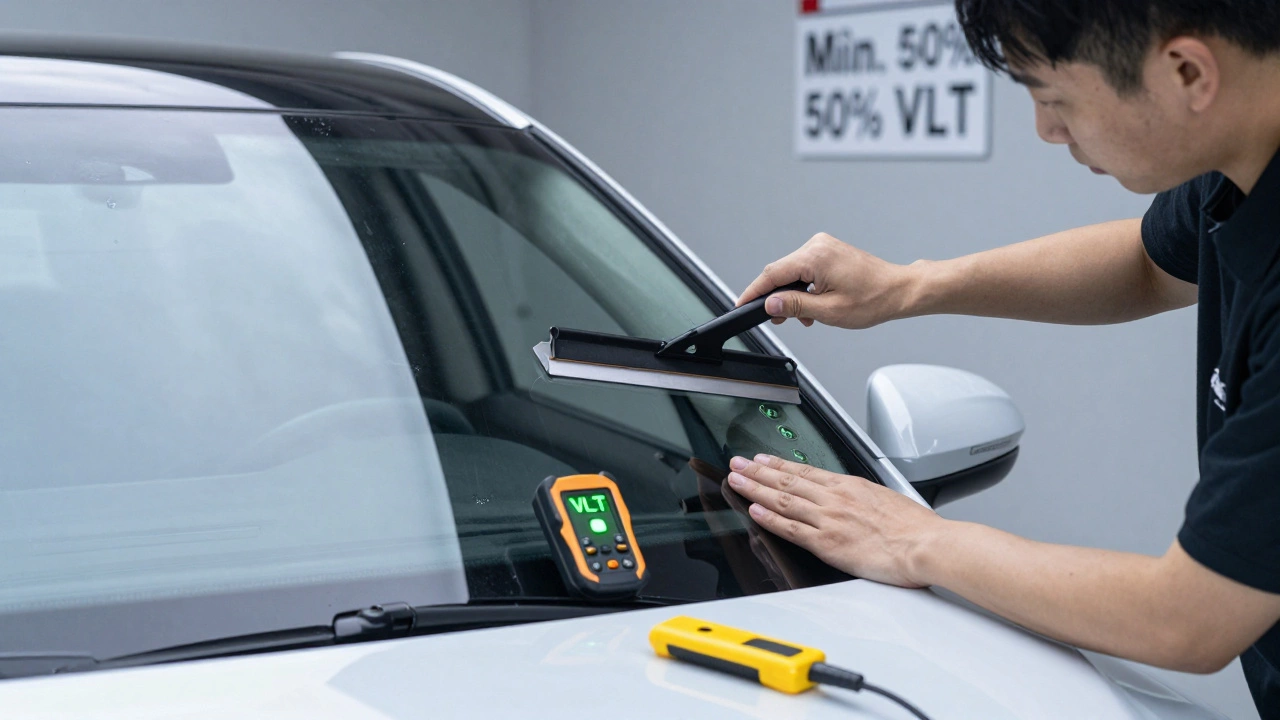
Before you go for that sleek black look, check your local laws. In the U.S., front side windows must typically allow at least 50% VLT. Some states like California and New York require 70% or higher. Rear windows are often more lenient, but even there, you can’t go below 20% in most places. Police officers don’t need a guess - they have handheld VLT meters. Get caught with illegal tint, and you’ll get a ticket, be forced to remove it, or both.
Canada and Australia have similar rules. In Germany, front window tint is banned entirely unless it’s factory-installed and meets EU standards. If you’re planning a road trip, assume the strictest rule applies. Don’t risk a fine or getting pulled over because you wanted a darker look.
Not All Tints Are Created Equal
There are three main types of window film: dyed, metalized, and ceramic. Each affects night vision differently.
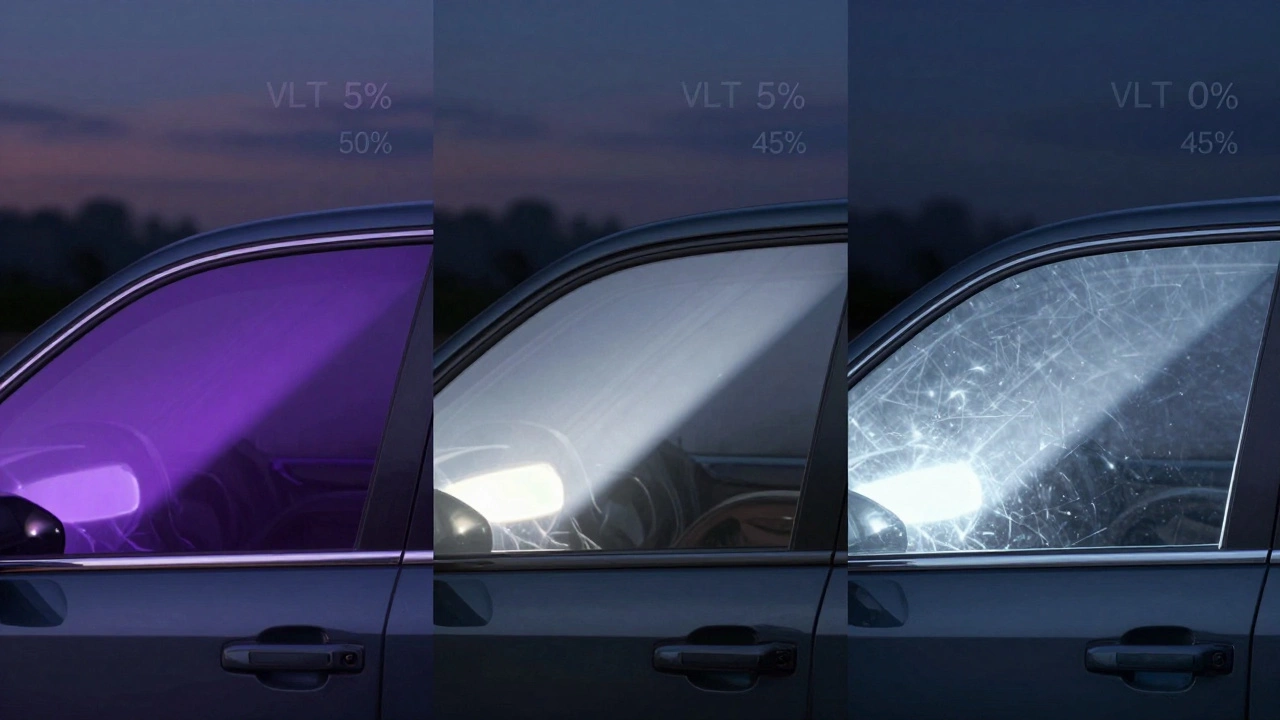
- Dyed tint - The cheapest option. It blocks heat and glare by absorbing sunlight. But at night, it can look slightly purple or hazy under LED lights. Not ideal for clarity.
- Metalized tint - Contains tiny metal particles that reflect heat and light. It’s great for daytime heat rejection, but it can interfere with GPS signals and create a mirror-like glare from oncoming headlights. Some drivers report it feels like driving through a foggy windshield at night.
- Ceramic tint - The best choice for night driving. It blocks infrared heat without using metal. That means no signal interference, no glare, and no color distortion. Ceramic films maintain sharp visibility even in low light. Brands like Llumar CTX, 3M Crystalline, and XPEL XR Plus use ceramic tech and offer 35-50% VLT options that pass legal tests and deliver clear vision.
Independent testing by Consumer Reports in 2024 found ceramic tints with 45% VLT provided the clearest night visibility compared to any other type. Drivers reported fewer headaches and less eye fatigue after long night drives. That’s not marketing - that’s measurable performance.
What About Privacy Tint?
You might be thinking: “But I want privacy.” Fair. But privacy doesn’t mean blacked-out windows. You can still get privacy without sacrificing safety. A 35% VLT ceramic tint blocks about 80% of visible light from outside - meaning people can’t see in during the day. At night, though, the inside of your car is brighter than the outside. So your privacy drops anyway. The real benefit? You still block UV rays and heat, and you won’t blind yourself with glare.
For true privacy after dark, use sunshades or park in well-lit areas. Tint isn’t a substitute for common sense.
Factory Tint vs Aftermarket
Many new cars come with factory-tinted rear windows. That’s usually around 20-25% VLT - fine for back seats, but useless if you’re trying to see your side mirror. Factory tint doesn’t count toward legal limits in most states, but if you add aftermarket tint on top, you risk going over the limit. Always check your car’s original VLT before adding film.
Front windows are rarely tinted from the factory. If you’re buying a new car and want tint, have it professionally installed after purchase. DIY kits often bubble, peel, or leave streaks - especially in humid climates. A professional install ensures even pressure, clean edges, and proper curing.
Real-World Tip: Test Before You Commit
Some tint shops offer sample swatches. Ask for them. Hold them up to your window at night with your headlights on. See how much you can see. Drive around the block with them taped in. If you can’t read a street sign clearly from 50 feet away, it’s too dark.
Also, avoid “night vision” claims. No tint can enhance night vision like night-vision goggles. That’s science fiction. What you want is a film that doesn’t make things worse.
What’s the Best Choice?
For most drivers, the best tint for night driving is:
- 35-50% VLT - Legal everywhere, clear enough to see.
- Ceramic film - No glare, no signal interference, no color distortion.
- Professional installation - No bubbles, no peeling, no legal issues.
Brands like 3M Crystalline 40, Llumar CTX 40, and XPEL XR Plus 45 are top performers. They’re pricier than dyed film - usually $300-$600 for a full car - but they last longer, perform better, and won’t get you pulled over.
Don’t Forget the Rear Windows
While front windows need to be legal, rear windows can be darker. Many drivers use 20% VLT on rear glass for privacy. That’s fine - as long as your side mirrors and backup camera are clear. If you have a backup camera, make sure the tint doesn’t block its infrared sensors. Some ceramic films are designed to be camera-friendly.
What If You Already Have Dark Tint?
If you’re stuck with 5% or 15% tint and you’re struggling to see at night, don’t just drive through it. You’re risking your safety and others’. Consider having it professionally removed or replaced. Most shops can remove tint without damaging the rear defroster lines or window seals. It’s cheaper than a ticket or an accident.
And if you’re tempted to just drive slower - don’t. Slower doesn’t fix poor visibility. It just makes you more vulnerable to drivers who can see.
Final Rule: Light Is Safety
At night, every bit of light matters. Your eyes are already working harder. Don’t make them work harder by cutting out the light you need. The best tint isn’t the darkest one. It’s the one that lets you see - clearly, comfortably, and legally.
Can you drive at night with 5% tint?
Technically, yes - but it’s dangerous and often illegal. A 5% tint blocks 95% of visible light. Most states require at least 35% VLT on front windows. Even if you’re not ticketed, your reaction time slows down, and you’ll struggle to see pedestrians, road signs, and headlights. It’s not worth the risk.
Is ceramic tint worth the extra cost?
Yes, if you drive at night often. Ceramic tint blocks heat without using metal, so it doesn’t cause glare or interfere with GPS. It also doesn’t fade or turn purple over time. While it costs 2-3 times more than dyed film, it lasts longer and improves visibility. For night driving, the clarity and safety benefits outweigh the price difference.
Does window tint affect backup cameras?
Some tints can. Older metalized films sometimes block infrared signals used by backup cameras. Ceramic films are designed to be camera-safe. Always ask your installer if the film you’re choosing is compatible with your car’s sensors. Most reputable brands list compatibility on their website.
Can you tint your windshield?
In nearly all U.S. states and countries, tinting the windshield is illegal except for a small strip at the very top - usually no more than 4-6 inches. Even that has to be non-reflective. Any tint lower than that can result in immediate ticketing and mandatory removal. Never tint your windshield.
How long does window tint last?
High-quality ceramic tint lasts 10-15 years with proper care. Cheaper dyed films start fading in 2-5 years. Look for warranties - most professional installers offer lifetime warranties on ceramic films. That means if it bubbles, peels, or changes color, they’ll fix it for free.