Wrapped Car Sun Exposure Risk Calculator
Assess Your Vehicle's Daily Risk
Input your specific wrap details to see how vulnerable it is to today's sun.Current Status
Imagine pulling your freshly wrapped car out of the shop. It looks incredible. The color is deep, the finish is flawless. Then you park it under a blazing midday sun for three hours. When you return, do you see bubbles? Peeling edges? Faded colors? This is the million-dollar question every wrap owner asks: can a wrapped car sit in the sun without ruining that investment?
The short answer is yes, but with conditions. Vinyl wraps are not paper; they are engineered polymers designed to withstand outdoor elements. However, "withstand" does not mean "immune." Heat and ultraviolet (UV) radiation are the two main enemies of automotive vinyl. Understanding how these factors interact with different types of vinyl allows you to protect your vehicle’s appearance for years.
Understanding Vinyl Wrap Materials
To know if your car can handle the sun, you first need to understand what is actually on its body. Not all wraps are created equal. There are primarily two types of vinyl used in the automotive industry: cast vinyl and calendared vinyl.
Cast Vinyl is a high-quality, thin film made through a continuous casting process that offers superior conformability and durability. This is the premium choice for full vehicle wraps. Because it is thinner and more flexible, it hugs complex curves better. More importantly for sun exposure, cast vinyl typically has a thicker adhesive layer and higher-quality UV inhibitors built into the laminate. Brands like 3M and Avery Dennison dominate this space, offering warranties that often extend up to seven or ten years when properly installed and maintained.
Calendared Vinyl, by contrast, is a thicker, less flexible material produced by pressing heated rollers, making it cheaper but less durable against long-term UV exposure. You will often find this material on partial wraps, fleet vehicles, or temporary graphics. While it handles moderate weather well, it tends to become brittle over time. If left in direct sunlight for extended periods without shade, calendared vinyl may crack or fade faster than its cast counterpart.
The difference matters because UV degradation is cumulative. Every hour of direct sunlight breaks down the chemical bonds in the vinyl slightly. Cast vinyl resists this breakdown much longer due to its formulation, which is why most professional installers recommend it for daily drivers that spend significant time outdoors.
How Heat Affects Vinyl Adhesion
Sunlight brings two threats: UV rays and heat. UV fades the color, but heat messes with the glue. Automotive vinyl uses pressure-sensitive adhesives that rely on temperature stability. Most standard acrylic adhesives have an optimal working range between 50°F and 100°F (10°C to 38°C).
When a car sits in the sun, the surface temperature of the paint and vinyl can skyrocket. On a hot summer day, ambient air might be 90°F (32°C), but the black vinyl on a hood or roof can easily reach 140°F (60°C) or higher. At these temperatures, the adhesive softens. This softening creates a risk known as "slippage," where the graphic shifts position, or worse, the edges begin to lift because the bond weakens temporarily.
Here is the critical nuance: heat-induced lifting is often reversible if caught early. If the adhesive cools down before the vinyl stretches too far, it re-bonds. However, if the car stays hot for hours, the plasticizer in the vinyl can migrate to the surface, creating a sticky residue that attracts dirt. Over time, this residue degrades the adhesive permanently. This is why parking in the shade isn't just about aesthetics; it's about preserving the chemical integrity of the bond.
UV Exposure and Color Fading
While heat affects the glue, UV radiation attacks the pigment. Modern automotive wraps come with a protective laminate top coat. This laminate acts like sunscreen for your car. It blocks a significant percentage of UV rays from reaching the colored layer underneath.
However, no laminate is perfect. Even high-end matte finishes, which are popular for their stealthy look, tend to show wear faster than gloss finishes. Matte vinyl lacks the same level of UV stabilization as gloss, meaning it can turn chalky or develop a "ghosting" effect where old paint lines show through after prolonged sun exposure. Gloss vinyl, on the other hand, reflects more light and generally holds its vibrancy longer under direct sun.
If you live in a region with intense sunlight, such as Arizona, California, or Australia, the cumulative UV dose is significantly higher. In these areas, experts recommend choosing vinyls with specific UV-resistant laminates. Some manufacturers offer "architectural grade" laminates designed for outdoor signage, which provide extra protection for cars parked outside year-round.
Best Practices for Parking a Wrapped Car
You don't need to keep your car in a garage 24/7 to protect the wrap, but you should adopt some smart habits. Here is how to minimize sun damage while keeping your life convenient:
- Park in the shade whenever possible. Tree shade, building shadows, or underground garages are ideal. If you must park outside, try to find a spot that gets morning sun but afternoon shade, as afternoon sun is more intense.
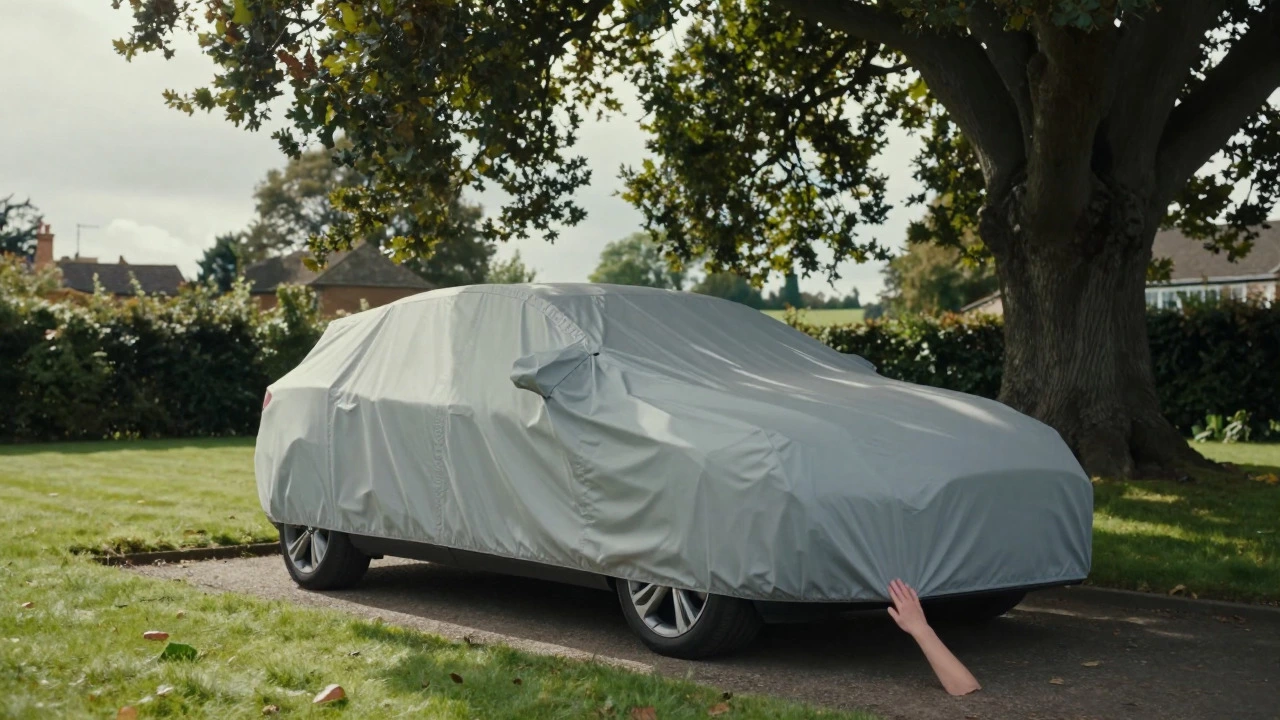
- Use a car cover. A breathable, UV-blocking car cover is one of the best investments for a wrapped vehicle. Look for covers made from polyester or polypropylene with a UV coating. Avoid cheap non-breathable plastic covers, as they trap heat against the vinyl, creating a greenhouse effect that cooks the adhesive.
- Wash regularly. Dirt and debris act as abrasives. When combined with heat, they can scratch the laminate. Regular washing removes these contaminants and keeps the UV-protective layer clean and effective.
- Avoid high-pressure washers on edges. High-pressure water can force itself under the vinyl edges, especially if the adhesive is softened by heat. Use a gentle stream and a microfiber mitt instead.
Another pro tip: avoid waxing your vinyl with traditional carnauba waxes. These waxes can yellow over time and leave a hazy film on matte finishes. Instead, use a dedicated vinyl sealant or ceramic coating designed specifically for wraps. These products add another layer of UV protection and make cleaning easier.
Signs Your Wrap Is Suffering Sun Damage
Your eyes are the best diagnostic tool. If you notice any of the following, your wrap is telling you it needs more protection:
| Damage Type | Visual Appearance | Likely Cause | Reversibility |
|---|---|---|---|
| Fading | Color looks washed out or dull compared to original | UV degradation of pigment | Low (requires re-wrap) |
| Chalking | White, powdery residue on matte surfaces | Laminate failure + UV exposure | Moderate (polishing may help) |
| Edge Lifting | Corners curling up or peeling away | Heat softening adhesive / poor installation | High (if caught early) |
| Bubbling | Small air pockets forming under vinyl | Moisture trapped + heat expansion | Medium (professional repair needed) |
| Ghosting | Old paint lines visible through vinyl | Thin vinyl stretching over uneven surface | Low (structural issue) |
If you see edge lifting, act fast. Gently press the area down with a warm (not hot) hair dryer and a squeegee. The heat will reactivate the adhesive, allowing you to flatten the bubble or lift. If the area is large or bubbling is widespread, consult a professional installer. DIY repairs on large areas can lead to wrinkles or further adhesion issues.
Myths About Vinyl and Sunlight
There are several misconceptions circulating online that can lead to unnecessary worry or poor maintenance choices. Let’s clear them up.
Myth 1: Vinyl melts in the sun. This is false. Vinyl melts at temperatures above 300°F (150°C). Your car hood rarely exceeds 160°F (70°C) even in extreme heat. The issue is never melting; it’s adhesion and UV fading.
Myth 2: All wraps last the same amount of time. Also false. As discussed, cast vinyl lasts significantly longer than calendared vinyl. Additionally, brand quality matters. A generic no-name vinyl from a discount supplier may lack proper UV inhibitors, leading to rapid fading within two years. Premium brands offer consistent performance and reliable warranties.
Myth 3: You should never wash a wrapped car in the sun. This is partially true. Washing a hot car can cause water spots to set quickly because the water evaporates rapidly, leaving mineral deposits. These spots can etch into the laminate. Always wash your car when the surface is cool to the touch, ideally in the morning or evening.
Long-Term Care Strategy
Treating your wrapped car like a high-performance asset ensures longevity. Create a simple annual routine:
- Spring: Inspect all edges for lifting. Clean the entire vehicle with a pH-neutral soap. Apply a vinyl-specific sealant.
- Summer: Maximize shade usage. Use a car cover if parking outside for more than four hours. Check for chalking on matte finishes.
- Autumn: Remove tree sap and bug splatter immediately, as they contain acids that degrade the laminate. Re-apply sealant if it has worn off.
- Winter: Wash frequently to remove road salt, which is corrosive to both vinyl and underlying paint. Ensure drainage holes are clear to prevent water trapping under the vinyl.
By following this cycle, you extend the life of your wrap beyond its warranty period. Many owners report their cast vinyl wraps looking pristine after five to seven years, provided they avoided excessive direct sun exposure during peak heat months.
How many hours can a wrapped car sit in the sun safely?
There is no single magic number, but general consensus suggests limiting direct sun exposure to under four to six hours per day for optimal longevity. Shorter exposures are fine, but chronic daily exposure without shade accelerates UV fading and adhesive weakening. If you must park outside all day, use a UV-blocking car cover.
Does matte vinyl fade faster than gloss vinyl in the sun?
Yes, generally speaking. Matte finishes have a textured surface that scatters light, making them more susceptible to showing chalking and minor scratches. Gloss finishes reflect more UV light and have smoother laminates that resist fading better. However, both types require proper UV-inhibited laminates to perform well outdoors.
What happens if vinyl lifts from the heat?
Heat softens the adhesive, causing the vinyl to lose grip. If caught early, you can usually fix this by warming the area with a hair dryer and smoothing it down with a squeegee. If left unattended, the lifted area can collect dirt and moisture, leading to permanent adhesion failure and potential bubbling.
Is it safe to use a ceramic coating on a car wrap?
Yes, ceramic coatings are excellent for wrapped cars. They provide a hard, hydrophobic layer that repels water, dirt, and UV rays. Just ensure the coating is labeled as safe for vinyl and test it on a small, inconspicuous area first. Avoid abrasive polishing pads that can scratch the vinyl surface.
How long does a cast vinyl wrap last in sunny climates?
In sunny climates, a high-quality cast vinyl wrap typically lasts between five and seven years. With excellent care, including regular washing, shade parking, and ceramic coating, it can last up to ten years. Calendared vinyl, however, may only last two to three years in similar conditions.