Air Filter Balance Calculator
Use this tool to find the sweet spot between power and protection. Select your engine specs and environment to see which filter type is recommended.
Engine Specifications
Performance Goals
Filter Type
Description
You spent good money on a high-flow air filter expecting your car to wake up. The box looks sleek, the cone is oiled, and you’re ready for more horsepower. But after the install, the throttle feels sluggish, or maybe the check engine light pops on. Did you buy the wrong part? Or did you just create a problem where none existed?
The short answer is yes. Air filters can absolutely be too restrictive. In fact, most stock paper filters are designed with some level of restriction to maximize dust capture. When you upgrade, you’re trying to thread the needle between letting enough air in for power and keeping dirt out to save your engine. If you swing too far one way, you lose power. Swing too far the other, and you might destroy your pistons. Let’s figure out exactly where that line is.
The Physics of Breathing: Why Restriction Matters
Your engine is basically a giant vacuum cleaner running in reverse. It sucks in air, mixes it with fuel, and explodes it to make movement. For this to work efficiently, the air needs to move fast and smooth. Think about trying to drink a thick milkshake through a tiny coffee stirrer versus a wide straw. The milkshake (air) has the same volume, but the narrow straw (restrictive filter) makes it hard to get it into your mouth (engine cylinders).
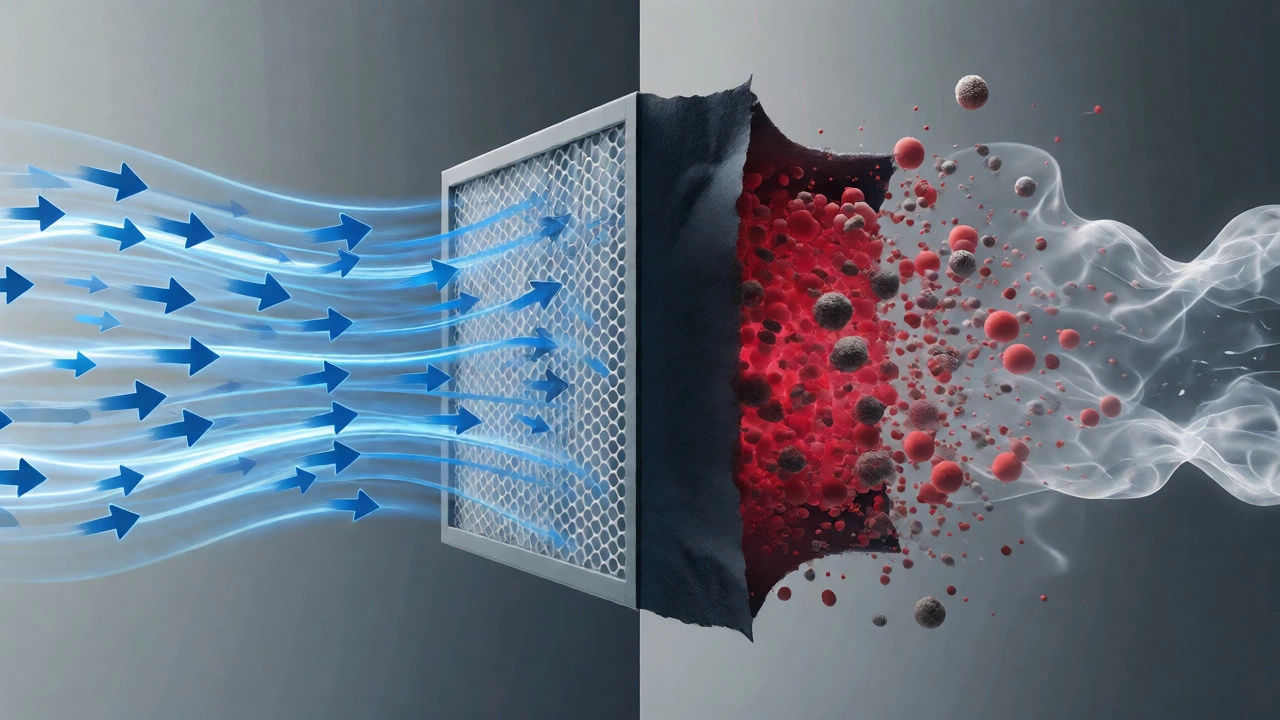
This resistance is called pressure drop. Every time air passes through a filter medium, it loses energy. A clean, open filter has low pressure drop. A clogged or overly dense filter has high pressure drop. When pressure drop gets too high, the engine has to work harder just to pull air in. This creates a vacuum inside the intake manifold that starves the cylinders. You might not notice it at idle, but step on the gas, and the lack of oxygen shows up immediately as hesitation or flat spots.
Filtration Efficiency vs. Airflow: The Trade-Off
There is no such thing as a free lunch in automotive engineering. To catch smaller particles of dust, pollen, and road grit, a filter material must have tighter pores. Tighter pores mean less space for air to pass through. This is the fundamental conflict: filtration efficiency fights against airflow capacity.
Stock filters from manufacturers like Fram, Bosch, or Motorcraft are optimized for longevity and cost. They use dense paper media that traps almost everything. Yes, they restrict airflow slightly, but they keep your engine clean for 15,000 miles. Performance filters, like those from K&N, BMC, or Pipercross, use layered cotton gauze or synthetic foam. These materials allow air to slip past easier because the fibers are arranged differently. However, if you choose a filter that is physically too small for your engine’s cubic inch displacement, you’ve created a bottleneck regardless of how "high-flow" the material claims to be.
| Filter Type | Airflow Restriction | Filtration Efficiency | Best For |
|---|---|---|---|
| Standard Paper | Moderate-High | 99%+ | Daily driving, warranty compliance |
| Oiled Cotton Gauze | Low-Moderate | 95-98% | Street performance, track days |
| Dry Synthetic | Low | 97-99% | High-performance street cars |
| Racing Foam/Straight Pipe | Very Low | <90% | Closed-course racing only |
Signs Your Filter Is Choking Your Engine
How do you know if you’ve crossed the line into over-restriction? Your car will tell you, but you need to listen. The symptoms often mimic other issues, so don’t jump straight to blaming the spark plugs.
- Sluggish Throttle Response: The most common sign. You press the pedal, and there’s a noticeable delay before the RPMs climb. The engine feels like it’s holding its breath.
- Reduced Top-End Power: At lower speeds, things feel fine. But when you push past 4,000 RPM, the power curve flattens out unexpectedly. High-RPM breathing requires massive airflow volume.
- Poor Fuel Economy: This seems counterintuitive. Shouldn’t less air mean less fuel? Not necessarily. Modern engines try to maintain stoichiometric ratios. If the ECU detects a lean condition due to lack of air, it may adjust timing or inject more fuel to compensate, leading to inefficient combustion.
- Check Engine Light (CEL): Sensors like the Mass Air Flow (MAF) sensor can detect abnormal flow rates. If the restriction causes turbulent air or unexpected pressure changes, the computer logs a code.
When "Too Restrictive" Isn't About the Filter Media
Sometimes, the filter itself isn’t the culprit. It’s the housing. Many enthusiasts buy a universal cone filter and shove it into a tight engine bay without proper shielding. Here’s what happens: the hot air from the exhaust manifold surrounds the cold intake pipe. Hot air is less dense than cold air. Less dense air means fewer oxygen molecules per cubic foot. So, even if your filter flows perfectly, you’re feeding the engine hot soup instead of crisp water.
Another issue is poor fitment. If the seal between the filter and the intake tube is loose, unfiltered air bypasses the media entirely. This isn’t a restriction problem; it’s a contamination problem. Dirt gets sucked straight into the throttle body. Conversely, if the filter is installed backward (some directional filters exist), the airflow path becomes chaotic, increasing turbulence and effective restriction.
Measuring Restriction: Beyond Guesswork
Don’t rely on dyno runs alone. Dynos measure wheel horsepower, which includes drivetrain losses. To truly understand restriction, look at CFM ratings (Cubic Feet per Minute). Manufacturers test filters at specific pressure drops, usually 28 inches of water column (inH2O). If a filter claims 500 CFM at 28 inH2O, but your engine demands 600 CFM at peak RPM, you’re starving it.
A simple DIY check involves using a vacuum gauge attached to the intake manifold. At idle, a healthy engine typically shows 17-22 inHg (inches of mercury). If you see readings significantly higher than normal under load, or if the needle fluctuates wildly, you might have an intake blockage. While this doesn’t isolate the filter specifically, it confirms a restriction exists somewhere in the intake tract.
The Dirty Truth: Maintenance Creates Restriction
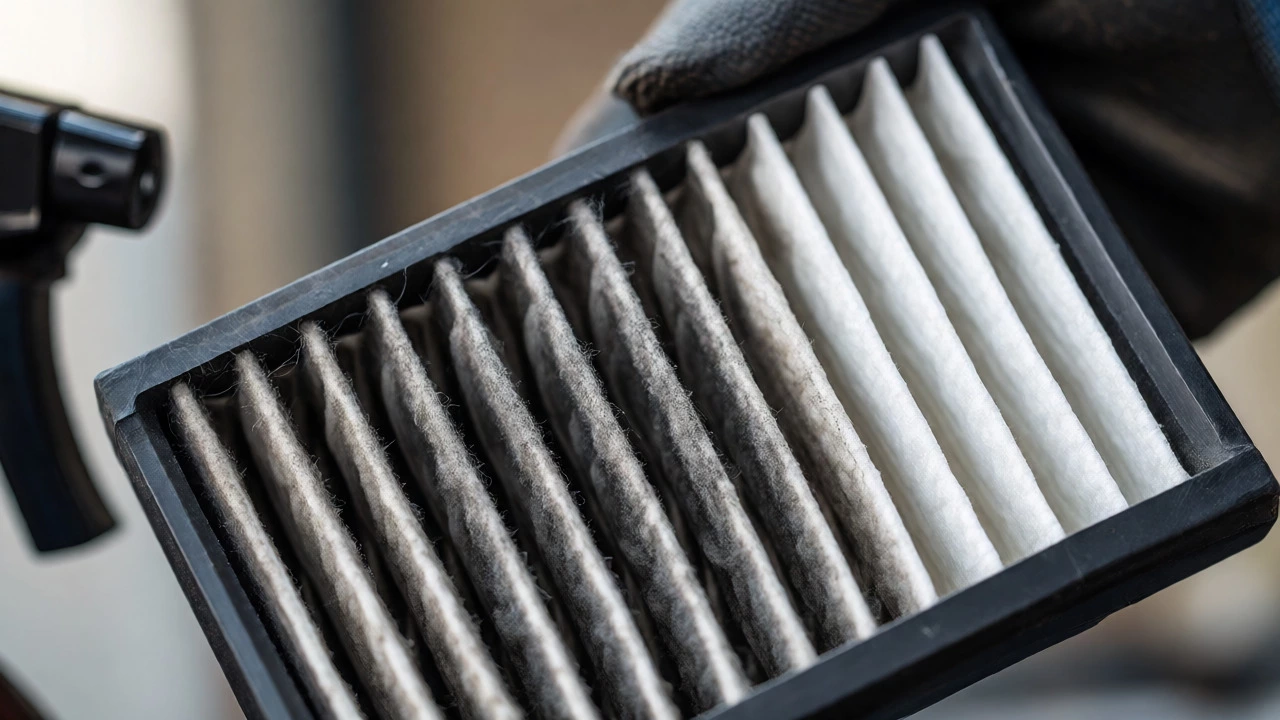
A brand-new high-flow filter might start with excellent flow characteristics. But as it collects dust, its restriction increases exponentially. Unlike paper filters that you throw away, reusable filters require cleaning and re-oiling. Over-oiling is a classic mistake. Excess oil coats the fibers, trapping dust faster but also blocking airflow. It creates a sticky barrier that slows air down significantly.
If you live in a dusty environment-like rural Australia during dry season-you’ll need to clean your filter more frequently. Neglecting this turns a "low restriction" filter into a highly restrictive one very quickly. Always inspect the pleats. If they are packed solid with gray fuzz, it’s time to clean. Don’t wait for the CEL to come on.
Choosing the Right Balance
So, should you ditch the stock filter? Only if you have supporting modifications. On a completely stock engine, the gains from a high-flow filter are often negligible-maybe 1-3 horsepower. That gain comes at the cost of slightly reduced filtration efficiency. For daily drivers, sticking with a high-quality OEM-spec replacement is often smarter.
However, if you’ve added a turbocharger, supercharger, or larger injectors, your engine now demands more air. In these cases, a restrictive stock filter becomes a genuine bottleneck. Upgrading to a panel-style high-flow filter (which retains the factory airbox shape) is usually safer than switching to a pod filter. Panel filters benefit from the factory heat shielding and ducting while offering better flow than paper.
Does a dirty air filter reduce horsepower?
Yes, significantly. A heavily clogged filter can cause a measurable loss in acceleration and top speed. While modern engines can compensate somewhat, severe restriction leads to rich running conditions and incomplete combustion, wasting fuel and reducing power output.
Are pod filters bad for my engine?
Not inherently, but they are risky. Pod filters draw air from the immediate engine bay area, which is often hot. Without a proper heat shield or cold air feed, you risk ingesting hot air (reducing power) and large debris (rocks, leaves) that can damage the engine. They also offer less filtration protection than enclosed box systems.
How often should I replace or clean my performance air filter?
It depends on driving conditions. For standard street use, inspect every 10,000 miles and clean/re-oil every 25,000-50,000 miles. If you drive off-road or in dusty areas, inspect monthly. Never let the filter become visibly black or saturated with dirt before cleaning.
Can I wash a paper air filter?
No. Standard paper filters are single-use. Washing them destroys the structural integrity of the cellulose fibers, causing them to tear or collapse. This allows unfiltered air to enter the engine, potentially causing catastrophic wear. Always replace paper filters.
What is a good pressure drop for an air filter?
For most passenger vehicles, a pressure drop below 2-3 kPa (approx. 8-12 inH2O) at full load is considered acceptable. High-performance setups aim for lower numbers, but extremely low pressure drop often correlates with lower filtration efficiency. Check your manufacturer's spec sheet for exact limits.