You see it everywhere-cars sitting low, tires stretched tight, wheels kissing the fenders. It looks cool. It feels like you’re in control. And the easiest way to get there? Just slap on some lowering springs. But here’s the thing: lowering springs aren’t a magic button. They’re a trade-off. And if you don’t know what you’re getting into, you could end up with a car that handles worse, wears out faster, or even gets you pulled over.
What Lowering Springs Actually Do
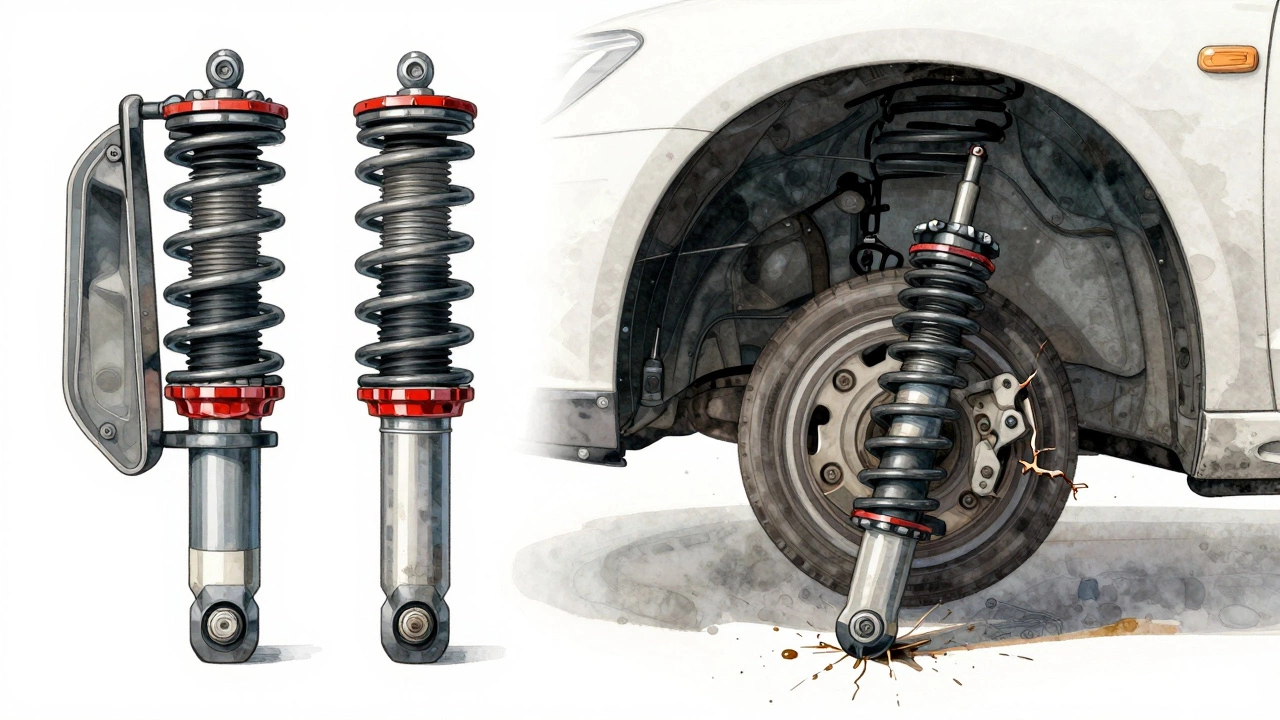
Lowering springs are stiffer, shorter versions of your factory springs. They reduce the distance between your car’s chassis and the ground-usually by 1 to 2 inches. That’s it. No fancy hydraulics, no air bags, no electronic adjustments. Just metal coils with less height and more rate.
Most factory springs are designed for comfort, load capacity, and safety across all driving conditions. Lowering springs cut that height to improve looks and, sometimes, handling. But they don’t fix everything. They don’t replace shocks. They don’t adjust camber. And they don’t magically turn your family sedan into a track monster.
If your car came with coilovers, you’re probably better off upgrading those. But if you’ve got stock struts and you’re thinking about lowering springs? You’re looking at a simple, cheap fix-with hidden costs.
The Pros: Why People Choose Lowering Springs
Let’s be honest-lowering springs are tempting because they’re cheap. You can buy a decent set for $200 to $400. Installation? If you’ve got basic tools and a jack, you can do it in a weekend. No need for an alignment shop right away (though you’ll need one soon).
Here’s what you actually gain:
- Lower center of gravity-less body roll in corners, especially noticeable on twisty roads.
- Better visual appeal-no more giant gaps between tire and fender. The car looks planted.
- Simple upgrade path-you can always add better shocks or sway bars later.
- No electronics-no pumps, no sensors, no leaks. Just mechanical, reliable hardware.
For someone driving a daily driver on mostly smooth roads, who wants a subtle drop and doesn’t plan on track days, lowering springs can work. But only if you know the downsides.
The Hidden Cons: What Nobody Tells You
Here’s where things go wrong.
Factory shocks are built to work with factory spring rates and travel. When you swap in shorter, stiffer springs, you’re forcing those shocks to operate outside their design range. That means:
- Harsher ride-you’ll feel every crack in the road. Potholes become jolts. Speed bumps feel like speed bumps on steroids.
- Reduced suspension travel-your shocks can’t absorb big bumps anymore. That leads to bottoming out, which damages struts, control arms, and even the chassis.
- Uneven tire wear-lowering changes your camber and toe angles. Without an alignment, your tires will wear on the inside edges. You could burn through a set in 10,000 km instead of 60,000.
- Reduced ground clearance-your front splitter or exhaust could drag on driveways, speed bumps, or parking ramps. In Adelaide, where the road surfaces vary from smooth highways to rough suburban streets, this is a real problem.
- Strut damage-stock struts aren’t designed for the extra stress. They’ll wear out faster. I’ve seen people replace their struts two years after installing lowering springs-costing more than a full coilover setup would’ve.
And then there’s the legal side. In South Australia, if your car’s ride height is below the manufacturer’s minimum (usually marked on the door jamb), you could fail your roadworthy inspection. Police can also pull you over if your car looks “unroadworthy” or if your tires are too close to the fender-especially if you’re rubbing.
When Lowering Springs Make Sense
They’re not always a bad idea. Here’s when they work:
- You drive a rear-wheel-drive car like a Ford Mustang or BMW 3 Series, and you want a subtle drop-not a slam.
- You’re on a tight budget and plan to upgrade shocks within a year.
- Your car has decent suspension geometry to begin with-older models like the E46 BMW or Mk4 Golf handle lowering better than modern cars with complex multi-link setups.
- You’re not driving on rough roads daily. If you live in the Adelaide Hills or frequently drive on gravel roads near the coast, skip this.
Also, don’t go too low. A 1-inch drop is fine. A 2-inch drop? That’s asking for trouble unless you’re replacing everything else.
What You Should Do Instead
There’s a better way. And it’s not much more expensive in the long run.
Instead of just lowering springs, consider a coilover kit. These combine adjustable springs and shocks in one unit. You get:
- Adjustable ride height
- Adjustable damping (so you can tune the ride)
- Shocks built for the spring rate
- Better longevity
Brands like KW, Eibach, and H&R make coilovers for common cars. You’ll pay $800-$1,500, but you’ll save money on replacements later. And you won’t be stuck with a harsh, damaged ride after six months.
Or, if you want to keep it simple: get lowering springs and new shocks at the same time. Match them. Buy a kit from the same brand. Eibach Pro-Kit springs paired with Koni FSD shocks? That’s a proven combo. It’s not cheap, but it’s smart.
What to Do After Installing Lowering Springs
If you’ve already installed them-or you’re planning to-here’s your checklist:
- Get an alignment immediately-even if the shop says it’s fine. Camber and toe will be off. You need it adjusted to factory specs for lowered cars, not stock specs.
- Check for tire rub-turn the wheel fully left and right. Look at the fender liner. If you see plastic scraping, you’ve got a problem.
- Test ride quality-drive over a speed bump. If the car clunks or feels like it’s hitting metal, your struts are bottoming out.
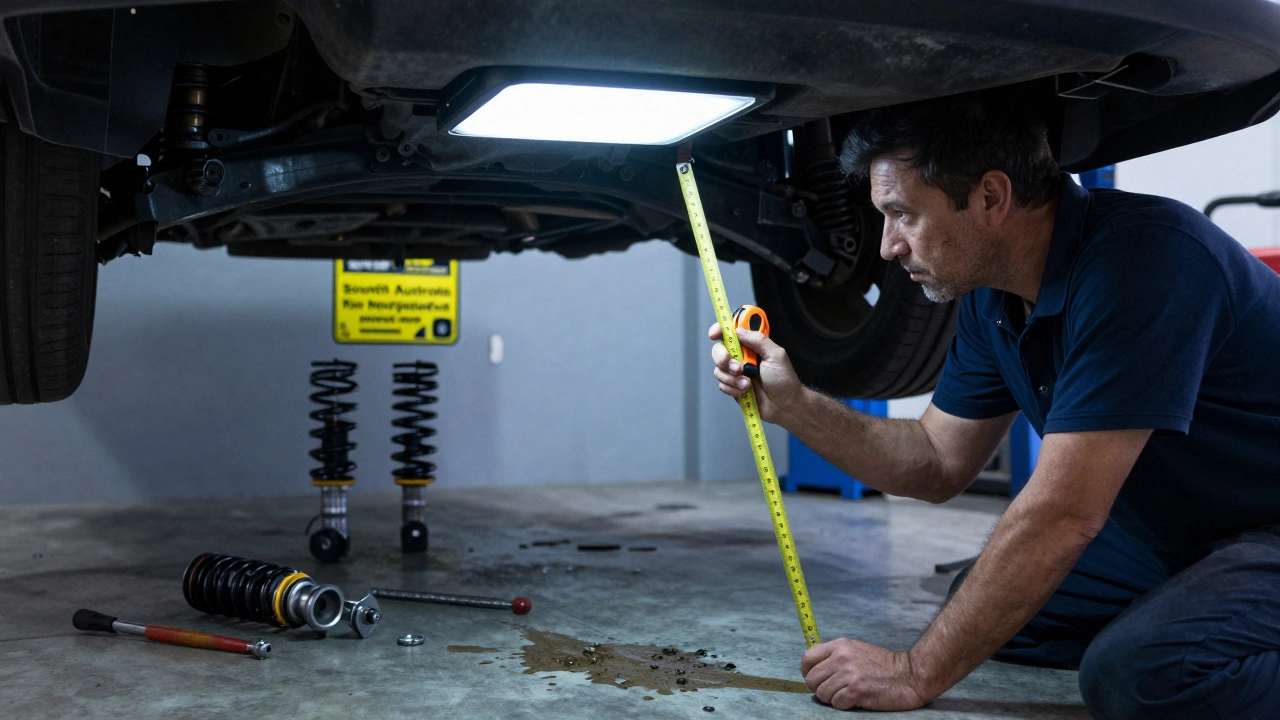
- Inspect your struts in 6 months-look for oil leaks, dents, or bent mounts. If you see any, replace them before they fail.
- Know your local laws-in South Australia, the minimum ride height is usually 100mm from the ground to the lowest part of the chassis. Measure it. Take a photo. Keep it.
Real Talk: Is It Worth It?
I’ve seen people drop their cars with springs, then spend $1,200 replacing struts six months later. Then they buy coilovers. Then they get an alignment. Then they replace tires. They end up spending $2,000 on a “cheap” upgrade.
Or they just give up. Their car looks terrible-worn tires, leaking shocks, uneven ride. They feel like they wasted their money.
Lowering springs aren’t evil. But they’re not a plug-and-play solution either. They’re a compromise. If you want looks and performance without regret, don’t just buy springs. Buy a system.
Want a lower car? Go for it. But go smart. Don’t cut corners on suspension. Your wallet, your tires, and your back will thank you.
Can lowering springs damage my car?
Yes, if they’re installed without matching shocks or an alignment. Lowering springs increase stress on stock struts, reduce suspension travel, and can cause premature wear on tires, control arms, and even the chassis. Bottoming out on bumps is common and can lead to expensive damage.
Do I need new shocks with lowering springs?
You don’t have to, but you should. Factory shocks aren’t designed for stiffer, shorter springs. Pairing lowering springs with worn or stock shocks leads to a harsh ride, poor handling, and faster strut failure. For best results, replace shocks at the same time or choose a matched kit.
Are lowering springs legal in Australia?
In South Australia, your car must meet minimum ride height requirements-usually 100mm from the ground to the lowest part of the chassis. If your car is too low, it may fail a roadworthy inspection or be deemed unroadworthy by police. Always check your manufacturer’s specs and measure your ride height after installation.
How much should I lower my car?
One inch (25mm) is generally safe for most street cars. Two inches (50mm) is pushing it and will likely cause rubbing, reduced ground clearance, and ride quality issues. Anything beyond that usually requires coilovers, modified fenders, or a full suspension overhaul.
Do lowering springs improve handling?
They can, but only if paired with proper shocks and an alignment. Lowering reduces body roll, which helps in corners. But if the ride becomes too harsh or the suspension bottoms out, handling actually gets worse. It’s not just about being low-it’s about balance.