Carbon Fiber Spoiler Decision Calculator
Use this tool to determine if a carbon fiber spoiler fits your lifestyle and budget, considering the hidden costs and risks highlighted in the article.
Your Profile
Analysis Result
Fill out your profile and click "Analyze Suitability" to see if a carbon fiber spoiler is right for you.
You see a carbon fiber composite material known for its high strength-to-weight ratio and distinctive woven appearance spoiler on a friend’s car, and it looks incredible. It screams performance, exclusivity, and engineering prowess. But before you drop two grand on that sleek addition to your trunk lid, you need to ask the uncomfortable question: what are the actual downsides? Because while carbon fiber is the darling of supercars and track days, it comes with a set of headaches that fiberglass or ABS plastic simply don’t have.
| Disadvantage | Impact Level | Why It Matters |
|---|---|---|
| Cost | High | 5-10x more expensive than fiberglass alternatives. |
| Fragility | Medium-High | Cracks rather than dents; difficult to hide minor impacts. |
| Maintenance | Medium | UV damage causes yellowing; requires specific sealants. |
| Repairability | High | Often requires full replacement rather than simple bodywork. |
| Aesthetic Risk | Medium | Poor installation leads to visible gaps or "orange peel" finish. |
The Price Tag Is Not Just A Number
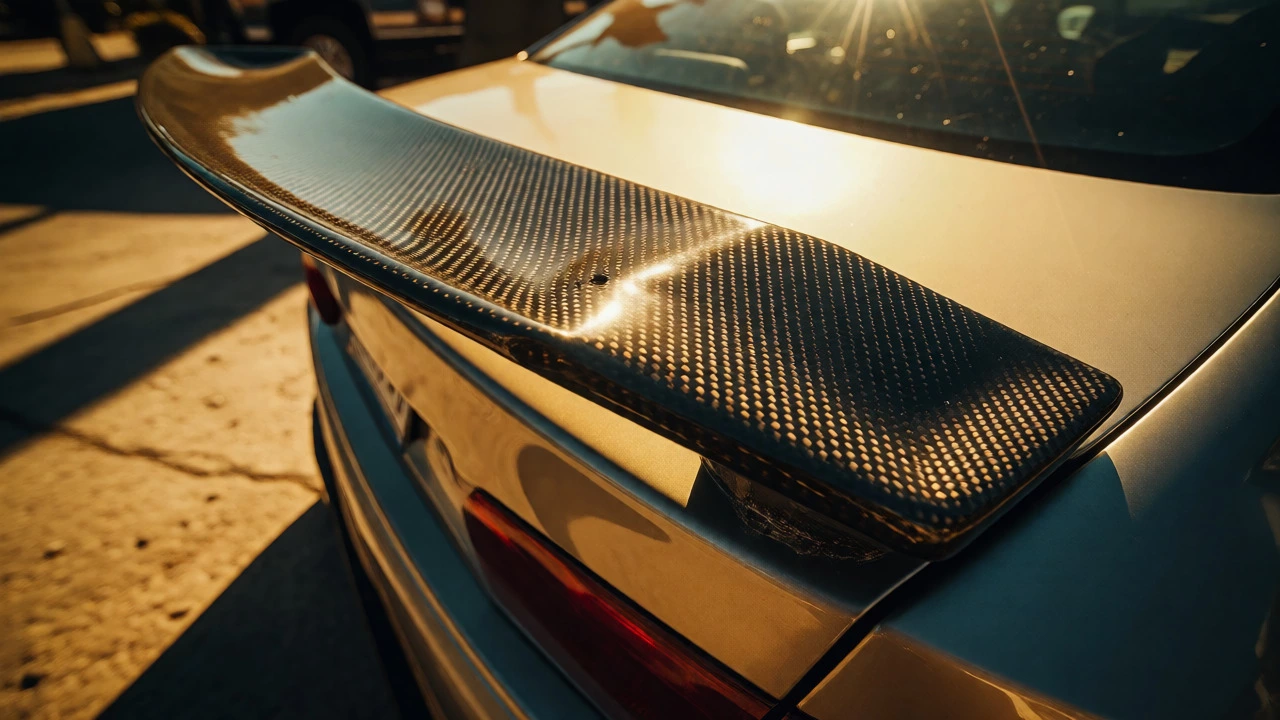
Let’s be real about money first. When you buy a carbon fiber spoiler automotive aerodynamic component made from layered carbon fibers bound by resin, you aren’t just paying for the material. You’re paying for labor-intensive manufacturing processes like autoclave curing or vacuum bagging. A standard painted ABS spoiler might cost you $150 to $300. Its carbon fiber counterpart? Easily $800 to $2,500 for the part alone, plus professional installation.
Why does this matter beyond the wallet hit? Depreciation. If you plan to sell your car in three years, will a buyer pay an extra $1,000 because of that spoiler? Rarely. Most used-car buyers look at mileage and service history, not whether your wing is dry carbon or wet layup. You’re essentially renting the aesthetic appeal for a premium price, with little hope of recouping that investment at resale time.
It Cracks Instead Of Dents
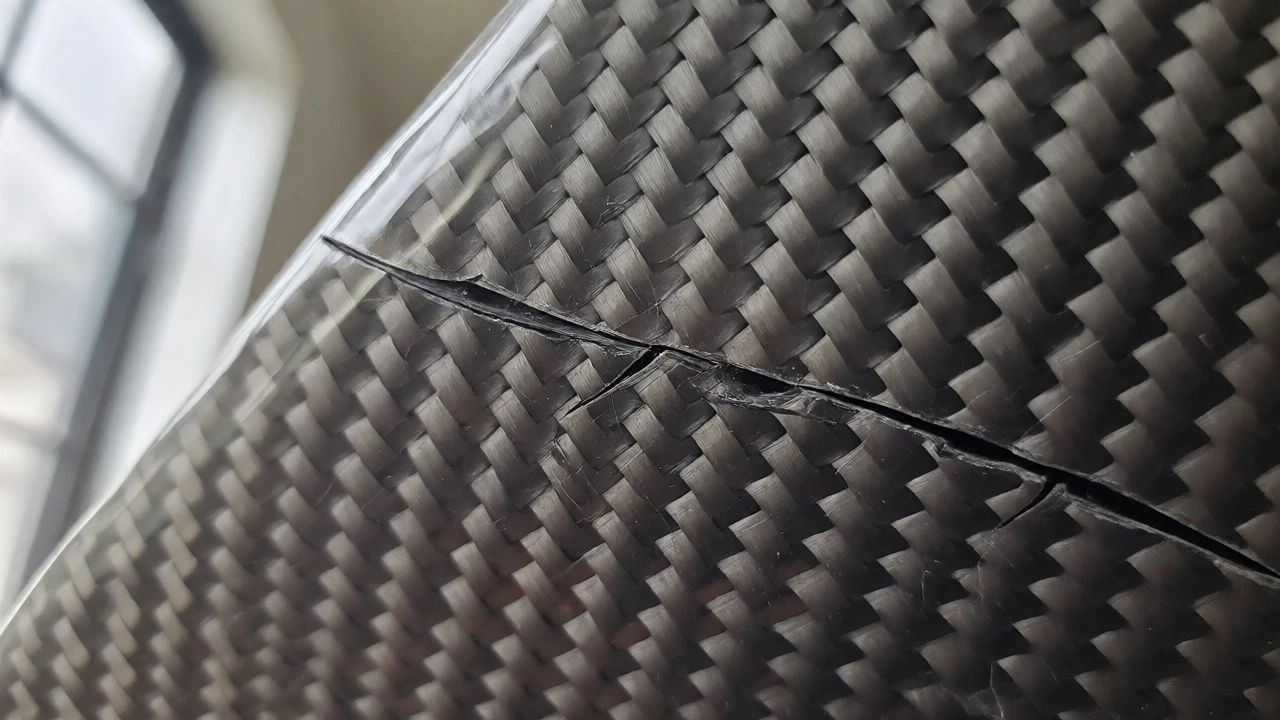
This is the big one people forget until they hit a garage door frame. Traditional materials like steel or aluminum dent. Fiberglass cracks but can often be sanded down and filled. Carbon fiber behaves differently. It is stiff and brittle under certain impact angles. A minor fender bender that leaves a scuff on a plastic bumper might cause a spiderweb crack in a carbon fiber spoiler.
And here’s the kicker: you can’t easily fix those cracks without ruining the visual integrity. With painted parts, you sand, prime, and repaint. The paint hides the substrate imperfections. With exposed weave carbon fiber, the pattern is the feature. If the weave breaks, you see it. Trying to fill a crack in clear-coated carbon often results in a cloudy spot or a visible line that ruins the symmetrical look of the weave. Many owners end up replacing the entire unit after a minor parking lot incident, which brings us back to that painful price tag.
UV Damage And Yellowing Are Real Threats
Most aftermarket carbon fiber parts use epoxy resins to bind the fibers. Over time, ultraviolet rays from the sun break down these resins. This process, known as photodegradation, causes the clear coat and the underlying resin to yellow or turn milky white. Have you ever seen an older BMW M3 with a faded, yellowish tint on its roof or mirrors? That’s UV damage.
To prevent this, you must apply UV-resistant clear coats or ceramic coatings specifically designed for composites. Standard wax won’t cut it. You need to maintain a rigorous schedule of applying protectants every few months. Neglect this, and your glossy black beauty turns into a dull, yellowed eyesore within five to seven years. Reapplying the clear coat isn’t a DIY weekend job either; it usually requires stripping the old coat, which risks damaging the delicate carbon weave underneath if done improperly.
Installation Pitfalls Can Ruin The Look
A poorly installed carbon fiber spoiler looks worse than no spoiler at all. Because carbon fiber is rigid, it doesn’t flex to match slight imperfections in your car’s body lines like rubber-backed tape spoilers do. If your trunk lid has even a tiny warp or curve mismatch, the gap between the spoiler and the car becomes glaringly obvious.
Furthermore, drilling holes for mounting brackets is risky. Unlike metal, carbon fiber can delaminate (separate layers) around screw holes if drilled incorrectly. Using the wrong drill bit speed or failing to support the backside during drilling can cause splintering on the exit side of the hole. Once that structural integrity is compromised, water gets in, freezes in winter, expands, and widens the crack. Suddenly, your expensive accessory is a water trap waiting to fail.
Resale Value Isn’t Guaranteed
Enthusiasts love carbon fiber. Regular drivers? Not so much. If you own a mainstream sedan like a Honda Accord or Toyota Camry, adding a carbon fiber spoiler might actually narrow your buyer pool. Some potential buyers view it as a sign of aggressive modification, fearing hidden accident repairs or poor maintenance habits associated with "modded" cars.
Even among enthusiasts, quality varies wildly. There is a huge difference between OEM-style dry carbon and cheap wet-layup knockoffs found on online marketplaces. If you bought the latter, savvy buyers will recognize the heavy weight and uneven gloss, potentially lowering their offer rather than raising it. They know that cheap carbon often peels or fades quickly, turning a perceived upgrade into a liability.
Environmental And Recycling Concerns
We talk less about this, but it matters. Carbon fiber is notoriously difficult to recycle. Unlike aluminum or steel, which can be melted down repeatedly, carbon fiber composites require energy-intensive pyrolysis processes to separate the fibers from the resin. Currently, most damaged carbon fiber parts end up in landfills. As sustainability becomes a bigger factor in consumer choices, knowing that your beautiful spoiler contributes to long-term waste might bother some eco-conscious owners.
Is It Worth The Hassle?
So, should you avoid carbon fiber entirely? Not necessarily. If you drive a high-end sports car where the factory offers carbon options, sticking with OEM quality ensures better resin formulations and fitment. If you treat your car like a showpiece, keep it in a garage, and accept that repairs mean replacement, the aesthetic payoff can be worth it.
But for daily drivers, budget builds, or anyone who parks outdoors regularly, the disadvantages often outweigh the cool factor. The combination of high upfront cost, fragility, and strict maintenance requirements makes it a high-maintenance luxury. Consider alternatives like high-quality ABS plastic with a matte black finish or genuine wood accents if you want style without the stress.
Does carbon fiber rust?
No, carbon fiber itself does not rust because it is not a metal. However, the metal hardware used to mount the spoiler (bolts, nuts, brackets) can rust if not properly sealed or if made from lower-grade steel. Additionally, galvanic corrosion can occur when carbon fiber touches bare aluminum due to electrical conductivity differences, though this is rare in modern insulated installations.
Can I polish carbon fiber myself?
You can, but it is risky. Polishing removes a thin layer of the clear coat. If you polish too aggressively, you risk cutting through the clear coat and exposing the raw resin or fibers, which then oxidizes and yellows. It is safer to clean with mild soap and apply a UV-protectant spray sealant regularly rather than attempting machine polishing unless you have significant experience with composite surfaces.
How long do carbon fiber spoilers last?
With proper care and indoor storage, a high-quality carbon fiber spoiler can last 10 to 15 years or more. However, if left exposed to harsh sunlight, road salt, and frequent washing with abrasive chemicals, the clear coat may begin to degrade, yellow, or peel within 3 to 5 years. Lifespan depends heavily on environmental exposure and maintenance frequency.
Is carbon fiber stronger than steel?
By weight, yes. Carbon fiber has a higher strength-to-weight ratio than steel. However, in terms of absolute strength and impact resistance, steel is tougher. Steel bends and dents under impact, absorbing energy. Carbon fiber is stiffer but more brittle; it tends to crack or shatter under sudden, sharp impacts rather than deforming plastically like metals.
Why does my carbon fiber look orange?
This is likely UV degradation. The epoxy resin used in many aftermarket carbon fiber parts is sensitive to ultraviolet light. Over time, UV rays break down the chemical bonds in the resin, causing it to change color from clear/black to a yellowish-orange hue. This indicates the protective clear coat has failed or was insufficient, allowing UV penetration into the binding agent.