Body Kit Fuel Economy Estimator
Most body kits increase drag or weight, reducing MPG. Use this tool to estimate the net effect on your fuel consumption.
Vehicle & Modification Details
Estimated Efficiency Impact
Enter details to see how your modifications might affect fuel economy.
You just dropped serious cash on a sleek new front bumper and side skirts. You look in the mirror, admire the aggressive stance, and think, "This thing looks fast. It must be efficient too." But here is the uncomfortable truth: most aftermarket body kits actually make your fuel economy worse. Not better. Worse.
Why? Because while they might look like they are slicing through the air, many of them create more turbulence than they smooth out. Unless you are an engineer or have access to a wind tunnel, you are likely guessing. Let’s break down exactly how body kits affect your gas mileage, when they help, and when they just drain your wallet at the pump.
The Physics of Drag vs. Lift
To understand fuel economy, you need to understand two forces fighting against your engine every time you drive: drag and lift.
Drag is the resistance your car faces as it pushes through the air. Think of it like sticking your hand out of a moving car window. If your palm is flat and facing forward, the air pushes back hard-that’s high drag. If you turn your hand sideways, it slices through easily-low drag. At highway speeds, overcoming drag consumes the majority of your engine’s power. If a modification increases drag, your engine works harder, burning more fuel.
Lift, on the other hand, is the upward force generated by airflow passing over the curved roof and hood of your car. Too much lift makes the car feel floaty and unstable, especially at speed. Some body kit components, like splitters and diffusers, are designed to create downforce (negative lift) to keep tires planted. But here is the catch: creating downforce almost always creates drag as a byproduct.
So, does a body kit increase MPG? Only if it significantly reduces drag without adding excessive downforce or weight. For most street cars, this balance is incredibly hard to achieve with off-the-shelf parts.
When Body Kits Help Fuel Economy
It’s not all bad news. There are specific scenarios where aerodynamic modifications can genuinely improve efficiency. This usually happens when you replace factory components that are already inefficient.
Older cars often have boxy shapes with poor airflow management. A well-designed aero kit for a classic muscle car or a van can smooth out turbulent air pockets around the wheel wells and undercarriage. For example, adding a rear spoiler to a hatchback can sometimes reduce drag by managing the wake behind the car, preventing low-pressure zones from pulling the vehicle backward.
Another scenario involves cooling. Modern engines generate massive heat. If your stock grille design restricts airflow to the radiator, the fans run constantly, sapping horsepower and fuel. An open-mouthed front bumper that allows better airflow might let the engine run cooler, allowing the ECU to optimize timing and potentially save fuel. However, this is a delicate balance. Too much opening, and you’ve just created a giant hole full of chaotic air.
| Component | Aerodynamic Effect | Typical Impact on MPG | Best Use Case |
|---|---|---|---|
| Front Splitter | Increases Downforce & Drag | -1% to -3% | Track days or high-speed stability |
| Rear Spoiler (Wing) | Reduces Lift, Increases Drag | -2% to -5% | Coupe/Hatchback stability |
| Side Skirts | Minimizes Underbody Turbulence | Neutral to +1% | Smoothing airflow along sides |
| Rear Diffuser | Manages Wake, Reduces Drag | 0% to +2% | Vehicles with exposed underbodies |
| Fender Flares | Can Create Turbulence | -1% to -2% | Wide-wheel setups only |
The Hidden Costs: Weight and Fitment
Aerodynamics isn’t the only factor. Every piece of plastic, fiberglass, or carbon fiber adds weight. While modern materials are light, a full wide-body kit can add 20 to 50 pounds. In the world of performance, 50 pounds doesn’t sound like much, but for fuel economy, it matters. Heavier cars require more energy to accelerate and maintain speed.
Then there is fitment. If your body kit is installed poorly-if the panels don’t sit flush or leave gaps-you’re creating noise and drag. Those tiny gaps act like mini air scoops, catching wind and slowing you down. I’ve seen installs where the gap between the bumper and the fender was wide enough to stick a finger in. That’s not just ugly; it’s an efficiency killer.
Also, consider the wheels. Many people pair body kits with larger, wider rims. Wider tires mean more rolling resistance. If you put a slick aero kit on a car but also upgraded to 20-inch wheels with low-profile tires, the increased rolling resistance will likely outweigh any aerodynamic gains. You’ll see lower MPG, not higher.
Real-World Testing vs. Marketing Hype
Manufacturers love to claim their kits are "aerodynamically optimized." But what does that mean? Often, it means they looked good in a computer simulation, not necessarily in real-world traffic. Real-world driving includes stop-and-go city traffic, crosswinds, and varying road surfaces.
In my experience working on modified cars in Adelaide, I’ve tracked fuel logs for dozens of vehicles. The pattern is consistent: unless the kit is specifically designed to close off open spaces (like covering wheel arches on a truck), fuel economy drops. On a recent build involving a Ford Mustang, we added a front lip and side skirts. We expected maybe a neutral impact. Instead, highway MPG dropped by 0.8 liters per 100km. Why? The front lip caught more air, increasing frontal area slightly, and the side skirts trapped hot air in the wheel wells rather than venting it.
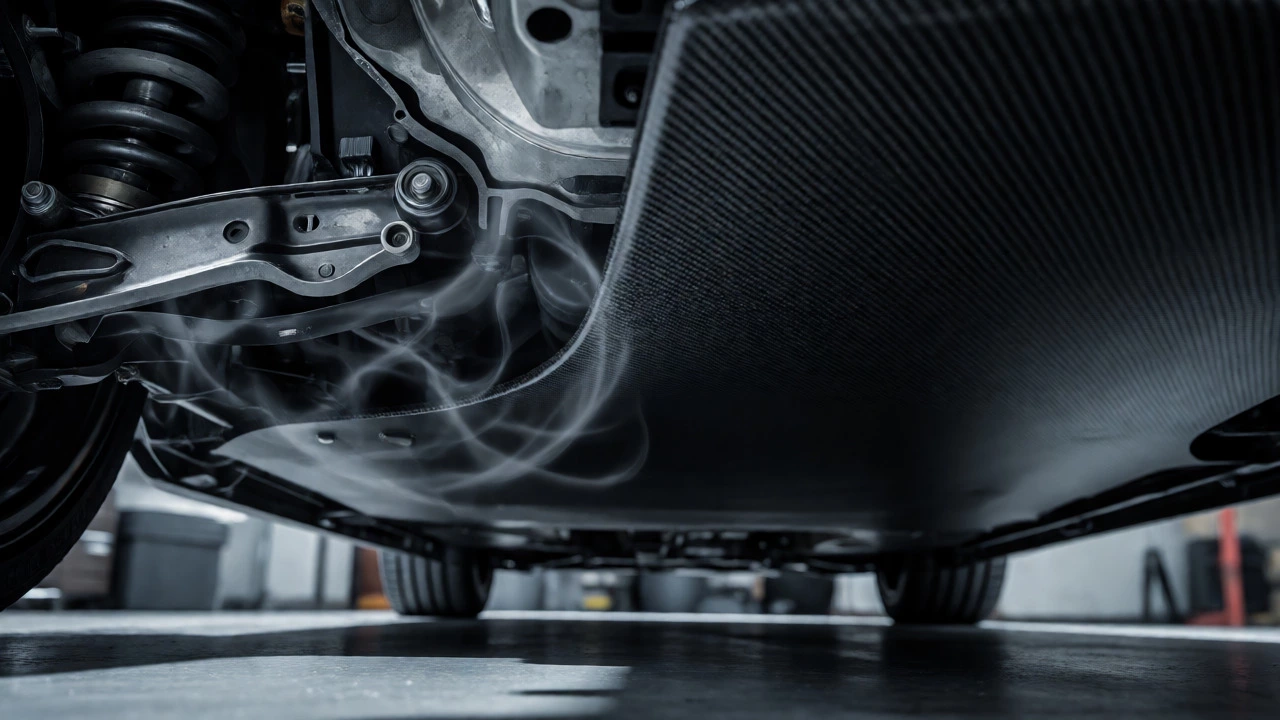
Compare this to a Tesla Model 3 owner who added a simple under-tray kit. Because the underbody was already relatively smooth, adding trays to cover suspension components smoothed out the airflow underneath. They saw a slight improvement in range during highway runs. Context is everything.
How to Maximize Your Chances of Better MPG
If you are dead set on a body kit but want to protect your fuel bill, follow these rules:
- Choose Low-Drag Designs: Look for spoilers with "Gurney flaps" or designs tested in wind tunnels. Avoid massive, vertical wings meant for race cars unless you drive at 150+ mph regularly.
- Prioritize Underbody Coverage: Flat undertrays are often more effective for MPG than external bumpers. They reduce turbulence beneath the car, which is a major source of drag.
- Keep Tires Stock: Don’t upgrade your wheel size. Keep the same tire diameter and width to minimize rolling resistance changes.
- Check the Fitment: Ensure no gaps exist between panels. Use weatherstripping or sealant if necessary to prevent whistling and air catch.
- Test Before You Buy: If possible, rent a car with the kit installed or find online forums where owners post actual fuel logs, not just dyno charts.
Remember, the goal of most body kits is aesthetics and handling, not economy. Accepting this upfront saves you disappointment later.

Alternatives That Actually Boost MPG
If your main goal is saving money on petrol, skip the flashy bumper and try these proven methods instead:
- Tire Pressure Management: Under-inflated tires increase rolling resistance. Keeping them at the manufacturer’s recommended cold pressure can improve MPG by up to 3%.
- Remove Roof Racks: An empty roof rack acts like a parachute. Removing it when not in use can save 2-5% on highway fuel economy.
- Window Film: Tinting windows reduces cabin heat, meaning your AC works less. Less AC load equals less engine strain.
- Regular Maintenance: A clogged air filter or old spark plugs hurts efficiency more than any body kit helps.
These steps cost little to nothing and offer guaranteed returns. A body kit is a gamble; maintenance is a sure bet.
FAQ
Does a rear spoiler always decrease fuel economy?
Not always, but usually yes for street cars. A large wing creates drag to produce downforce. However, a small, integrated lip spoiler on a hatchback can sometimes streamline the airflow off the rear glass, reducing the turbulent wake and potentially improving efficiency slightly. It depends entirely on the shape and angle of the spoiler.
Are carbon fiber body kits better for MPG than plastic ones?
Carbon fiber is lighter, which helps marginally with acceleration and braking, but its impact on steady-state cruising MPG is negligible compared to aerodynamics. The shape of the kit matters far more than the material. A heavy steel kit with perfect aero might beat a lightweight plastic kit with poor airflow management.
Can a body kit improve handling enough to offset worse MPG?
For enthusiasts, yes. If the kit provides downforce that allows you to corner faster and brake later, you might enjoy the driving experience more, even if you visit the gas station more often. However, purely financially, the cost of extra fuel plus the initial kit price rarely pays for itself in "performance value" unless you track the car.
Do side skirts really do anything for aerodynamics?
Yes, but subtly. Side skirts help manage the airflow along the sides of the car, preventing air from getting trapped in the wheel wells and reducing the vortex effect. While they don't drastically change MPG, they contribute to overall stability and can slightly reduce drag if properly shaped.
Is it worth installing a body kit solely for better gas mileage?
No. The return on investment is extremely low. You would spend hundreds or thousands of dollars on the kit and installation, only to possibly lose money on fuel costs. Buy a body kit because you love how it looks or handles, not because you expect it to pay for itself in fuel savings.