People buy carbon fiber spoilers because they look fast. But if you ask most car owners, they’ll say it’s because they think it adds horsepower. It’s a myth that won’t die. You see one on a Mustang or a Civic, and suddenly it’s got to be making more power. But here’s the truth: carbon fiber spoilers do not add horsepower. Not a single pound. Not one extra horse. That’s not how they work.
What Spoilers Actually Do
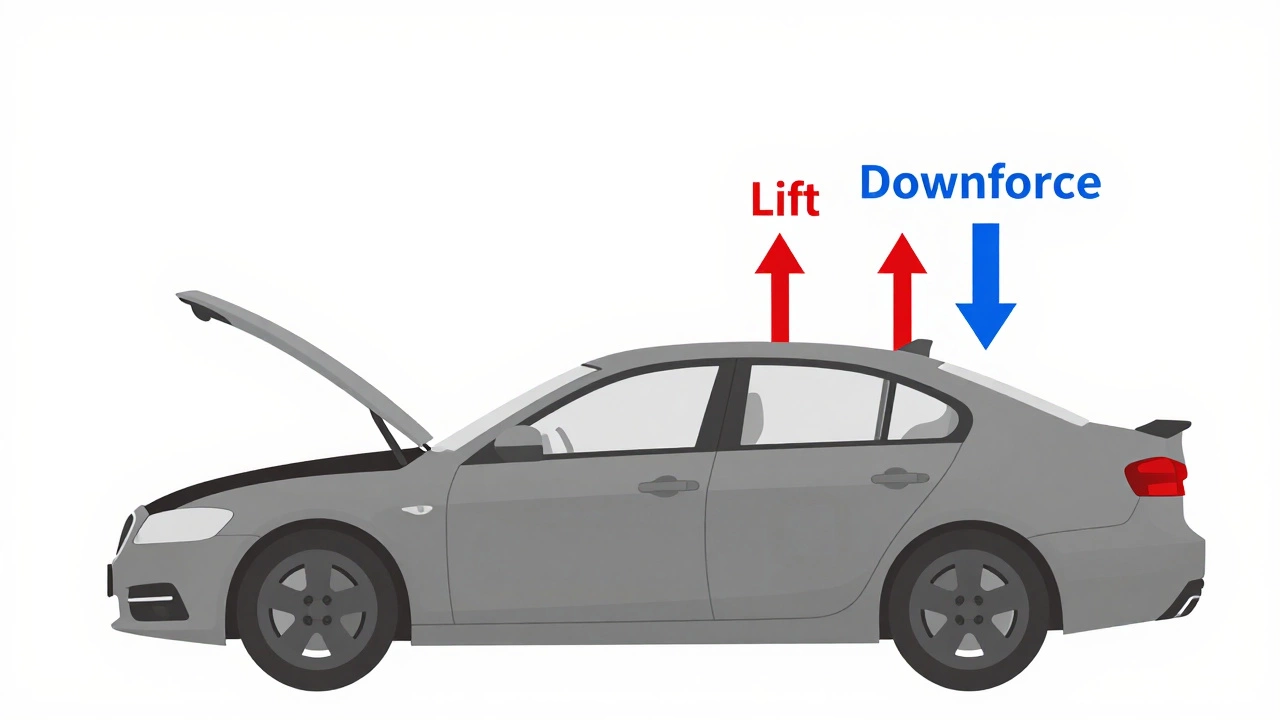
Spoilers aren’t engines. They don’t burn fuel. They don’t spin turbines. They’re just pieces of shaped plastic or carbon fiber mounted on the back of a car. Their job? To mess with airflow. Specifically, they’re designed to reduce lift - the force that makes your car want to float off the road at high speeds.
Think of it like this: when a plane flies, wings create lift. A car going 120 km/h is basically a wing flying upside down. The air rushing over the roof and trunk creates upward pressure. That reduces tire grip. Less grip means less control, especially in corners or during sudden braking. A spoiler pushes air down, creating downforce. That’s it.
Downforce isn’t horsepower. It’s traction. And traction lets you use the horsepower you already have more effectively. If your car has 300 hp but the rear tires are slipping because of lift, a spoiler won’t give you more power. It’ll just let you put that 300 hp to the ground better.
Why Carbon Fiber? Just for Looks?
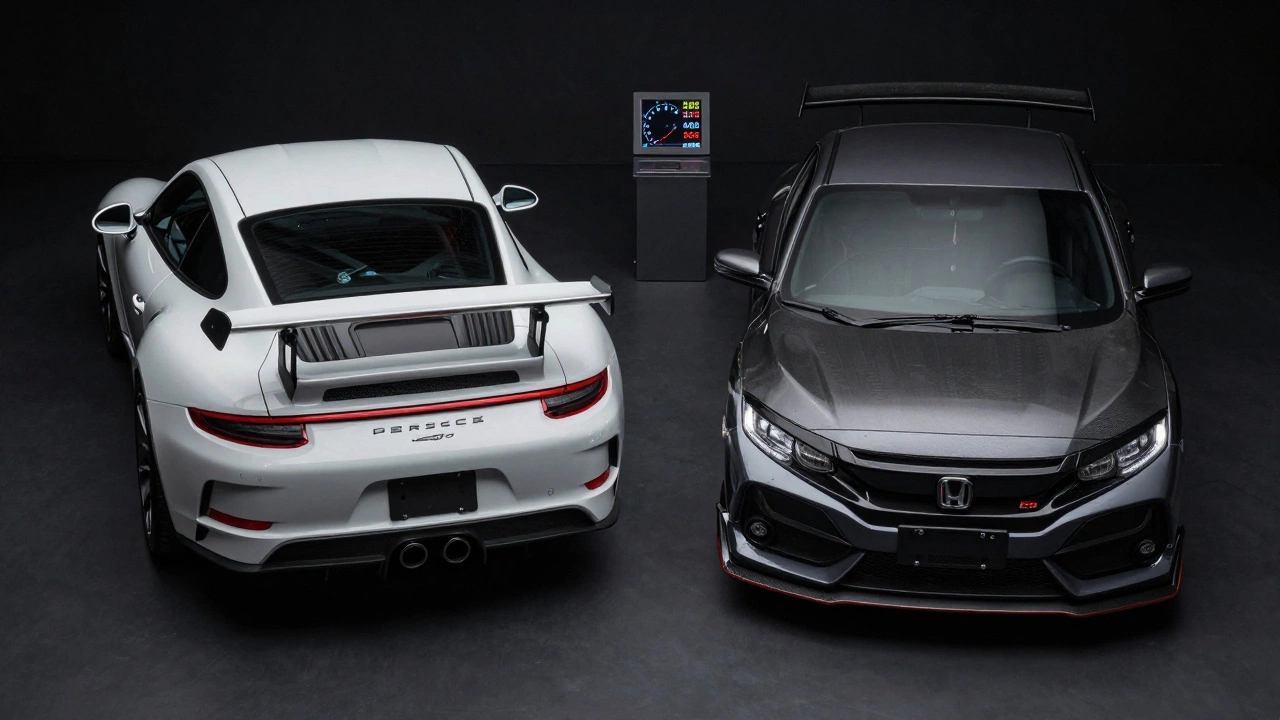
Carbon fiber is expensive. It’s lightweight. It’s strong. But in the case of most aftermarket spoilers, you’re not getting a performance upgrade - you’re paying for aesthetics and marketing. Factory spoilers, like the ones on a Porsche 911 GT3 or a Subaru WRX STI, are engineered with wind tunnels, CFD simulations, and real-world track testing. They’re part of the car’s overall aerodynamic design.
Aftermarket carbon fiber spoilers? Most are made in factories overseas, molded from generic templates. They’re designed to fit a range of models, not optimized for any one. They might look cool, but they often don’t improve airflow at all. Some even make drag worse.
There’s a reason race teams use adjustable rear wings, not fixed spoilers. They tweak the angle based on track conditions. A fixed carbon fiber spoiler on your daily driver? It’s probably set at the wrong angle - or worse, it’s just sitting there like a decorative shelf.
When Do Spoilers Actually Help Performance?
They help when they’re designed for your specific car, at the right angle, and you’re driving fast enough for aerodynamics to matter. That usually means speeds above 100 km/h. Below that, the effect is negligible. Most city driving? No difference.
On a track day, a properly designed rear wing can reduce lap times by improving rear-end stability. You can brake later, corner harder, and accelerate out of turns with more confidence. That’s not because you gained horsepower. It’s because you gained grip. And grip is what turns speed into control.
Real performance upgrades come from tuning the engine, upgrading the exhaust, improving airflow into the engine, or reducing weight. A spoiler is a secondary effect. It doesn’t create power - it helps you use what you’ve got.
The Horsepower Illusion
Why do people think spoilers add horsepower? Because they’re visually linked to fast cars. You see a spoiler on a tuned Nissan Skyline, and you assume the spoiler made it fast. But the real upgrades are under the hood: bigger turbo, upgraded fuel injectors, ECU tune, cold air intake. The spoiler? It’s just the cherry on top.
It’s like buying a fancy hat and thinking it makes you smarter. The hat doesn’t change your IQ. But if you wear it to a job interview, people might assume you’re more put-together. That’s the same psychology behind spoilers.
Car magazines and YouTube videos fuel this myth. They’ll show a car with a spoiler, then say, “This 400 hp beast just got even faster!” But they never show the dyno numbers before and after. Spoiler on? Same torque curve. Same horsepower. Same everything - except the look.
What About Drag? Does It Slow You Down?
Yes. And that’s the trade-off. A spoiler creates downforce, but it also creates drag. That’s physics. More downforce = more air resistance. That means your engine has to work harder to maintain speed. On a straight highway, that can hurt fuel economy.
Most street cars aren’t built for high-speed stability. They’re built for comfort and efficiency. Adding a large spoiler can increase drag by 5-10%. That means you might lose 1-2 mpg on the highway. For daily drivers, that’s a real cost. For track cars? It’s a fair trade for better cornering.
That’s why race cars use wings with adjustable angles. They dial in the right balance between downforce and drag for each circuit. Your street car doesn’t have that option.
Are Carbon Fiber Spoilers Worth It?
Only if you care about looks - and you’re okay with paying extra for them. Carbon fiber looks premium. It’s lighter than plastic, which means less unsprung weight. But the weight savings on a spoiler are tiny - maybe 1-2 kilograms. That’s not going to make your car noticeably quicker.
If you want real performance gains, spend your money on tires. Good tires give you more grip than any spoiler ever will. Then upgrade your suspension. Then get a proper tune. After that? Maybe a spoiler if you still want it.
And if you’re buying a carbon fiber spoiler just because you think it’ll add horsepower? You’re wasting your money. You’ll get the same visual effect for a fraction of the cost from a high-quality ABS plastic version.
Real-World Example: A 2023 Honda Civic Type R
The Civic Type R comes with a massive rear wing. It’s not there for style. It generates over 100 kg of downforce at 200 km/h. That’s enough to pin the rear tires to the road during high-speed cornering. But Honda didn’t install it to add horsepower. They installed it because the car makes 315 hp - and without that wing, the rear end would get twitchy.
Now, imagine you take that same car and swap the factory wing for a $300 carbon fiber spoiler from eBay. What happens? Nothing. The dyno reading stays the same. The 0-100 km/h time doesn’t change. But now your car might be less stable at highway speeds. The wing’s angle is wrong. It’s not designed for this car. It’s just a decoration.
Bottom Line
Spoilers don’t make your car faster by adding power. They make your car more predictable by keeping it planted. If you’re driving on a track, at high speeds, and you need rear-end stability - then yes, a well-designed spoiler helps. But if you’re commuting, cruising, or just showing off? It’s purely cosmetic.
Carbon fiber doesn’t change that. It’s just a fancy material. The physics stays the same. No horsepower. No magic. Just science - and a whole lot of marketing.
Do spoilers increase engine power?
No. Spoilers don’t interact with the engine at all. They affect airflow over the car’s body, not the combustion process. Horsepower comes from the engine, exhaust, intake, and tuning - not from a piece of carbon fiber on the trunk.
Can a spoiler improve acceleration?
Not directly. A spoiler might help you launch better by reducing rear-wheel slip, but only at high speeds. For normal street driving, acceleration is determined by engine torque, transmission, and tires - not aerodynamics. The difference is negligible below 100 km/h.
Are carbon fiber spoilers better than plastic ones?
Only in weight and appearance. Carbon fiber is lighter and looks more premium, but it doesn’t perform better aerodynamically unless it’s engineered for your specific car. Most aftermarket carbon fiber spoilers are just molded plastic with a carbon fiber wrap.
Do spoilers make cars more fuel efficient?
Usually not. Spoilers increase drag, which can reduce fuel economy on highways. Some factory-designed spoilers improve airflow enough to reduce lift without adding much drag, but aftermarket ones often hurt efficiency. Don’t buy one expecting better gas mileage.
What’s the best way to actually add horsepower?
Start with a performance air filter and a cat-back exhaust - those are affordable and legal. Then consider a tune from a reputable shop. For bigger gains, upgrade the turbo, intercooler, or fuel system. Spoilers don’t belong on that list.