Custom Exhaust Horsepower Estimator
Not all exhaust mods are created equal. Select your engine type and upgrade level to see realistic expectations.
Estimated HP Gain
Primary Benefit:
Information not available.
You’ve probably heard the promise a thousand times: bolt on a shiny new custom exhaust and watch your horsepower numbers jump. It’s the gateway drug of car modification. You see the big tips, hear the aggressive rumble, and assume power follows sound. But here’s the uncomfortable truth that shop owners often gloss over: for many modern cars, simply swapping out the muffler does absolutely nothing for peak horsepower. In fact, if you do it wrong, you might actually lose torque in the mid-range, making your daily driver feel sluggish until you stomp on the gas.
So, why do people still buy them? And when does an exhaust system actually make a measurable difference? It comes down to understanding how your engine breathes. Think of your engine as a human athlete. A stock exhaust is like running with a slightly loose shirt-annoying, but manageable. A poorly designed custom exhaust is like trying to run while breathing through a straw. A well-tuned one removes restrictions, allowing air to flow freely. This article breaks down exactly where the power comes from, which components matter, and what kind of gains you can realistically expect without falling for marketing hype.
The Myth of Back Pressure
Let’s kill the biggest myth first. For decades, mechanics told enthusiasts that you needed "back pressure" to keep exhaust gases moving fast enough to help pull more air into the cylinders. This was true for older carbureted engines with simple cam profiles. Modern engines, however, are different beasts. They rely on precise valve timing and computer-controlled fuel injection. Today, we know that excessive back pressure is generally bad for performance. It forces the engine to work harder to push spent gases out, stealing energy that could have been used to spin the wheels.
But removing all restriction isn’t the answer either. If you remove everything-including the catalytic converters-you create a low-pressure environment that can confuse oxygen sensors and mess up the air-fuel ratio. This is especially true if you don’t retune the engine. The sweet spot lies in optimized flow. A good custom exhaust reduces restriction just enough to let the engine breathe better at high RPMs without causing turbulence or scavenging issues at lower RPMs. Scavenging is the process where outgoing exhaust pulses create a vacuum that helps suck in the next intake charge. Proper pipe length and diameter are critical here; get them wrong, and you hurt this effect.
Cat-Back vs. Header-Back: Where Does the Power Hide?
When shops talk about exhaust upgrades, they usually mean one of two things: a cat-back system or a header-back (or full turbo-back) system. Understanding the difference is crucial because their impact on horsepower varies wildly.
A cat-back system replaces everything from behind the catalytic converter to the tailpipes. This includes the resonator, mufflers, and piping. For most naturally aspirated cars, a cat-back upgrade yields minimal horsepower gains-often less than 5 horsepower. Why? Because the catalytic converter itself is often the primary bottleneck. The pipes after it are rarely restrictive enough to hold back significant power unless they’re severely clogged or crushed. So, if you buy a $1,500 cat-back system expecting a 20-horsepower boost, you’ll be disappointed. You’re mostly paying for sound quality and aesthetics.
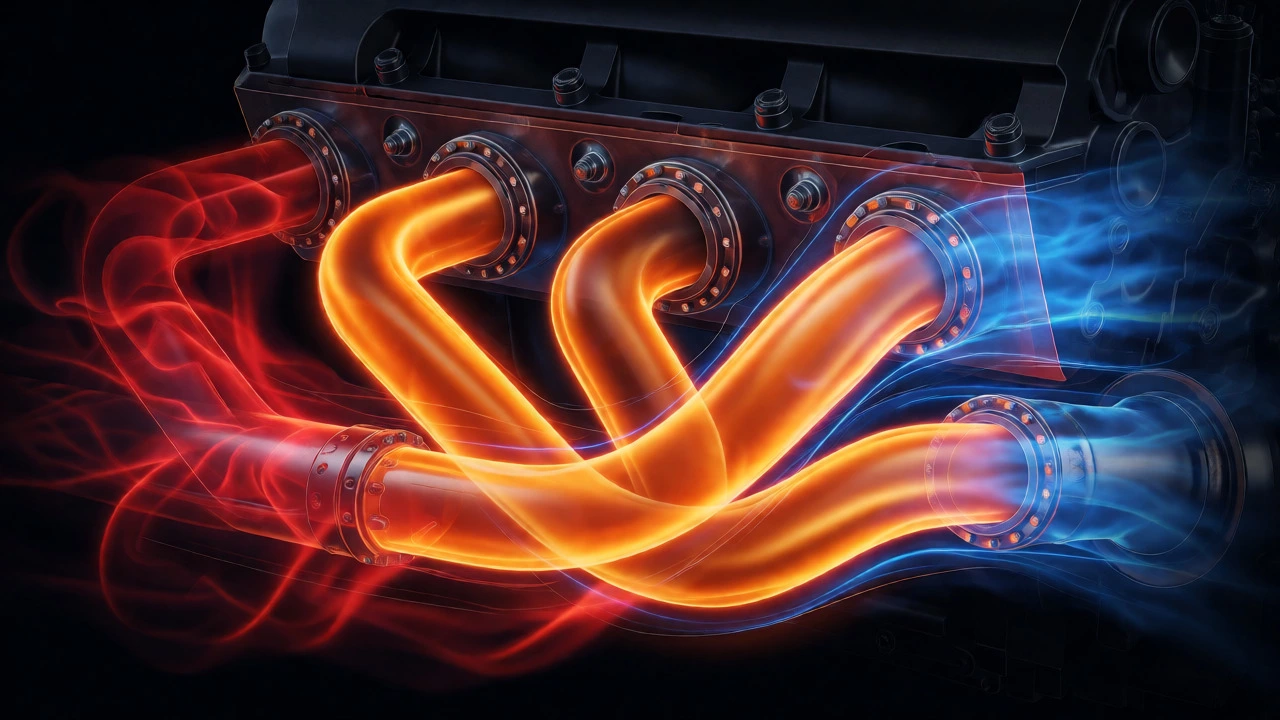
A header-back system goes further. It replaces the exhaust manifolds (headers) and often includes high-flow catalytic converters. This is where real power lives. Headers improve the initial exit of gases from the cylinders. By smoothing out the bends and equalizing pipe lengths, headers enhance scavenging significantly. Pairing these with high-flow cats removes the biggest choke point in the system. On a turbocharged car, switching to a larger diameter downpipe and high-flow cat can unlock 15-30 horsepower easily, especially when combined with an ECU tune. The turbo spools faster because there’s less resistance pushing against the turbine wheel.
Realistic Horsepower Expectations by Engine Type
Not all engines respond the same way to exhaust modifications. Your baseline engine technology dictates whether an exhaust mod is worth your money. Here’s a breakdown of what you can expect based on current automotive trends in 2026.
| Engine Type | Cat-Back Only Gain | Header/Downpipe + Tune Gain | Primary Benefit |
|---|---|---|---|
| Naturally Aspirated (NA) | 0-5 hp | 5-15 hp | Sound & Minor Top-End Power |
| Turbocharged (Stock Boost) | 0-5 hp | 15-30 hp | Faster Spool & Reduced Lag |
| Supercharged | 0-5 hp | 10-20 hp | Heat Reduction & Flow |
| Diesel | 0-5 hp | 20-40 hp | EGT Reduction & Torque |
Notice the pattern? Turbocharged and diesel engines benefit the most. These engines operate under higher pressures and temperatures. Reducing back pressure allows the turbocharger to work more efficiently, resulting in quicker spool times and higher boost levels. For a standard Honda Civic or Toyota Camry, an exhaust is primarily a noise and style upgrade. For a Subaru WRX or Ford F-250, it’s a legitimate performance component.
The Role of Diameter and Material
Bigger isn’t always better. This is a common mistake DIYers make. They install 3-inch piping on a small 4-cylinder engine and wonder why it feels gutless at stoplights. Pipe diameter affects velocity. Smaller pipes maintain gas velocity at lower RPMs, helping with torque. Larger pipes reduce restriction at high RPMs, helping with top-end power. If you go too large, the exhaust gases slow down, losing the momentum needed for effective scavenging.
For most street-driven cars, sticking close to factory diameter or going up half an inch is safe. A 2.25-inch system suits sub-200hp engines. A 2.5-inch system works for 200-300hp applications. Anything above 3 inches is typically reserved for V8s, turbos, or dedicated track builds. Material choice also matters, though not for horsepower directly. Stainless steel resists rust and maintains internal smoothness longer than aluminized steel. Corroded pipes develop rough interiors that increase friction, gradually reducing performance over time. Titanium is lighter and stronger but costs significantly more, offering no direct power advantage other than weight savings.
Why Tuning Is Non-Negotiable
If you change the physical characteristics of your exhaust flow, you change how the engine behaves. Modern cars use wideband oxygen sensors to monitor exhaust gases and adjust fuel delivery in real-time. When you remove restrictions, the air-fuel mixture can shift. Without a proper tune, the car’s computer might run lean or rich, triggering check engine lights or hurting performance.
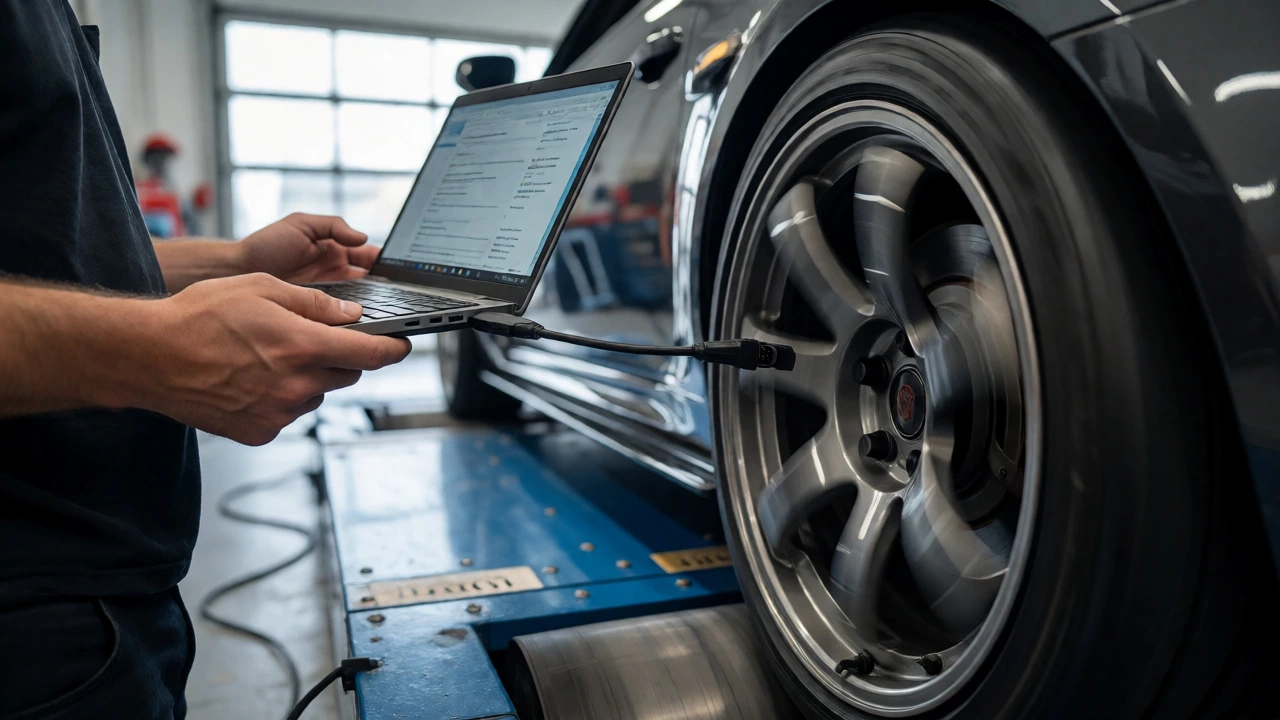
A professional tune recalibrates the fuel maps and ignition timing to match the new exhaust flow. It ensures the engine takes full advantage of the increased airflow. On turbocharged cars, the tuner can safely raise boost pressure because the exhaust can handle the extra heat and volume. Skipping the tune is like buying a gym membership but never showing up. You spent the money, but you didn’t get the results. Always budget for dyno tuning if you’re chasing actual horsepower numbers.
Common Pitfalls That Kill Performance
Even with the right parts, installation errors can negate any potential gains. One major issue is improper hanger placement. If the exhaust hangs too low, it can hit speed bumps or restrict airflow due to kinks in flexible joints. Another problem is mixing incompatible materials. Joining stainless steel to mild steel without proper isolation can cause galvanic corrosion, leading to leaks. Leaks before the oxygen sensor throw off readings, causing poor fuel economy and erratic idle.
Also, beware of "universal" mufflers. They are cheap but often poorly designed internally. Baffles that rattle or restrict flow can create unexpected back pressure. Quality brands invest in computational fluid dynamics (CFD) modeling to optimize internal baffling. Cheap knockoffs guess. If you want reliability and performance, stick to reputable manufacturers who provide specific fitment data for your vehicle model year.
Is It Worth It? Making the Decision
Ask yourself what you value more: sound or stats. If you drive a daily commuter car and want it to sound sporty without spending thousands, a cat-back system is fine. Just accept that the tachometer won’t move much. If you’re building a weekend canyon runner or a track toy, invest in headers, high-flow cats, and a tune. That combination delivers tangible improvements in throttle response and acceleration.
Consider the resale value too. A loud, poorly installed exhaust can scare off buyers. A clean, brand-name system with receipts looks like a thoughtful upgrade. Keep the stock parts in storage. Many buyers prefer the quiet, legal compliance of stock exhausts. Being able to revert the car instantly adds flexibility.
Does a straight pipe add horsepower?
A straight pipe removes all restrictions, including mufflers and sometimes catalytic converters. While it reduces back pressure, it often causes a loss of low-end torque due to reduced gas velocity. Peak horsepower might stay similar or drop slightly, but the sound becomes extremely loud and droning. It rarely adds net horsepower compared to a properly tuned cat-back or header-back system.
How much horsepower does a cat-back exhaust add?
Typically, a cat-back exhaust adds between 0 and 5 horsepower on naturally aspirated engines. On turbocharged vehicles, it may add 5-10 horsepower, but only if paired with a tune. Most of the perceived gain is psychological or auditory rather than mechanical.
Do headers really add horsepower?
Yes, headers are one of the most effective exhaust upgrades. By improving exhaust flow and scavenging, long-tube headers can add 10-20 horsepower on naturally aspirated engines and significantly more on forced-induction setups, especially when combined with a tune.
Will a custom exhaust void my warranty?
Under the Magnuson-Moss Warranty Act in the US, a dealer cannot automatically void your warranty for aftermarket parts. However, if the exhaust modification causes a failure in another component (like a turbo or engine), they may deny coverage for that specific repair. Keeping documentation of the part’s certification helps.
Is a louder exhaust always faster?
No. Loudness is related to frequency and amplitude of sound waves, not necessarily airflow efficiency. Some very loud systems have restrictive baffles that hurt performance. Conversely, some quiet systems flow exceptionally well. Never judge performance solely by volume.