Performance Air Filter Sound Estimator
Select your vehicle specifications below to estimate how a performance air filter will alter your engine's intake note compared to the stock setup.
Estimated Intake Character
NeutralYou swap the stock paper filter for a high-flow performance unit, fire up the engine, and suddenly that low rumble feels different. Sharper. More aggressive. Did you just buy noise, or did you unlock power? It’s a common question in the garage, and the answer isn’t a simple yes or no. A performance air filter is a modified component designed to increase airflow into the engine compared to standard factory filters. While its primary job is to let more oxygen reach the combustion chambers, the side effect on acoustics is real, measurable, and often misunderstood.
Here is the quick summary before we get into the physics:
- Yes, it makes the engine sound louder. But it changes the *character* of the sound, not just the volume.
- The noise comes from increased airflow velocity creating turbulence inside the intake tract.
- It does not make the exhaust louder unless you modify the exhaust system separately.
- The difference is most noticeable at idle and during wide-open throttle (WOT).
- Quality matters: Cheap filters can rattle; premium ones produce a clean, deep induction roar.
Why Does More Air Create More Noise?
To understand why your car sounds different, you have to look at how engines breathe. An internal combustion engine is essentially an air pump. It sucks in air, mixes it with fuel, compresses it, and ignites it. The rate at which it can pull in air directly limits how much power it can make. Stock filters are designed for longevity and filtration efficiency, often restricting airflow slightly to protect the engine from dust and debris over long service intervals.
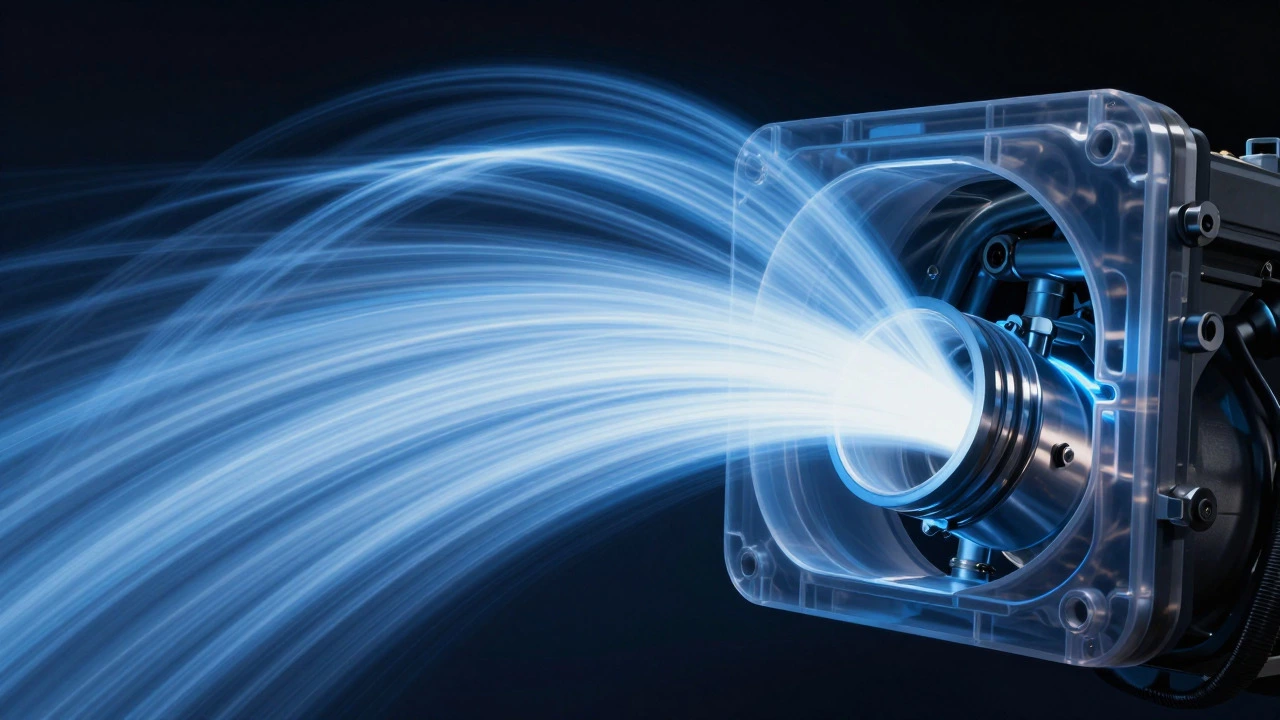
When you install a performance filter, you reduce that restriction. This allows air to move faster through the intake manifold. In fluid dynamics, faster-moving air creates higher pressure differentials and turbulence. That turbulence vibrates the metal and plastic components of the intake system. Those vibrations translate into sound waves that travel through the engine bay and into your cabin. Think of it like blowing across the top of a bottle. If you blow gently, the tone is soft. If you blow harder, the tone gets louder and sharper. The engine is doing the same thing, just at a much larger scale and higher frequency.
Intake Roar vs. Exhaust Volume
This is where most confusion happens. People think "louder car" means "louder exhaust." They don't. These are two completely separate acoustic events.
| Feature | Intake Sound (Air Filter) | Exhaust Sound |
|---|---|---|
| Source | Air entering the engine | Combustion gases exiting the engine |
| Frequency Range | Mid-range to high-pitched (whoosh/roar) | Low-frequency bass (rumble/bang) |
| When It's Audible | Idle, acceleration, WOT | Constantly, but peaks at RPM |
| Effect of Modifying | Changes tone and clarity | Increases decibel level significantly |
If you only change the air filter, your exhaust will still sound exactly the same as before. However, because the intake sound becomes more prominent, it masks some of the exhaust note, making the overall experience feel more "alive." At idle, you might hear a distinct "chuffing" or breathing sound. Under load, it transforms into a deep, aggressive growl that many enthusiasts describe as "throaty."
Factors That Influence the Noise Level
Not all performance filters sound the same. Several variables determine how loud and distinct the new intake note will be.
- Filter Material: Cotton gauze filters (like K&N) are porous and allow significant airflow. Paper-based performance filters restrict more than cotton but less than stock. Cotton generally produces a louder, more pronounced sound due to lower resistance.
- Housing Design: The shape of the airbox matters. A restrictive, small stock box dampens sound. A larger, open-element housing allows sound to resonate. Some aftermarket intakes use heat shields or resonators specifically to tune this sound.
- Engine Type: Naturally aspirated engines tend to show a clearer intake note than turbocharged engines. Turbochargers act as sound dampeners, absorbing much of the intake turbulence before it reaches the compressor wheel. On a turbo car, the difference is subtle unless you also upgrade the intercooler piping or bypass valves.
- Cabin Insulation: How well your car isolates engine noise affects what you hear. Older cars or those with poor sound deadening will transmit the intake roar more clearly than modern luxury sedans with thick glass and foam padding.
Common Myths About Air Filter Noise
Let’s clear up a few misconceptions that circulate in online forums.
Myth 1: It makes the car illegal to drive. Unless you live in a strict noise ordinance zone and your intake scream exceeds local decibel limits (rare), you are fine. Most jurisdictions measure exhaust noise, not intake noise. Police officers rarely pull people over for a loud air filter alone.
Myth 2: It causes backfires. A cleaner air path doesn't cause backfires. Backfires are usually caused by lean fuel mixtures or ignition timing issues. While a dirty stock filter can cause a lean condition, a clean performance filter actually helps maintain proper air-fuel ratios, potentially reducing popping sounds rather than causing them.
Myth 3: You need to remap the ECU immediately. For most street cars, the Electronic Control Unit (ECU) can handle the extra airflow without tuning. The mass air flow sensor (MAF) or manifold absolute pressure (MAP) sensor detects the change and adjusts fuel injection accordingly. Tuning is only necessary if you are pushing significant horsepower gains or running other major modifications.

How to Maximize the Sound Without Sacrificing Protection
If you want that aggressive induction sound but worry about dust getting into your engine, here is what works in practice.
First, choose a reputable brand. Brands like K&N, BMC, or AEM have spent decades engineering filters that balance flow and filtration. Avoid no-name brands from marketplaces that claim "unlimited flow"-these often lack proper pleating density, leading to premature clogging and potential engine damage.
Second, consider the installation. Ensure the airbox seal is tight. A loose clamp lets unfiltered air bypass the filter element entirely, which defeats the purpose and can introduce grit. Also, check the length of the intake tube. Shorter tubes reduce restriction but may pick up hot air from the engine bay, which hurts power. Longer tubes stay cooler but add length to the path, potentially muting the sound slightly. For most daily drivers, a direct-fit OEM replacement size is the sweet spot.
Finally, maintenance is key. Performance filters are reusable, but they need cleaning every 10,000 to 15,000 miles depending on your environment. If you drive on unpaved roads or in dusty areas, check it monthly. A clogged performance filter restricts airflow just like a dirty stock one, killing both power and sound.
Is It Worth It Just for the Sound?
That depends on your goals. If you are chasing peak horsepower, a standalone air filter might only gain you 1-3% power. Is that worth $100-$200? Maybe not. But if you value the driving experience, the auditory feedback is a massive part of car ownership. The sound tells you how hard the engine is working. It connects you to the machine. Many owners report that even with negligible power gains, the psychological boost of hearing that deeper, more responsive intake note makes the car feel faster and more engaging.
Just manage your expectations. It won't turn a quiet sedan into a muscle car. It won't drown out highway traffic. But it will give your engine a voice that matches the effort you put into modifying it. And for most enthusiasts, that connection is worth far more than a few extra horsepower.
Does a performance air filter affect fuel economy?
Generally, no. In fact, it can slightly improve fuel economy by allowing the engine to breathe more efficiently, reducing pumping losses. However, the change is so minor (less than 1%) that you likely won't notice it at the pump. Any gain is offset by the tendency of drivers to accelerate more aggressively when they hear the louder engine note.
Can a performance air filter void my warranty?
In most regions, including Australia and the US, manufacturers cannot void your entire warranty simply because you installed an aftermarket part. They must prove that the specific part caused the failure. If your engine fails due to dirt ingestion, and you had a cheap, poorly maintained filter, they might deny the claim for that specific repair. Keep records of filter cleaning and use reputable brands to minimize risk.
Which type of performance filter is loudest?
Cotton gauze filters are typically the loudest because they offer the least restriction. Among these, filters with larger surface area and fewer pleats tend to be louder. Dry paper filters are quieter. If maximum sound is your goal, look for a 'cold air intake' system that includes a large-diameter tube and an open-airbox design, rather than just swapping the filter element itself.
Do I need to reset the MAF sensor after changing the filter?
No, you do not need to reset the Mass Air Flow (MAF) sensor. The sensor measures actual airflow in real-time. As soon as you start the car, it will detect the new flow characteristics and adjust the fuel mixture automatically within seconds. A reset is only needed if the sensor was disconnected or if you are reprogramming the ECU.
How often should I clean a reusable performance filter?
The general rule of thumb is every 10,000 miles (16,000 km) or once a year, whichever comes first. If you drive in dusty conditions, near construction sites, or on off-road trails, inspect it every 3 months. Use the manufacturer's recommended cleaner and oil. Never use a pressure washer directly on the media, as it can damage the pleats.