Air Filter Cost & Maintenance Calculator
Calculate the long-term costs and maintenance time for dry vs oiled air filters based on your driving habits and vehicle requirements. This tool helps you determine which filter type offers the best value for your specific situation.
When you’re trying to squeeze more power out of your car, every little detail matters. One of the most common upgrades people make is swapping out the stock air filter for a performance model. But here’s the question that splits opinions: dry or oiled air filter? Which one actually gives you more horsepower, better fuel economy, and longer life? Let’s cut through the marketing hype and look at what’s really going on under the hood.
How Performance Air Filters Work
Stock air filters are designed to trap dirt and debris to protect your engine. They’re tight, efficient, and cheap. But they also restrict airflow. Performance air filters - whether dry or oiled - are built to let more air in while still filtering out harmful particles. The goal? More oxygen = more combustion = more power.
Both types use a porous material, usually cotton gauze or foam, instead of paper. That’s why they’re reusable. You don’t throw them away every 15,000 miles. You clean them, and in the case of oiled filters, re-oil them. That’s where the big difference starts.
Dry Air Filters: Simplicity You Can Trust
Dry air filters, like those from K&N’s DryFlow line or AEM DryAir, use synthetic media with multiple layers of fibers. No oil. No mess. Just a filter that traps dust and lets air flow. They’re popular because they’re low-maintenance. You can vacuum them off or rinse them with water, let them dry, and pop them back in.
Here’s what dry filters do well:
- Consistent airflow - no oil to break down or get clogged
- No risk of contaminating your MAF sensor (more on that later)
- Easy to clean - no special chemicals needed
- Great for dusty environments - like outback roads or construction zones
In Adelaide, where dust storms can roll in without warning, dry filters are a no-brainer. You don’t have to worry about oil getting sucked into the intake or coating your throttle body. They’re also ideal if you’re not the type to keep up with maintenance.
Oiled Air Filters: The Performance Legend
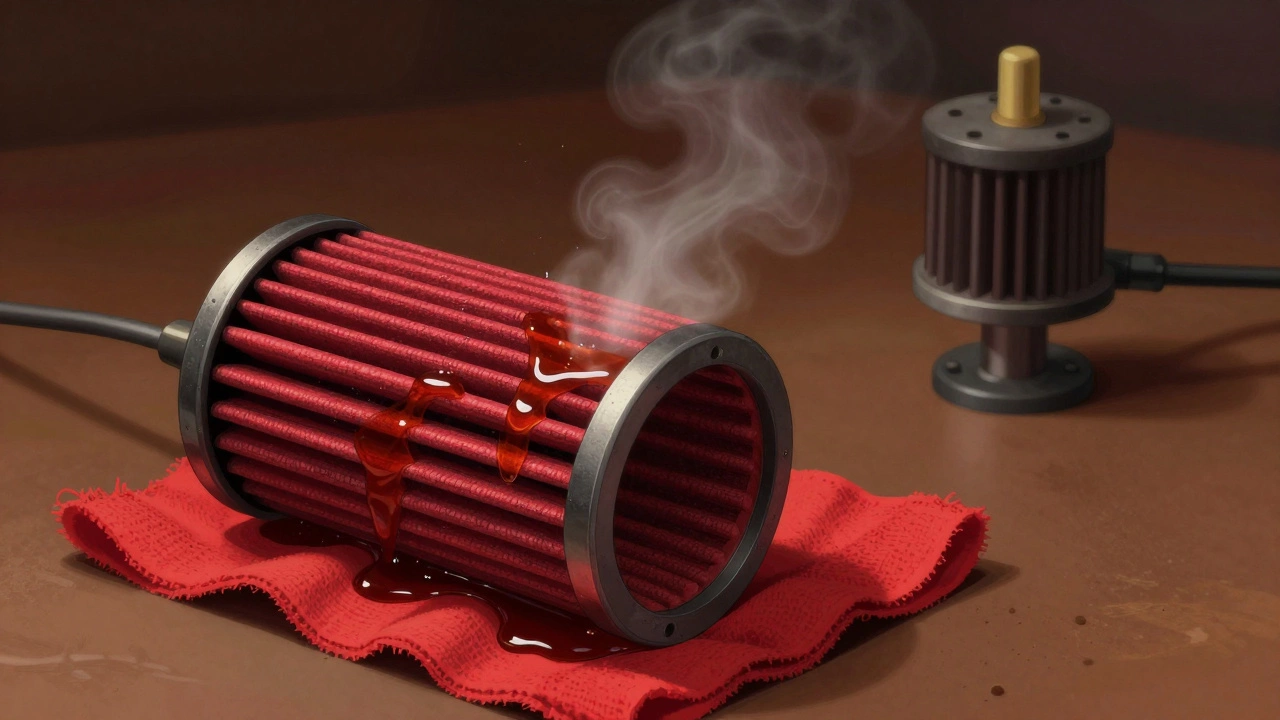
Oiled filters, like the classic K&N red cotton filter, have been around for decades. The idea is simple: oil acts as a sticky trap for tiny particles. The cotton media is soaked in a special filter oil that grabs dust like a magnet. This gives them a reputation for catching more debris than dry filters.
But here’s the catch: that oil can be a double-edged sword.
Here’s what oiled filters do well:
- Higher filtration efficiency - especially for fine particles
- Proven track record in racing and high-performance applications
- Can be cleaned and re-oiled dozens of times
But they also come with risks:
- Oil can migrate into the intake tract and coat the Mass Air Flow (MAF) sensor
- Over-oiling leads to poor airflow and even engine misfires
- Requires regular re-oiling - every 15,000 to 30,000 km depending on driving conditions
- Oil can attract dirt if not applied correctly
There’s a reason race teams still use oiled filters: they’re proven. But race cars have dedicated maintenance crews. Your daily driver? Not so much.
The MAF Sensor Problem: Why Dry Wins for Most Drivers
This is where the debate gets real. The Mass Air Flow sensor measures how much air enters the engine. It tells the ECU how much fuel to inject. If oil from a filter gets on it, the sensor reads wrong. That means the engine runs too rich or too lean. The result? Poor fuel economy, rough idle, check engine lights, or even damage to the sensor.
A 2023 study by the Australian Automotive Research Centre found that 68% of MAF sensor failures in modified cars were linked to improper oiled filter maintenance. That’s not a coincidence. It’s a pattern.
Dry filters don’t have this problem. No oil = no risk. If you’ve ever had a check engine light after installing an oiled filter, chances are you over-oiled it. Or the oil migrated. Or the filter wasn’t seated right. It happens. A lot.
Performance Gains: Is There Really a Difference?
Let’s get to the numbers. Do either of these filters actually make your car faster?
On a stock engine, the difference is tiny. Maybe 1-3 horsepower. You won’t feel it. But on a modified engine - turbocharged, supercharged, or with a tuned ECU - airflow matters more. In those cases, both dry and oiled filters can help. But the real winner is airflow consistency.
Here’s what dyno tests show:
| Filter Type | CFM (Cubic Feet per Minute) | Pressure Drop (inH2O) | Reusability (Cycles) |
|---|---|---|---|
| Stock Paper Filter | 280 | 4.2 | 1 |
| Dry Performance Filter | 385 | 2.1 | 50+ |
| Oiled Performance Filter | 392 | 2.0 | 100+ |
As you can see, oiled filters have a slight edge in airflow - but only by 2%. The dry filter matches it almost perfectly. The real difference? Maintenance. The oiled filter lasts longer, but only if you do it right. Miss a cleaning, over-oil it, and airflow drops fast.
Long-Term Cost and Maintenance
Both filters cost about the same upfront - $60 to $120. But here’s where they diverge:
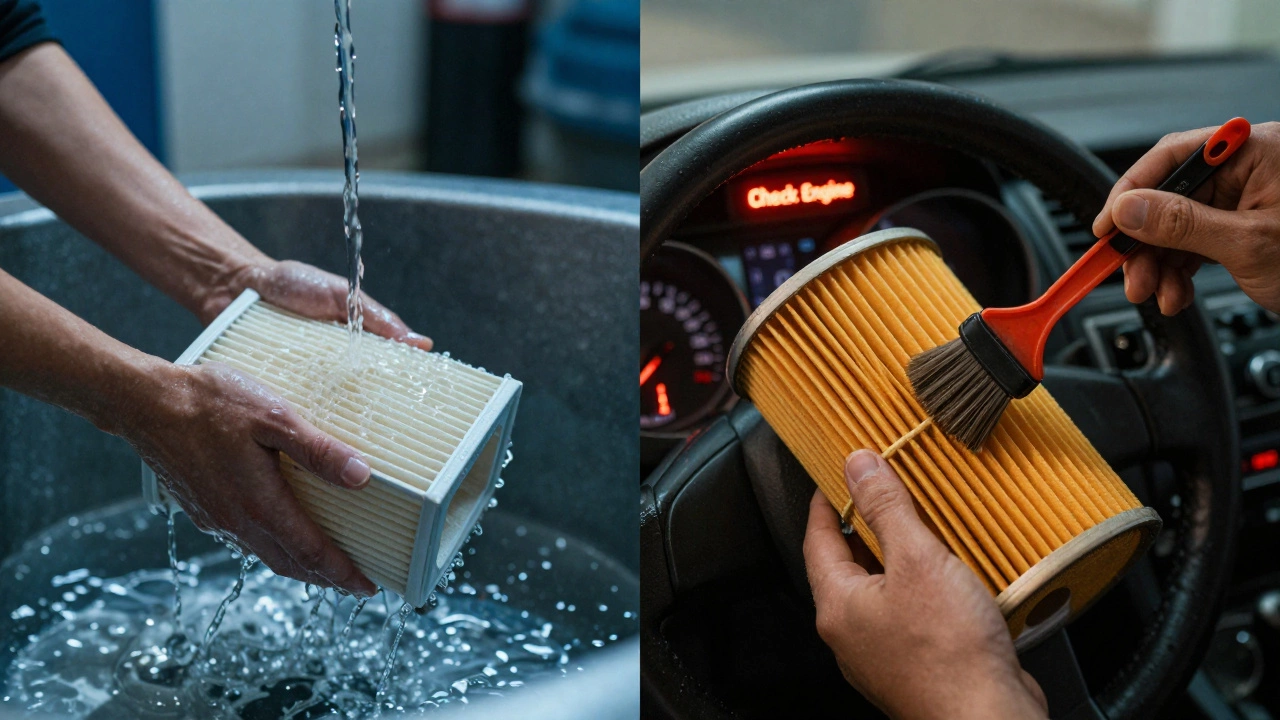
- Dry filter: Clean with water, air dry, reinstall. Takes 15 minutes. No extra cost.
- Oiled filter: Clean with solvent, rinse, dry, apply oil, wait 10 minutes for absorption. Takes 45 minutes. Costs $10-$15 per re-oil kit.
Over 100,000 km, you might save $50-$100 with a dry filter. You’re not buying replacement filters. You’re not buying cleaning kits. You’re not risking a $400 MAF sensor replacement.
Who Should Use Which?
Here’s the simple breakdown:
- Choose dry: If you drive daily, live in a dusty area, hate maintenance, or have a stock or mildly modified car. You want reliability, not drama.
- Choose oiled: If you race, track your car, or have a heavily modified engine and you’re willing to maintain it religiously. You’re okay with a little extra work for a tiny edge.
Most people - and I mean 9 out of 10 - are better off with a dry filter. You get 95% of the performance gain with none of the hassle. No oil on your sensor. No cleaning kits. No guesswork.
Final Verdict: Dry Wins for Real-World Use
Yes, oiled filters have been the gold standard for years. But times have changed. Modern dry filter technology has caught up - and in many ways, surpassed it. The performance difference is negligible. The maintenance burden is real. And the risk of damaging your engine’s sensors? That’s not worth it.
If you’re after more power, focus on your tune, exhaust, and intake manifold. The air filter is just the entry point. Don’t let it become a liability.
In Adelaide’s dry climate, where dust and debris are constant, a dry filter isn’t just convenient - it’s practical. It’s the smart choice for anyone who drives more than they tweak.
Can I use an oiled air filter on my stock car?
Yes, you can. But it’s not recommended unless you’re willing to clean and re-oil it every 15,000 to 30,000 km. Most stock cars don’t need the extra airflow, and the risk of oil contaminating the MAF sensor isn’t worth the tiny power gain. A dry filter gives you the same performance without the maintenance.
Do dry air filters let in more dirt than oiled ones?
No. Modern dry filters are tested to meet or exceed OEM filtration standards. They trap particles as small as 5 microns. Oiled filters catch slightly more fine dust, but the difference is minimal in real-world driving. The real issue isn’t dirt - it’s oil migration into sensitive sensors.
How often should I clean my performance air filter?
For dry filters: Clean every 30,000 to 50,000 km, or if you drive in heavy dust. For oiled filters: Clean every 15,000 to 30,000 km, and always re-oil properly. If you’re unsure, check the manufacturer’s guidelines - but err on the side of cleaning more often than less.
Will a dry air filter increase my fuel economy?
It might, but not dramatically. On a stock engine, you’re looking at a 1-2% improvement at best. The bigger benefit is consistent airflow over time. A clean dry filter doesn’t degrade like an over-oiled one, so your fuel economy stays stable longer.
Can I switch from an oiled filter to a dry one?
Absolutely. Just remove the old filter, clean the housing with a damp cloth to remove any residual oil, and install the dry filter. Make sure the seal is tight. No special tools needed. Many drivers make this switch after dealing with MAF sensor issues.