Body Kit Installation Time Calculator
Estimate how long it will take to install a body kit on your car based on your experience, kit type, and other factors. This calculator is based on real-world installation times from the article.
Putting a body kit on your car isn’t like swapping out a set of tires. It’s a full-day job at best, and sometimes it stretches into multiple days - depending on your experience, the kit, and how much prep work is needed. If you’re thinking about doing it yourself, you need to know what you’re signing up for. No magic timer says, "You’re done in four hours." Realistically, most people spend between 8 and 20 hours total, spread over one to three days.
What’s Actually Involved in Installing a Body Kit?
A body kit isn’t just a few plastic panels glued on. It usually includes front and rear bumpers, side skirts, fender flares, and sometimes a rear spoiler or hood. Each piece needs to be fitted, trimmed, drilled, sanded, and bonded - often with multiple types of adhesives and fasteners. You’re not just bolting on parts; you’re reshaping the entire look of the car, and every millimeter matters.
First, you remove the factory bumpers and side panels. That sounds simple, but factory bolts can be rusted, clips can break, and wiring for sensors or fog lights might be hidden behind them. One person in Adelaide lost three hours just untangling a rear parking sensor harness because they didn’t unplug it before pulling the bumper off.
Then comes the fitting phase. Body kits rarely fit perfectly out of the box. Even high-end kits from brands like Razzi or APR need trimming. You’ll need to hold each piece up, mark where it rubs, sand down edges, and test-fit again. Repeat that for every panel. If you skip this step, you’ll end up with gaps, misalignments, or panels that don’t sit flush. That’s not just ugly - it’s dangerous if air flows wrong at highway speeds.
DIY vs. Professional Installation: Time Differences
If you’ve never worked on a car before, expect the job to take 15 to 20 hours. You’ll spend more time reading instructions, watching YouTube tutorials, and re-doing mistakes than actually installing. Most beginners underestimate how much prep work is needed. Sanding, priming, and masking take longer than people think.
On the other hand, a professional shop with experience installing the same kit on the same model can finish in 6 to 10 hours. Why? They’ve done it 50 times. They know exactly where the factory clips are, which screws to remove, and how much to trim without overdoing it. They also have air sanders, heat guns, and industrial adhesives that cut hours off the process.
One mechanic in Melbourne told me he once had a customer bring in a kit that took him 14 hours to install because the customer had already cut the fender flares too short. He had to fabricate new mounting points. That’s the kind of thing you avoid by doing your homework first.
Factors That Make Installation Longer
Not all body kits are created equal. Here’s what slows things down:
- Material type: Fiberglass kits are brittle and need careful trimming. Polyurethane kits are flexible but require more sanding to get a smooth edge.
- Car model: Older cars with simpler mounting points (like a 1990s Civic) are easier than modern cars with integrated sensors, cameras, or complex aerodynamics (think a 2023 Subaru WRX).
- Kit quality: Cheap kits from eBay or AliExpress often have poor tolerances. You might spend hours adjusting one panel just to get it to line up with the next.
- Paint status: If your car isn’t painted yet, you’ll need to mask off the entire body, prime the kit, and wait for paint to cure. That adds days. If you’re painting over an existing finish, you’re limited to spot repairs and blending - which still takes hours.
- Weather: Adhesive needs temps above 15°C to cure properly. In Adelaide’s winter, if you’re working in an unheated garage, you’re waiting for glue to set longer - sometimes overnight between steps.
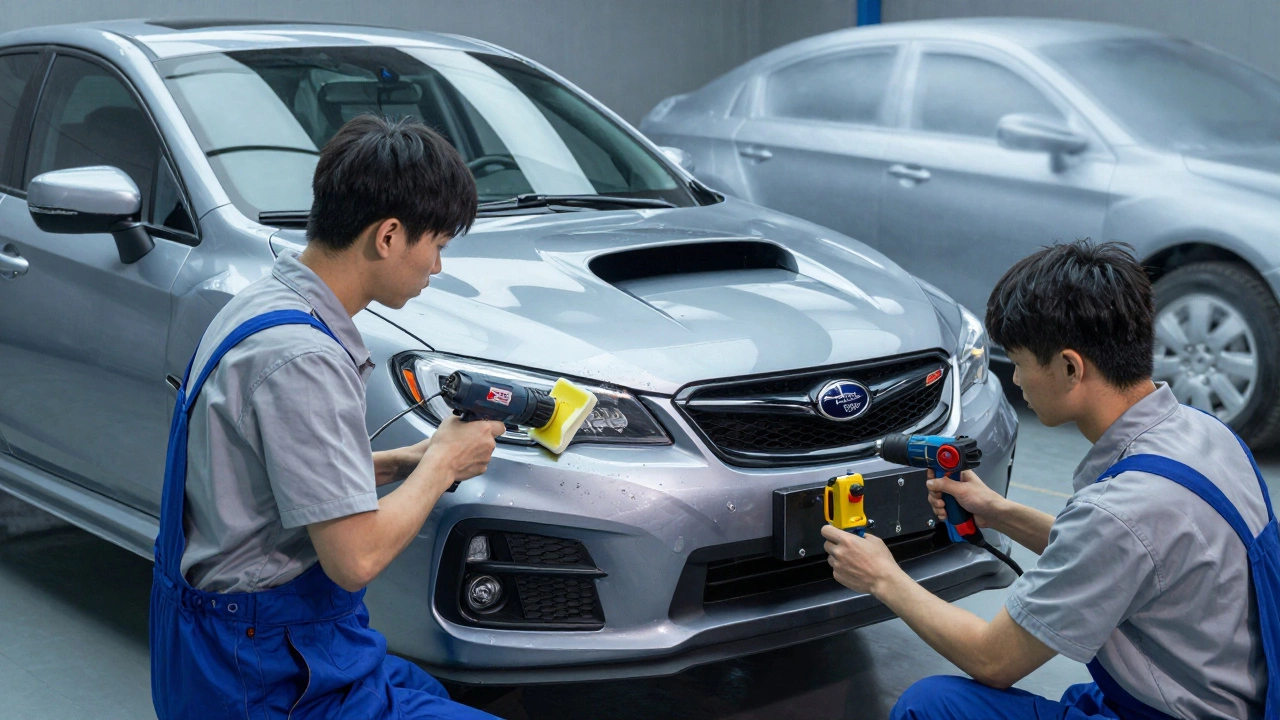
Step-by-Step Time Breakdown
Here’s how time breaks down for a typical DIY install on a mid-range sedan:
- Preparation (1-2 hours): Clean the car, gather tools (screwdrivers, drill, sandpaper, masking tape, adhesive), and remove factory parts.
- Test-fitting (2-4 hours): Dry-fit all panels. Mark cuts. Adjust. Repeat. This is where most people rush and regret it later.
- Trimming and sanding (3-5 hours): Cut excess material, sand edges for smooth transitions. Don’t skip this - rough edges look terrible and catch wind.
- Adhesive application and mounting (2-3 hours): Use 3M automotive adhesive or similar. Apply evenly. Press firmly. Let set for 15-30 minutes per panel.
- Hardware installation (1-2 hours): Bolt on brackets, screws, and retainers. Don’t over-tighten - plastic cracks.
- Curing and cleanup (2-4 hours): Let everything cure overnight. Clean up tape residue, wipe down surfaces, inspect for gaps.
That’s 11 to 20 hours total - and that’s if nothing breaks, nothing misaligns, and you don’t have to re-order a part because you cut it wrong.
Common Mistakes That Add Hours
People make the same mistakes over and over:
- Skipping the test-fit: You think, "It’ll fit. It’s the same model." It won’t. You’ll waste hours correcting it later.
- Using household glue: Super glue, silicone, or epoxy from Bunnings will fail in heat, cold, or vibration. Use only automotive-grade adhesives.
- Not masking the car: Paint scratches from sanding or adhesive residue cost hours to fix. Cover everything - even the tires.
- Installing in direct sunlight: Heat makes adhesive set too fast. You get poor bonding. Work in shade or indoors.
- Forgetting wiring: Many kits now integrate LED lights or sensors. If you don’t plan for wiring, you’ll have to cut into the car’s harness - and that’s a whole new job.
What You Need to Have Ready
You can’t wing this. Here’s the bare minimum toolkit:
- Socket set and ratchet
- Drill with metal and plastic bits
- Angle grinder or Dremel (for trimming)
- 80-220 grit sandpaper (hand and electric)
- 3M automotive adhesive or similar (not regular epoxy)
- Masking tape and plastic sheeting
- Clamps or heavy weights (to hold panels while adhesive sets)
- Latex gloves and safety glasses
- Owner’s manual (for factory bolt locations)
And don’t forget time. Block out at least two full days. If you’re working nights after work, expect it to take a week. Rushing leads to bad bonds, crooked panels, and expensive repairs.
When to Call a Pro
Do it yourself if you’re patient, have a garage, and don’t mind spending a weekend on it. But if your car is new, expensive, or you’re planning to sell it soon - hire a pro. A bad body kit install can drop your car’s value by thousands. Professionals also offer warranties. DIY? You’re on your own.
And if you’re planning to paint the kit yourself, factor in another 10-15 hours for prep, paint, and clear coat. That’s a whole other project.
Final Reality Check
There’s no shortcut. Even the simplest body kit takes a solid day of focused work. Most people think it’s a weekend project. It’s actually a multi-day commitment. The satisfaction of driving a car with a custom body kit? Worth it. But only if you give it the time it deserves.
If you’re serious about this, start with a kit designed for your exact model year. Read reviews from people who’ve installed it. Watch full installation videos - not just the 30-second clips. And don’t rush the prep. That’s where the magic happens.
Can I install a body kit in one day?
Yes, but only if you’re experienced, have all the right tools, and the kit fits perfectly out of the box. For most people, especially beginners, one day isn’t enough. You’ll end up rushing, making mistakes, and having to redo work. Two days is the realistic minimum.
Do I need to paint the body kit before installing it?
No, you don’t have to. Many people install the kit first, then paint the whole car together for a seamless finish. But if you’re painting just the kit, it’s easier to do it before installation - you get better access and fewer masking issues. Just make sure the paint is fully cured before you mount it.
What’s the most time-consuming part of installing a body kit?
Test-fitting and trimming. Most kits don’t fit perfectly, so you’ll spend hours holding each panel up, marking where it rubs, sanding it down, and trying again. It’s tedious, but skipping it leads to gaps, misalignment, and wind noise. This step can easily take 3-5 hours.
Can I use regular glue from the hardware store?
No. Regular glue, silicone, or epoxy will fail under heat, cold, or vibration. Automotive body kits need special adhesives like 3M Automotive Adhesive or similar urethane-based products. These are designed to flex with the material and withstand weather. Using the wrong glue means your panels could fall off - even at highway speeds.
How much does professional installation cost?
Professional installation typically costs between $300 and $800, depending on the complexity of the kit and the shop’s rates. In Adelaide, expect to pay around $500 for a standard kit on a sedan. This usually includes mounting, minor trimming, and cleaning - but not painting. Painting is extra.
Will a body kit affect my car’s warranty?
Yes, if the modification affects components covered under warranty - like sensors, cameras, or aerodynamic systems. Most manufacturers will void warranty claims related to the modified areas. Always check with your dealer before installing. Some aftermarket kits are designed to be OEM-compatible and may not trigger a void, but it’s not guaranteed.
Is it worth doing a body kit myself?
Only if you enjoy working with your hands and have the time. You’ll save $300-$800 on labor, but you’ll also spend days on it. If you mess up, you could end up spending more on repairs or a new kit. For most people, the satisfaction of doing it yourself outweighs the cost - as long as they’re prepared for the time and effort.
If you’re ready to start, pick a kit made for your exact car model, set aside two full days, and don’t rush the prep. The result will look professional - and you’ll know you earned it.