Car Detailing Cost Calculator
Calculate Your Detailing Cost
Results
Pro Tip: Professional ceramic coatings ($400-$800) last 2-5 years and can save you $1,000+ in future detailing. For daily drivers, it's the smartest long-term investment.
How much should you really spend on a car detail? If you’ve ever stood in front of your car, looking at the dust, the swirl marks, and the sticky residue on the dashboard, you’ve probably asked yourself this. The answer isn’t a single number-it depends on what you want, how often you do it, and whether you’re doing it yourself or hiring someone. Let’s cut through the noise and give you real numbers based on what people in Adelaide and beyond are actually paying in 2025.
What You Get for Your Money
Car detailing isn’t just a wash. It’s a full restoration. At the low end, you’re cleaning. At the high end, you’re bringing back paint that’s been sun-damaged, removing embedded contaminants, and sealing surfaces so they repel dirt for months. Think of it like a dental cleaning versus orthodontic work. One keeps things clean. The other fixes years of neglect.
A basic wash and vacuum might cost $40 if you go to a quick detailer. But if you want to remove oxidation from your hood, restore faded trim, and get a ceramic coating that lasts two years? That’s a different ballgame. The real value isn’t in the shine-it’s in protection. A well-detailed car holds its value better. Resale prices for well-maintained vehicles in Australia are up 12% compared to 2023, according to RedBook data. That’s not just pride-it’s cash in your pocket.
DIY Car Detailing: How Much to Spend
If you’re doing it yourself, you’ve got two paths: cheap and cheerful, or serious investment.
Cheap route ($50-$100): You’ll buy a basic kit from Supercheap Auto or Bunnings. It includes a sponge, a cheap microfiber towel, an all-purpose cleaner, and a spray wax. This works for light cleaning-removing bird droppings, light dust, and road grime. But here’s the catch: these products often leave swirls. The towels shed lint. The wax lasts two weeks, not two months. You’ll end up redoing it every month, which adds up.
Serious DIY route ($200-$400): This is where you start seeing real results. You get a dual-action polisher (like the Porter-Cable 7424XP), a set of foam pads, a quality compound for removing scratches, a paint sealant (not wax), and microfiber towels that don’t shed. Brands like Chemical Guys, Meguiar’s, and Adam’s Polishes dominate this space. You’ll also need a clay bar ($15) to pull out contaminants that washing can’t touch. This setup can handle a full exterior detail-paint correction, trim restoration, wheel cleaning-and last you for years.
One Adelaide owner, Mark, spent $320 on his first full kit. He detailed his 2018 Toyota Camry twice in 2024. His paint looks like it’s from the showroom. He says, “I used to spend $80 every six weeks at a detailer. Now I do it myself in a weekend. I’ve saved over $800 in a year.”
Professional Detailing: What You Pay
Going to a pro is faster, but more expensive. Prices vary wildly based on location, vehicle size, and service level.
- Basic Detail ($80-$150): Wash, vacuum, interior wipe-down, tire shine. No paint correction. This is what most quick-detail shops offer. Fine if your car is clean and you just need a refresh.
- Intermediate Detail ($200-$350): Includes paint decontamination (clay bar), light polishing, interior steam cleaning, and a sealant or ceramic coating. This is what most people should aim for if they want lasting results. In Adelaide, shops like Detailing Adelaide and AutoGloss offer this range.
- Premium Detail ($400-$800+): Full paint correction (two-stage polishing), ceramic coating (3-5 year protection), engine bay cleaning, headlight restoration, and leather conditioning. This is for show cars, luxury vehicles, or people who want it done right once and forget it for years.
One thing to watch: some shops advertise “$99 detailing” but add $200 in upsells. Always ask for a written quote. A reputable detailer will list exactly what’s included-no vague terms like “premium finish.”
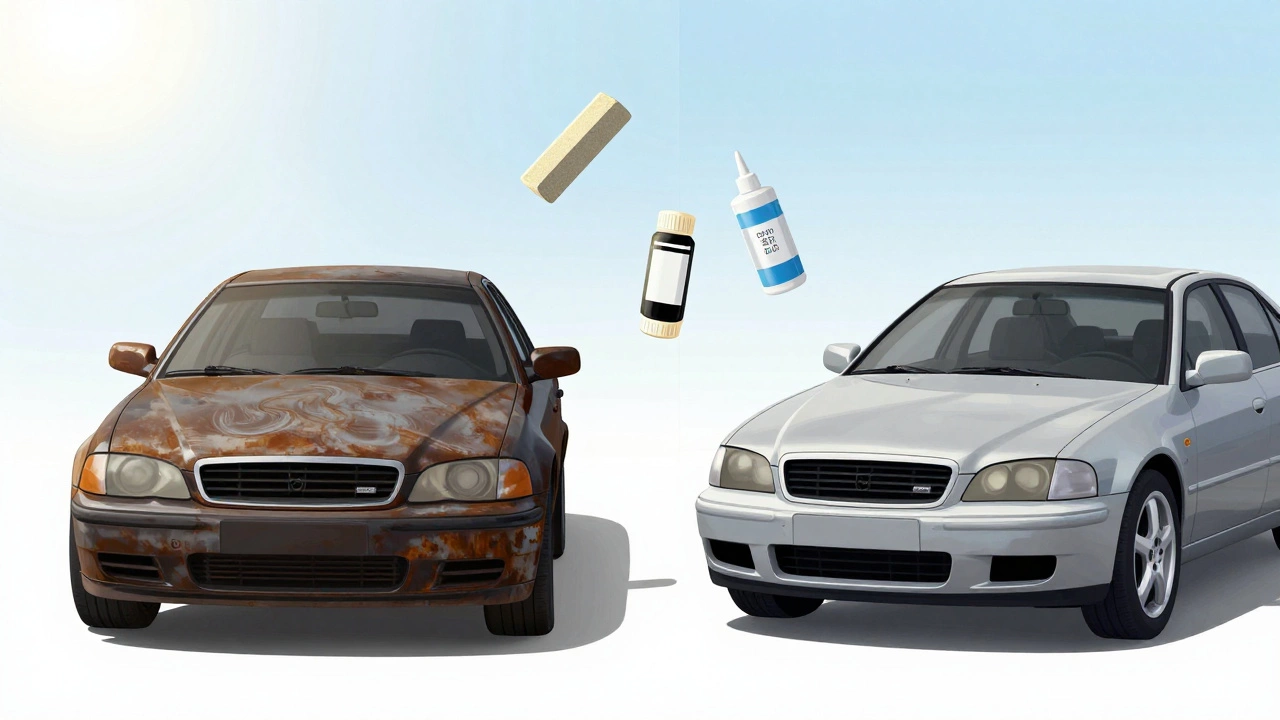
What’s Actually in a Good Detailing Kit?
Here’s what you need if you’re going DIY:
- Wash bucket with grit guard - Prevents scratches by trapping dirt away from your sponge.
- Two microfiber towels - One for washing, one for drying. Buy 100% polyester, 300+ GSM. Avoid cheap ones from Amazon.
- Clay bar and lubricant - Removes invisible contaminants like tree sap, industrial fallout, and brake dust.
- Paint cleaner or compound - For removing light scratches and swirls. Use a light polish if your paint is in good shape.
- Dual-action polisher - Manual polishing is exhausting and uneven. A DA polisher is the difference between “okay” and “showroom.”
- Paint sealant or ceramic coating - Sealants last 6-12 months. Ceramic coatings last 2-5 years. Coatings are harder to apply but worth it if you’re serious.
- Interior cleaner and protectant - For dash, plastics, and vinyl. Avoid silicone-based sprays-they attract dust.
- Wheel cleaner and brush set - Brake dust eats rims. Use a dedicated wheel brush, not a sponge.
You don’t need all this on day one. Start with the wash bucket, two towels, a clay bar, and a sealant. That’s $80. Add the polisher and compound later.
When to Skip DIY and Hire a Pro
You don’t need to do everything yourself. Here’s when to call in help:
- Your paint has deep scratches or oxidation you can’t fix with polish.
- You’ve never used a polisher and don’t want to risk burning through your clear coat.
- You’re short on time. A full detail takes 6-10 hours for a beginner.
- You’re selling your car and want maximum resale value.
Even if you do most of the work yourself, consider hiring a pro once a year for a full ceramic coating. It’s a one-time investment that saves you hundreds in future detailing.
How Often Should You Detail?
It’s not about seasons-it’s about exposure.
- Coastal areas (like Adelaide): Salt air eats paint. Detail every 3-4 months.
- Urban areas: Pollution and bird droppings are the main threats. Every 4-6 months.
- Rural areas: Dust and bugs. Every 6 months if you drive often.
Between full details, do a quick wash and spray wax every 2-3 weeks. It keeps the coating intact and reduces how often you need to polish.
Common Mistakes That Waste Money
Most people overspend because they do it wrong:
- Using dish soap to wash your car. It strips wax and damages paint.
- Wiping a dusty car with a dry towel. That’s like sanding your paint.
- Buying “lifetime” ceramic coatings from eBay. Real ceramic coatings require professional prep and curing.
- Skipping the clay bar. You can’t polish out what you haven’t removed.
- Using the same towel for wheels and paint. Brake dust is abrasive and will scratch your clear coat.
These mistakes don’t just waste money-they damage your car. And fixing paint damage costs $500-$2,000.
Final Rule: Spend Based on Value, Not Price
Don’t think about cost. Think about return.
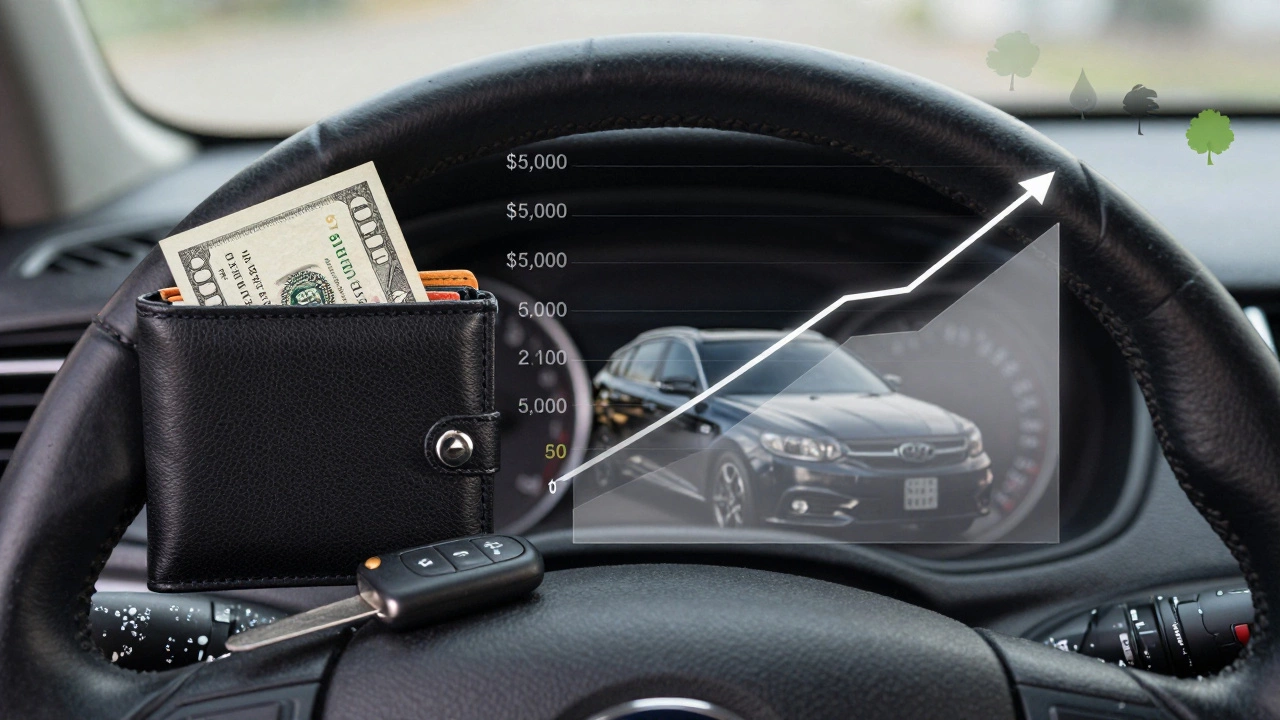
If you spend $300 on a DIY kit and detail your car twice a year, you’re spending $150 a year. That’s less than half what you’d pay for professional services. And you keep your car looking new for longer. A well-maintained car in Australia can fetch $2,000-$5,000 more at resale, depending on the model.
So how much should you spend? If you’re just cleaning, $50. If you want your car to look like it just rolled off the lot and stay that way for years? $300-$400 upfront. That’s not an expense. It’s insurance for your car’s value.
Is it worth spending more on a ceramic coating?
Yes, if you drive regularly or live near the coast. Ceramic coatings repel water, dirt, and UV rays better than wax. They last 2-5 years instead of 3-6 months. A $400 professional coating can save you $1,000+ in future detailing and paint repair. For daily drivers, it’s the smartest long-term investment.
Can I use a car detailer on a brand-new car?
Absolutely-but be gentle. New cars have a factory clear coat that’s still curing. Avoid heavy polishing for the first 60 days. A simple wash, clay bar, and sealant are safe and recommended. It protects the paint from early damage like bird droppings or tree sap.
What’s the difference between wax and sealant?
Wax is natural (carnauba) and gives a warm glow but lasts only 2-3 months. Sealants are synthetic and form a harder, longer-lasting barrier-6 to 12 months. For durability and protection, sealants are better. Wax is for show. Sealant is for real life.
Do I need a polisher for a good detail?
You don’t *need* one, but you’ll never get professional results without it. Hand polishing can’t remove swirls evenly. A dual-action polisher is the tool that turns a decent detail into a show-quality finish. If you’re serious, spend $150 on one. It pays for itself in one year.
How do I know if a detailer is trustworthy?
Ask for before-and-after photos of actual cars they’ve worked on-not stock images. Check reviews on Google and Facebook. A good detailer will explain the process, not just give you a price. If they say “we use magic products” or don’t mention clay bars or paint correction, walk away.