Carbon Fiber Cutting Tool Selector
Describe your project to get a recommendation.
Project Analysis
Select your options and click "Get Recommendation" to see the best tools and safety tips for your job.
Carbon fiber looks incredible on a car. It’s lightweight, strong, and screams performance. But when you buy a new carbon fiber spoiler that is a rear aerodynamic wing made from woven carbon fiber strands and resin, it rarely fits perfectly out of the box. Maybe your trunk lid is slightly different. Maybe you need to remove a mounting bracket. Or maybe you just want to trim the edges for a cleaner look. The big question is: can you actually cut this material without ruining it?
The short answer is yes. You can cut carbon fiber. But if you grab your standard wood saw or metal hacksaw, you are about to make a very expensive mistake. Carbon fiber is brittle. It doesn’t bend like plastic; it snaps. If you force it, the layers separate (delaminate), the surface chips, and that glossy black weave turns into a jagged mess. Doing it right requires specific tools, patience, and a bit of finesse.
Why Cutting Carbon Fiber Is Different
To cut carbon fiber properly, you first need to understand what you are dealing with. Unlike steel or aluminum, which are ductile metals, carbon fiber is a composite material. It consists of thousands of tiny carbon filaments held together by a polymer resin (usually epoxy). Think of it like a stack of paper glued together. If you pull too hard on one edge, the glue fails, and the layers peel apart.
This brittleness means you cannot use tools that rely on aggressive biting teeth. A standard circular saw blade has large gullets designed to throw out chunks of wood or metal. On carbon fiber, those teeth act like chisels, digging in and tearing the fibers rather than slicing them. This leads to two major problems:
- Delamination: The internal layers separate, creating weak spots where the cut was made.
- Fiber Fraying: The edges become rough and fuzzy, requiring excessive sanding to smooth out.
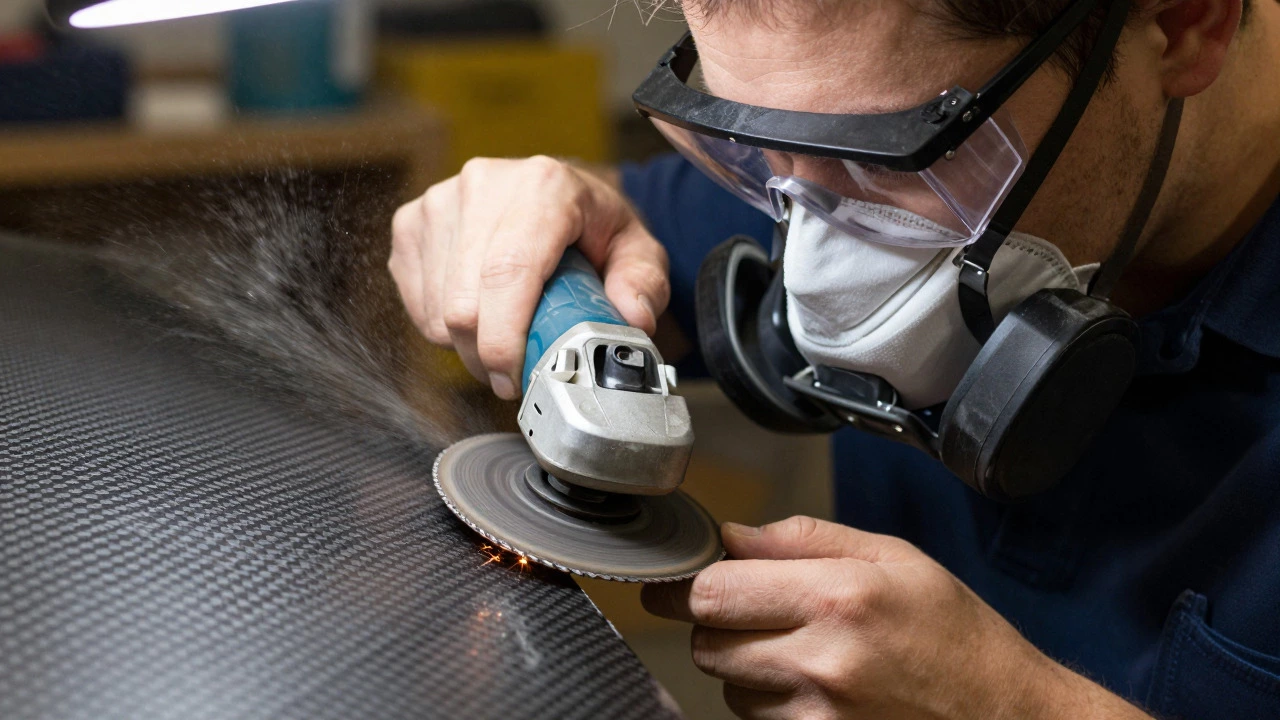
Additionally, there is a health hazard you must respect. When you cut carbon fiber, you create dust. This isn't just dirt; it's microscopic shards of carbon. Inhaling this dust over time can irritate your lungs and eyes significantly. Always wear a high-quality respirator mask rated for fine particles (N95 or P100) and safety goggles. Don't skip this step.
Essential Tools for the Job
You don't need a professional workshop to cut a spoiler, but you do need the right equipment. Using the wrong tool is the fastest way to ruin a part worth hundreds or even thousands of dollars. Here is what you should have before you start.
| Tool | Type / Specification | Best Use Case |
|---|---|---|
| Diamond Blade is a cutting disc coated with industrial diamonds for grinding hard materials | Continuous rim, thin kerf (1mm) | Angle grinders for straight cuts |
| Diamond File is a hand file coated with diamond grit for shaping composites | Coarse to medium grit | Trimming small amounts and smoothing edges |
| Dremel Tool is a handheld rotary tool used for detailed work | Diamond-coated grinding stone | Precision cuts and curves |
| Jigsaw is a power tool with a reciprocating blade for curved cuts | Triple-chip carbide blade (TCC) | Larger curved sections (use with caution) |
| Masking Tape is adhesive tape used to protect surfaces during painting or cutting | Standard painter's tape | Preventing surface scratches and marking lines |
The gold standard for cutting carbon fiber is a diamond blade that is a cutting wheel embedded with synthetic diamonds. Specifically, you want a "continuous rim" blade, not a segmented one. Segmented blades have gaps between the teeth, which cause vibration and chipping. A continuous rim acts more like a grinding wheel, slicing through the material smoothly. Make sure the blade is thin (around 1mm thick) to minimize material loss and reduce friction heat.
For smaller adjustments, a diamond file that is a manual filing tool with abrasive diamond coating is incredibly useful. It allows you to nibble away at the material with total control. If you need to cut a complex curve, a Dremel with a rotary attachment works well, provided you keep the speed low and apply light pressure.
Step-by-Step Guide to Cutting Your Spoiler
Now that you have the tools, let’s get to work. Follow these steps to ensure a clean cut and a safe process.
- Mark Your Cut Line: Never draw directly on the clear coat of your carbon fiber. The ink can stain, and the marker tip might scratch the finish. Instead, apply a strip of masking tape along the area where you plan to cut. Draw your line on the tape using a sharpie or pencil. This protects the surface and gives you a clear guide.
- Secure the Part: Place the spoiler on a stable workbench. Use clamps to hold it firmly in place, but be careful not to crush the hollow core of the wing. If you clamp too hard, you might crack the carbon fiber internally. Soft jaws or wooden blocks between the clamp and the spoiler help distribute the pressure evenly.
- Choose Dry Cutting: While wet cutting (using water to cool the blade) reduces dust, it can sometimes cause the resin to soften or warp if water gets inside the honeycomb core. For most DIYers, dry cutting with a slow-speed grinder is safer and easier to manage. Just remember your respirator.
- Start Slow: If you are using an angle grinder, start the tool before touching the material. Gently bring the spinning blade to the marked line. Do not force the blade. Let the diamond grit do the work. Pushing too hard generates heat, which can melt the resin and weaken the bond between the carbon layers. Keep the blade moving steadily along the line.
- Follow the Curve: If you are cutting a curve, make several shallow passes rather than one deep cut. This reduces vibration and prevents the blade from grabbing and jerking. If you are using a jigsaw, ensure the blade is pointing downwards (tooths down) to cut on the upstroke, which minimizes chipping on the top surface.
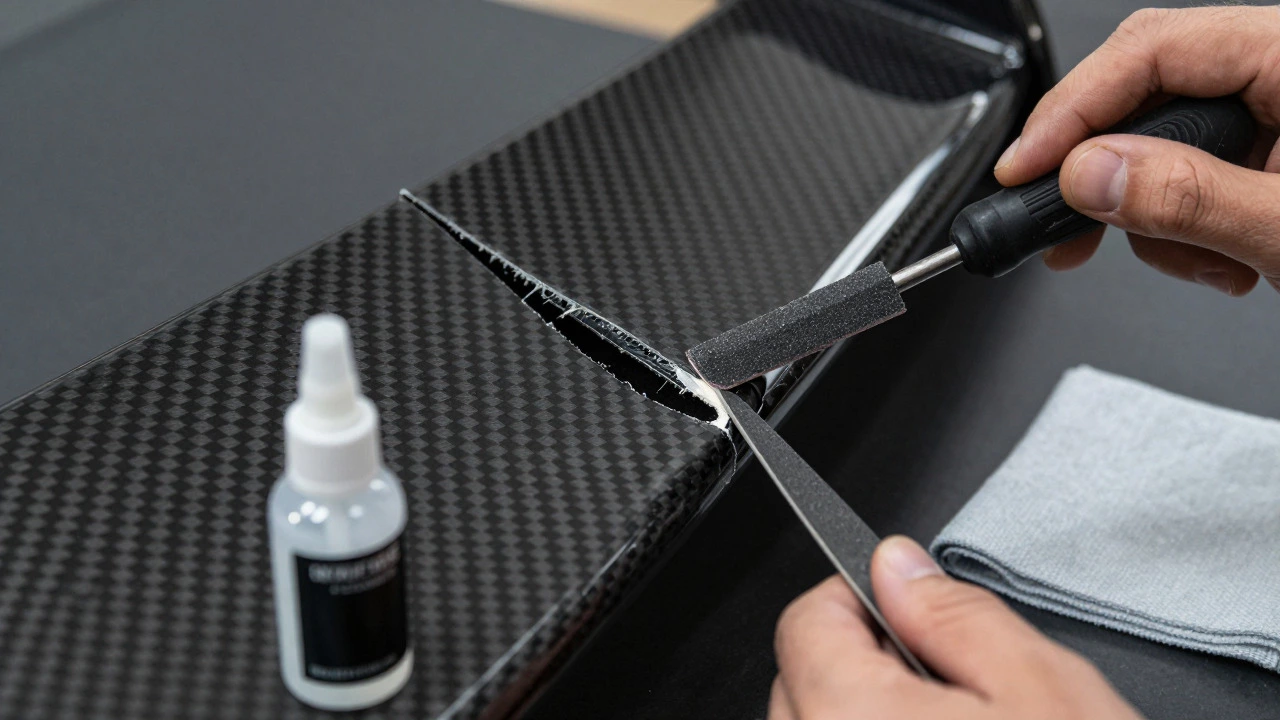
- Clean Up the Edge: Once the cut is complete, the edge will likely be rough. Use a diamond file or coarse sandpaper (80-grit) to smooth out any burrs. Work your way up to finer grits (120, then 220) until the edge feels smooth to the touch. Be careful not to sand too much into the main body of the spoiler.
Common Mistakes to Avoid
Even with the right tools, mistakes happen. Here are the most common pitfalls that ruin carbon fiber parts.
Using Standard Metal Blades: As mentioned, standard bi-metal blades have teeth that are too aggressive. They tear the fibers. Stick to diamond or triple-chip carbide blades only.
Ignoring Heat: Friction creates heat. If the blade gets too hot, the epoxy resin softens. You might not see it immediately, but the structural integrity of that section is compromised. If the part feels hot to the touch, stop and let it cool down. Taking breaks every few seconds helps.
Sanding Too Aggressively: After cutting, it’s tempting to sand the edge quickly. However, carbon fiber is hard on sandpaper. If you press too hard, you can burn through the clear coat and expose the raw weave underneath, leading to oxidation and fading. Use light pressure and frequent inspection.
Forgetting the Core: Many spoilers have a balsa wood or foam core inside the carbon skin. If you cut all the way through, you might expose this core material. Seal the exposed core with a bit of epoxy resin or fiberglass cloth to prevent moisture absorption, which can lead to swelling and delamination over time.
Finishing the Cut Edge
A raw cut edge looks unfinished and can be sharp. To give your spoiler a professional look, you need to finish the edge properly. There are two main ways to do this.
Option 1: Clear Coat Touch-Up If you sanded the edge smooth, you can apply a matching clear coat. Clean the area with isopropyl alcohol to remove dust and oils. Apply a thin layer of automotive clear urethane. This seals the carbon fibers and matches the rest of the spoiler’s gloss level. Lightly sand with 2000-grit wet sandpaper after curing for a mirror finish.
Option 2: Edge Banding For a cleaner look, especially on visible edges, consider adding edge banding. This is a thin strip of pre-finished carbon fiber or ABS plastic that adheres to the cut edge. It covers the raw layers and provides a durable, polished border. Use a high-strength epoxy adhesive to attach it.
When to Call a Professional
While cutting a spoiler is a manageable DIY project, some situations warrant professional help. If the cut requires removing a significant portion of the structural support, or if you are modifying a carbon fiber hood or roof panel (which bear more stress), consult a composite specialist. They have vacuum bags, ovens, and expertise to reinforce the cut area with additional carbon plies, ensuring the part remains safe and functional.
Also, if you are unsure about the internal structure (e.g., if there are hidden brackets or wiring channels), take the spoiler to a shop. X-ray or ultrasound inspections can reveal internal components that might be damaged by a blind cut.
Can I use a regular hacksaw to cut carbon fiber?
Technically yes, but it is not recommended. A standard hacksaw blade will tear the carbon fibers, resulting in a rough, frayed edge that requires extensive sanding. It also takes much longer and increases the risk of delamination due to uneven pressure. Use a diamond blade or a specialized composite blade instead.
Is carbon fiber dust dangerous?
Yes. Carbon fiber dust consists of microscopic shards that can irritate the lungs, eyes, and skin. Prolonged exposure without protection can lead to respiratory issues. Always wear a N95 or P100 respirator mask and safety goggles when cutting or sanding carbon fiber.
What happens if I cut through the clear coat?
If you cut through the clear coat, the underlying carbon weave is exposed to UV rays and moisture. Over time, this can cause the resin to yellow and the fibers to oxidize, leading to a dull, faded appearance. You should seal the exposed area with clear coat or edge banding to protect it.
Do I need to wet cut carbon fiber?
Wet cutting reduces dust and heat, which is beneficial. However, for hollow spoilers with foam or balsa cores, water can seep inside and cause swelling or rot. Dry cutting with a slow-speed grinder and proper ventilation is often safer for DIY projects unless you can ensure the core stays completely dry.
How do I repair a chip in my carbon fiber spoiler?
For small chips, clean the area, fill it with a two-part epoxy putty mixed with carbon fiber powder for color match, sand it smooth, and apply clear coat. For larger cracks, you may need to inject epoxy resin into the crack and reinforce it with a small piece of carbon fiber patch on the underside.