There is nothing quite like the smell and feel of a brand-new car. That crisp plastic scent, the supple leather, and the pristine surfaces make you feel like you’re driving into the future. But once that honeymoon phase ends, reality sets in. Coffee spills happen. Sunlight fades dashboards. Kids track mud onto carpets. If your car’s cabin looks more like a storage unit than a luxury lounge, don’t worry. You don’t need to buy a new vehicle to get that fresh feeling back.
Restoring your car interior is a process of deep cleaning, stain removal, and surface protection to restore original appearance is entirely possible with the right tools and a bit of elbow grease. Whether you are prepping for a sale or just want to enjoy your daily commute again, this guide will walk you through every step to make your cabin look showroom-ready.
The Deep Clean: Removing Dirt and Debris
Before you apply any chemicals or conditioners, you have to deal with the physical dirt. Most people skip this step, but it’s crucial. If you polish over dust, you’re just making muddy paste that scratches your surfaces. Start by removing all floor mats. Take them outside and give them a good shake or beat them against a wall to dislodge embedded grit. For rubber mats, a quick rinse with a hose and some dish soap works wonders. Fabric mats might need a brush and warm water.
Next, grab a vacuum cleaner. Don’t just run it over the top of the carpet. Use the crevice tool to get between the seats and the center console. Lift the seat cushions if they are removable; you’d be surprised how much debris falls underneath. Pay special attention to the footwells and under the pedals. Once the loose dirt is gone, use a stiff-bristled brush to agitate the carpet fibers. This lifts up ground-in dirt so the vacuum can suck it out. Finish this stage by wiping down all hard surfaces-door panels, dashboard, and center console-with a microfiber cloth dampened with water. This removes the layer of dust that accumulates from open windows and air conditioning vents.
Tackling Stains on Seats and Carpets
Stains are the biggest enemy of a clean interior. The approach depends entirely on the material. For fabric seats and carpets, an upholstery cleaner is your best friend. Spray the cleaner directly onto the stain, let it sit for a few minutes to break down the oils, and then scrub with a soft brush. Blot the area with a clean white towel to lift the stain. Avoid rubbing, as this can push the stain deeper into the fibers. For tough stains like wine or coffee, a mixture of white vinegar and water (1:1 ratio) can work miracles without damaging the fabric.
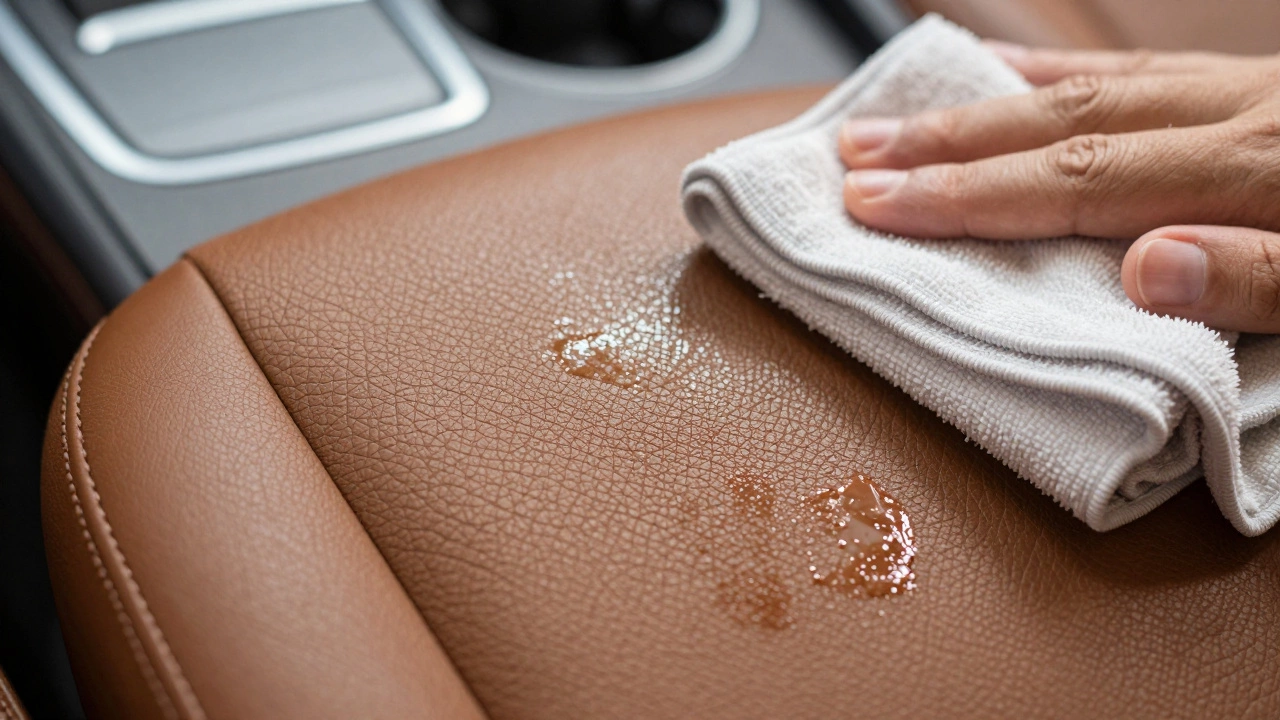
If your car has leather seats, which are premium upholstery made from animal hide requiring specific pH-balanced cleaners, you need to be gentler. Never use household cleaners like bleach or ammonia on leather, as they strip the natural oils and cause cracking. Instead, use a dedicated leather cleaner. Apply it to a microfiber cloth, not directly to the seat, and wipe in circular motions. For scuffs or light scratches, a small amount of leather conditioner can help mask the damage while restoring flexibility. If you have perforated leather, avoid soaking it, as moisture can get trapped inside and lead to mold.
Reviving Hard Surfaces: Dashboard and Console
The dashboard takes a beating from UV rays. Over time, plastic becomes dull, chalky, and cracked. To fix this, start by cleaning the surface with an all-purpose cleaner diluted in water. Use a soft brush to get into the air vents and buttons. Once dry, apply a dashboard protectant. There are two main types: glossy and matte. Glossy products give that "wet" look many people associate with new cars, but they can be slippery and attract dust. Matte or satin finishes look more factory-correct and resist glare on sunny days. Apply the product sparingly with a microfiber applicator pad. Too much product leaves a greasy residue that feels sticky to the touch.
Don’t forget the trim pieces. Black plastic trim often fades to grey due to oxidation. A trim restorer can bring back the deep black color. These products usually contain pigments that fill in the faded areas. Wipe off any excess after application to prevent transfer onto your clothes. For vinyl surfaces, such as door panel inserts, the same cleaning and conditioning routine applies. Keep these surfaces hydrated to prevent them from becoming brittle and cracking in extreme temperatures.
Glass and Mirror Clarity
Clear visibility starts with clean glass. Many people use newspaper or their shirt tails to wipe windows, but this often leaves streaks and lint. Use a proper automotive glass cleaner and a clean microfiber towel. For the windshield, spray the cleaner on the towel, not the glass, to avoid overspray on the dashboard. Wipe in an S-pattern rather than circles, which helps reveal missed spots. For side windows, ensure you clean both the inside and outside for maximum clarity. Rearview mirrors often accumulate fingerprints and oil from touching. Use a dedicated mirror cleaner or isopropyl alcohol for a streak-free shine.
Air Quality and Odor Removal
A clean-looking car isn’t complete if it smells bad. Odors usually come from hidden sources like mold in the AC evaporator, spilled food under seats, or pet dander in the carpets. Start by replacing your cabin air filter. This simple part traps pollen, dust, and pollutants before they enter the cabin. An old, clogged filter can harbor bacteria and cause musty smells.
To eliminate lingering odors, place an open box of baking soda in the trunk or under a seat overnight. Baking soda absorbs moisture and neutralizes acidic odors. For stronger smells, consider using an ozone generator. These devices release ozone gas, which breaks down odor molecules at a chemical level. However, use caution: ozone is harmful to breathe, so only run the generator when the car is empty and ventilate thoroughly afterward. For a natural alternative, simmer citrus peels and cinnamon sticks on the stove, then place the bowl in the parked car for a few hours to infuse a fresh scent.
Protection and Maintenance Tips
Keeping your interior looking new requires ongoing maintenance. Invest in high-quality floor mats that cover the entire footwell, including the sides. All-weather rubber mats are easier to clean than carpeted ones. Install a sunshade on your windshield whenever you park outside. UV protection is the single most effective way to prevent dashboard cracking and seat fading. Regularly wipe down surfaces with a dry microfiber cloth to remove dust before it settles. Address spills immediately; the longer a liquid sits, the harder it is to remove. By incorporating these habits into your routine, you’ll extend the life of your interior and maintain that fresh, new-car feel for years to come.
| Tool/Product | Purpose | Best For |
|---|---|---|
| Shop Vacuum | Removing loose dirt and debris | Carpets, cracks, and crevices |
| Microfiber Towels | Dusting and drying without scratching | All surfaces, especially glass and leather |
| Upholstery Cleaner | Breaking down stains and oils | Fabric seats and carpets |
| Leather Conditioner | Restoring moisture and flexibility | Leather seats and steering wheels |
| Dashboard Protectant | UV protection and aesthetic finish | Plastic dashboards and consoles |
How often should I detail my car interior?
For most drivers, a thorough interior detailing every 6 to 12 months is sufficient. However, if you have pets, young children, or eat frequently in your car, you may need to do a deep clean every 3 to 4 months. Weekly vacuuming and monthly wiping of surfaces can help maintain cleanliness between major details.
Can I use household cleaners on my car interior?
It is generally not recommended. Household cleaners like bleach, ammonia, or multi-surface sprays often contain harsh chemicals that can damage automotive plastics, leather, and fabrics. They can cause fading, cracking, or discoloration. Always use products specifically designed for automotive interiors to ensure safety and effectiveness.
How do I remove smoke smell from my car?
Smoke odor penetrates deeply into fabrics and plastics. Start by vacuuming all surfaces thoroughly. Then, use an enzymatic cleaner on fabrics to break down organic residues. For persistent smells, an ozone generator is highly effective. Place the generator in the car, run it for the recommended time, and then ventilate the vehicle completely before driving. Replacing the cabin air filter is also essential.
What is the best way to clean leather seats without damaging them?
Use a pH-balanced leather cleaner and a soft microfiber cloth. Avoid soaking the leather, especially if it is perforated. After cleaning, apply a leather conditioner to restore moisture and prevent cracking. Test any product on a small, inconspicuous area first to ensure it does not cause discoloration. Regular conditioning every 3-6 months keeps leather supple and looking new.
Will a steam cleaner damage my car interior?
When used correctly, a steam cleaner is safe and highly effective for sanitizing and removing stains. It kills bacteria and allergens without chemicals. However, avoid holding the steam nozzle too close to sensitive electronics or delicate fabrics, as excessive heat and moisture can cause damage. Always follow the manufacturer's instructions and allow surfaces to dry completely.