Car Interior Upgrade Cost Calculator
Most people spend hours tweaking their car’s exterior-paint jobs, rims, spoilers-but ignore what’s right under their butt. And honestly? The inside of your car is where you spend the most time. If it looks cheap, feels cluttered, or smells like last week’s fast food, no amount of shiny paint will fix it. Making your car look cool inside isn’t about buying the most expensive stuff. It’s about smart, intentional changes that turn a boring cabin into a space you actually want to sit in.
Start with the basics: clean like you mean it
You can’t make a dirty car look cool. No matter how good your seat covers are, if there’s dust in the vents or crumbs stuck in the console, it screams neglect. A deep clean isn’t optional-it’s step one.
Use a vacuum with a crevice tool to get under seats, around pedals, and behind the center console. Wipe down every surface with a microfiber cloth and a non-ammonia cleaner. Avoid those harsh chemical sprays that leave streaks on plastic and glass. For leather seats, use a conditioner that doesn’t darken the material-just enough to bring back the softness. For synthetic materials, a quick wipe with a damp cloth and a drop of mild soap works better than anything sold in a spray can.
Don’t forget the air vents. Dust builds up there like a sponge. Use a small brush or an old toothbrush to clean them. And yes, remove the floor mats and shake them out. Then wipe the carpet underneath. It’s messy, but it changes everything.
Upgrade the lighting: mood matters
Factory lighting is designed for safety, not style. Most cars have dull, blue-white LEDs that make the cabin feel like a hospital waiting room. Swapping them out for warm-toned LEDs is one of the cheapest and most effective upgrades you can do.
Look for RGB or color-changing LED kits that plug into the dome light, door handles, or footwell areas. You don’t need to install them yourself-many kits come with adhesive strips and can be hooked up to the car’s existing wiring. Set them to a soft amber or cool gray. Avoid neon green or flashing rainbow modes. This isn’t a nightclub.
One real-world example: a 2018 Toyota Corolla owner in Melbourne changed the dome light from white to 3000K warm white. The difference? It made the whole cabin feel more premium, like a higher-end model. No new seats. No new stereo. Just better light.
Replace the gear shifter knob and steering wheel cover
These are two of the most touched parts of your car. And they’re usually made of cheap plastic that gets greasy, cracked, or faded over time.
A leather-wrapped steering wheel cover adds grip, reduces vibration, and feels way more expensive than the original. Look for ones stitched with contrast thread-black leather with white stitching on a gray interior, for example. It’s subtle, but it draws the eye.
For the gear shifter, swap the factory knob for a weighted aluminum or carbon fiber one. Brands like B&M and MOMO make affordable options that fit most automatic transmissions. The weight makes shifting feel more deliberate, like you’re driving something more serious than a daily commuter.
Both upgrades cost under $80 total. And they’re the kind of changes people notice when they open your door.
Choose the right floor mats
Factory floor mats are thin, flimsy, and look like they came from a discount store. Upgrade to all-weather rubber mats with deep grooves and raised edges. Brands like WeatherTech and Husky Liners are built to last. They don’t slide, they don’t smell, and they’re easy to rinse off after a muddy hike or a rainy commute.
But here’s the trick: match the color. If your interior is black, go with black mats. If it’s beige or gray, get a matching tone. Don’t go for bright red or yellow unless you’re going for a full rally look. The goal is cohesion, not contrast.
Also, install trunk mats. People forget this. A dirty trunk ruins the whole vibe. A rubber mat back there keeps spills contained and makes cleaning a 30-second job.
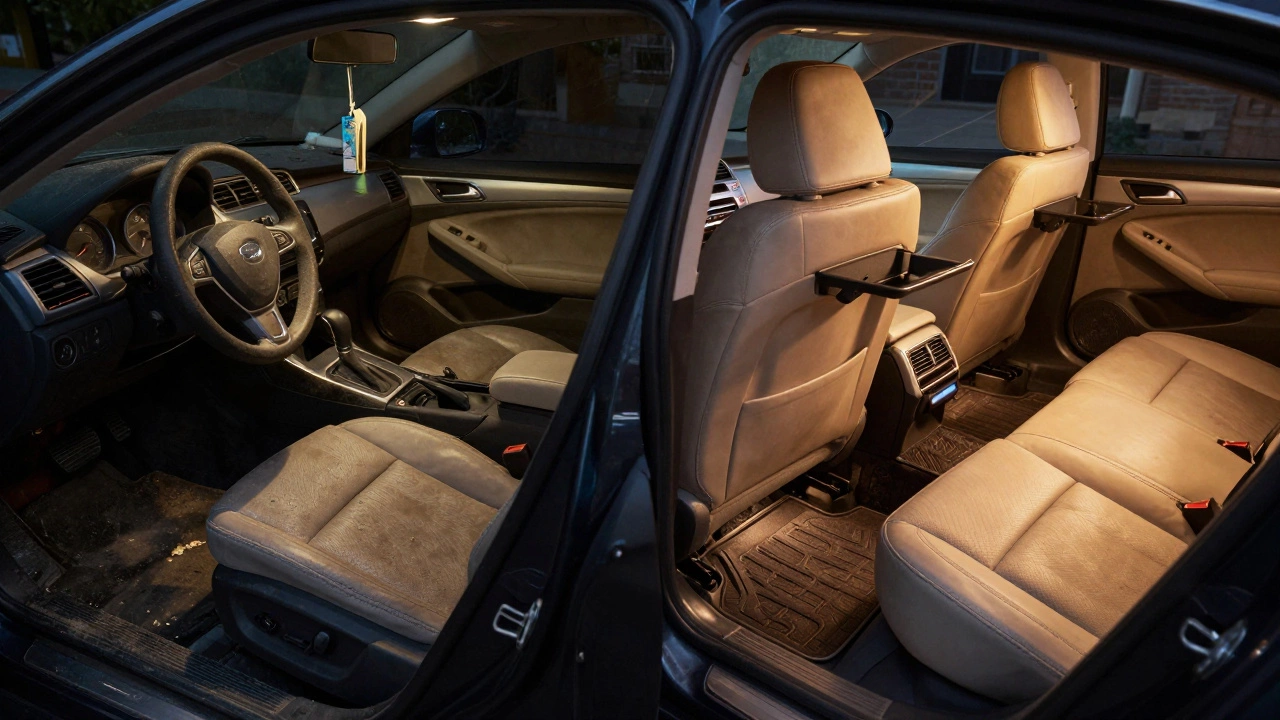
Declutter like a minimalist
That dangling air freshener? The pile of charging cables? The half-eaten energy bar wrapper wedged under the seat? Get rid of it.
A cool interior doesn’t mean cluttered with gadgets. It means clean, intentional, and calm. Keep only what you use daily: one phone mount, one cup holder insert, maybe a small organizer for sunglasses and toll tags.
Use hidden storage. Many cars have compartments under the center armrest or behind the center console. Use those. If your car doesn’t, invest in a slim magnetic organizer that sticks to the underside of the dash. No one sees it, but it keeps your keys and coins from rolling around.
Pro tip: wipe down the center console every morning with a microfiber cloth. It takes 10 seconds. It keeps everything looking new.
Upgrade the headliner (if you’re serious)
The headliner is the fabric on the ceiling. Most cars have a cheap, stretched-out material that sags over time or turns gray from UV exposure. Replacing it with a premium suede or Alcantara fabric is a game-changer.
It’s not cheap-expect to pay $200-$400 for parts and labor-but it adds a luxury feel you can’t get any other way. It absorbs sound, reduces glare, and makes the cabin feel taller and more intimate.
Some DIYers do this themselves with adhesive-backed fabric. But if you’re not confident, find a local auto upholstery shop. They’ll do it in a day. And yes, it’s worth it. One owner in Adelaide swapped out the headliner in his 2015 Honda Civic. Friends started asking if he bought a new car.
Sound matters too
A cool interior isn’t just about what you see. It’s about what you hear. Factory speakers are usually thin, tinny, and lack bass. Upgrading to a pair of quality component speakers can transform your drive.
You don’t need a full sound system. Just replace the front door speakers. Brands like JL Audio, Pioneer, and Focal make entry-level sets that fit most factory housings. Install them yourself with a wiring harness-no need to rewire the whole car.
Add a small subwoofer under a seat if you like bass. Or just get a Bluetooth speaker that clips to the sun visor. The point is: music should feel immersive, not like it’s coming from a radio in a cardboard box.
Final touch: smell
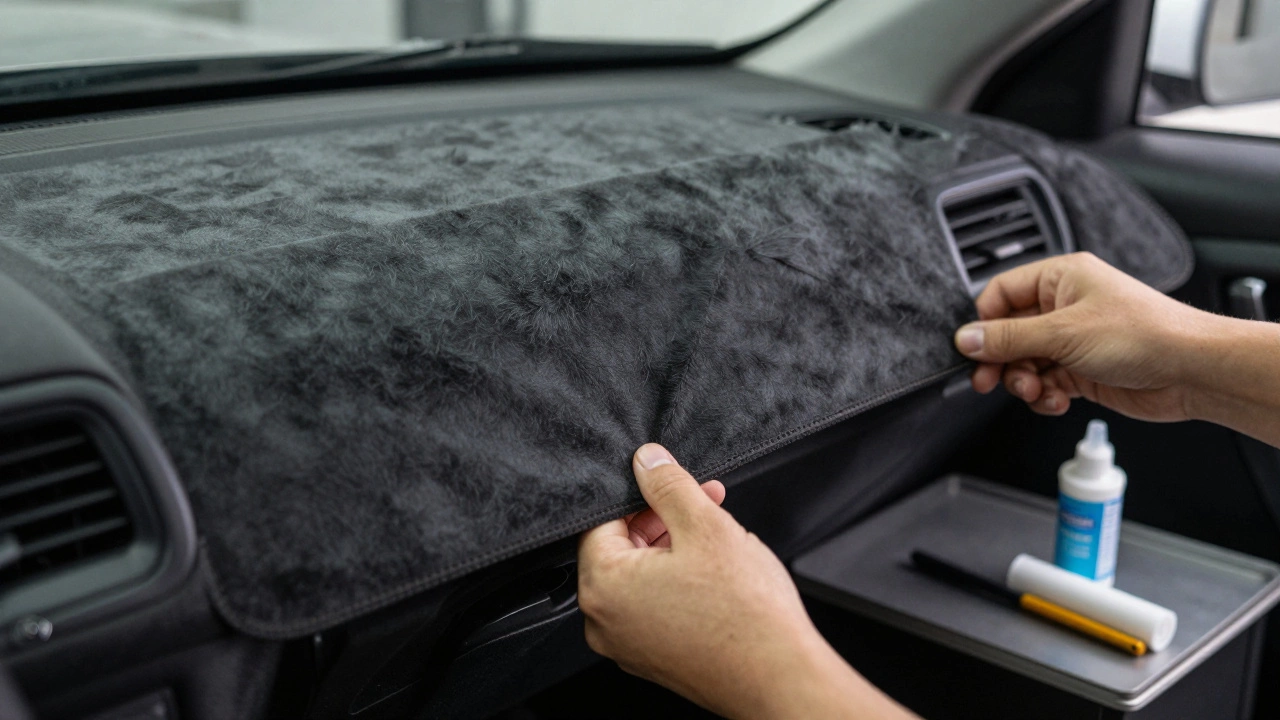
Smell is the most underrated sense in car styling. A car that smells like new plastic, stale coffee, or wet dog will never feel cool.
Use a charcoal-based odor absorber in the center console. They last months and don’t release perfume. If you want a scent, go for something subtle: leather, cedar, or clean linen. Avoid vanilla or coconut-those scream "new car" and don’t age well.
Keep a small bottle of interior cleaner in the glovebox. Spray it on seats and dash after long drives. It’s not magic, but it’s the difference between "this car feels lived in" and "this car feels cared for."
What not to do
Don’t cover every surface in carbon fiber. It looks cheap when overused. One accent piece-a dash trim, a vent surround-is enough.
Don’t install giant LED strips that flash to the beat of your music. It’s distracting and illegal in some states.
Don’t buy random Amazon gadgets that promise "luxury" but break in six months. Stick to proven brands with real reviews.
Don’t try to copy a luxury car’s interior exactly. A BMW-style leather wrap won’t make your Hyundai feel like a 7 Series. It’ll just feel like a Hyundai trying too hard.
Summary: What actually works
- Deep clean first-no shortcuts
- Swap lighting for warm tones
- Upgrade steering wheel and gear knob
- Use matching, high-quality floor mats
- Declutter. Keep only what you use
- Consider a headliner swap if you’re serious
- Improve sound with better speakers
- Control odor with charcoal absorbers, not air fresheners
These aren’t flashy mods. They’re thoughtful upgrades. And they add up. You don’t need to do them all at once. Start with one. Clean the interior. Then add better lighting. Then replace the gear knob. In three months, you’ll look at your car differently.
How much does it cost to make a car interior look cool?
You can start for under $50-cleaning supplies, a steering wheel cover, and a set of floor mats. If you add LED lighting and a gear knob, you’re looking at $150-$200. A headliner upgrade or better speakers will push it to $400-$600. But you don’t need to spend that much. Most of the impact comes from cleaning, decluttering, and small, intentional upgrades-not big purchases.
Can I do this myself, or do I need a professional?
Almost all of these upgrades are DIY-friendly. Cleaning, installing LED strips, swapping out floor mats, and replacing speakers can all be done with basic tools and a YouTube tutorial. The only job that usually needs a pro is headliner replacement-it requires removing the roof panel and stretching fabric tightly. But even that can be done by someone with patience and a heat gun.
What’s the biggest mistake people make when upgrading their car interior?
Trying to make it look like a luxury car. You can’t turn a 2012 Honda Fit into a Mercedes by sticking on carbon fiber trim. The goal isn’t imitation-it’s improvement. Focus on quality materials, clean lines, and personal taste. A simple, well-maintained interior always looks better than a cluttered, over-decorated one.
Do LED lights drain the car battery?
No, not if you install them correctly. Modern LED kits draw less than 1 amp total-far less than your headlights or radio. Most are wired to the dome light circuit, which only turns on when the door opens or the car is running. If you’re worried, pick a kit with an auto-off timer or connect it to the ignition circuit so it only works when the engine is on.
How often should I clean my car interior?
Wipe down surfaces every 1-2 weeks. Vacuum once a month. Do a deep clean (removing mats, cleaning under seats, wiping vents) every 3-4 months. If you eat in the car or have pets, do it more often. Consistency beats deep cleaning once a year.