Spring Rate Calculator
How Cutting Springs Affects Your Ride
Calculate the real impact of cutting coils from your car's springs
People think cutting car springs is a quick, cheap way to lower their ride. You grab a pair of bolt cutters, take off a coil or two, and suddenly your car looks like it’s hugging the pavement. Sounds cool, right? But here’s the truth: cutting springs to lower a car is bad-and not just because it looks sloppy. It’s dangerous, it ruins your suspension, and it’ll cost you more in the long run than buying the right parts in the first place.
What Happens When You Cut a Spring?
Car springs aren’t just coils of steel. They’re precision-engineered components designed to work as a system. Each spring has a specific wire diameter, coil count, and tension curve. When you cut even one coil, you’re not just shortening the spring-you’re changing how it behaves under load.
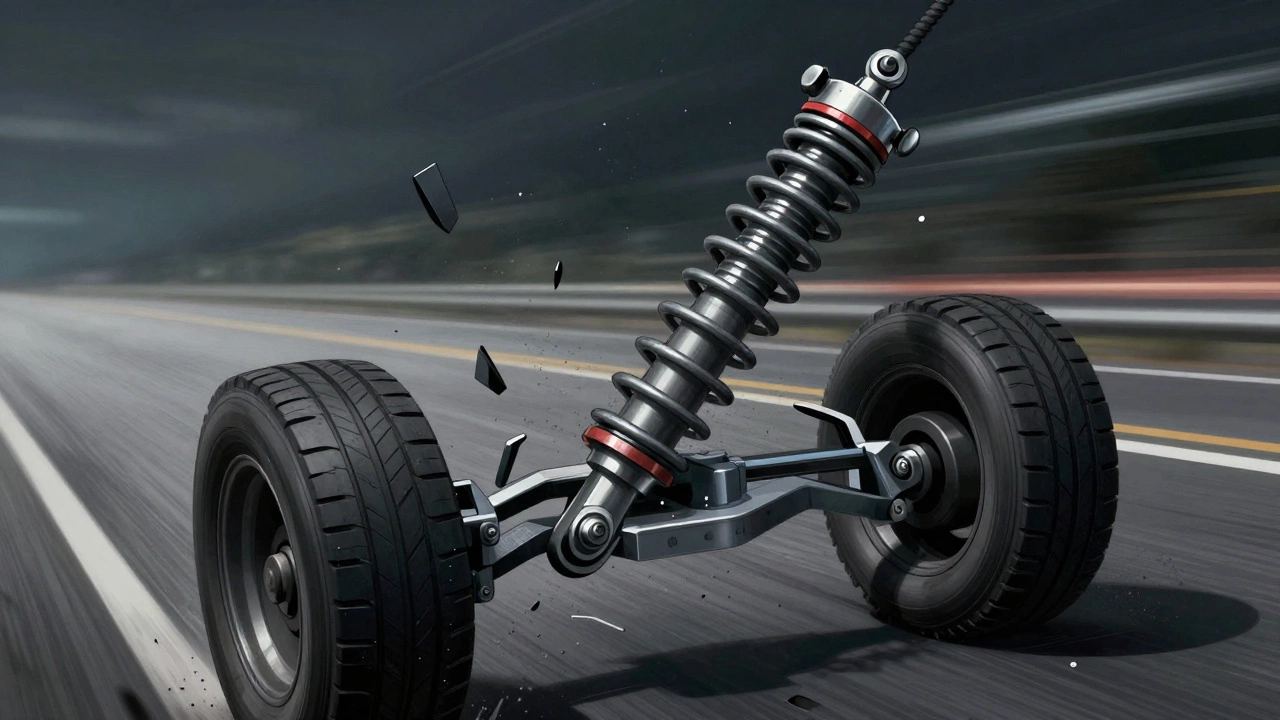
Here’s the science: spring rate increases when you shorten a spring. That means it gets stiffer. A spring that was meant to absorb a pothole at 200 pounds per inch might now push back at 300 or even 400. That’s a massive jump. The result? Your ride turns into a jackhammer. Every bump, crack, or speed bump hits your chassis like a punch. Your shocks can’t keep up. They wear out faster. Your tires lose contact with the road. And your suspension components-bushings, control arms, ball joints-start cracking under the extra stress.
Why It’s More Dangerous Than You Think
Let’s say you cut your springs and drive around for a few weeks without issues. You think you got away with it. But here’s what you’re not seeing:
- Your tires are wearing unevenly-especially the inner edges-because the alignment is thrown off by the changed ride height.
- Your steering feels twitchy. The car doesn’t track straight anymore, especially at highway speeds.
- Braking distance increases. A stiffer spring reduces suspension travel, which means your tires can’t maintain optimal contact during hard stops.
- Bottoming out becomes common. Even on mild inclines or driveways, your suspension hits its limit. That’s when you hear that loud clang-and you start wondering if your control arm just snapped.
Real-world example: In Adelaide, a driver cut his Honda Civic’s rear springs to get a ‘stance.’ Three months later, he hit a speed hump at 25 km/h. The rear coilover collapsed. The shock absorber exploded. The control arm bent. Repair bill? $2,800. A proper set of lowering springs? $450.
What’s the Right Way to Lower a Car?
There’s no mystery here. You buy designed-for-purpose lowering springs. These aren’t just shorter springs. They’re engineered with:
- Correct spring rates for the new ride height
- Reinforced wire to handle increased load stress
- Optimized damping curves that work with your factory shocks
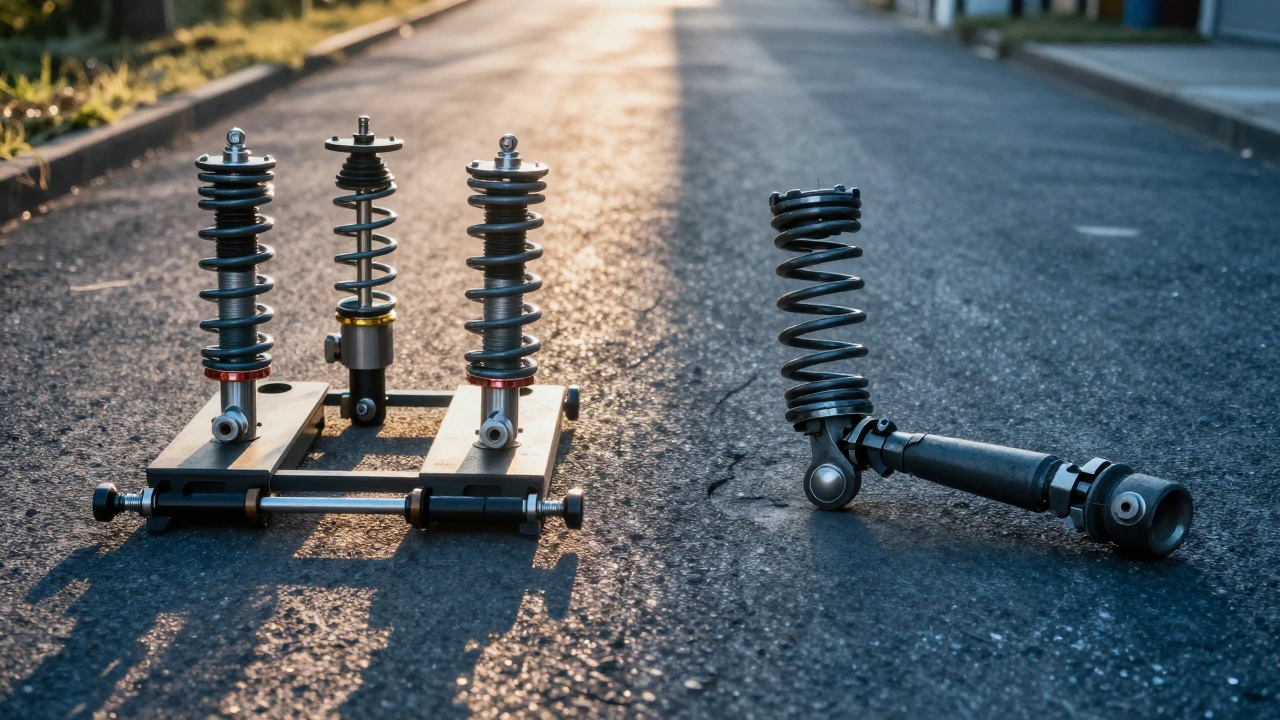
Brands like Eibach, H&R, and KW make lowering springs that drop your car 25-50 mm without wrecking the suspension. They’re tested on real roads, not YouTube garages. You get a smoother ride, better handling, and no surprise breakdowns.
And if you want more drop? Go for coilovers. They let you adjust height, damping, and preload. They’re more expensive, sure-but they’re safe, reliable, and adjustable. Cutting springs? Not even close.
What About the ‘It’s Just a Few Coils’ Argument?
Some people say, “I only cut half a coil. It’s fine.” That’s like saying, “I only removed one bolt from my wheel.” It’s still a modification that breaks the design.
Here’s a simple test: if a manufacturer didn’t offer a spring with that exact length and rate, then it wasn’t meant to be used that way. Suspension systems are calibrated as a whole. Changing one part without recalibrating the others is asking for trouble.
Even if your car doesn’t immediately fail, you’re accelerating wear on multiple components. That’s not saving money-it’s just delaying the inevitable bill.
Legal and Insurance Risks
In Australia, modified suspensions are regulated. The Vehicle Standards Bulletin VSB1 says any modification must not compromise safety. Cutting springs? That’s a clear violation. Your vehicle may fail its roadworthy inspection. If you’re in an accident and the insurer finds out you cut your springs, they could deny your claim.
Insurance companies don’t care if you thought it was “just a little tweak.” They look at whether the modification increased risk. And lowering a car by cutting springs? That’s a textbook risk multiplier.
What You Should Do Instead
Want a lower, sleeker look? Here’s what actually works:
- Buy a set of quality lowering springs designed for your exact model. Expect to pay $300-$600.
- Get a professional alignment after installation. This is non-negotiable.
- Check your tire wear every 5,000 km. If you see inner edge wear, get your alignment checked again.
- If you want more adjustability, upgrade to coilovers. They’re worth the investment.
No shortcuts. No hacks. Just proper parts that do what they’re supposed to do.
Final Verdict
Yes, cutting springs is bad. It’s not a clever trick. It’s a gamble with your safety, your wallet, and your car’s longevity. The few hundred bucks you save now will vanish in repairs, alignment fixes, tire replacements, and potential insurance issues. And worst of all-you’ll still end up with a harsh, unsafe ride.
There’s no substitute for purpose-built parts. If you want your car to look low and handle well, invest in the right components. Your suspension-and your future self-will thank you.