Car Wrap vs Paint Cost Calculator
Calculate Your Costs
Enter your vehicle details and usage habits to compare wrap vs paint costs
Why This Matters
The right choice depends on how you use your vehicle and how long you plan to keep it.
Pro Tip: Most people save money with wraps in 3+ years due to protection against sun damage and scratches. But cheap installations can lead to costly repairs.
Warning: Wraps don't fix existing paint damage. If your car has deep scratches or rust, repair these before wrapping.
Cost Comparison Results
Car Wrap
Upfront Cost:
Annual Maintenance:
Resale Value Impact:
Paint Job
Upfront Cost:
Annual Maintenance:
Resale Value Impact:
Total Cost Over : vs
Every year in Adelaide, more people are swapping paint for vinyl. You see them on the streets - matte black sedans, glossy red SUVs, even camo-patterned utes. Car wraps aren’t just for race teams anymore. But is wrapping your car actually a smart move, or just a flashy trend? Let’s cut through the hype and look at what really happens when you put vinyl over your factory paint.
What a car wrap actually does
A car wrap isn’t paint. It’s a thick, flexible vinyl film, usually 3M or Avery Dennison grade, that’s printed and then applied over your car’s original surface. It covers everything: hood, roof, doors, bumpers. You can go full color, add graphics, or even mimic carbon fiber or brushed metal. The film sticks with pressure-sensitive adhesive, not glue. That’s key - it’s designed to come off cleanly, without damaging the paint underneath, if installed and removed properly.
Unlike paint, which becomes part of your car’s structure, a wrap is a removable layer. That means you’re not permanently changing your vehicle. If you lease your car, rent it out, or plan to sell it later, a wrap gives you flexibility. You can restore the original color without repainting. And if you’re a business owner using your vehicle as a mobile ad, a wrap is way cheaper than a full-body paint job with custom graphics.
Cost breakdown: Wrap vs paint
Let’s talk numbers. A full car wrap in Australia right now costs between $3,500 and $6,500, depending on the vehicle size, complexity, and material quality. A basic matte black wrap on a sedan? Around $4,200. A full-color custom design with gloss finish and extended coverage? You’re looking at $5,800 or more.
Compare that to a professional paint job. A decent respray - sanding, priming, multiple coats, clear coat, curing - starts at $5,000 and can easily hit $8,000 for premium work. And that’s assuming your original paint is in good shape. If there’s rust, dents, or fading, prep work adds hundreds more.
Here’s the catch: wrap installation takes 3-7 days. Paint takes 5-10 days, plus curing time. You’re without your car longer with paint. And if something goes wrong with the wrap? It can often be patched. If the paint bubbles or chips during curing? You’re looking at a full redo.
Why people love car wraps
Most folks who wrap their cars say the same thing: it’s the look without the commitment. You can change your mind. One client in Norwood swapped from white to matte green in 2024, then back to original color before selling. Got $3,000 more than the neighbor who painted theirs.
Protection is another big reason. The wrap acts like armor. It shields your factory paint from UV fading, stone chips, light scratches, and even bird droppings. A wrapped car in the Adelaide sun holds its color better than painted ones. One mechanic in Glenelg told me he’s seen wrapped cars with 120,000 km on the clock and zero paint degradation underneath - the wrap took all the wear.
Businesses love it too. A food truck in Port Adelaide spent $4,500 on a wrap with a bold logo and menu. Two years later, they estimate it brought in over $20,000 in extra sales from visibility alone. That’s ROI you can’t get with paint.
The downsides you can’t ignore
It’s not all perfect. Wraps aren’t indestructible. If you drive on rough gravel roads often, or park under trees with sharp branches, the vinyl can tear. A single rock chip can start a lift. Once the edge starts peeling, water gets in, and you’re asking for mold or adhesive residue.
Washing matters. You can’t use automatic car washes with brushes. High-pressure sprayers at gas stations? Risky. You need hand washing with soft mitts and pH-neutral soap. Some wraps can’t handle wax or sealants - they’ll cloud or peel. You’re locked into specific care routines.
And then there’s the installation. A bad wrap job looks worse than no wrap at all. Bubbles, wrinkles, poor edge sealing - these are signs of amateur work. In Adelaide, you’ll find shops charging $2,000 for a wrap. That’s a red flag. Proper wrap installation requires climate-controlled environments, trained technicians, and 2-3 days of focused work. Don’t go cheap. The difference between a $4,000 wrap and a $2,500 one is often the quality of the film and the installer’s skill.

What wraps don’t fix
A wrap hides imperfections - but only superficially. If your car has deep scratches, dents, or rust, wrapping over it is like putting a bandage on a broken bone. The vinyl will follow the contour. A dent will still show. Rust will bubble up under the film and ruin it from below. Always fix body damage before wrapping.
Also, wraps don’t work well on textured surfaces. Some SUVs have matte plastic trim or rubber moldings. Vinyl doesn’t stick evenly there. You’ll need to mask those areas or accept uneven coverage. Factory matte finishes? Some wraps can mimic them, but others look fake next to the real thing. Test a small sample first.
Long-term durability: How long does it last?
Good-quality wraps last 5-7 years with proper care. Top brands like 3M and Avery Dennison guarantee 5-7 years against fading, cracking, or peeling. That’s longer than most paint jobs hold up under Aussie sun exposure.
But here’s the truth: most people don’t keep a wrapped car that long. They change vehicles, get tired of the color, or want to sell. In practice, the average wrap lifespan is 3-5 years before someone removes it. That’s still longer than most people expect. And when you do remove it? If it was installed right, the original paint should be intact - maybe even better than if you’d left it bare.
Who should wrap their car?
Wrap your car if:
- You want to change the look without permanent changes
- You’re a small business using your vehicle for advertising
- You drive in high-UV areas and want paint protection
- You lease your car and need to return it in original condition
- You like trying new colors every few years
Don’t wrap your car if:
- Your paint is already damaged or rusted
- You plan to keep the car for 10+ years and want maximum resale value
- You’re on a tight budget and can’t afford proper installation
- You hate maintenance - you’ll need to wash it by hand and avoid car washes
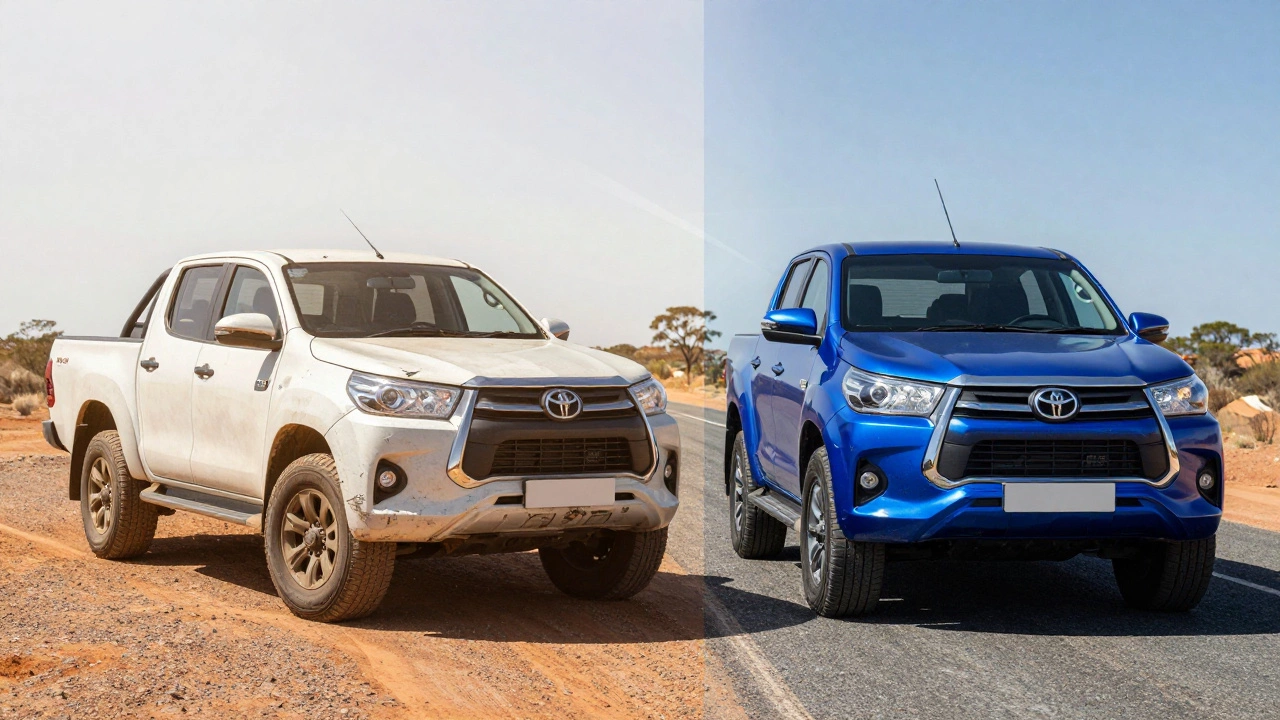
Real-world example: A 2022 Toyota Hilux in Murray Bridge
One owner wrapped his Hilux in a deep blue metallic wrap in early 2024. He drives 40,000 km a year - mostly on gravel roads and coastal routes. He washes it weekly, avoids automatic car washes, and uses a microfiber towel after every beach trip. Two years later, the wrap looks new. No fading, no lifting. The original paint underneath? Still factory-fresh. He’s planning to sell it next year and says he’ll get $5,000 more than the unwrapped ones at the dealership.
Meanwhile, his neighbor painted his Hilux the same color. The paint started chipping after 18 months from stone damage. He spent $2,200 on touch-ups last year. The wrap cost more upfront, but saved him money long-term.
| Feature | Car Wrap | Paint Job |
|---|---|---|
| Cost (full vehicle) | $3,500-$6,500 | $5,000-$8,000+ |
| Installation time | 3-7 days | 5-10+ days |
| Removable? | Yes, clean removal possible | No, permanent |
| Paint protection | Yes - blocks UV and scratches | No - paint is the surface |
| Wash requirements | Hand wash only, no brushes | Most car washes OK |
| Longevity | 5-7 years (with care) | 3-8 years (depends on sun exposure) |
| Resale impact | Often increases value if removed properly | Can decrease value if poor quality |
Frequently Asked Questions
Can I wrap a car with existing scratches or dents?
Technically, yes - but it’s not smart. Wraps conform to the shape of the surface underneath. Scratches won’t disappear; they’ll show through. Dents will still be visible. Rust will grow under the vinyl and ruin the wrap. Always repair body damage before wrapping.
Do car wraps damage the original paint?
No - if installed and removed correctly by a professional. High-quality vinyl uses removable adhesive designed to leave no residue. Many shops even offer a warranty on paint protection. But cheap film or poor removal can leave glue behind or pull off clear coat. Always choose a certified installer.
Can I wash a wrapped car in an automatic car wash?
Avoid brush-style automatic car washes. The brushes can catch on vinyl edges and peel them. Touchless washes are usually safe, but high-pressure sprays can force water under the film. Hand washing with soft mitts and mild soap is always the safest option.
How much does it cost to remove a car wrap?
Removal typically costs between $300 and $800, depending on the size and how long the wrap has been on. It’s labor-intensive - technicians use heat guns and special solvents to gently lift the film without damaging the paint underneath. Don’t try to peel it off yourself.
Can I wrap just part of my car?
Absolutely. Many people wrap just the roof, hood, or mirrors for a subtle look. Partial wraps cost less - around $800 to $2,000. It’s a good way to test the style before going full wrap.
Are car wraps legal in Australia?
Yes, as long as the wrap doesn’t obscure license plates, headlights, or reflectors. Some states require you to notify your registration authority if you change the vehicle’s color. In South Australia, you must update your registration details within 14 days of a color change, even if it’s just a wrap.
Final thought: Is it worth it?
If you want to protect your car’s paint, change its look without commitment, or turn your vehicle into a mobile billboard - yes, wrapping is a smart move. But it’s not a cheap shortcut. You’re paying for quality material, skilled labor, and ongoing care. Do it right, and your wrap will last longer than your paint job ever would. Do it cheap, and you’ll regret it before the year’s out.
In Adelaide’s sun, on our rough roads, a good wrap isn’t vanity - it’s strategy. It’s the modern way to keep your car looking new, without the permanence of paint.