Quick Legal Takeaways
- White and Selective Yellow: These are the only colors generally legal for forward-facing headlights globally.
- The "Blue" Trap: Bulbs that look blue in the box often produce white light, but actual blue light is illegal.
- Certification: Always look for DOT (Department of Transportation) or E-mark stamps on the bulb or housing.
- Beam Pattern: Legal LEDs must maintain a specific cutoff line to avoid blinding other drivers.
The Golden Rule of Headlight Color
When it comes to the law, the goal is predictability. Other drivers need to know instantly if a light is a headlight, a turn signal, or an emergency vehicle. This is why legal LED headlights is a regulated standard that limits forward-facing lights to white or selective yellow. In most jurisdictions, any one of these colors is the only way to go if you want to stay off the police radar.
White light is the standard because it provides the best contrast and visibility for the human eye at night. Selective yellow, which you'll often see on vintage French cars or specialized fog lights, is allowed because it cuts through rain and mist more effectively without creating the harsh glare that blue-tinted lights produce. If you install a color outside this narrow window-like red, green, or deep blue-you aren't just breaking a style rule; you're creating a safety hazard that mimics emergency services.
The Confusion Between Bulb Color and Light Color
Here is where most people get tripped up. You've probably seen LED bulbs semiconductor light sources that convert electricity into light that look distinctly blue or purple when they are sitting in the packaging. Does this mean they are illegal? Not necessarily.
The color of the physical diode or the coating on the glass is different from the color temperature of the light it emits. Color temperature is measured in Kelvins (K). A standard halogen bulb is usually around 3,000K (yellowish). A crisp, legal white LED is typically between 5,000K and 6,500K. Once you push past 7,000K or 8,000K, the light begins to take on a noticeable blue hue. While the bulb might look "white" to some, the law often views anything with a strong blue cast as a violation because it scatters more in the atmosphere and causes more glare for oncoming traffic.
| Kelvin Range | Visual Appearance | Legal Status | Best Use Case |
|---|---|---|---|
| 3,000K - 4,500K | Warm White / Yellow | Legal | Fog, Rain, Snow |
| 5,000K - 6,500K | Pure White / Daylight | Legal | Standard Night Driving |
| 7,000K - 10,000K+ | Cool Blue / Violet | Often Illegal | Show Cars (Off-Road) |
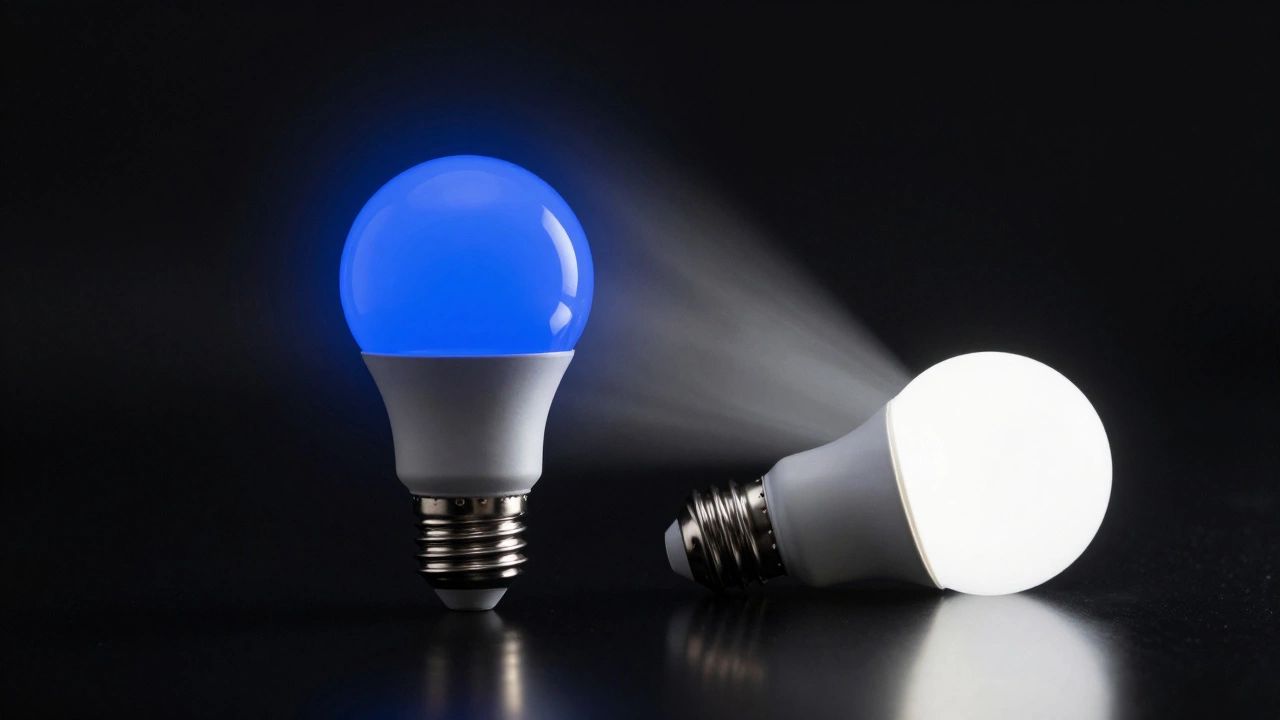
Why Blue LEDs are a Legal Nightmare
You might wonder why a little bit of blue is such a big deal. It comes down to how the human eye and the road interact. Blue light has a shorter wavelength, which means it scatters more easily. In a heavy rainstorm, blue-tinted LEDs create a "wall of light" effect that reflects off the water droplets and bounces right back into your eyes, actually reducing your visibility.
Furthermore, blue is reserved for Emergency Vehicles Authorized police, fire, and medical response units . If your headlights emit a blue glow, a police officer might perceive it as an attempt to impersonate a law enforcement vehicle. Even if you're just trying to look sporty, the risk of a "fix-it ticket" or even a more serious charge is high.
DOT and E-Mark: The Stamps That Save You
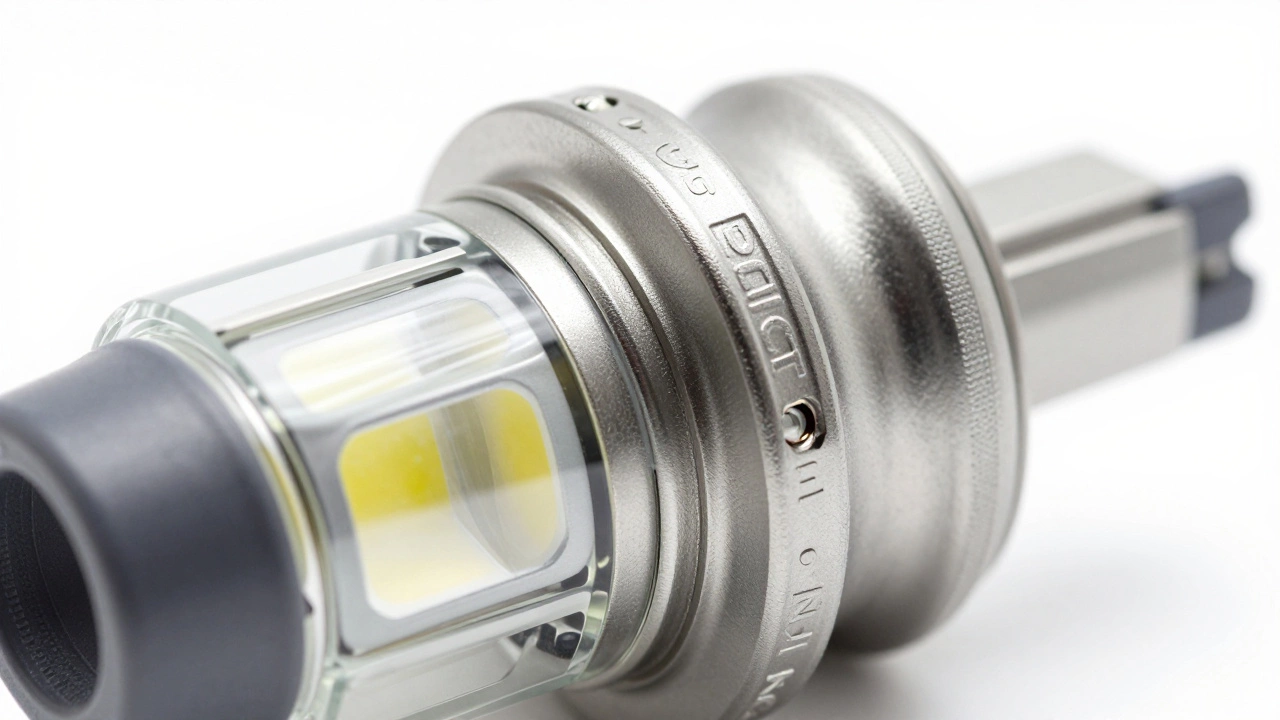
If you're buying LEDs from a random online marketplace, the description might say "Street Legal," but that's often a marketing claim rather than a legal fact. To be truly safe, you need to look for specific certifications. In the US, that's the DOT the Department of Transportation, which sets vehicle safety standards . In Europe and many other regions, look for the "E-mark" (a capital E in a circle).
These certifications mean the bulb has been tested for three critical things:
- Luminous Flux: The light is bright enough to see, but not so bright that it blinds others.
- Color Spectrum: The light falls within the legal white/yellow range.
- Beam Pattern: The light is focused where it belongs-on the road-and not leaking upward into the eyes of other drivers.
Many cheap LED drop-in replacements for halogen housings are technically illegal, even if they are white. Why? Because halogen reflectors are shaped for a filament (a small point of light), while LEDs have a different light source. This often causes the light to scatter, creating a "hot spot" and a messy beam that doesn't meet SAE the Society of Automotive Engineers, which defines technical standards for headlights standards.
Practical Tips for Switching to LED
If you're determined to upgrade your lighting, don't just buy the cheapest set of "Diamond White" bulbs. Start by checking your owner's manual to see if your car is pre-wired for LEDs. If you're putting LED bulbs into a housing designed for halogens, you might need a CANbus decoder. Without one, your car's computer might think the bulb is blown because LEDs draw significantly less power than halogens, leading to flickering or "bulb out" warnings on your dashboard.
Also, consider the housing. If you want the cleanest, most legal look, upgrading the entire Headlight Assembly the complete unit including lens, reflector, and bulb to a factory-spec LED unit is always safer than swapping bulbs. This ensures the optics are designed specifically for the LED light source, keeping your beam pattern sharp and your ticket risk at zero.
Are blue LED headlights legal anywhere?
Generally, no. In almost every country and US state, blue light is strictly reserved for emergency vehicles. While some regions might be more lenient with a very slight "cool white" tint, any distinct blue light is likely to result in a fine.
Can I use yellow LED headlights?
Yes, "selective yellow" is typically legal and is often preferred for fog lights or auxiliary driving lights because it improves visibility in poor weather conditions by reducing glare.
What happens if I use non-DOT approved LEDs?
You risk receiving a citation during a traffic stop or failing your annual vehicle safety inspection. More importantly, non-approved bulbs often have poor beam patterns that can blind other drivers, increasing the risk of an accident.
Is 6000K considered a legal white?
Yes, 6000K is widely considered "daylight white" and is the gold standard for most legal LED upgrades. It looks clean and modern without crossing into the illegal blue spectrum.
Do I need a decoder for LED headlights?
If you are installing LED bulbs into a car that originally had halogen bulbs, you likely need a CANbus decoder to prevent the car's computer from triggering an error code due to the lower power draw of LEDs.
What to do next
If you've already installed blue LEDs and are worried about the law, the quickest fix is to swap them for a 5,000K to 6,000K white set. Before you buy, check the packaging for the DOT or E-mark symbol. If you're still unsure, take a quick drive to a local mechanic or a car enthusiast group; they can usually tell you with a glance if your beam pattern is too scattered or if the color is too "loud" for the local police.