Lowering Springs vs. Coilovers Comparison
You’ve seen the stance. It’s aggressive, it looks fast even when standing still, and it’s usually cheaper than buying a full set of air suspension or high-end coilovers. So you grab a pair of lowering springs-those stiff, shortened metal coils designed to drop your car’s center of gravity-and bolt them onto your existing shock absorbers. But three months later, you’re noticing something isn’t right. The ride feels harsher than expected, the steering pulls slightly to the left, and that small pothole on Main Street just took out your wheel rim.
Lowering springs are one of the most popular first modifications for car enthusiasts, but they come with a specific set of mechanical compromises. They aren't just 'shorter springs'; they fundamentally alter how your vehicle interacts with the road. If you don't understand the physics behind the drop, you risk damaging your suspension components, ruining your daily drivability, and potentially voiding your insurance.
The Physics of Stiffness: Why Your Ride Feels Like Concrete
The primary reason people buy lowering springs is to lower the center of gravity. This theoretically improves cornering stability by reducing body roll. However, there is a catch. To support the same weight at a shorter length, the spring must be stiffer. This is measured in spring rate (N/mm or lbs/in). A stock spring might have a rate of 100 N/mm, while a typical -30mm lowering spring could jump to 180 N/mm or higher.
Here is the problem: your original equipment manufacturer (OEM) shock absorbers (dampers) were tuned specifically for the softness of the stock springs. When you swap in much stiffer springs without changing the dampers, you create a mismatch. The shocks can no longer control the energy stored in the stiff springs effectively. Instead of smoothing out bumps, the suspension bottoms out instantly. You feel every expansion joint, every pebble, and every seam in the asphalt. This phenomenon is often called 'harshness,' but technically, it's a failure of damping control.
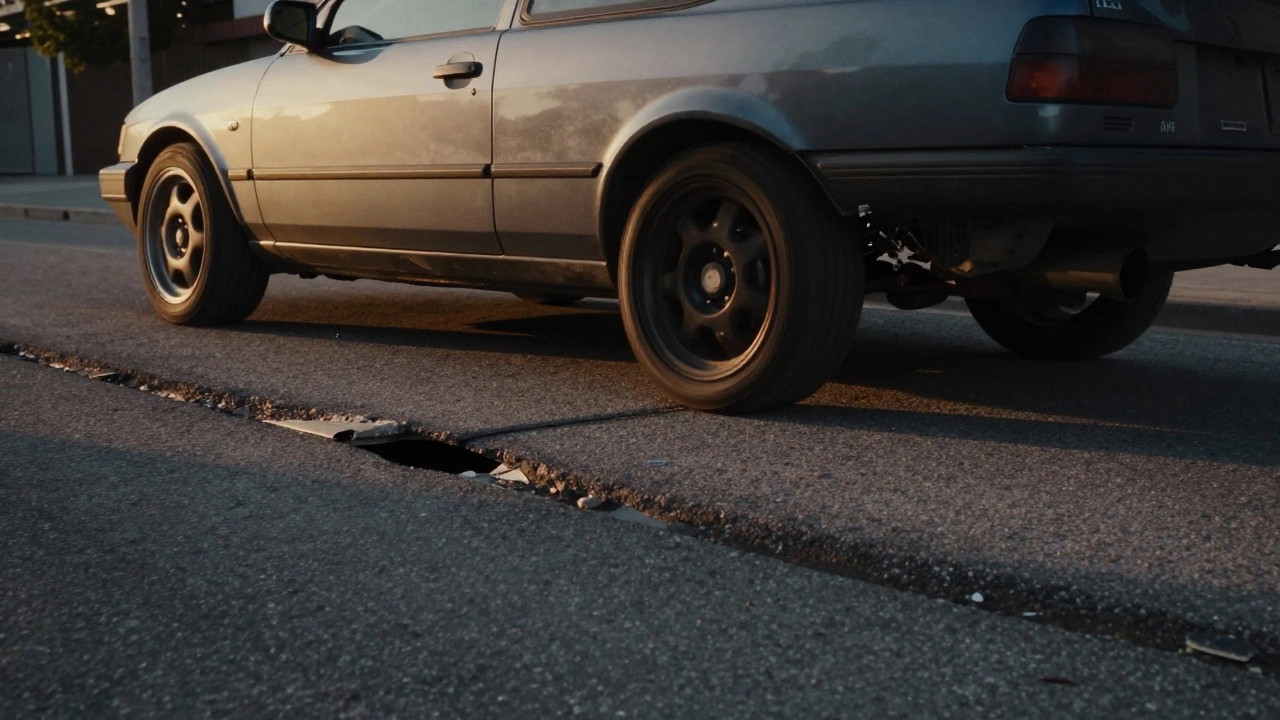
If you live in an area with poor road infrastructure, like many parts of Adelaide where older streets meet modern traffic loads, this stiffness becomes a daily punishment rather than a performance benefit. The car doesn't float over imperfections; it slams into them.
Suspension Geometry Goes Out the Window
Car manufacturers spend millions engineering the suspension geometry-the angles at which your wheels sit relative to the chassis. Key metrics include camber, caster, and toe. These angles ensure your tires maintain optimal contact with the road during straight-line driving and cornering.
When you lower a car using simple springs, you force the suspension into a position it was never designed to hold. As the car drops, the upper control arms move inward, pulling the top of the wheel toward the center of the car. This creates negative camber. While slight negative camber helps in high-speed cornering, excessive negative camber (caused by cheap lowering springs) causes the inner edge of your tire to wear down rapidly. You might find yourself replacing tires every 15,000 kilometers instead of 40,000.
Furthermore, lowering changes the bump steer geometry. Bump steer occurs when vertical movement of the suspension causes the wheels to turn left or right unintentionally. On a lowered car, hitting a bump can cause the steering wheel to jerk violently in your hands. This is dangerous because it reduces driver confidence and makes emergency maneuvers unpredictable.
The Strain on Stock Components
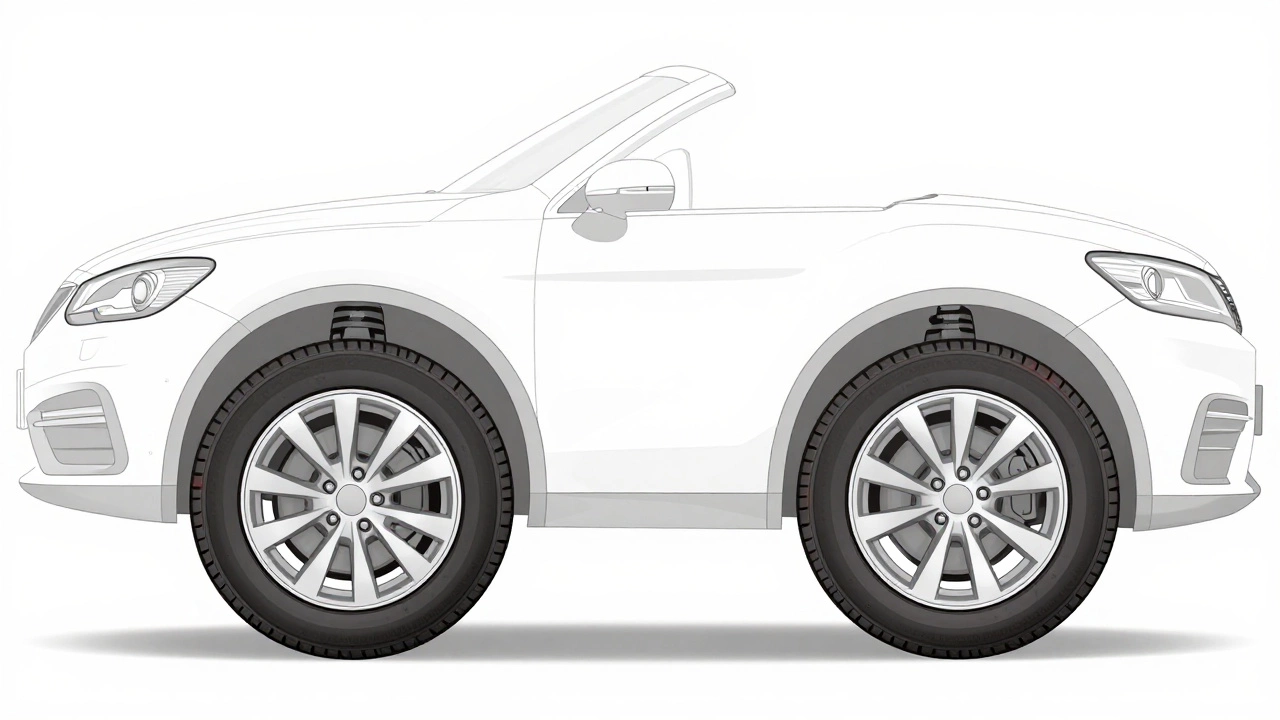
Lowering springs place increased stress on other parts of the suspension system. Because the suspension has less travel (the distance it can move up and down), components like ball joints, tie rod ends, and bushings are subjected to higher leverage forces. Over time, this accelerated wear leads to premature failure.
Consider the constant velocity (CV) joints. When a car is lowered, the angle of the CV axles increases. If the drop is too severe (usually more than 50mm without additional modification), the CV joints may bind or click when turning. In extreme cases, the axle can snap under acceleration. Additionally, the reduced ground clearance means your oil pan, exhaust system, and subframe are closer to the ground. Hitting a speed bump too fast can result in catastrophic damage to these expensive components.
Quality Variance: Cheap vs. Premium Springs
Not all lowering springs are created equal. The market is flooded with budget options that promise significant drops for minimal cost. These cheap springs often use inferior steel alloys that lack proper heat treatment. As a result, they can sag prematurely, losing their height gain within six months. Worse, they can crack or break under load, leaving your car stranded on the side of the road with its suspension collapsed.
Premium brands invest in progressive spring rates and precise manufacturing tolerances. Progressive springs start soft for comfort over small bumps but get stiffer as compression increases, offering a better balance between comfort and handling. However, even premium lowering springs cannot fully solve the geometry and damping mismatch issues mentioned earlier. They simply mitigate the severity of the problems.
| Feature | Stock Suspension | Lowering Springs | Coilovers |
|---|---|---|---|
| Ride Comfort | High (Tuned for OEM) | Low (Harsh) | Adjustable (Medium to High) |
| Handling Precision | Moderate | Improved (But Unbalanced) | Excellent (Balanced) |
| Tire Wear | Even | Uneven (Inner Edge) | Even (If Aligned Properly) |
| Cost | $0 (Included) | $150 - $400 AUD | $800 - $3,000+ AUD |
| Installation Complexity | N/A | Easy (DIY Friendly) | Hard (Requires Alignment) |
Is There a Better Alternative?
If you want the look and handling benefits of a lowered car without the drawbacks, consider upgrading to coilovers. Coilovers combine the spring and damper into a single unit. This allows engineers to tune the damping specifically for the spring rate, eliminating the harshness issue. Many coilover systems also offer adjustable ride height, allowing you to raise the car for rough roads and lower it for track days or shows.
Another option is strut spacers or drop spacers, which lower the car slightly (usually 10-20mm) without changing the spring rate or significantly altering geometry. This is a compromise solution that offers a modest aesthetic improvement with minimal impact on ride quality.
Maintenance Tips If You Stick With Springs
If you decide to proceed with lowering springs, take steps to minimize the risks:
- Get a Professional Alignment: Never skip this step. Have a mechanic adjust the camber and toe to compensate for the lowered height. This will save your tires and improve steering response.
- Check Bushings Regularly: Inspect control arm bushings and sway bar end links every 6 months. Replace them if you notice cracking or looseness.
- Drive Defensively: Avoid speed bumps, deep potholes, and steep driveways. Approach curbs slowly to prevent curb rash on your wheels.
- Monitor Tire Wear: Rotate your tires more frequently and check for uneven wear patterns. If the inner edges are wearing faster, your camber needs adjustment.
Lowering springs are a double-edged sword. They offer an affordable way to enhance your car's appearance and reduce body roll, but they demand sacrifices in comfort, component longevity, and geometric precision. By understanding these trade-offs, you can make an informed decision about whether the aesthetic payoff is worth the mechanical price.
Do lowering springs ruin my suspension?
They don't necessarily 'ruin' it immediately, but they accelerate wear on stock components like ball joints, bushings, and shock absorbers due to increased stiffness and altered geometry. Without regular maintenance and alignment, you will likely experience premature failure of these parts.
Can I install lowering springs myself?
Yes, installing lowering springs is generally considered a DIY-friendly task for those with basic mechanical skills and the right tools (spring compressors). However, you must have a professional wheel alignment performed afterward to ensure safety and prevent uneven tire wear.
How much should I lower my car safely?
A safe drop for daily driving is typically between 20mm and 40mm. Dropping more than 50mm usually requires additional modifications like adjustable control arms to correct suspension geometry and prevent binding or excessive tire wear.
Will lowering springs affect my insurance?
In Australia, minor modifications like lowering springs may not always need to be declared, but it depends on your insurer. If the modification affects the safety or value of the vehicle, failing to disclose it could void your policy in the event of a claim. Always check with your provider.
Are lowering springs legal in Australia?
Yes, lowering springs are legal provided the vehicle still meets minimum ground clearance requirements and safety standards set by local regulations. However, excessive lowering that impacts headlight aim or brake function can fail a safety inspection.