Exhaust Noise & Legality Checker
Select your current or planned exhaust setup to see estimated noise levels and potential legal consequences.
Legal Status
Analysis...
There is a specific kind of frustration that only a car enthusiast can truly understand. You wake up at 6:00 AM on a Saturday, ready for a peaceful coffee, when suddenly the street outside erupts into chaos. It sounds less like a vehicle starting and more like a jet engine testing its afterburners in your living room. This is the work of what the automotive community has affectionately-and often angrily-dubbed the "neighbor hater muffler."
If you have ever wondered why some cars sound like they are about to explode while others purr quietly, or if you are considering modifying your own exhaust system but want to avoid legal trouble, you need to understand exactly what these components are, how they work, and where the line between "sporty" and "illegal" actually lies.
What exactly is a neighbor hater muffler?
A neighbor hater muffler is not a technical term found in engineering manuals. It is a colloquial slang term used by car enthusiasts to describe an exhaust system designed specifically to produce maximum volume with minimal acoustic refinement. These systems often bypass traditional muffling chambers, using straight pipes, large-diameter tubing, or specialized resonators that amplify low-frequency drones and high-pitched pops rather than dampening them.
The Anatomy of a Loud Exhaust System
To understand why some exhausts are quiet and others are deafening, we have to look at the basic function of an exhaust system. Its primary job is to move toxic gases away from the engine and out of the vehicle. However, secondary jobs include reducing noise and improving engine efficiency through backpressure management.
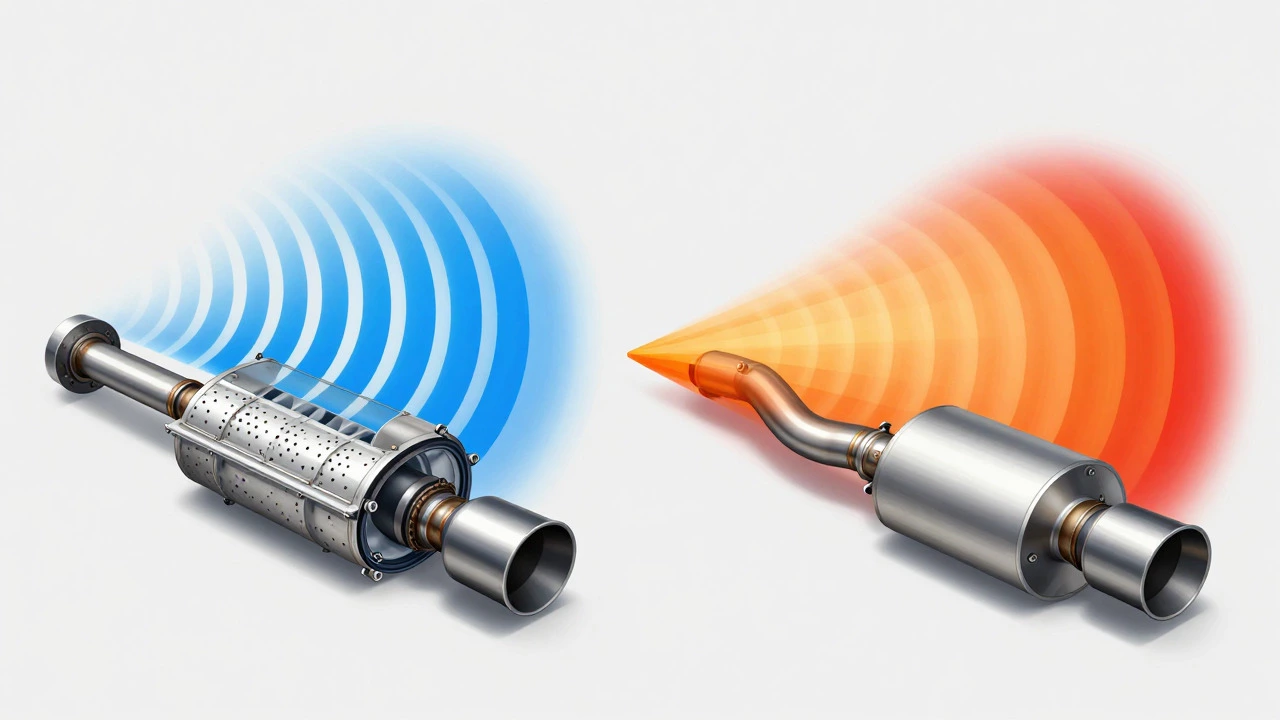
A standard factory exhaust system uses a combination of perforated tubes, baffles, and packing material inside the muffler is a device that reduces the noise of the exhaust gases exiting the engine to cancel out sound waves. Think of it like noise-canceling headphones for your car. When gas pulses hit the baffles, the sound waves reflect and interfere with each other, effectively neutralizing the noise before it exits the tailpipe.
A "neighbor hater" setup removes this cancellation process. Instead of complex internal structures, these systems often use:
- Straight Pipes: A simple metal tube with no internal restrictions. This allows exhaust gases to exit freely, creating a raw, unfiltered roar.
- Resonator-Only Systems: Some aftermarket parts replace the heavy muffler with a smaller resonator. While this reduces drone slightly, it still allows significantly more volume to escape compared to stock equipment.
- Large Diameter Tips: Simply attaching a wide cone tip to a stock pipe won't make it a neighbor hater, but combining a large tip with a free-flowing cat-back system amplifies the perceived volume due to the increased surface area of the exit point.
The result is a sound profile that is characterized by excessive decibel levels, often exceeding 100 dB at idle, which is comparable to a motorcycle revving nearby. This is the opposite of the refined growl sought by many performance drivers.
Straight Pipes vs. Performance Exhausts: What's the Difference?
One of the biggest misconceptions in the car world is that louder always equals faster. Many beginners believe that installing a loud exhaust will magically add horsepower. While reducing backpressure can improve high-RPM power output, the difference is usually negligible for daily driving and rarely justifies the noise penalty.
| Exhaust Type | Noise Level | Performance Gain | Legal Status (Most Regions) |
|---|---|---|---|
| Stock OEM | Low | Baseline | Always Legal |
| Cat-Back Performance | Moderate | Minimal to Moderate | Usually Legal |
| Header-Back / Turbo Back | High | Moderate | Varies by Region |
| Straight Pipe / Neighbor Hater | Very High | Negligible (Daily Use) | Often Illegal |
A true performance exhaust, such as those made by brands like Borla or MagnaFlow, focuses on flow dynamics. They use larger diameter piping to reduce restriction, but they still include mufflers tuned to provide a sporty tone without being obnoxious. A neighbor hater setup, conversely, prioritizes volume over flow optimization. In fact, completely removing all backpressure can sometimes hurt low-end torque, making the car feel sluggish in city traffic.
The Legal Reality: Noise Ordinances and Fines
This is where the fun stops for many enthusiasts. Living in Adelaide, Australia, I see firsthand how strictly local councils enforce noise pollution laws. But this isn't unique to Australia; most developed nations have strict regulations regarding vehicle noise.
In many jurisdictions, vehicles must pass a periodic safety inspection that includes a decibel test. For example, in South Australia, light vehicles generally must not exceed 85 dB(A) at idle and 95 dB(A) under acceleration, depending on the year of manufacture. A straight-piped car can easily hit 100+ dB at idle. This means the car fails inspection immediately.
Beyond inspections, police officers have the authority to issue on-the-spot fines for excessive noise. In some US states, having a modified exhaust that exceeds certain decibel limits is considered a non-moving violation, meaning you get a ticket even if you aren't speeding. In Europe, failing an MOT (Ministry of Transport) test due to noise can mean your insurance becomes void if you are involved in an accident.
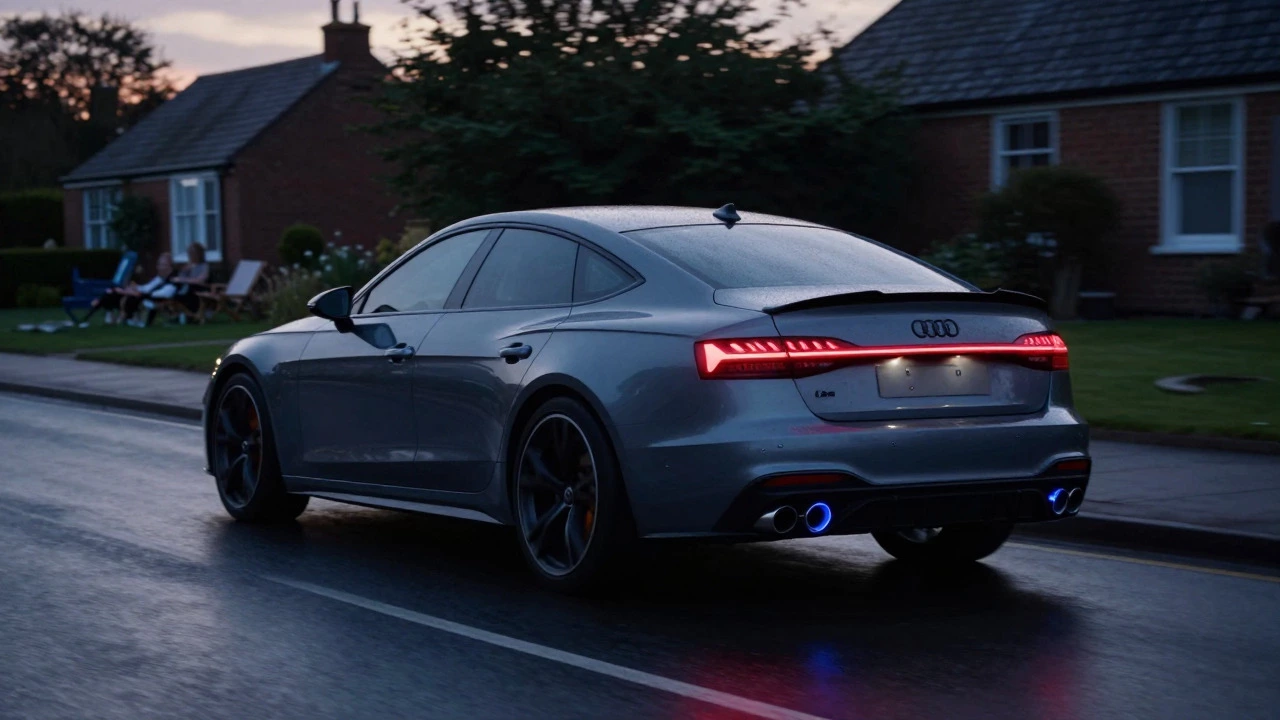
The term "neighbor hater" implies a social contract breach. While car culture celebrates individuality, residential areas operate on shared peace. Constantly idling a loud car, known as "idling abuse," is often subject to stricter penalties than simply driving with a loud exhaust because it creates sustained noise pollution.
Why Do People Install Them?
If they are illegal and annoying, why do people keep buying them? The reasons are psychological and cultural rather than mechanical.
- Attention Seeking: For some, the sound is a status symbol. It announces their presence and draws attention to their vehicle modification.
- Misinformation: Many buyers are told by inexperienced mechanics or online forums that "bigger is better." They equate loudness with power, not realizing that modern engines are already highly efficient.
- Track Use Misconception: Some believe that removing weight from the exhaust helps on the track. While true, the loss of low-end torque usually outweighs the minor weight savings for street-driven cars.
- Rebellion: There is a subculture that views noise ordinances as an infringement on personal freedom. Installing a loud exhaust becomes an act of defiance against perceived over-regulation.
However, the backlash is real. Online communities dedicated to reporting loud cars have grown in popularity. Neighbors frequently call police dispatchers to report vehicles based solely on sound. This leads to a negative perception of car enthusiasts as a whole, making it harder for responsible modifiers to advocate for reasonable regulations.
How to Get Sound Without the Hate
You don't have to choose between a boring factory drone and a neighborhood nuisance. The middle ground exists, and it is where most serious enthusiasts live. Here is how to upgrade your exhaust responsibly:
- Choose a Cat-Back System: Replace everything behind the catalytic converter. This changes the tone significantly without altering emissions compliance. Look for systems labeled "street legal" or "quiet sport."
- Use Active Valve Exhausts: High-end systems from brands like Akrapovič or Remus feature electronically controlled valves. The exhaust stays quiet at idle and low speeds, opening up for a louder, freer-flowing sound when you press the throttle hard. This gives you the best of both worlds.
- Test Before You Commit: If possible, listen to the exhaust on a similar car before buying. Decibel meters are cheap and available on smartphone apps. Measure the idle noise. If it’s above 80 dB, think twice about installing it near your home.
- Consider Resonators: If you want a deeper tone, adding a resonator can tune out harsh frequencies without silencing the entire system. This creates a smoother, more pleasant sound profile.
The Environmental Impact
While noise is the immediate complaint, there is an environmental angle too. Catalytic converters are crucial for reducing harmful emissions like nitrogen oxides (NOx) and carbon monoxide (CO). Some extreme modifications involve deleting the catalytic converter entirely ("cat delete") to maximize flow and sound.
Removing the cat doesn't just make the car louder; it increases pollution significantly. In regions with strict emissions testing, like California in the US or major cities in Europe, a cat-delete is almost guaranteed to fail inspection. Furthermore, modern engine control units (ECUs) may throw error codes if they detect the absence of oxygen sensors downstream of the cat, leading to reduced fuel efficiency and potential long-term engine damage due to incorrect air-fuel ratios.
Finding the Balance
Car modification is a hobby rooted in passion and engineering. The goal should be to enhance the driving experience, not degrade the quality of life for everyone around you. A well-tuned exhaust adds character to a car-a deep rumble on acceleration, a crisp crackle on overrun-but it should never be a constant assault on the senses.
The next time you hear a car that sounds like it's falling apart, remember that it might not be broken. It might just be poorly modified. And the next time you consider upgrading your own exhaust, ask yourself: Do I want to be heard, or do I want to be respected? There is a significant difference, and your neighbors will definitely notice.
Is it illegal to have a loud exhaust in Australia?
Yes, it can be. Each state and territory has specific noise limits for vehicles. In South Australia, for instance, vehicles must comply with the Motor Vehicle Standards Regulations. Excessive noise can lead to fines and failure during safety inspections. Police can also issue on-the-spot fines for unreasonable noise.
Does a straight pipe increase horsepower?
It can, but usually only at very high RPMs and on high-performance engines. For most daily driver cars, the gain is negligible (often less than 5 horsepower) and is offset by a loss of low-end torque, making the car feel slower in everyday driving conditions.
What is the difference between a cat-back and a header-back exhaust?
A cat-back exhaust replaces everything from the rear of the catalytic converter to the tailpipe. It affects sound and flow but keeps emissions hardware intact. A header-back (or turbo-back) replaces the exhaust headers/turbos all the way back, offering more performance potential but often resulting in much louder noise and potential emissions issues.
Can I install a loud exhaust and still pass inspection?
It depends on the specific decibel limits of your region and the type of inspection. Most standard aftermarket performance exhausts are designed to pass. Straight pipes and extreme "neighbor hater" setups frequently fail decibel tests during mandatory vehicle inspections.
What is a resonator and does it help with noise?
A resonator is a chamber in the exhaust system designed to cancel out specific low-frequency sound waves (drone) without significantly restricting flow. Adding or keeping a resonator can make a loud exhaust much more pleasant and less annoying at cruising speeds.
Social Impact
Impact analysis...