Wheel Flange Profile Checker
Enter your wheel marking below to understand what the letters mean for your tire safety and performance.
Detected Profile:
N/AAnalysis & Compatibility
What This Means
Typical Applications
Tire Safety Check
Recommendation
Quick Reference Guide
| Code | Flange Height | Common Use |
|---|---|---|
| J | Medium-High | Modern Passenger Cars/SUVs |
| JK | High | Performance Vehicles/Trucks |
| K | Very High | Light Trucks/Older Muscle |
| B | Low | Vintage Cars/Narrow Rims |
| BB | Extra Low | Classic Sports Cars |
You’re staring at the inside of your brand-new alloy wheels, and you see a bunch of numbers and letters. Most people ignore them, but if you’ve ever wondered why your tire sits differently on one rim compared to another, that letter "J" is the culprit. It’s not just decoration; it tells you exactly how high the side wall of the rim is, which dictates how well your tire stays glued to the road.
The Hidden Code on Your Rim
Wheel manufacturers stamp specific codes on the back or front face of every rim. These aren’t random. They follow strict standards set by organizations like the Tire and Rim Association (TRA) in the US or ETRTO in Europe. When you see something like "7.5J x 17", you are looking at three distinct pieces of information: width, profile, and diameter. The "J" sits right in the middle, acting as the bridge between how wide the wheel is and how tall its edges are.
Think of the wheel as a container for air. The sides of this container need to hold the tire bead-the thick, reinforced edge of the tire-securely against centrifugal force. If the sides are too low, the tire might slip off during hard cornering. Too high, and you risk damaging the tire sidewall when hitting potholes. The "J" defines this critical geometry.
Decoding the Letter J: What It Actually Means
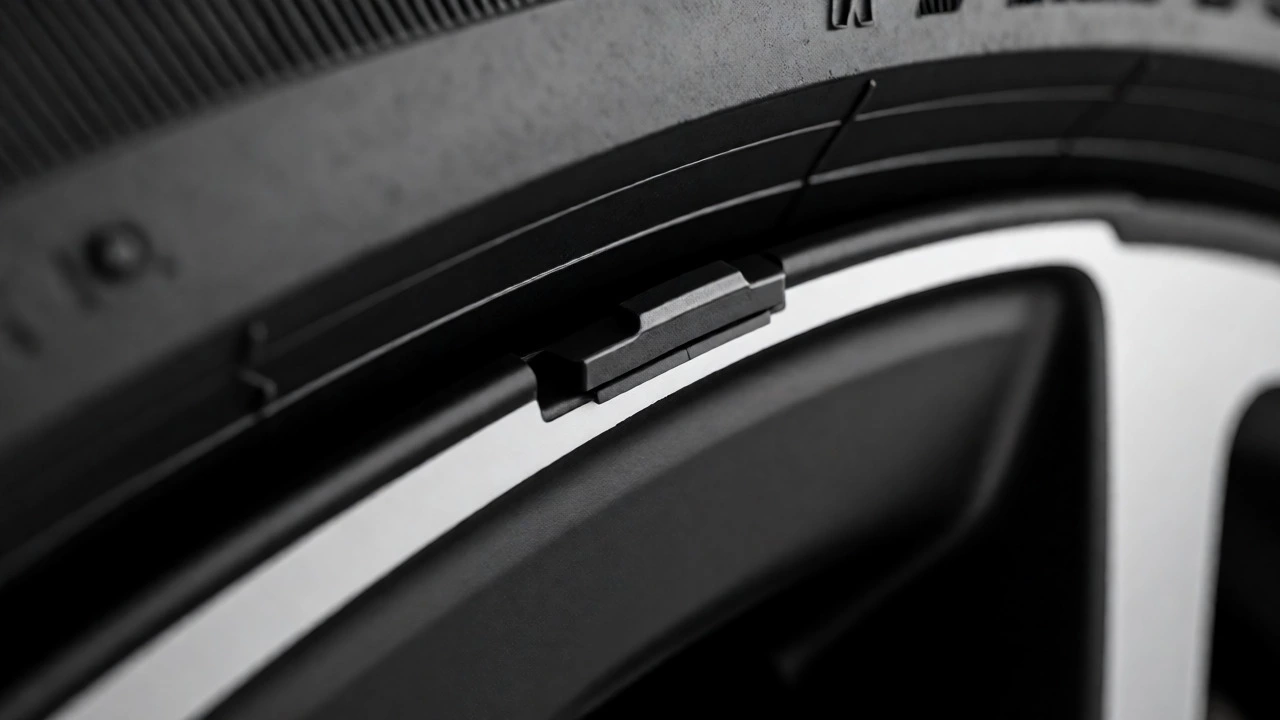
In technical terms, "J" refers to the flange height. The flange is the raised lip on the outer edge of the wheel rim. Its primary job is to keep the tire bead seated properly. Different letters correspond to different heights of this lip. For instance, an "A" profile has a very low flange, while a "K" or "L" has a much taller one.
Why does this matter to you? Because tires are designed to match specific flange profiles. A tire marked for a "JJ" rim might fit loosely on a "J" rim, leading to poor handling or even blowouts. Conversely, forcing a tire meant for a low-profile "B" rim onto a tall "J" rim can make installation a nightmare and stress the rubber unevenly.
| Profile Code | Flange Height | Typical Application | Tire Compatibility Note |
|---|---|---|---|
| J | Medium-High | Most modern passenger cars and SUVs | Standard for most radial tires today |
| JK | High | Performance vehicles, some trucks | Slightly taller than J, better bead retention |
| K | Very High | Light trucks, older muscle cars | Rare on modern sedans |
| B | Low | Older vintage cars, narrow rims | Often found on classic restorations |
| BB | Extra Low | Classic British sports cars | Specific vintage tire requirements |
Why "J" Became the Global Standard
If you look at almost any car manufactured after the year 2000, you will likely find "J" stamped on the wheel. This wasn’t always the case. In the past, manufacturers used various proprietary designs. However, as radial tires became universal, the industry needed a standard that balanced safety with ease of mounting. The "J" profile offered the perfect compromise: high enough to prevent de-beading under lateral load, but low enough to allow tire changers to mount and dismount tires without excessive force.
This standardization simplifies life for mechanics and DIY enthusiasts alike. When you buy a replacement tire, you rarely have to worry about the flange profile because 90% of consumer vehicles use "J" or "JK". It creates a predictable ecosystem where parts interchangeability is high.
Matching Tires to the J Profile
Just because your wheel says "J" doesn’t mean any tire will work perfectly. You still need to check the tire manufacturer’s specifications. Most modern tires are labeled with a range of compatible rim widths, such as "Rim Width Range: 6.5-8.0". But hidden in the fine print is often a recommendation for the flange type.
Here is a practical rule of thumb: If your tire sidewall looks excessively stretched or overly bulged, check the flange match. A mismatch usually shows up as uneven wear patterns or vibration at high speeds. For example, using a tire designed for a lower flange on a "J" rim might cause the shoulder of the tire to rub against the rim edge, creating heat and premature failure.
Common Misconceptions About Wheel Markings
Many drivers confuse the "J" with the bolt pattern or offset. Let’s clear that up. The bolt pattern (like 5x114.3) determines how the wheel attaches to the hub. The offset (ET value) determines how far the wheel sits inward or outward from the suspension knuckle. The "J" only cares about the cross-section shape of the rim itself.
- It’s not about strength: A "J" rim isn’t stronger than a "K" rim; they just have different shapes.
- It’s not about width: You can have a 7-inch wide "J" rim or a 9-inch wide "J" rim. The letter describes the edge shape, not the diameter.
- It’s not customizable: You cannot change the flange profile of a cast alloy wheel. It is molded into the design.
When You Should Care About the Flange Profile
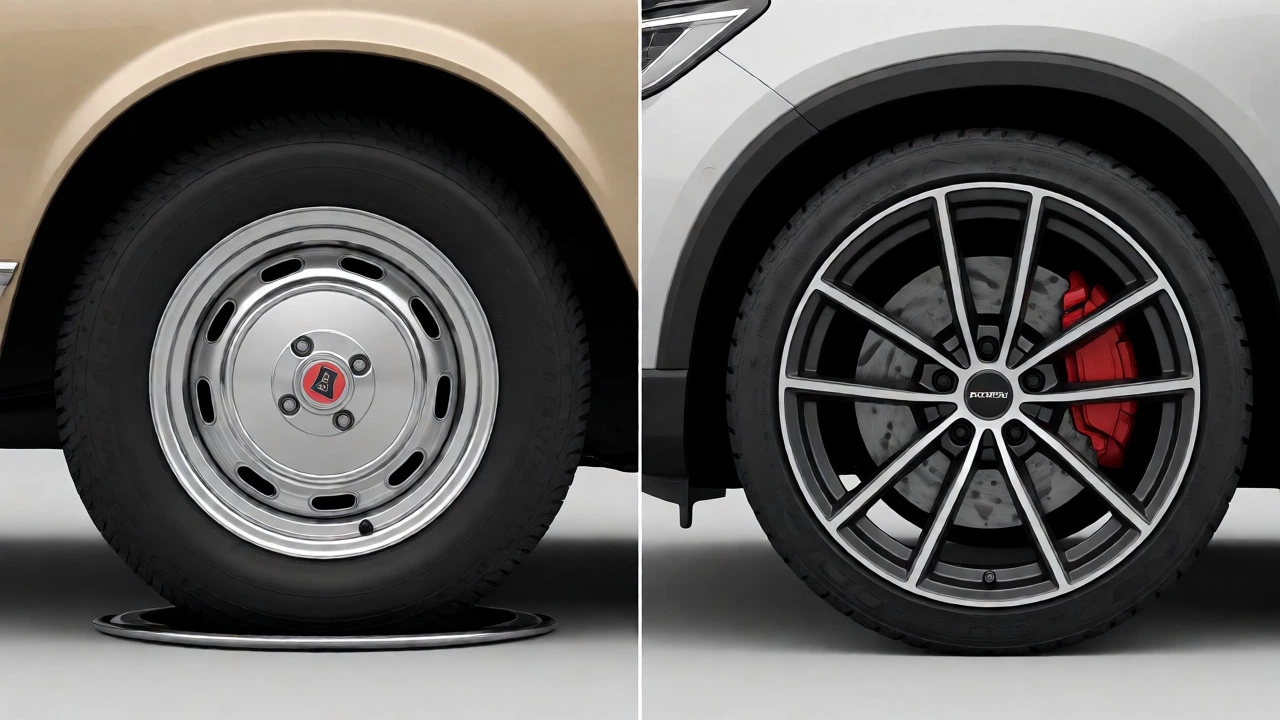
For daily driving, you can mostly ignore the "J". But there are scenarios where paying attention saves you money and headaches. First, if you are restoring a classic car, original specs matter. Using a modern "J" wheel on a car designed for "BB" flanges can alter the ride height and handling dynamics significantly.
Second, if you are mixing brands. Some European performance wheels use unique profiles that deviate slightly from the standard "J". While they might physically accept a standard tire, the seal might not be optimal, leading to slow leaks. Always verify compatibility if you are moving away from mainstream brands.
How to Check Your Current Setup
Finding the code is simple. Look at the inner barrel of the wheel, usually near the valve stem hole. Sometimes it is stamped on the outer face near the lug holes. It will look like "7.5J x 18 ET45". Here, "7.5" is width, "J" is profile, "18" is diameter, and "ET45" is offset.
If you are buying new tires, bring this number to the shop. Ask the installer to confirm the tire model is rated for "J" flanges. Reputable tire shops will know this by heart, but it never hurts to ask. It shows you’ve done your homework and ensures they double-check their inventory.
Impact on Tire Wear and Performance
A correctly matched flange ensures the tire maintains its intended contact patch. If the flange is too high, the tire sidewall may flex less than designed, making the ride harsher. If too low, the sidewall flexes more, reducing steering response and increasing heat buildup.
Consider a scenario where you upgrade from steel wheels to alloys. Steel wheels often have different flange geometries. Switching to "J" profile alloys might actually improve cornering stability because the higher flange supports the tire shoulder better during aggressive maneuvers. This is why many track-day enthusiasts prefer specific flange heights-they optimize the tire’s structural integrity under load.
Can I use a tire designed for a JK rim on a J rim?
Generally, yes, but it depends on the tire manufacturer's tolerance. Many modern tires are designed to accommodate both J and JK profiles due to their close similarity. However, always check the tire's technical data sheet for approved rim profiles to ensure optimal performance and warranty coverage.
Does the J marking affect wheel strength?
No, the "J" marking refers solely to the geometric shape of the rim flange, specifically its height and angle. It does not indicate the material strength, load rating, or durability of the wheel. Those factors are determined by the alloy composition and manufacturing process.
Are all modern alloy wheels J profile?
The vast majority are, especially for passenger cars and light trucks. However, some specialized performance wheels, heavy-duty commercial wheels, or vintage-style reproductions may use other profiles like K, L, or B. Always verify the stamping on the wheel before purchasing tires.
What happens if I put the wrong tire on my J rim?
You might experience poor bead sealing, leading to air leaks, or improper tire seating, causing vibrations. In severe cases, the tire could fail to stay seated under lateral loads, posing a safety risk. Uneven tread wear is also a common symptom of a mismatched flange profile.
Is JJ better than J for performance?
Not necessarily. "JJ" has a slightly taller flange than "J," which can offer marginally better bead retention during extreme cornering. However, the difference is minimal for street driving. Choose based on what your tire manufacturer recommends for your specific vehicle setup.