Tint Legality Checker
Check Your Tint Legality
Ensure your window tint meets legal requirements and provides safe visibility at night. Based on Australian regulations.
Driving at night is already tough. Headlights blind you, shadows hide pedestrians, and rain smears glare across your windshield. If you’ve got tinted windows, you might be wondering: what is the best tint to see at night? The answer isn’t what most people think. It’s not about how dark it looks-it’s about how much light gets through.
It’s Not About Darkness, It’s About Light
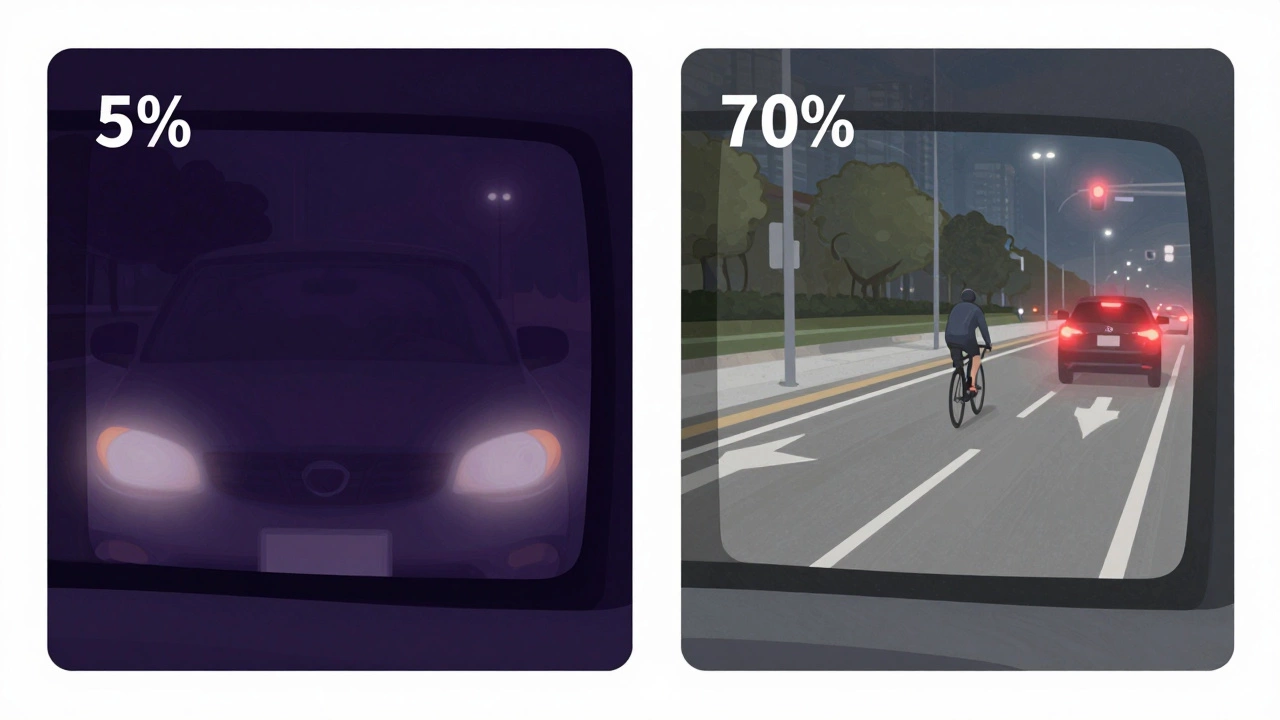
A lot of people assume darker tint = better privacy = better night vision. That’s backwards. The darker your tint, the less light enters your car. And at night, every bit of light matters. Your eyes are already struggling to adjust. Adding a tint that blocks 80% of incoming light? That’s like driving with sunglasses on after sunset.The key number you need to know is Visible Light Transmission (VLT). This tells you how much light passes through the film. A 5% VLT tint blocks 95% of light. That’s legal for rear windows in some places-but not for your front windows. A 70% VLT tint lets in 70% of light. That’s what you want for night driving.
Most states and countries set legal limits. In Australia, front side windows must let in at least 35% VLT. The windshield must allow at least 70%. If you’re in Adelaide, you’re stuck with those rules. But even if you live somewhere with looser laws, going darker than 35% VLT on your front windows is a bad idea. You’re not making your car look cooler-you’re making yourself a hazard.
What Tint Actually Helps at Night?
Not all tints are created equal. Even if two films have the same VLT percentage, they can behave totally differently at night.Here’s what works:
- Carbon or ceramic tint at 35%-50% VLT: These block heat and UV rays without eating up visible light. They don’t turn purple or fade like cheap dyes. They let your eyes adjust naturally.
- Clear infrared-blocking film at 70% VLT: This is the secret weapon. It looks almost clear, but it stops 99% of infrared heat and UV damage. You get protection without sacrificing visibility.
- Hybrid tints with metalized layers: These reflect heat away from the glass, so your cabin stays cooler. But they’re not as dark-so your night vision stays sharp.
What doesn’t work:
- Standard dyed film under 35% VLT: It fades, bubbles, and turns purple over time. At night, it turns your windshield into a murky green haze.
- Reflective or mirror tints: These are banned in most places for a reason. They blind drivers behind you. And at night, they turn your windows into one-way mirrors that reflect dashboard lights right into your eyes.
- Blackout tints on side windows: Sure, they look cool. But if a pedestrian steps out near your driver’s side? You won’t see them until it’s too late.
Why Your Eyes Matter More Than Your Style
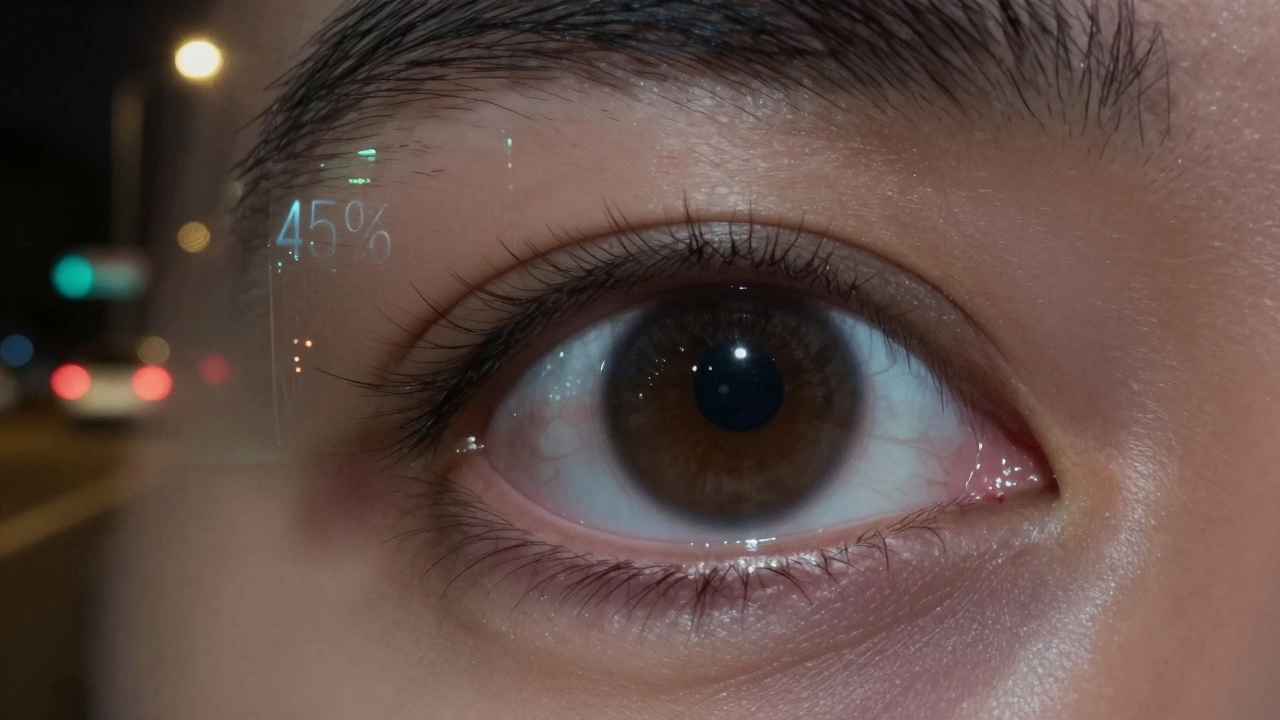
Your eyes adapt to low light by dilating pupils. That’s natural. But if your tint blocks too much light, your pupils stretch too far. That causes blurry vision, longer reaction times, and eye fatigue. Studies from the Australian Road Safety Foundation show drivers with low-VLT tint take up to 0.4 seconds longer to react to sudden obstacles at night. That’s the difference between braking safely and hitting a cyclist.Think about this: if you’re driving home at 11 p.m. on a rainy Adelaide street, and a kid on a bike pops out from behind a parked car-you have less than two seconds to react. If your tint cuts your peripheral vision by 30%, you’re already behind.
There’s no trophy for having the darkest windows. There’s only risk.
What About the Back Windows?
Here’s where you can go darker. Rear windows and rear windshields can legally go as low as 20% VLT in South Australia. That’s fine. You’re not the one driving. You’re not the one needing to see the road ahead. A darker tint back there keeps heat out and prying eyes away. Just make sure your side mirrors are clean and your rearview mirror is adjusted properly.Some people tint their rear windows black and then install a backup camera. That’s smart. But don’t skip the camera just because you think the tint is enough. Tint isn’t a substitute for visibility tech.
Real-World Test: What I Saw in Adelaide
I’ve had three cars tinted over the last five years. First time, I went with 5% on all windows. Big mistake. I was squinting at stop signs. My wife complained she couldn’t see the kids crossing the street at dusk. I replaced it with 35% ceramic tint. Everything changed. The cabin stayed cool. The glare from oncoming headlights? Gone. The view of the road? Crystal clear. I didn’t even notice the difference until I drove a friend’s car with 20% tint. I felt like I was driving through a foggy window.That’s the test. If you can’t read a street sign at 30 meters without leaning forward, your tint is too dark.
How to Choose the Right Tint
Follow this checklist before you buy:- Check your state’s legal VLT limits. In SA, front windows must be 35%+.
- Ask for a certificate of compliance. Reputable installers give this.
- Test the film in daylight. Hold it up to a window. Can you clearly read text through it? If not, it’s too dark.
- Look for ceramic or carbon-based films. Avoid dye-based or metallic tints unless they’re labeled for night visibility.
- Get a warranty. Good tint lasts 10+ years. Cheap stuff peels in 2.
What If You Already Have Dark Tint?
If you’re stuck with 20% or lower on your front windows, here’s what to do:- Upgrade your interior lighting. Use LED dome lights with warm white tones (not blue). Cold light makes your pupils contract harder.
- Keep your windshield spotless. Even a smear of dirt cuts visibility in half at night.
- Use anti-glare glasses. Non-prescription yellow-tinted lenses help reduce headlight glare without blocking light.
- Consider a backup camera and blind-spot monitoring. Tech can compensate for poor visibility.
- Plan to replace the tint. Don’t wait until it bubbles or fades. Do it before winter.
Final Rule: See More, Not Less
The best tint for night driving isn’t the darkest one. It’s the one that lets you see everything clearly-pedestrians, road signs, traffic lights, oncoming cars. Anything that makes you squint or strain is working against you.Window tint is supposed to protect you-from UV rays, heat, and prying eyes. Not from seeing the world around you. Choose clarity over darkness. Your eyes, and everyone else on the road, will thank you.
Is 5% tint legal for front windows at night?
No. In Australia, front side windows must allow at least 35% Visible Light Transmission (VLT). A 5% tint blocks 95% of light-far below the legal limit. Driving with this tint on front windows can result in fines, vehicle defect notices, or even being pulled over by police. Even if you’re not stopped, it’s unsafe. Your reaction time slows, and you lose peripheral vision.
Can ceramic tint improve night vision?
Yes, ceramic tint is one of the best options for night driving. Unlike dyed films that fade and darken over time, ceramic tints use nano-ceramic particles that block infrared heat and UV rays without reducing visible light. A 35%-50% VLT ceramic film keeps your cabin cool and your vision sharp. It doesn’t distort colors or create glare. That means you see brake lights, road signs, and pedestrians more clearly at night.
Why does my tint look purple at night?
Purple tint is a sign of low-quality dyed film. Cheaper window films use dyes that break down under UV exposure. Over time, they fade unevenly and shift color-usually toward purple or pink. This doesn’t just look bad. It scatters light, making headlights and streetlights blurrier at night. If your tint has turned purple, it’s time to replace it with a ceramic or carbon film.
Does tint help with headlight glare?
Not if it’s too dark. A tint that’s too dark makes glare worse by forcing your pupils to open wider. The solution isn’t more darkness-it’s better film. Ceramic and infrared-blocking films reduce glare by filtering out harsh wavelengths without cutting total light. They let your eyes adjust naturally. Pair that with a clean windshield and anti-glare glasses, and you’ll notice a big difference.
Should I tint my windshield?
In Australia, you cannot tint the windshield below 70% VLT, and most manufacturers don’t allow any tint on the main viewing area. A thin, clear ceramic strip at the top (sun visor strip) is allowed and helps reduce glare without blocking vision. Full windshield tint is illegal and dangerous. It reduces your ability to read signs, judge distances, and spot hazards in low-light conditions.