Lowering Springs Suitability Calculator
Answer these questions to see if lowering springs will improve your driving experience or cause frustration.
There is a specific sound that makes every car enthusiast sit up straighter. It is the low rumble of an engine combined with the visual cue of tires hugging the wheel wells just a little too closely. You have seen it at stoplights or in parking lots. The car sits lower than the factory setting, looking aggressive and planted. This look usually comes from one simple, affordable part: lowering springs. But before you drop your budget sedan to the pavement, you need to know exactly what these steel coils do to your vehicle beyond just making it look cool.
Lowering springs are not magic wands. They are mechanical components that fundamentally change how your car interacts with the road. They alter your center of gravity, change your steering geometry, and completely rewrite the way your suspension absorbs bumps. If you install them without understanding the consequences, you might end up with a car that looks great but drives like a boat-or worse, one that damages itself on every speed bump. Let's break down the physics, the benefits, and the hidden costs of dropping your ride.
The Physics of Dropping Your Ride Height
To understand what lowering springs do, you first have to understand why cars are built high off the ground in the first place. Factory suspension systems are designed for compromise. Engineers want comfort for grocery runs, durability for potholes, and enough ground clearance for snow banks or steep driveways. They achieve this by using long-travel shocks and soft spring rates. The result is a higher center of gravity (CG).
When you swap those factory springs for shorter, stiffer lowering springs, you physically move the chassis closer to the axle. This lowers the CG. In physics terms, a lower CG means less weight transfer during cornering. Imagine holding a heavy box out at arm's length versus holding it against your chest. The box against your chest is easier to control when you turn. That is what happens to your car. The mass stays more centered over the tires, which reduces body roll-the leaning motion you feel when taking a sharp turn.
This reduction in body roll is the primary performance benefit. By keeping the tires flatter against the asphalt during turns, you maintain better contact patches. More contact means more grip. For a driver who enjoys carving through canyon roads or simply wants their daily commuter to feel more stable on highway exits, this is a tangible improvement. The car feels "planted" rather than floaty.
The Trade-Off: Comfort Versus Control
Here is the catch. You cannot get something for nothing in engineering. To achieve that stiff, responsive handling, lowering springs must be made of thicker wire or have fewer coils than factory parts. This increases the "spring rate," which is a measure of stiffness. A higher spring rate resists compression more aggressively.
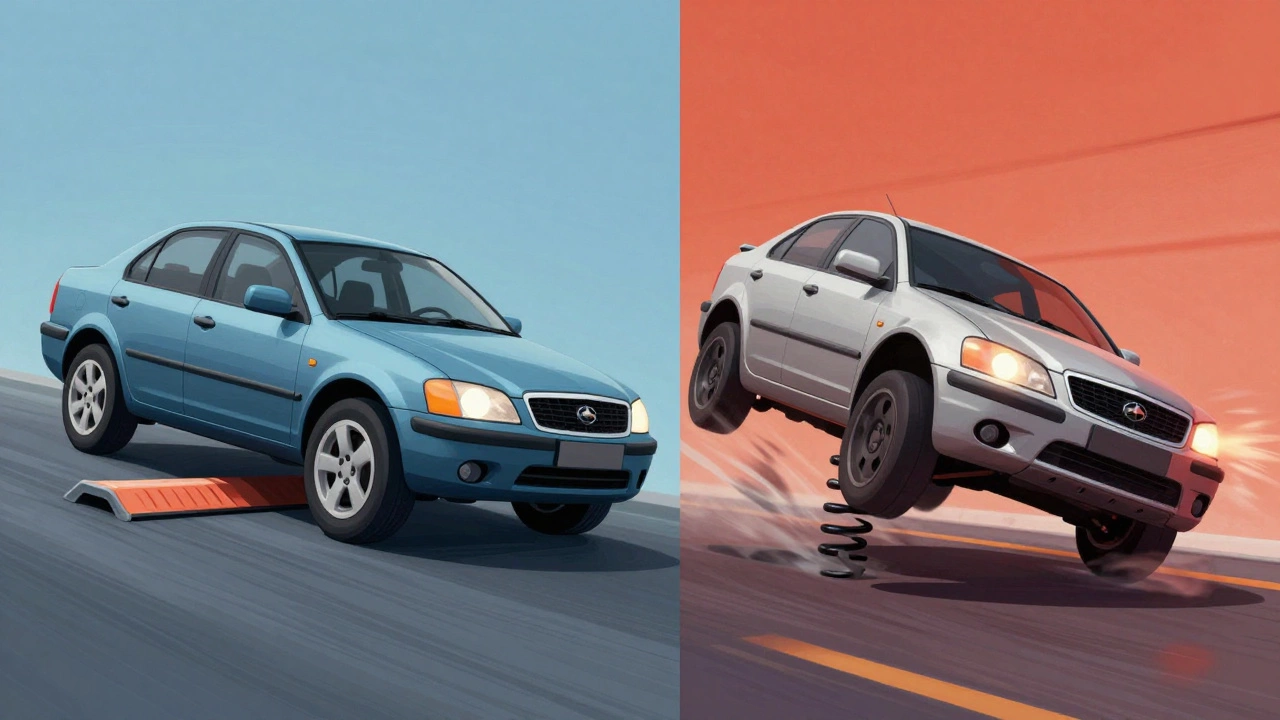
On a smooth race track, this is perfect. On a typical suburban street with cracks, seams, and occasional debris, it can be punishing. Factory suspensions are tuned to isolate you from road imperfections. Lowering springs transmit much more of that energy directly into the cabin. You will feel every pebble. Speed bumps, which were once gentle undulations, become significant obstacles that require you to slow down considerably.
If you live in a city with poor road maintenance, this trade-off becomes critical. A car lowered by two inches might scrape its undercarriage on standard curbs. A car lowered by three inches might bottom out on a slight driveway incline. You have to weigh the aesthetic appeal and handling gains against the daily reality of your driving environment. Many enthusiasts find themselves raising their cars back up after a winter of salted, broken roads because the ride quality became unbearable.
Steering Geometry and Alignment Issues
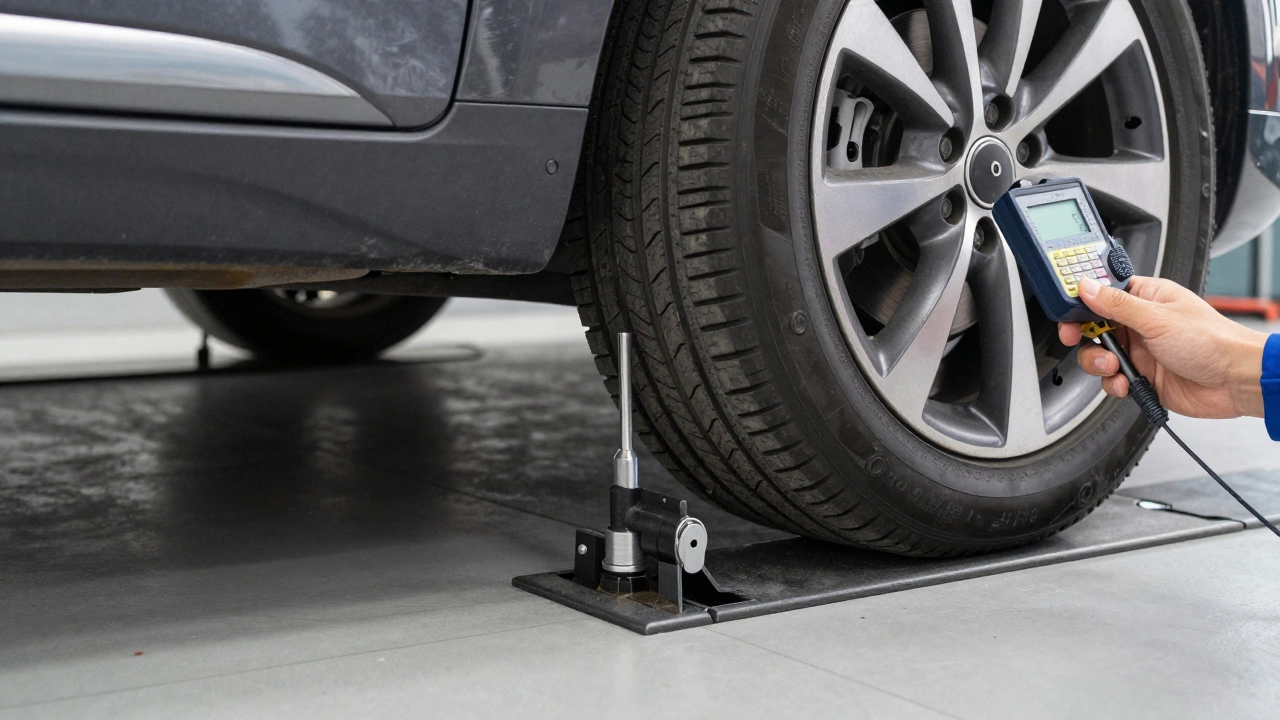
Changing the height of your car does not just affect vertical movement; it twists the angles of your suspension arms. Modern cars use complex double-wishbone or multi-link suspensions that rely on precise geometric angles to keep tires aligned. When you drop the chassis, you alter the "camber" angle-the tilt of the tire relative to the road surface.
In most cases, lowering a car causes negative camber, meaning the top of the tire tilts inward toward the center of the car. While some negative camber helps with cornering grip (which is why race cars have it), excessive negative camber wears out the inside edge of your front tires rapidly. You might notice uneven tire wear within just a few thousand miles if you don't address this.
This is where many DIYers make a mistake. They install the springs and drive away. Instead, you should expect to pay for a professional alignment immediately after installation. However, standard alignment shops often cannot adjust camber on lowered cars because the factory adjustment range is limited. You may need aftermarket camber bolts or adjustable control arms to get the wheels straight again. This adds cost and complexity to what was supposed to be a simple bolt-on upgrade.
Lowering Springs vs. Coilovers: Knowing the Difference
A common point of confusion is the difference between lowering springs and coilovers. Both lower the car, but they function differently. Lowering springs are just the spring component. You keep your factory shock absorbers (dampers). Coilovers, short for "coil-over-shock," replace both the spring and the damper as a single unit.
| Feature | Lowering Springs | Coilovers |
|---|---|---|
| Cost | $150 - $400 | $600 - $2,000+ |
| Installation Difficulty | Moderate (requires spring compressors) | High (full suspension rebuild) |
| Ride Height Adjustability | Fixed (cannot adjust after install) | Adjustable (click-knobs or threaded perches) |
| Damping Tuning | Factory dampers only | Often adjustable rebound/compression |
| Best For | Budget stance, mild handling improvement | Track use, precise tuning, maximum drop |
Lowering springs are the entry-level option. They give you the look and some of the handling benefits for a fraction of the price. However, because you are pairing a stiffer spring with a factory shock that was designed for a softer spring, you may experience "bottoming out" of the shock absorber itself. The shock doesn't have enough travel to handle the new spring force properly. Coilovers solve this by matching the spring and damper, but they come with a significantly higher price tag and installation time.
Practical Risks: Scrapes, Struts, and Sensors
Beyond handling and comfort, there are practical risks to consider. When you lower a car, you reduce the gap between the undercarriage and the road. This is called ground clearance. If you lower your car more than 1.5 to 2 inches, you risk scraping the front splitter, oil pan, or exhaust system on steep driveways, railroad crossings, or large speed bumps.
Repeated scraping can damage sensors, particularly the parking sensors or radar modules used in modern adaptive cruise control systems. These are expensive to replace. Additionally, if the car bottoms out hard, you can bend suspension components or crack the subframe. It sounds extreme, but it happens frequently with drivers who underestimate the height of a curb.
Another issue is strut binding. Some lowering springs are so short that they prevent the suspension from extending fully. This can cause the strut mounts to bind, leading to premature failure of the strut bearings. Always check reviews for specific spring brands to ensure they are compatible with your vehicle's suspension travel limits.
Who Should Install Lowering Springs?
Lowering springs are not for everyone. If your priority is pure comfort and you drive mostly on rough roads, stick with the factory setup. If you want the aggressive look but also plan to take the car to autocross events or track days, consider saving up for coilovers instead.
However, if you want a modest drop of about 1 to 1.5 inches, you will likely get the best balance. This amount lowers the center of gravity enough to improve stability and tighten up the steering feel, without drastically compromising ride comfort or ground clearance. Brands like Eibach, H&R, and Bilstein offer "sport" springs that are engineered to retain some compliance while still providing a noticeable drop. These are often the sweet spot for daily drivers.
Remember, the goal of any modification should be to enhance your driving experience, not just to impress others in a static photo. Test drive a friend's lowered car if possible. Feel the ride. Listen to the noise. Then decide if that is the trade-off you are willing to make every day.
Will lowering springs void my warranty?
In the United States, the Magnuson-Moss Warranty Act prevents manufacturers from voiding your entire warranty due to aftermarket parts unless they can prove that the specific part caused the damage. So, if your transmission fails, they cannot blame your springs. However, if you damage your CV axles or suspension components due to the lowered height, the dealership will likely deny coverage for those specific repairs. Always keep records of your installation and consult your dealer if unsure.
How much can I lower my car safely?
For a daily driver, a drop of 1 to 1.5 inches is generally considered safe and practical. This improves handling without causing excessive scraping on normal roads. Drops greater than 2 inches often require additional modifications like sway bar relocation brackets, fender rolling, or camber adjustments to avoid rubbing tires against the wheel wells during turns.
Do I need new shocks with lowering springs?
Not necessarily, but it depends on the brand and the drop height. High-quality sport springs from reputable manufacturers are designed to work with factory shocks. However, if you are dropping the car significantly or notice harsh bouncing and bottoming out, upgrading to performance shocks or full coilovers will provide better damping control and longevity.
Can I install lowering springs myself?
Yes, but it requires special tools called spring compressors. Compressing a spring without these tools is extremely dangerous and can lead to serious injury or death. If you do not have access to proper spring compressors and jack stands, it is highly recommended to pay a professional shop for installation. The labor cost is usually reasonable compared to the risk of injury.
Why are my headlights pointing downward after installing springs?
Lowering the front of the car changes the angle of the headlight housings. Since the car sits lower, the beams aim further down toward the road surface, reducing visibility. Most cars have a manual adjustment screw on the back of the headlight assembly. After installing lowering springs, you should recalibrate your headlights to ensure they shine at the correct distance for safety and legal compliance.