Exhaust Sound & System Selector
Recommended Setup
--
--
Select your options to see the perfect exhaust match.
There is nothing quite like the roar of a high-performance engine. It’s primal. It connects you to the machine in a way that horsepower numbers on a spec sheet never can. But when it comes to custom exhaust, the question isn’t just about volume-it’s about character. Do you want a deep, guttural rumble that wakes up the neighbors at 6 AM? Or do you prefer a sharp, aggressive crackle that hints at speed without screaming for attention?
Finding the "best" exhaust sound is subjective, but it is also technical. The right note depends entirely on your vehicle’s engine type, your daily driving habits, and how much you value comfort versus raw aggression. Let’s break down what creates these different sounds and which setup fits your style.
The Science Behind the Sound
Before picking a pipe, you need to understand why an engine makes noise in the first place. An internal combustion engine works by exploding fuel and air inside cylinders. This explosion pushes pistons down, creating power. But it also creates pressure waves-essentially, loud bangs.
Your factory exhaust system is designed to manage these pressure waves. It does two main things: it reduces backpressure to help the engine breathe (which improves performance) and it uses mufflers and resonators to cancel out unwanted frequencies (which reduces noise). When you modify this system, you are changing how those pressure waves exit the vehicle.
If you remove too many restrictions, the sound becomes harsh and raspy. If you keep too many, it stays quiet and boring. The "sweet spot" lies in balancing flow with acoustic tuning. This is where specific components come into play.
Key Components That Shape Your Exhaust Note
Not all parts contribute equally to the final sound. Here are the primary entities that determine whether your car purrs, growls, or screams:
- Catalytic Converters: These reduce emissions but also dampen sound. Removing them (going "decat") usually results in a louder, raspier tone. High-flow cats maintain some damping while improving flow.
- Mufflers: The heart of noise reduction. Chambered mufflers (like glasspacks) create a deeper, classic muscle-car drone. Turbine-style mufflers offer a smoother, more refined sporty note.
- Resonators: These target specific low-frequency noises. Deleting resonators often adds a higher-pitched whistle or increases volume significantly, especially at idle.
- Pipe Diameter: Larger pipes allow more air to flow but can lower the pitch if not matched correctly to the engine size. Too big, and the sound gets thin and hollow.
Common Exhaust Configurations and Their Sounds
Different setups produce distinct auditory profiles. Knowing what each one sounds like helps you choose wisely before spending hundreds-or thousands-of dollars.
| Exhaust Type | Sound Character | Volume Level | Best For |
|---|---|---|---|
| Cat-Back System | Refined, sporty, deeper tone | Moderate | Daily drivers seeking subtle improvement |
| Axle-Back System | Louder than stock, retains some resonance | Moderate-High | Budget-conscious upgrades |
| Straight Pipe | Raspy, loud, unfiltered | Very High | Track-only cars or extreme enthusiasts |
| Active/Valved Exhaust | Adjustable from quiet to aggressive | Variable | Versatile daily use with track capability |
| Glasspack Muffler | Deep, bubbly, classic American muscle | High | V8 engines, vintage restorations |
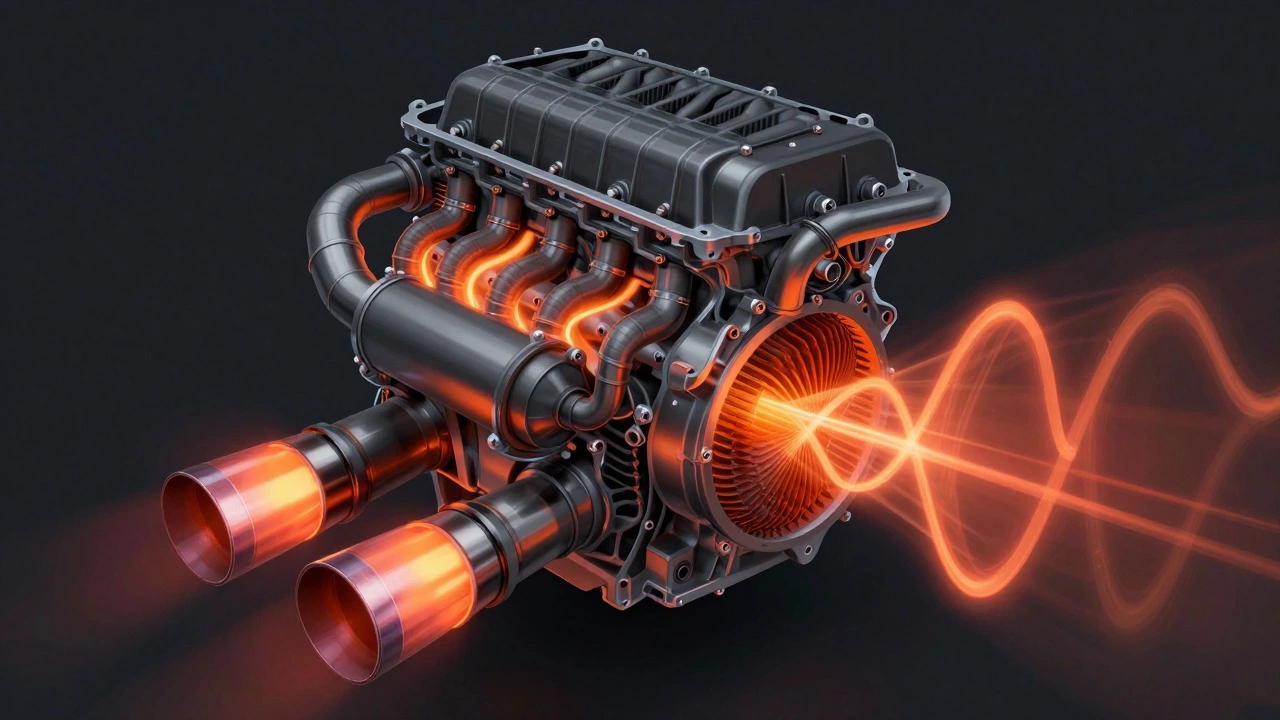
Engine Type Matters: V8 vs. Inline-4 vs. Turbo
You cannot treat every engine the same. The firing order and cylinder configuration dictate the natural frequency of the exhaust pulses.
V8 Engines: These naturally produce a rich, low-end rumble due to their cross-plane crankshafts. A simple axle-back upgrade often yields significant gains in sound quality without needing drastic modifications. Glasspack mufflers complement this naturally deep tone beautifully.
Inline-4 Engines: Smaller engines tend to have a higher-pitched, buzzy character. To make them sound good, you often need larger diameter pipes and less restrictive mufflers to deepen the pitch. However, going too far can result in a tinny, rattling noise rather than a powerful growl.
Turbocharged Engines: Turbos act as additional restrictors in the exhaust path, muting the engine's natural voice. To get a good sound from a turbo car, you typically need to delete the downpipe or install a high-flow catalytic converter. Even then, the sound is often dominated by the turbine spooling up-a distinctive whine known as "turbo flutter" upon deceleration.
The Danger of "Drone": What You Need to Know
One of the biggest mistakes people make when chasing a better exhaust sound is ignoring drone. Drone is a persistent, humming vibration that occurs at specific RPM ranges, usually during highway cruising (around 2,000-3,000 RPM).
It happens when the exhaust system creates standing waves that resonate with the cabin's interior space. It’s exhausting to listen to after ten minutes, let alone an hour-long commute. Many cheap aftermarket systems suffer from this because they lack proper resonator tuning.
To avoid drone, look for systems that include resonators or are specifically tuned for your vehicle’s transmission gearing. Brands like Borla, MagnaFlow, and Flowmaster often provide dyno-tested notes that indicate drone levels. Always check reviews from owners who drive similar distances daily.
Legal Considerations and Noise Regulations
In 2026, noise pollution regulations remain strict in many regions. While a cool exhaust sound feels great, getting pulled over for excessive noise ruins the experience quickly.
Most states and countries have decibel limits, typically ranging between 80 dB and 95 dB measured at a certain distance from the vehicle. Straight piping almost always exceeds these limits. Even some aggressive cat-back systems can push you over the edge.
Furthermore, removing catalytic converters is illegal in most places unless you replace them with CARB-compliant high-flow units. Keep receipts and certification documents handy during inspections. Ignorance of local laws is not a valid defense against fines.
How to Choose the Right Exhaust for Your Lifestyle
Ask yourself these three questions before buying:
- Do I drive long distances regularly? If yes, prioritize systems with minimal drone. Active valved exhausts are excellent here, allowing you to close the valves for quiet highway cruising and open them for weekend fun.
- Is my car mostly used for commuting? Stick to a quality axle-back or mild cat-back. These offer noticeable improvements in tone without annoying passengers or triggering noise complaints.
- Do I track my car? Performance matters more than refinement. Lighter weight and maximum flow are key. Straight pipes or race-specific headers paired with free-flowing mufflers will maximize horsepower, even if the sound is harsh.
Installation Tips for Optimal Sound
Even the best exhaust system can sound terrible if installed poorly. Here’s what to watch out for:
- Hanging Properly: Exhaust hangers must support the weight without pulling tension on the pipes. Misaligned hangers can cause vibrations that alter the sound and lead to premature failure.
- Gasket Integrity: Use new gaskets everywhere. Leaks introduce hissing noises that ruin the clean tone of the exhaust. Torque bolts to manufacturer specifications.
- Tip Orientation: Pointing tips downward can sometimes muffle the sound slightly compared to horizontal or upward-facing tips. Experiment if possible, though aesthetic preference often dictates this choice.
Final Thoughts on Finding Your Perfect Note
There is no single "best" exhaust sound. There is only the best sound for you. Some people love the ear-splitting scream of a supercar-inspired titanium system. Others prefer the polite burble of a well-tuned diesel pickup.
Start conservative. You can always add more volume later by swapping mufflers or deleting resonators, but you can’t easily take it away once you’ve gone straight pipe. Listen to real-world videos of the exact system on your exact model year. Trust your ears, respect the law, and enjoy the ride.
Does a bigger exhaust pipe make a louder sound?
Not necessarily. While larger pipes reduce backpressure and can increase volume, they also change the pitch. If the pipe is too large for your engine, the sound may become thin, hollow, or even quieter at low RPMs because the gas velocity decreases. Match pipe diameter to your engine’s displacement and power output for the best balance of sound and performance.
What is the difference between a cat-back and an axle-back exhaust?
An axle-back exhaust replaces everything from the rear axles backward, including the mufflers and tips. A cat-back system starts further forward, replacing the section from behind the catalytic converter to the tailpipes. Cat-backs generally offer more performance gains and a more dramatic change in sound because they affect a larger portion of the exhaust path.
Will a custom exhaust void my warranty?
Under the Magnuson-Moss Warranty Act in the US, manufacturers cannot void your entire warranty simply because you installed an aftermarket part. They can only deny coverage for issues directly caused by that part. For example, if a bad exhaust causes engine damage, that repair might not be covered. However, unrelated issues like transmission failure should still be honored. Keep records of your installation to prove causality if disputes arise.
How much horsepower can an exhaust upgrade add?
On a stock vehicle, a quality cat-back or axle-back exhaust might add 5-10 horsepower at the wheels, primarily by improving airflow efficiency. More significant gains come from upgrading headers and downpipes, especially on turbocharged engines. However, the primary benefit of most exhaust upgrades is improved throttle response and sound, not massive horsepower jumps.
Are active exhaust systems worth the extra cost?
If you use your car for both daily commuting and occasional spirited driving, yes. Active exhausts use electronic valves to switch between a quiet mode for traffic and highways and an aggressive mode for open roads or tracks. They eliminate the compromise between comfort and excitement. However, they are significantly more expensive and complex to repair than traditional passive systems.