Before you bolt on some aluminum discs to get that perfect fitment, you need to know what's actually happening under the car. Most people think spacers are a simple 'plug and play' mod, but they introduce several stress points that can lead to expensive repairs if you aren't careful.
Key Takeaways for Your Setup
- Wheel spacers increase the load on your bearings and axles.
- Using the wrong type (concentric vs hubcentric) can lead to dangerous wheel vibrations.
- Excessive width can cause tires to rub against the fender or inner wheel liners.
- Incorrect installation often leads to stripped studs or wheel failure.
The Mechanical Toll on Wheel Bearings
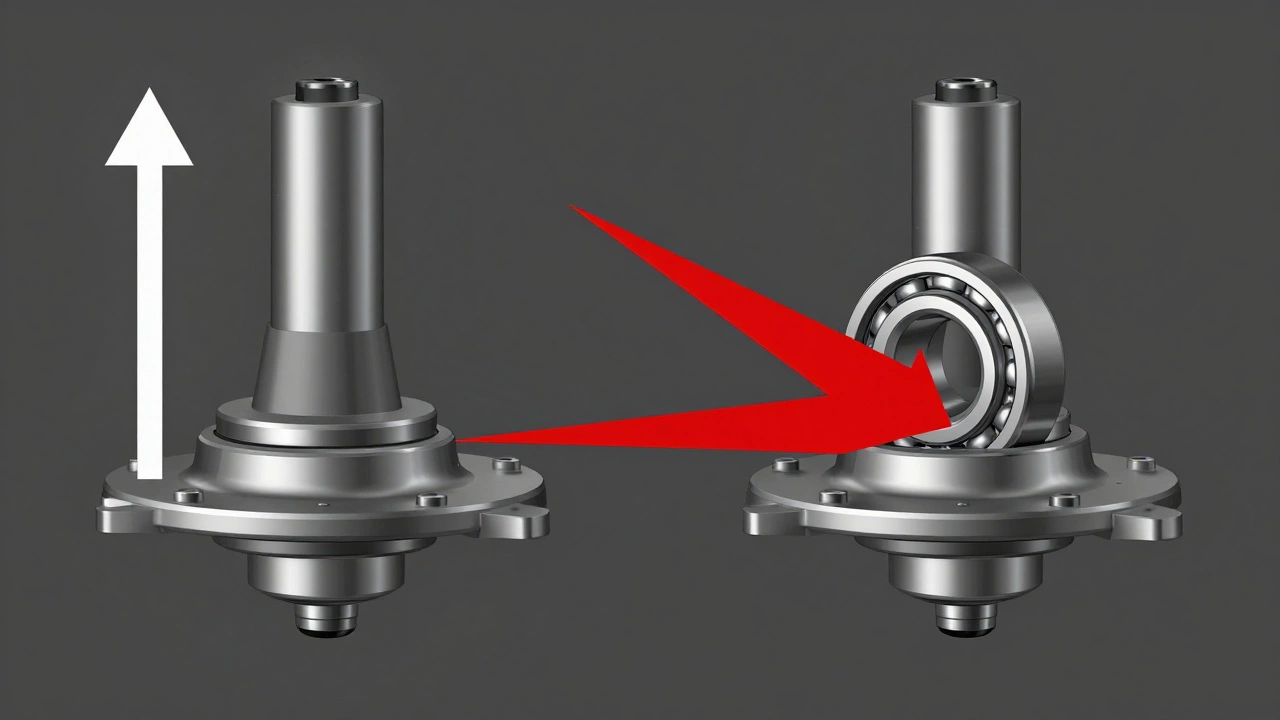
Think of your wheel bearing like a pivot point. When the wheel is tucked in close to the hub, the weight of the car pushes straight down. Once you add wheel spacers is a device used to increase the distance between the wheel hub and the wheel rim, you've essentially created a lever. This leverage increases the torque acting on the bearing.
In a real-world scenario, if you install 30mm spacers on a daily driver, you're putting significantly more lateral stress on the bearing whenever you take a corner. Over 20,000 to 30,000 kilometers, you might notice a humming sound or a slight wobble in the steering wheel. This is usually a sign that the bearing has worn down prematurely because it was fighting a constant, unnatural angle of force.
The Danger of Concentric vs Hubcentric Designs
This is where many people make a critical mistake. There are two main types of spacers: hubcentric and concentric.
Hubcentric Spacers are designed to fit snugly over the hub and into the center bore of the wheel. This ensures the wheel remains perfectly centered on the axle. On the other hand, Concentric Spacers (or bolt-on adapters) rely solely on the lug nuts to center the wheel.
| Feature | Hubcentric | Concentric |
|---|---|---|
| Centering Method | Hub Lip | Lug Nuts Only |
| Vibration Risk | Low | High |
| Installation | Simple (Slip-on) | Complex (Extended Studs) |
| Load Distribution | Evenly spread | Concentrated on bolts |
If you use a concentric spacer and one lug nut is slightly looser than the others, the wheel can shift by a fraction of a millimeter. At 100 km/h, that tiny shift manifests as a violent shake in the steering wheel. More importantly, since the hub isn't supporting the weight, all that pressure goes directly into the Wheel Studs. These studs aren't designed to be the sole support system; they're meant to hold the wheel on, not carry the load of the vehicle.
Altering Your Wheel Offset and Handling
When you change the Wheel Offset-which is the distance from the hub mounting surface to the centerline of the wheel-you change the car's scrub radius. The scrub radius is the distance between the pivot point of the steering and the center of the tire's contact patch.
By pushing the wheels out, you increase this distance. This usually results in 'heavier' steering. You'll feel more resistance when turning the wheel, and the car may become more sensitive to bumps. If you hit a pothole, the impact isn't absorbed as linearly; it's kicked back into the steering rack with more force. For those driving high-performance cars, this can make the front end feel twitchy or unstable during high-speed maneuvers.
Tire Rubbing and Body Damage
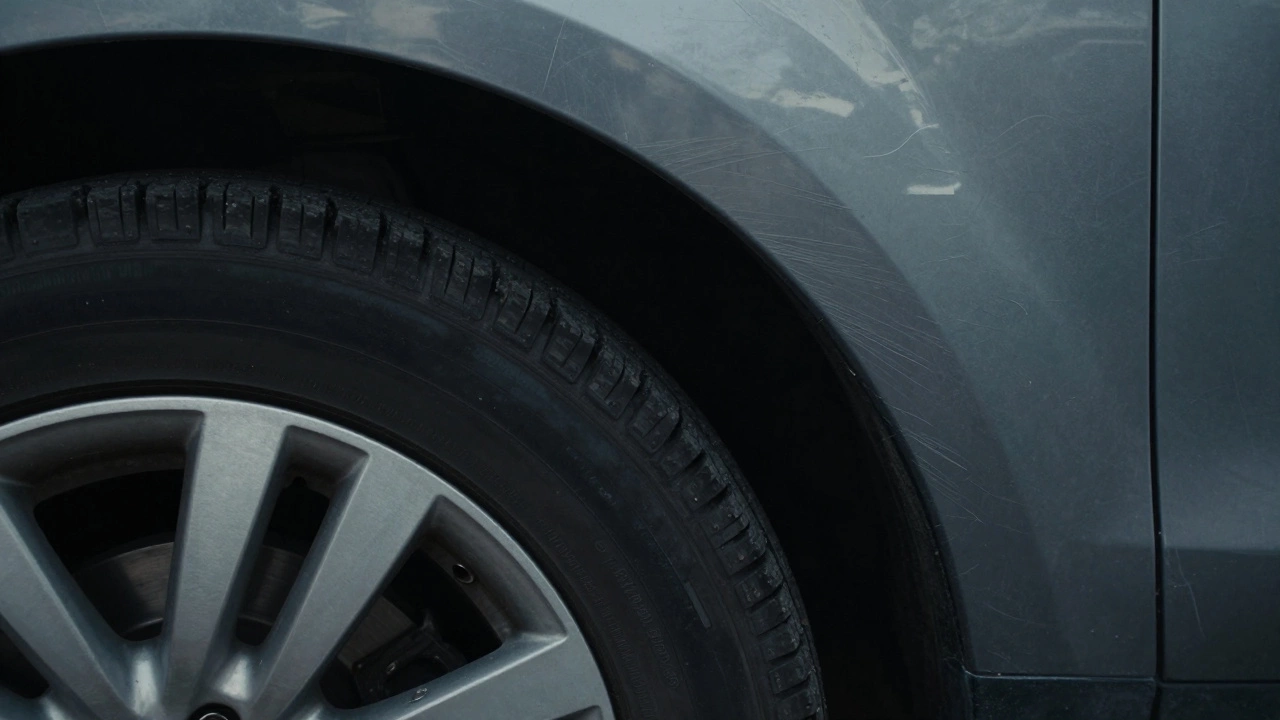
It's a common sight at car meets: a car with beautiful wide wheels and a jagged, torn-up fender liner. This happens because spacers push the tire's outer edge closer to the wheel arch.
You might think it looks fine while the car is parked, but when you compress the suspension during a hard turn or hit a dip in the road, the tire can make contact with the metal of the fender. This doesn't just wear down the rubber; it can actually slice into the tire sidewall or rip the plastic inner liners out of the chassis. To fix this, many people end up rolling their fenders, which involves folding the inner metal lip of the wheel arch-a permanent modification that can lead to rust if not treated correctly.
The Risk of Hardware Failure
Installing spacers often requires Extended Wheel Studs or specific nuts. If you use a spacer that is too thick for your stock studs, you might only have a few threads engaging. A general rule of thumb in automotive mechanics is that you need at least 6 to 8 full turns of a lug nut to ensure a secure fit.
If you're only getting 3 or 4 turns, you're risking a 'sheared bolt' scenario. Imagine driving on a highway and a stud snaps because of the increased leverage and insufficient thread engagement. This can lead to the wheel vibrating loose or, in worst-case scenarios, the wheel detaching entirely from the hub.
Impact on Fuel Economy and Aerodynamics
While it seems minor, pushing your wheels out beyond the bodywork increases the car's aerodynamic drag. Most modern cars are designed with the wheels slightly tucked in to allow air to flow smoothly along the sides of the vehicle. When the wheels poke out, they act like air brakes, creating turbulence. In a long-distance trip, this can lead to a noticeable drop in fuel efficiency, as the engine has to work harder to push through the air.
Can I use spacers if I have a modified suspension?
Yes, but it's riskier. Lowered cars have less travel in their suspension, meaning tires are more likely to hit the fender when you add spacers. If you're on coilovers, you can adjust the height, but you still need to check for clearance during full steering lock (turning the wheel all the way to one side).
Will wheel spacers void my warranty?
In many cases, yes. If you experience a failure in your wheel bearings or steering rack, the manufacturer may deny the claim if they find spacers installed, arguing that the part failed due to an unnatural increase in load caused by the modification.
What is the maximum spacer thickness I should use?
Generally, avoid going over 15mm-20mm with slip-on spacers. Anything thicker than that usually requires studs that are too long for the factory hub or requires a bolt-on adapter. Once you hit 25mm+, the impact on your bearings and handling becomes significantly more pronounced.
Do I need to get an alignment after installing spacers?
Absolutely. Because spacers change the scrub radius and the effective track width, your toe and camber settings will be affected. If you don't get a professional alignment, you'll likely see uneven tire wear (cupping or scrubbing) within a few thousand kilometers.
Are cheap spacers from online marketplaces safe?
Usually, no. Quality spacers are made from forged 6061-T6 aluminum. Cheap versions are often cast from low-grade alloys that can crack under the stress of cornering. A cracked spacer is a catastrophic failure waiting to happen.
Next Steps for Your Fitment Journey
If you're determined to get a wider look, don't just buy the widest spacers you can find. Start small-maybe 5mm or 10mm-and check your clearance. If you find that the vibration is too much, switch to high-quality hubcentric versions immediately. If you're worried about long-term bearing wear, the best alternative is to buy wheels with a different built-in offset, which provides the look you want without the added stress of a separate spacer disc.