Wheel Spacer vs. Adapter Selector
Enter your current vehicle setup and desired wheel specs below to find out which component is required for a safe installation.
Why this choice?
Installation Tips
Quick Comparison Reference
| Feature | Wheel Spacer | Wheel Adapter |
|---|---|---|
| Bolt Pattern | Unchanged | Changed |
| Complexity | Low | High |
| Cost | $30 - $80 | $60 - $150+ |
| Best For | Clearance/Stance | Cross-brand swaps |
You’re staring at a set of aftermarket wheels that look incredible on your car’s website mockup, but there’s a snag: they don’t fit. Maybe the bolt pattern is wrong, or maybe they sit too deep in the wheel well. This is where the confusion usually starts. You head to an auto parts store or browse online forums, and you hear two terms thrown around like they’re interchangeable: wheel spacers and wheel adapters. They look similar-both are metal discs that go between your hub and your wheel-but using one instead of the other can lead to wobbly steering, stripped bolts, or even a wheel falling off while you’re doing 100 km/h.
The core difference comes down to what problem each part solves. A spacer pushes the wheel out for clearance or aesthetics without changing how it attaches. An adapter changes the attachment method itself. If you try to use a spacer when you actually need an adapter, the holes won’t line up. If you use an adapter when you just needed a spacer, you’re adding unnecessary weight, cost, and complexity. Let’s break down exactly how these components work, when to use which, and why getting it right matters more than just making the wheels flush with the fender.
The Basic Job of Wheel Spacers
A wheel spacer is a solid ring of aluminum or steel that mounts directly onto your vehicle’s existing hub studs. Its only job is to push the wheel further away from the suspension components. Think of it as a shim. It doesn’t change the bolt pattern (the number of bolts and the circle diameter they form), and it doesn’t change the center bore size (the hole in the middle that fits over the hub). It simply adds distance.
Why would you want this? Usually, it’s about stance or clearance. If you’ve got wide tires that rub against the inner fender liner when you turn the wheel, a 5mm or 10mm spacer moves the tire outward, clearing the bodywork. Alternatively, if you want that aggressive, flush-look where the tire edge lines up perfectly with the fender flare, spacers are the cheapest way to achieve it. Because they mount onto the existing studs, installation is straightforward: you slide the spacer on, tighten the nuts, then mount the wheel on top of the spacer’s new studs.
However, spacers have limits. Since they extend the stud length effectively, you reduce the thread engagement on the original lug nuts unless the spacer has its own built-in studs (which most quality ones do). Cheap, thin spacers that just slip over existing studs and rely on the original lug nuts to clamp them can be dangerous if not torqued correctly. Always check if the spacer is "slip-on" or "bolt-on." Bolt-on spacers, which come with their own extended studs, are generally safer for larger offsets because they maintain proper clamping force.
How Wheel Adapters Change the Game
If a spacer is a shim, an wheel adapter is a conversion interface that alters the bolt pattern or center bore of the hub. This is critical when the wheel you want doesn’t match your car’s factory setup. For example, you might drive a Toyota Camry with a 5x114.3 bolt pattern, but you find a set of BMW rims you love, which use a 5x120 pattern. The holes physically cannot align. No amount of tightening will make a 5x114.3 wheel fit a 5x120 hub.
This is where the adapter steps in. It has one side that matches your car’s hub (e.g., 5x114.3) and another side that presents the new pattern (e.g., 5x120) to the wheel. It effectively translates the mounting language. Adapters also often adjust the center bore. If your car has a 67.1mm hub bore but the wheel has a 72.6mm bore, a hub-centric adapter can bridge that gap, ensuring the wheel centers itself precisely on the hub rather than relying solely on the lug nuts to hold it straight.
Adapters are heavier and more complex than spacers because they involve two sets of fasteners: one set to attach the adapter to the hub, and another to attach the wheel to the adapter. This double-layering means you must torque both sets independently. Skipping a step here is a common DIY mistake that leads to vibrations.
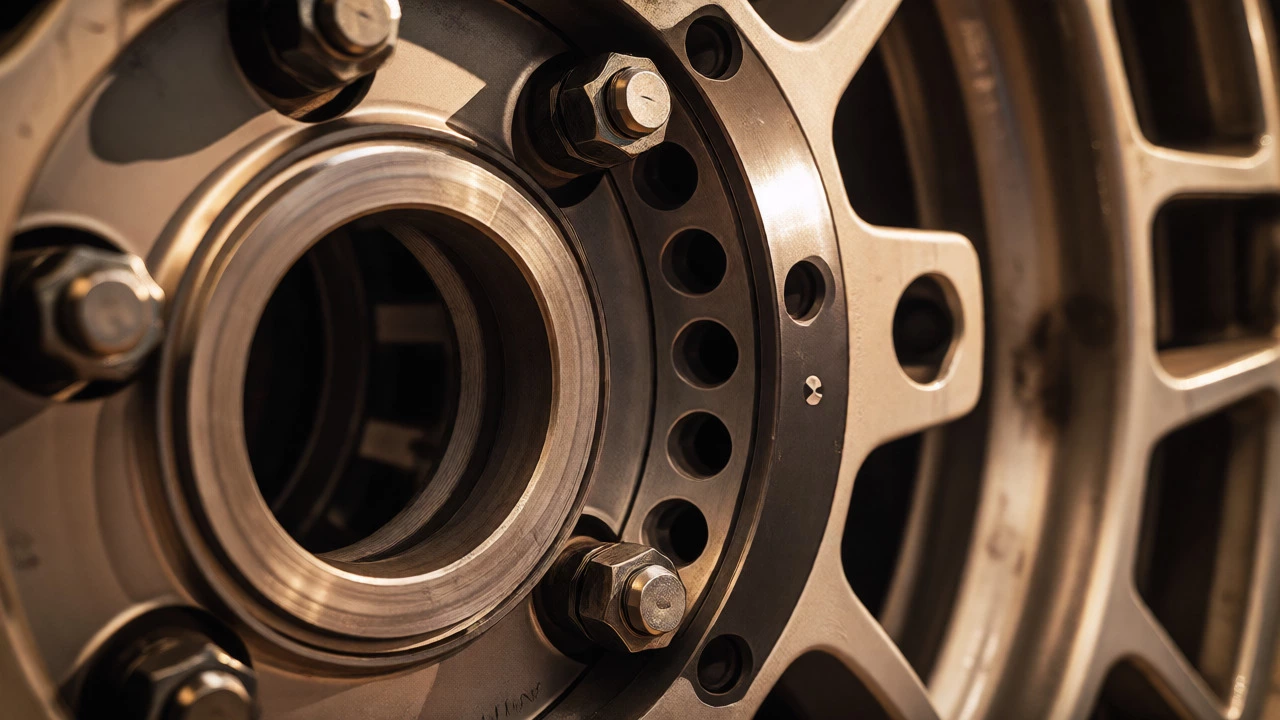
Hub-Centric vs. Lug-Centric: Why Center Bore Matters
Both spacers and adapters interact with the center bore, and this is where many people get into trouble. Your wheel should ideally be hub-centric. This means the center hole of the wheel slides snugly over the protruding hub on your axle. This ensures the wheel rotates perfectly true, centered on the axis of rotation.
If the wheel’s center bore is larger than your hub, it’s called lug-centric fitting. In this scenario, the wheel hangs entirely on the tapered seats of the lug nuts. Over time, especially under heavy braking or acceleration, micro-movements can occur, leading to wobbling or uneven wear. High-quality spacers and adapters include a raised lip on the inside (matching your hub size) and a recessed area on the outside (matching the wheel’s bore). This restores hub-centricity.
When buying either component, measure three things:
- Hub Bore: The diameter of the metal nub on your car’s axle.
- Wheel Bore: The diameter of the hole in the center of your new wheel.
- Adapter/Spacer Bore: Ensure the inner diameter matches your Hub Bore and the outer diameter matches your Wheel Bore.
If you ignore this and buy a generic spacer that ignores center bore specs, you’re forcing a lug-centric fit. It might feel fine at first, but high-speed balance issues often crop up later.
Comparing Cost, Weight, and Safety Risks
Let’s look at the practical trade-offs. Spacers are generally cheaper and lighter. A simple 10mm aluminum spacer might weigh less than a pound. An adapter doing the same width increase but also changing the bolt pattern will be significantly heavier due to the extra material needed to bridge the different patterns. This unsprung weight affects suspension response slightly, though for most street cars, it’s negligible.
Safety is the bigger concern. Both devices introduce a new failure point. With a spacer, the risk is improper torque or using a spacer that exceeds the manufacturer’s recommended thickness for your specific stud length. If you stack multiple spacers, you increase leverage on the wheel bearings, potentially shortening their lifespan.
With adapters, the risk is compatibility errors. Mixing up left-hand and right-hand threads (rare but possible in some imports) or failing to clean the mating surfaces before installation can cause the adapter to sit crooked. A crooked adapter causes immediate vibration. Furthermore, because adapters add height, they move the wheel further from the suspension geometry’s optimal point. This can alter scrub radius and affect steering feedback. If you’re going beyond 20-25mm of total offset change, consult a professional alignment specialist.
| Feature | Wheel Spacer | Wheel Adapter |
|---|---|---|
| Primary Function | Increase track width / Clearance | Change bolt pattern or center bore |
| Bolt Pattern | Remains unchanged | Changes from one pattern to another |
| Complexity | Low (Single mounting layer) | High (Double mounting layers) |
| Weight Impact | Minimal | Moderate to High |
| Best For | Flush stance, tire rubbing fixes | Using non-OEM wheels, cross-brand swaps |
| Cost | $30 - $80 per pair | $60 - $150+ per pair |

Installation Pitfalls to Avoid
No matter which you choose, installation technique dictates success. First, cleanliness is non-negotiable. Remove all rust, dirt, and brake dust from the hub face and the back of the spacer/adapter. Even a grain of sand can prevent the metal-to-metal contact required for friction-based holding power. Use a wire brush and brake cleaner.
Second, torque sequence matters. Do not crank one nut tight before touching the others. Follow a star pattern, tightening gradually in stages. If you’re using a bolt-on spacer with integrated studs, ensure the studs themselves are torqued to spec before mounting the wheel. Many kits require you to remove the old lug nuts, install the spacer’s studs, and then use new lug nuts provided with the kit. Reusing old lug nuts on new studs can sometimes lead to improper seating if the taper angles don’t match.
Finally, re-torque after driving. Metal settles. After 50-100 kilometers of driving, put your car back on jack stands and check the torque values again. This catches any initial settling that might loosen the assembly. If you notice any wobble or vibration immediately after installation, stop driving. Check that the center bore is seated fully and that no debris is trapped behind the component.
When to Choose Which?
Pick a wheel spacer if your bolt pattern and center bore already match the wheel, but you just need more room or a wider stance. It’s the simpler, safer, and cheaper option for cosmetic tweaks or minor clearance issues.
Pick a wheel adapter if the physical mounting points don’t align. If you’re trying to put Subaru wheels on a Honda, or Ford rims on a Mazda, you have no choice but to use an adapter. Also, consider adapters if you need to correct a severe center bore mismatch to restore hub-centric benefits, although dedicated hub rings might be a better solution for small gaps.
Remember, modifying your wheels changes the load paths through your suspension. While spacers and adapters are widely accepted modifications, extreme widths can void warranties or accelerate bearing wear. Keep it reasonable, buy quality machined aluminum components (avoid cast junk), and always prioritize fitment accuracy over aggressive looks.
Can I use wheel spacers if my bolt pattern doesn't match?
No. Wheel spacers preserve the existing bolt pattern. If your wheel’s holes do not align with your car’s studs, a spacer will not fix it. You need a wheel adapter to convert the bolt pattern.
Are wheel adapters safe for daily driving?
Yes, provided they are high-quality, properly installed, and matched to your vehicle’s specifications. Poorly made adapters or incorrect installation can lead to vibrations or loosening, so always use reputable brands and follow torque specs.
Do wheel spacers affect handling?
They widen the track width, which generally improves stability and cornering grip. However, excessive width can alter steering geometry and increase stress on wheel bearings. Moderate spacer use (under 25mm) typically has minimal negative impact.
What happens if the center bore is wrong?
If the center bore is too large, the wheel becomes lug-centric, which can cause vibrations and uneven wear. If it’s too small, the wheel won’t fit. Always ensure the spacer or adapter matches both your hub bore and wheel bore for a hub-centric fit.
Can I stack wheel spacers?
It’s possible but not recommended. Stacking increases the lever arm on the wheel bearings and introduces more potential failure points. It’s better to buy a single thicker spacer or an adapter that provides the necessary offset.