Ground Clearance Calculator
Input Your Vehicle Details
Enter your vehicle details to see how lowering springs affect ground clearance.
Most people who think about lowering their car start with the same question: Are lowering springs better than stock? The answer isn’t simple. It depends on what you want your car to do - and how you drive it every day.
What Lowering Springs Actually Do
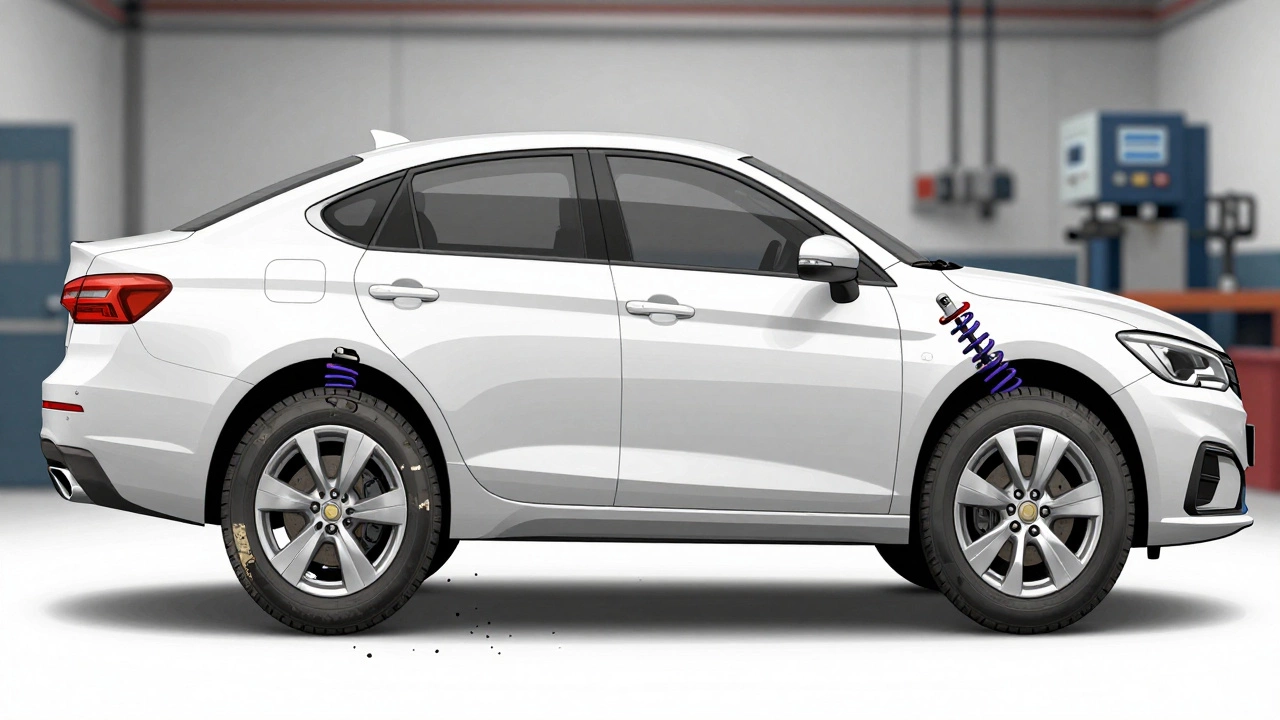
Lowering springs are stiffer, shorter versions of your factory springs. They replace the stock ones and drop your car anywhere from 1 to 2 inches. That’s it. No fancy hydraulics. No air bags. Just metal coils with less height and more tension.
They’re popular because they’re cheap, easy to install, and give your car that aggressive, hugging-the-road look. But that look comes with trade-offs. Your car’s ride quality, handling, and even tire wear change - often in ways you don’t expect.
Why People Choose Lowering Springs
Let’s be honest: most people buy lowering springs because they want their car to look meaner. And honestly? It works. A lowered car looks planted. It doesn’t look like it’s floating above the road. That’s why you see them on Hondas, BMWs, and even F-150s.
But beyond looks, there are real performance reasons. Lowering the center of gravity reduces body roll in corners. That means less lean during hard turns. Your tires stay flatter on the pavement, which improves grip. Track drivers and autocrossers use lowering springs because they improve turn-in response and reduce weight transfer.
According to data from Tire Rack’s suspension tests, a 1.5-inch drop can reduce body roll by up to 20% on a typical sedan - without changing the shock absorbers. That’s a measurable gain.
The Hidden Downsides
Here’s where things get messy.
Lowering springs don’t just make your car sit lower. They change the geometry of your suspension. Your camber and toe angles shift. That means your tires wear unevenly - often on the inside edges. You might go through a set of tires 30% faster than with stock springs.
Then there’s the ride. Lowering springs are stiffer. That’s how they control the car’s movement. But stiffness means every bump, crack, and pothole hits harder. If you drive on rough roads, you’ll feel every one. Many people regret their lowering springs after a winter of salted roads and potholes.
And don’t forget ground clearance. A car lowered by 1.5 inches loses nearly 3 inches of approach and departure angle. That means you’ll scrape your front bumper on steep driveways. Your exhaust might drag on speed bumps. You’ll get stuck on icy inclines. One owner of a lowered Subaru WRX told me he had to take a detour to avoid a simple gas station ramp.
Stock Springs: The Forgotten Option
Stock springs were designed for a reason. They balance comfort, durability, and handling for everyday use. They’re tuned to work with the factory shocks, control arms, and tires. They’re built to last 100,000 miles or more.
Most factory suspensions are actually quite good. A well-tuned OEM setup can handle corners, bumps, and highway cruising without drama. You don’t need to lower your car to drive it well.
Think about this: if lowering springs were universally better, car manufacturers would install them from the factory. But they don’t. They know most people don’t drive on tracks. They know most people care about comfort, not lap times.
When Lowering Springs Make Sense
There are real situations where lowering springs are the right choice.
- You drive your car on smooth roads most of the time - think suburbs, highways, or coastal cities.
- You’re on a tight budget. Lowering springs cost $150-$300. Coilovers cost $800-$2,000.
- You want a subtle drop, not a slammed look. A 1-inch drop is barely noticeable but still improves handling.
- You plan to get a proper alignment after installation. That’s non-negotiable.
- You’re not planning to haul heavy loads or drive off-road.
For example, a 2018 Honda Civic with lowering springs and a $100 alignment is a common combo among weekend enthusiasts. It’s cheap, effective, and doesn’t destroy the car.
When You Should Skip Them
Don’t install lowering springs if:
- You live in an area with bad roads - think potholes, gravel, or snow.
- You carry passengers or cargo regularly.
- You drive in winter conditions. Lowered cars get stuck easier.
- You plan to sell the car soon. Buyers hate lowered suspensions unless they’re perfect.
- You don’t want to spend extra on tires, alignment, or shocks later.
One owner of a lowered Mazda3 in Minnesota told me he had to replace his rear shocks after 18 months because the springs wore them out. He ended up spending more than the cost of a new set of stock springs - and still had a harsh ride.
What About Coilovers?
Some people say, “Why not just get coilovers?” They’re adjustable, better built, and let you fine-tune ride height and stiffness.
But coilovers aren’t magic. They cost 3-5 times more. They’re more complex. They can leak. They need maintenance. And if you buy cheap ones, they’ll rattle and sag in a year.
Lowering springs are the entry point. Coilovers are the upgrade - if you’re serious. Most people don’t need them. And if you’re just trying to look cool, lowering springs do the job for less.

The Alignment Factor
You cannot skip this step. If you install lowering springs and don’t get an alignment, you’re throwing money away.
Lowering changes your camber - the angle your tires tilt inward or outward. Too much negative camber = inside tire wear. Too much positive camber = outside wear. Both reduce grip and shorten tire life.
After lowering, you need a four-wheel alignment. Expect to pay $80-$150. Some shops won’t even do it without proof you’ve installed lowering springs. That’s how common the issue is.
One mechanic in Ohio told me he sees 3-5 cars a week with front tires worn down to the cords - all because someone dropped their car and skipped the alignment.
Real-World Verdict
Are lowering springs better than stock? Only in specific cases.
If you want a subtle visual upgrade, drive on smooth roads, and plan to get an alignment - then yes, they’re a smart, affordable choice.
If you drive daily in rough conditions, carry weight, or hate harsh rides - then stick with stock. Your wallet, your tires, and your spine will thank you.
There’s no universal winner here. It’s about matching the part to your life - not to a YouTube video.
What Most People Miss
Here’s the truth no one tells you: lowering springs don’t make your car faster. They make it look faster.
Real performance gains come from better tires, better shocks, and better alignment - not just a lower ride height. A stock car with performance tires and a proper alignment will out-handle a lowered car with cheap tires and no alignment.
Focus on the whole system. Don’t just drop the car. Upgrade the parts that actually matter.