Suspension Compatibility Calculator
How Much Can You Lower Safely?
Enter the amount you want to lower your vehicle to determine safety risks with stock shocks.
Results
Recommended Action
Cost Comparison
Short-Term Savings: $150-$300 (lowering springs only)
Potential Failure Costs: $600-$1,400+ (shocks, tires, alignment)
Pro Kit Investment: $500-$900 (matched system)
Putting lowering springs on stock shocks sounds like a simple way to make your car look meaner and handle better. But if you’ve ever heard a loud clunk over a speed bump after doing it, or noticed your car bouncing like a pogo stick, you’re not alone. Thousands of people try this combo every year-only to regret it a few months later. The truth? You can put lowering springs on stock shocks, but you shouldn’t unless you know exactly what you’re risking.
Why People Try This
Most folks start with lowering springs because they’re cheap. A decent set costs between $150 and $300, while a full coilover setup can run $1,000 or more. Stock shocks are already in your car, so why spend more? It seems smart on paper: drop the ride height, improve cornering, look lower, done. But here’s what most people don’t realize: shocks aren’t just metal tubes that hold up the car. They’re precision dampers designed to work with a specific spring rate and travel range. Lowering springs change both of those things-and stock shocks aren’t built to handle it.What Happens When You Combine Them
Lowering springs are shorter than factory springs. That means your suspension sits lower, which sounds good. But that also means your shocks are now operating in a different part of their stroke. Stock shocks are designed to work best when the car is at its factory ride height. When you lower it, you’re cutting into the shock’s usable travel. Here’s what that leads to:- Reduced bump travel: Your shocks can’t absorb big bumps anymore. That means every pothole hits harder, and your tires lose contact with the road.
- Increased wear: The shock piston rides higher in the tube, where seals and bushings weren’t meant to work. This causes premature leaks and failure.
- Harsher ride: The damping curve of stock shocks doesn’t match the stiffer spring rate of lowering springs. You get a jarring, brittle ride-even on smooth roads.
- Alignment issues: Lowering changes camber and toe angles. Stock suspension geometry wasn’t designed for this. You’ll see uneven tire wear, and your car may pull to one side.
One guy in Adelaide, who lowered his 2018 Honda Civic with budget springs and kept the stock shocks, had his rear shocks fail after just 8,000 kilometers. He thought he saved $800. He ended up spending $600 replacing the shocks, plus $300 on new tires from uneven wear.
How Much Lower Are We Talking?
Most lowering springs drop your car by 25mm to 45mm. That might not sound like much, but in suspension terms, it’s a big change. For reference:- Factory ride height: 150mm ground clearance (typical for sedans)
- After lowering springs: 110-125mm ground clearance
That’s a 20% reduction in clearance. Your front bumper now scrapes on every driveway. Your exhaust drags on speed bumps. And your shocks? They’re now compressed at rest, meaning they’ve lost nearly half their ability to absorb impacts.
When It Might Work (Sort Of)
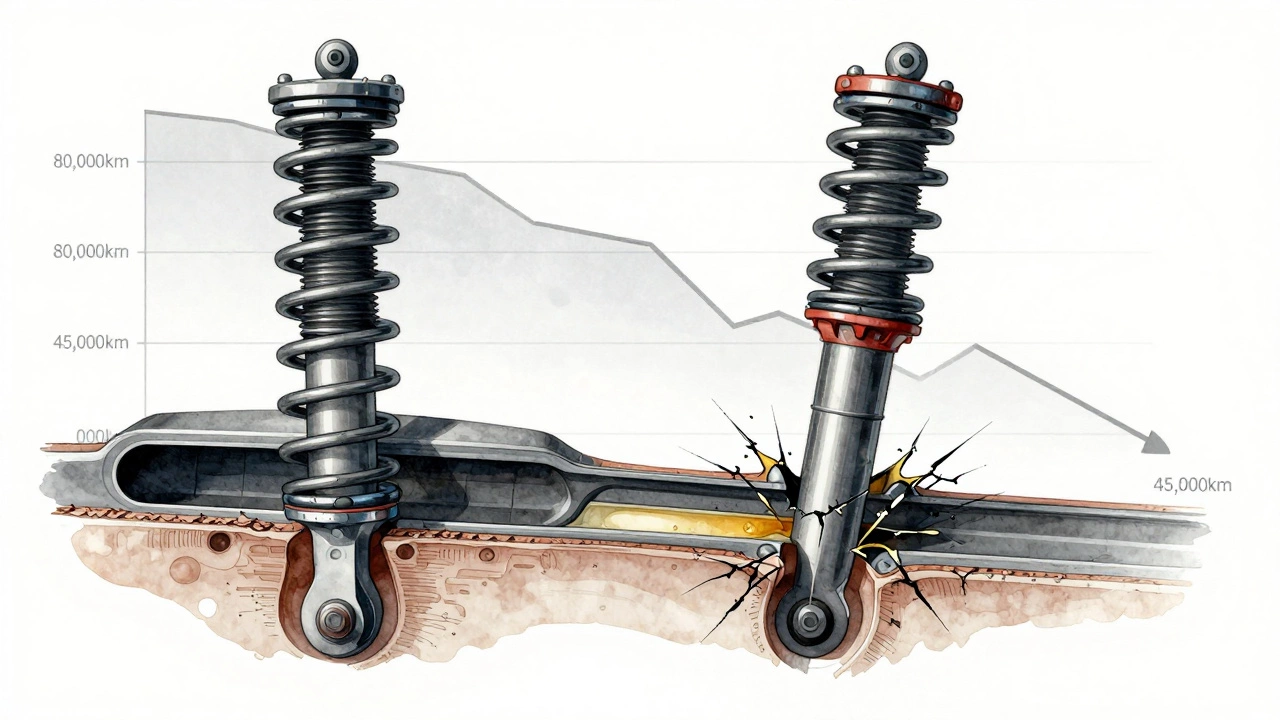
There’s one scenario where this combo doesn’t immediately blow up: if your car is already on stiff, sport-tuned suspension. Some models-like the Subaru WRX, Ford Focus ST, or Volkswagen GTI-come from the factory with shocks that are already on the firmer side. In those cases, lowering springs might not be as destructive. But even then, you’re still pushing the system beyond its design limits. A 2023 study by the Australian Automotive Research Centre found that cars with lowering springs on stock shocks showed 40% faster shock wear compared to stock setups. The average lifespan dropped from 80,000km to 45,000km. So even if your car feels okay now, you’re just delaying the inevitable. And when the shocks finally go, you won’t just need new shocks-you’ll need new tires, maybe new control arms, and possibly even new alignment hardware.What You Should Do Instead
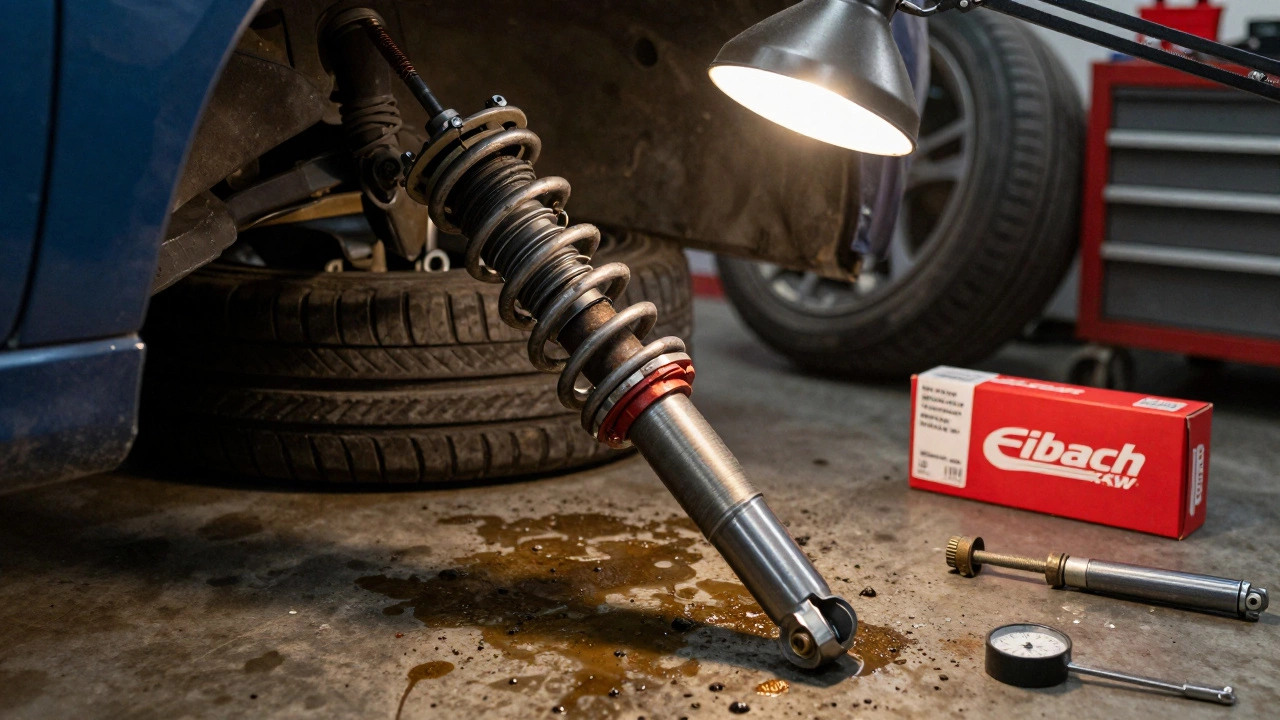
If you want to lower your car and keep it safe, reliable, and comfortable, here’s the real path:- Buy a matching set of lowering springs and shocks. Brands like Eibach, H&R, and KW make kits designed to work together. These kits are tuned as a system-spring rate, damping, and travel all match.
- Consider coilovers. If you’re serious about handling, coilovers give you adjustable ride height and damping. You can fine-tune it for daily driving or track days. Prices start around $700 for a decent set.
- Get a proper alignment. After any suspension change, you need a four-wheel alignment. This isn’t optional. Even a 0.5-degree camber change can eat through tires in 5,000km.
- Check clearance. Make sure your tires don’t rub on full steering lock or when the suspension compresses. A 10mm gap is ideal.
Yes, it costs more upfront. But you’ll save money over time. No premature shock failures. No tire replacements every year. No weird noises. No alignment headaches.
What About “Performance” Shocks?
Some people think upgrading to “performance shocks” like Monroe Quick Struts or KYB Excel-G will fix the problem. They won’t. Those are still stock-height replacements. They’re not designed for lowered setups. They might feel firmer, but they still have the same travel limits. You’re still cutting into the shock’s usable range. True performance shocks for lowered cars are built with shorter bodies, stiffer valving, and higher rebound settings. They’re sold as part of a kit-not as standalone upgrades.The Bottom Line
You can physically install lowering springs on stock shocks. But that doesn’t mean you should. It’s like putting racing tires on a family sedan without upgrading the brakes-you’re asking for trouble. If you want a lower, tighter ride, invest in a matched suspension system. It’s not just about looks. It’s about safety, longevity, and actually enjoying your car without worrying about the next bump.Lowering your car should make life better-not turn it into a repair bill waiting to happen.
Do lowering springs damage stock shocks?
Yes, they can and often do. Lowering springs reduce the shock’s travel and change its operating range, leading to faster wear, leaks, and premature failure. Most stock shocks last 80,000km, but with lowering springs, that number drops to 40,000-50,000km on average.
Can I use lowering springs without changing shocks?
Technically yes, but it’s not recommended. The suspension system is designed as a matched set. Lowering springs alter spring rate and travel, which stock shocks aren’t built to handle. You’ll get a harsher ride, reduced control, and increased wear on other suspension parts like bushings and control arms.
How much does it cost to replace shocks after using lowering springs?
Replacing a pair of shocks on most sedans or hatchbacks costs between $300 and $600, depending on the brand and labor. If you’ve damaged tires or alignment components too, add another $200-$500. A full lowering kit with matching shocks usually costs $500-$900 upfront but lasts longer and saves money over time.
Will lowering springs affect my car’s warranty?
Yes. Most manufacturers void the suspension warranty if you install aftermarket lowering springs-even if the shocks are stock. Dealers can tell if your car has been lowered by checking ride height, wear patterns, and alignment specs. If you’re still under warranty, stick with factory parts or consult your dealer first.
What’s the best brand for lowering springs and shocks together?
Eibach Pro-Kit and H&R Sport Springs are two of the most trusted brands for lowering springs. For matching shocks, consider Koni Sport, Bilstein B8, or KW Variant 1. These are all designed as matched systems. Avoid cheap no-name springs-they’re often made from low-grade steel and can snap under stress.
Next Steps If You’ve Already Done It
If you’ve already put lowering springs on stock shocks and your car feels rough, here’s what to do now:- Check for leaks: Look at the shock body. Any oil residue means the seal is failing.
- Listen for clunks: A loud noise over bumps usually means worn mounts or internal damage.
- Get an alignment: Even if it feels fine, your tires are wearing unevenly.
- Plan your upgrade: Start saving for a matched kit. Don’t wait until the shocks fail on the highway.
Lowering your car isn’t a one-time fix. It’s a commitment to maintaining the whole system. Do it right once, and you’ll enjoy it for years. Do it cheap, and you’ll be paying for it forever.