K&N Filter Maintenance & Risk Calculator
Your Setup
Enter your details to see if your filter needs service or if you are at risk of damaging your MAF sensor.
If you’ve just installed a K&N air filter in your car, the first question that usually pops up is whether you need to oil it. The short answer is yes. Most K&N filters are designed to be oiled because they rely on a specific type of grease to trap dust and debris while letting air flow through. But here’s the catch: not all K&N filters require oil, and getting this wrong can lead to expensive engine damage or voided warranties. Let’s break down exactly what you need to know so you don’t accidentally ruin your investment.
Why Do K&N Filters Use Oil?
To understand why oil is necessary, you have to look at how these filters work compared to standard paper filters. A typical disposable air filter uses dense paper fibers to block particles. It works well, but it restricts airflow significantly once it gets dirty. K&N filters use a multi-layer cotton gauze material that is much less restrictive. If they used dry cotton, fine dust would pass right through into your engine. That’s where the oil comes in.
The specialized oil acts as a sticky barrier. When air passes through the filter, larger particles hit the outer layer and get stuck. Smaller particles, like fine dust and pollen, get trapped by the oil-coated fibers inside. This allows the filter to maintain high airflow-often improving engine breathing by 5% to 10%-while still protecting the engine from abrasive contaminants. Without the oil, the filter becomes little more than a loose piece of fabric with holes in it.
Not All K&N Filters Are Created Equal
This is where most people make mistakes. While the classic red K&N filters are famous for being oiled, the company also produces non-oiled versions. You need to check the packaging or the model number before you buy any maintenance supplies.
- Oiled Filters: These are the traditional performance filters made of cotton gauze. They require periodic cleaning and re-oiling. Look for the word "Reusable" or "Serviceable" on the box.
- Non-Oiled Filters: K&N also makes synthetic media filters (often labeled as "KN-89" series or similar) that do not use oil. These are designed for convenience and are usually replaced rather than cleaned. Some newer models even use a proprietary foam that doesn't need oil.
- Pre-Filters: In some off-road applications, K&N sells pre-filters that sit over the main intake. These might have different maintenance requirements depending on the specific application.
If you’re unsure, look at the filter itself. Oiled filters will have a slight sheen and feel tacky to the touch. Dry filters will feel like regular cloth or foam. Never assume based on color alone, as K&N has changed materials over the years.
The Risks of Over-Oiling Your Filter
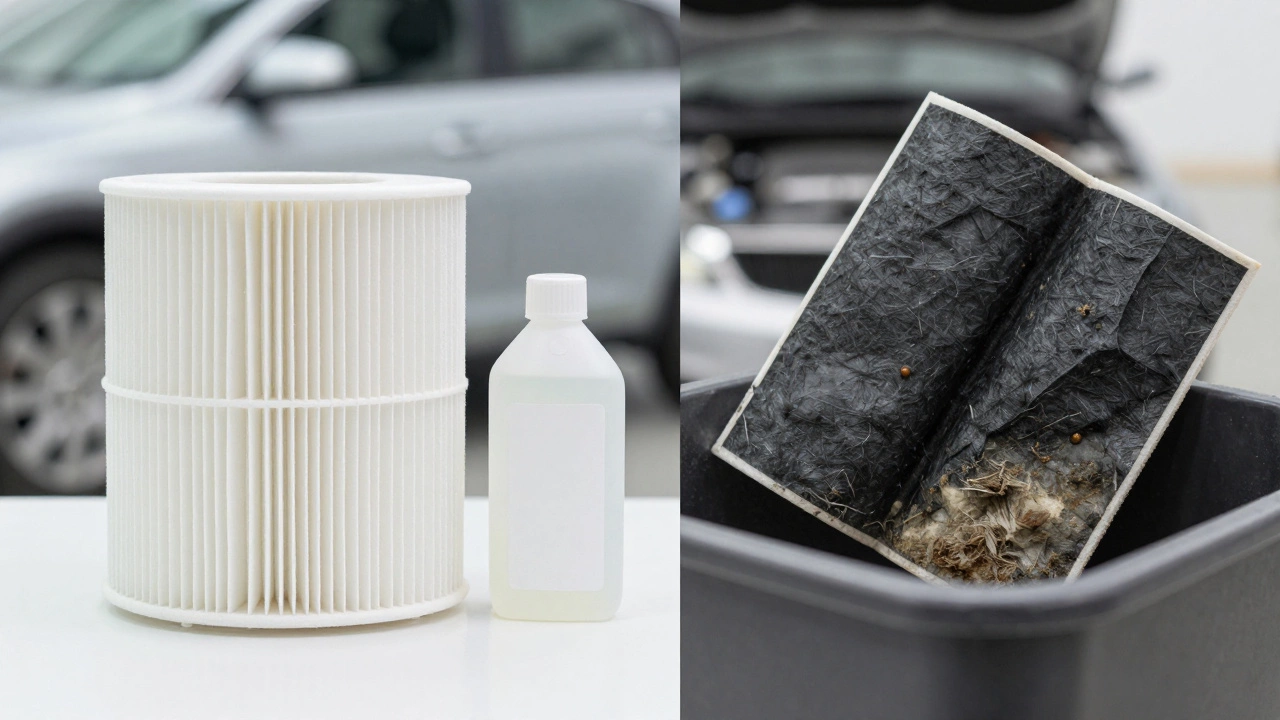
One of the biggest dangers with K&N filters isn’t forgetting to oil them-it’s using too much oil. This is a common mistake among DIY enthusiasts who think "more is better." It’s not. Excess oil can wick through the filter media and end up in your engine’s Mass Air Flow (MAF) sensor.
The MAF sensor measures the amount of air entering the engine. It’s incredibly sensitive. If oil coats the sensor wires, it sends false data to the Engine Control Unit (ECU). This leads to poor fuel economy, rough idling, and sometimes a Check Engine Light. In severe cases, excess oil can burn inside the combustion chamber, causing fouled spark plugs or even damaging catalytic converters. I’ve seen customers spend hundreds on diagnostic fees only to find a simple case of over-oiling was the culprit.
How to Properly Clean and Re-Oil a K&N Filter
If you have an oiled K&N filter, maintenance is straightforward but requires patience. You shouldn’t rush this process. Here’s the step-by-step method recommended by K&N themselves:
- Remove the filter: Take the filter out of the airbox. Inspect it for tears or damage. If the cotton media is ripped, replace the filter immediately.
- Pre-clean: Gently tap the filter against a hard surface to dislodge loose dirt. Avoid using compressed air if possible, as high pressure can blow particles deeper into the media or damage the stitching.
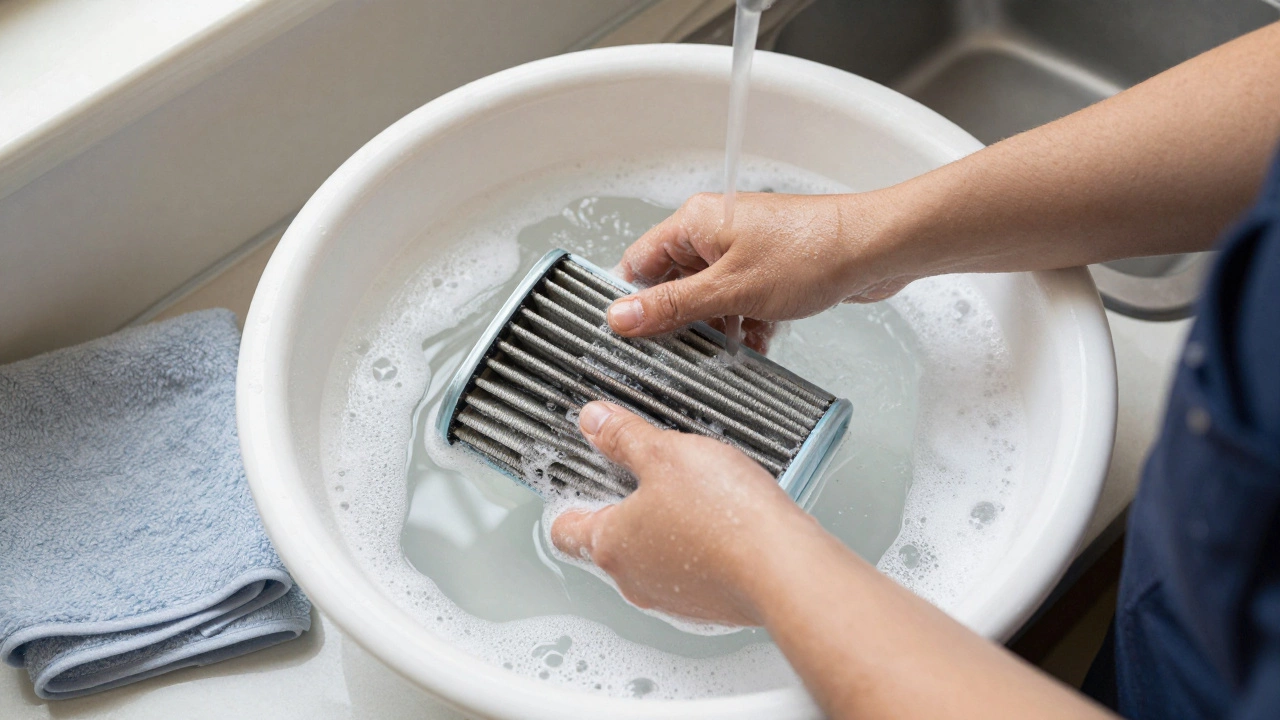
- Wash: Use K&N’s own cleaner or a mild dish soap mixed with warm water. Soak the filter for no more than two minutes. Agitate gently with your hands. Do not scrub aggressively.
- Rinse: Rinse thoroughly with low-pressure water until the water runs clear. Make sure all soap residue is gone.
- Dry: Let the filter air-dry completely. This can take several hours. Do not use heat sources like hair dryers or ovens, as heat can damage the cotton and glue.
- Re-oil: Once bone dry, apply the K&N filter oil evenly across the entire surface. Apply enough so the cotton looks uniformly dark, but not so much that it drips. Focus on the pleats.
- Cure: Let the filter sit for at least 30 minutes to allow the oil to soak into the fibers before reinstalling it.
When Should You Clean Your Filter?
Unlike paper filters that you replace every 12,000 to 15,000 miles, K&N filters last much longer. The general rule of thumb is to clean and re-oil every 50,000 to 100,000 miles, depending on driving conditions. If you drive in dusty environments, off-road, or in areas with heavy pollution, you may need to service it more frequently-perhaps every 20,000 miles.
A good visual indicator is airflow. If you notice your engine feels slightly sluggish or you hear a change in the intake sound, it might be time for a check. Also, inspect the filter visually during routine oil changes. If it looks clogged with black grime, give it a wash.
Alternatives to Oiled Filters
If the idea of washing and oiling a filter sounds like too much hassle, you’re not alone. Many drivers prefer the convenience of disposable filters. Standard paper filters are cheap, easy to install, and require zero maintenance. They’re perfect for daily drivers that aren’t pushed hard.
Another option is dry reusable filters from brands like BMC or Uni-filter. These use synthetic media that traps dirt without oil. They offer better airflow than paper filters but typically don’t match the peak flow rates of oiled K&N filters. However, they eliminate the risk of MAF sensor contamination entirely. For many city drivers, this trade-off is worth it.
| Filter Type | Maintenance Required | Airflow Performance | Lifespan | Risk to MAF Sensor |
|---|---|---|---|---|
| K&N Oiled Cotton | High (Clean & Oil) | High | Very Long (100k+ miles) | High (if over-oiled) |
| Paper Disposable | None (Replace) | Low | Short (12k-15k miles) | None |
| Synthetic Dry Reusable | Medium (Clean Only) | Medium-High | Long (50k-75k miles) | None |
Common Mistakes to Avoid
I see the same errors repeated constantly in forums and repair shops. First, never use gasoline, solvents, or harsh chemicals to clean your filter. These destroy the cotton fibers and the adhesive holding the filter together. Stick to mild soap or dedicated filter cleaners.
Second, don’t skip the drying step. Installing a wet filter is disastrous. Water can enter the engine intake, leading to hydrolock-a catastrophic failure where the engine tries to compress liquid instead of air. Always wait until the filter is completely dry before applying oil.
Third, avoid using generic oils. Do not use motor oil, WD-40, or cooking oil. These products have the wrong viscosity and chemical properties. They won’t trap particles effectively and can degrade the filter media over time. Only use oil specifically formulated for air filters.
Is It Worth the Trouble?
For performance enthusiasts, the answer is often yes. An oiled K&N filter can improve throttle response and horsepower slightly, especially in modified engines with upgraded intakes. The ability to reuse the filter also makes it cost-effective over time, despite the higher upfront price.
However, for average commuters who prioritize convenience, the maintenance burden might outweigh the benefits. If you hate getting your hands dirty or forget about maintenance tasks, a high-quality paper filter or a dry synthetic alternative might be a smarter choice. There’s no shame in choosing simplicity.
Can I use my K&N filter without oil?
No, not if it is an oiled cotton gauze filter. Running an oiled K&N filter without oil will allow fine dust and debris to pass directly into your engine, causing premature wear on pistons and cylinders. Non-oiled synthetic K&N filters exist, but they are distinct products designed for dry operation.
What happens if I put too much oil on my K&N filter?
Excess oil can migrate to your Mass Air Flow (MAF) sensor, coating it and causing inaccurate air readings. This leads to poor fuel economy, rough idling, and potentially a Check Engine Light. In extreme cases, burning oil can foul spark plugs or damage the catalytic converter.
How often should I clean and re-oil my K&N filter?
Generally, every 50,000 to 100,000 miles under normal driving conditions. If you drive in dusty, sandy, or polluted environments, you should inspect it more frequently and possibly clean it every 20,000 miles. Visual inspection during oil changes is a good practice.
Can I use compressed air to clean my K&N filter?
It is not recommended. High-pressure air can force dirt deeper into the cotton media, making it harder to remove later. It can also damage the filter's stitching or tear the delicate cotton layers. Gentle hand washing with soap and water is the safest method.
Does oiling a K&N filter improve performance?
Yes, properly oiled K&N filters generally offer better airflow than standard paper filters, which can result in a slight improvement in throttle response and horsepower. However, the primary purpose of the oil is filtration, not performance enhancement. Without oil, the filter fails its main job of protecting the engine.