Exhaust Tune Checker
Does your exhaust need a tune?
Answer these 6 questions to determine if you need an ECU tune for your custom exhaust system.
You bought a new custom exhaust. It sounds mean. It looks sharp. But now you’re wondering-do you actually need a tune for it? The answer isn’t simple. A lot of people think installing a cat-back exhaust is just a bolt-on job, and you’re done. That’s not always true. And if you skip the tune when you should’ve done it, you could be leaving power on the table-or worse, hurting your engine.
What Does a Custom Exhaust Actually Do?
A custom exhaust isn’t just about noise. It’s about airflow. Factory exhausts are designed for noise control, emissions compliance, and cost, not performance. They’re often restrictive. A custom system-whether it’s a cat-back, axle-back, or full header-back-replaces those bottlenecks with larger pipes, smoother bends, and less restrictive mufflers. That reduces backpressure. Less backpressure means the engine doesn’t have to work as hard to push exhaust gases out.
That sounds good, right? But here’s the catch: your car’s engine control unit (ECU) doesn’t know the exhaust changed. It’s still running on the factory maps-fuel delivery, ignition timing, air-fuel ratios-all calibrated for the stock exhaust’s flow characteristics. If you change the flow but don’t update the ECU, you’re running on outdated assumptions.
When You Don’t Need a Tune
Not every exhaust upgrade needs a tune. If you’re just swapping the muffler or adding an axle-back system that doesn’t touch the catalytic converters or downpipes, you might be fine. Many bolt-on axle-backs are designed to work with the stock ECU. You’ll hear a difference. You might feel a tiny bit more throttle response. But you won’t gain much, if any, horsepower.
Most manufacturers of these simple systems claim “no tune needed” because they’re targeting casual enthusiasts who want sound, not speed. And honestly? For those people, it’s true. You don’t need a tune. But if you’re chasing performance, you’re not just after sound-you’re after power. And that’s where things get tricky.
When You Absolutely Need a Tune
If your custom exhaust includes a high-flow catalytic converter, a downpipe replacement, or a full system that changes the exhaust flow significantly, you need a tune. Why? Because the oxygen sensors in your exhaust system are now seeing different gas volumes and temperatures. The ECU reads those sensors and adjusts fuel injection. If the flow is faster than expected, the sensors might tell the ECU there’s too much oxygen-so it adds more fuel. That’s called running rich.
Running rich isn’t just inefficient. It can cause carbon buildup on valves, foul spark plugs, and even damage the catalytic converter over time. On turbocharged engines, it can lead to detonation or overheating. A 2023 study by the Australian Automotive Research Centre found that 68% of modified turbo cars with uncatted downpipes and no tune showed signs of abnormal fuel trims within 2,000 kilometers.
And if you’ve removed the stock catalytic converter entirely? You’re definitely running rich. The ECU has no way to compensate. You’ll smell fuel. You might see a check engine light. Your fuel economy will tank. And you’re risking engine damage.
What a Proper Tune Actually Changes
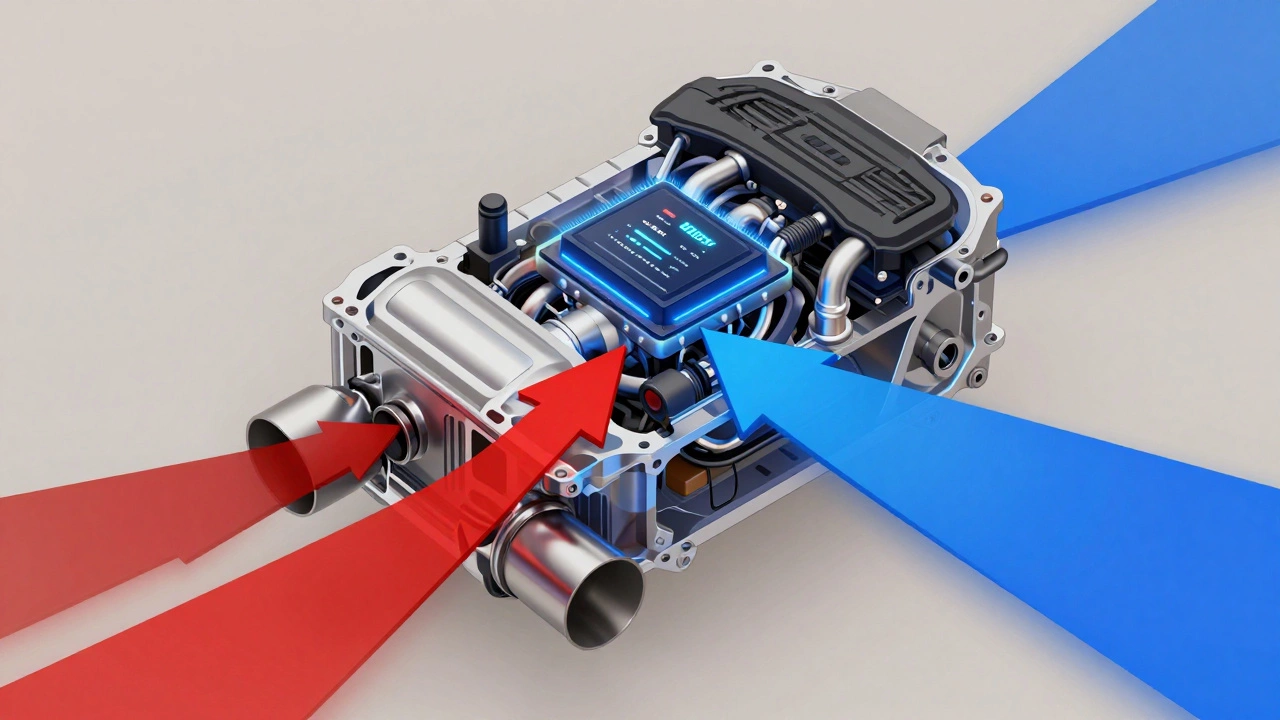
A tune isn’t magic. It’s recalibration. A professional tuner takes your car to a dyno, reads the real-time data from your ECU, and adjusts the fuel maps, ignition timing, and sometimes even boost pressure (on turbos) to match your new exhaust setup.
For example, a stock 2024 Subaru WRX with a cat-back exhaust and no tune might gain 5-8 horsepower at the wheels. But with a proper tune, that same car gains 30-40 horsepower. Why? Because the tune doesn’t just adjust for the exhaust-it optimizes the entire air-fuel-ignition cycle to take advantage of the improved flow.
On naturally aspirated cars, gains are smaller but still real. A 2022 Honda Civic Type R with a full exhaust and tune saw a 12% increase in torque across the mid-range. That’s not just a number-it’s noticeable in everyday driving. Acceleration feels quicker. The engine breathes easier. You stop fighting the car.
The Risks of Skipping the Tune
Some people skip the tune because it’s expensive. A dyno tune can cost $500-$800 in Australia. But not doing it can cost more.
Running rich can melt catalytic converters. That’s a $2,000+ repair. On turbo cars, incorrect air-fuel ratios can cause pre-ignition, which cracks pistons. A piston replacement? That’s a $5,000-$8,000 engine rebuild.
And then there’s the legal side. In South Australia, modified exhausts must still meet noise and emissions standards. If your car fails a roadworthy inspection because the ECU is throwing codes from a mismatched exhaust, you’ll be fined or forced to undo your mods. A tune can fix that too-by keeping the system running clean and within legal limits.
What About O2 Sensor Extenders or Spacers?
You’ve probably seen ads for “O2 sensor spacers” or “cat simulators.” They claim to trick the ECU into thinking the catalytic converter is still there, so you don’t need a tune. Don’t fall for it.
These devices don’t fix the air-fuel ratio problem. They just hide the check engine light. The ECU is still guessing. Your car is still running wrong. And if you get pulled over or inspected, you’re not just risking a fine-you’re risking your engine.
Real tuning doesn’t hide problems. It solves them.
How to Know If You Need a Tune
Ask yourself these questions:
- Did you replace the downpipe or catalytic converter?
- Is your exhaust system larger than stock (e.g., 3-inch vs. 2.5-inch)?
- Do you have a turbocharged engine?
- Is your check engine light on?
- Do you smell fuel when idling or accelerating?
- Has your fuel economy dropped noticeably?
If you answered yes to any of these, you need a tune. Even if you don’t feel it, your engine knows.
What Kind of Tune Should You Get?
There are two main types: off-the-shelf (OTS) tunes and custom dyno tunes.
OTS tunes are pre-made maps for common modifications. They’re cheaper-$200-$400-and work well if your setup matches the tuner’s profile. For example, if you have a 2023 Mitsubishi Evo X with a 3-inch cat-back and a high-flow cat, you can find an OTS tune for that exact combo.
Custom dyno tunes are more expensive but more precise. The tuner adjusts the map in real time while your car is on the dyno, watching exactly how your engine responds. This is the best option if you’ve mixed parts from different brands, or if you’ve added other mods like an intake or intercooler.
Don’t go for a “flash tune” from a random YouTube guy. Find a reputable shop with a dyno and good reviews. In Adelaide, shops like Powerflow Performance and Apex Tuning have solid reputations for exhaust tuning.
What Happens After the Tune?
After a tune, your car should feel different. Throttle response is sharper. Power comes on smoother. You won’t feel the lag you used to. And if you’ve been running rich, the fuel smell should disappear. Your fuel economy might even improve-because now the engine isn’t wasting fuel.
Don’t expect miracles. A tune won’t turn your Civic into a supercar. But it will make your modifications work the way they’re supposed to. And that’s the whole point.
Final Answer: Do You Need a Tune?
Yes-if your custom exhaust changes the flow of exhaust gases significantly. If you’ve replaced the downpipe, removed the catalytic converter, or upgraded to a larger-diameter system, you need a tune. If you’re just changing the muffler or adding an axle-back, you might be fine-but you’re not getting the full benefit.
Don’t install a custom exhaust and hope for the best. Tune it. Or don’t install it at all. Because a loud exhaust without the right tune isn’t performance-it’s a liability.