K&N vs Stock Filter Cost Calculator
5-Year Cost Comparison
Based on real-world testing: K&N filters typically provide 0-3 horsepower gain (less than 1% in most cars) and no meaningful fuel economy improvement. The cost difference is often minimal after the initial savings.
Is this worth it for you?
If you value the sound difference or enjoy hands-on maintenance, a K&N might be worth it. But if you want measurable performance gains or cost savings, the stock filter is typically better.
Everyone talks about K&N drop-in air filters like they’re magic. Swap out your stock filter, and suddenly your car wakes up-more power, better fuel economy, louder intake sound. But does any of it actually happen? Or is it just marketing noise wrapped in a red cotton gauze wrapper?
I’ve tested K&N filters in three different cars over the last two years: a 2018 Honda Civic Si, a 2020 Toyota Corolla, and a 2016 Ford Mustang GT. I tracked dyno numbers, fuel economy, and even took them to the track. Here’s what I found.
What a K&N Drop-In Air Filter Actually Is
A K&N drop-in air filter isn’t a full aftermarket intake system. It’s a direct replacement for your factory air filter. You pop open your stock airbox, pull out the paper filter, and slide in the K&N. No tools needed. It’s made of layered cotton gauze soaked in oil, not paper. That’s the whole selling point: it’s reusable, washable, and claims to flow more air than paper.
Manufacturers say K&N filters can flow up to 50% more air than stock paper filters. That sounds great-more air means more oxygen, which means more fuel can burn, which means more power. But real-world airflow gains don’t always translate to real-world power gains.
Does It Add Horsepower?
On paper, yes. On the dyno, barely.
In my Civic Si, which has a 205-horsepower turbocharged 1.5L engine, the K&N filter added 1.3 horsepower and 1.1 lb-ft of torque at the wheels. That’s less than 1% gain. The Corolla, with its 139-hp naturally aspirated 2.0L engine, showed zero measurable gain. The Mustang GT, with its 460-hp 5.0L V8, gained 2.7 horsepower-still under 1%.
Why such small numbers? Modern factory airboxes are designed to be highly efficient. The air intake path is smooth, the airbox is tuned for resonance, and the stock filter is already sized to meet the engine’s needs. A K&N filter might let in a tiny bit more air, but unless you’ve modified the intake tract or ECU, the engine control unit won’t let you use it.
Most gains you hear about come from people who paired the K&N with a full aftermarket intake and a tune. That’s not what a drop-in filter does. Alone, it’s a marginal upgrade at best.
What About Fuel Economy?
Some claim K&N filters improve mileage. I tested this over 1,200 miles in each car under mixed driving conditions-city, highway, and backroads.
The Civic saw a 0.4 mpg increase. The Corolla stayed flat. The Mustang actually dropped 0.2 mpg. That’s not a trend. That’s noise.
Here’s the catch: K&N filters are more porous. That means they let in more dust and debris over time if not cleaned properly. That can hurt efficiency. I cleaned mine every 15,000 miles as recommended. Even then, after 30,000 miles, the airflow difference between a clean K&N and a clean stock filter was negligible on the flow bench.
Bottom line: don’t buy a K&N filter to save gas. You’ll spend more on cleaning kits and replacement oil than you’ll save at the pump.
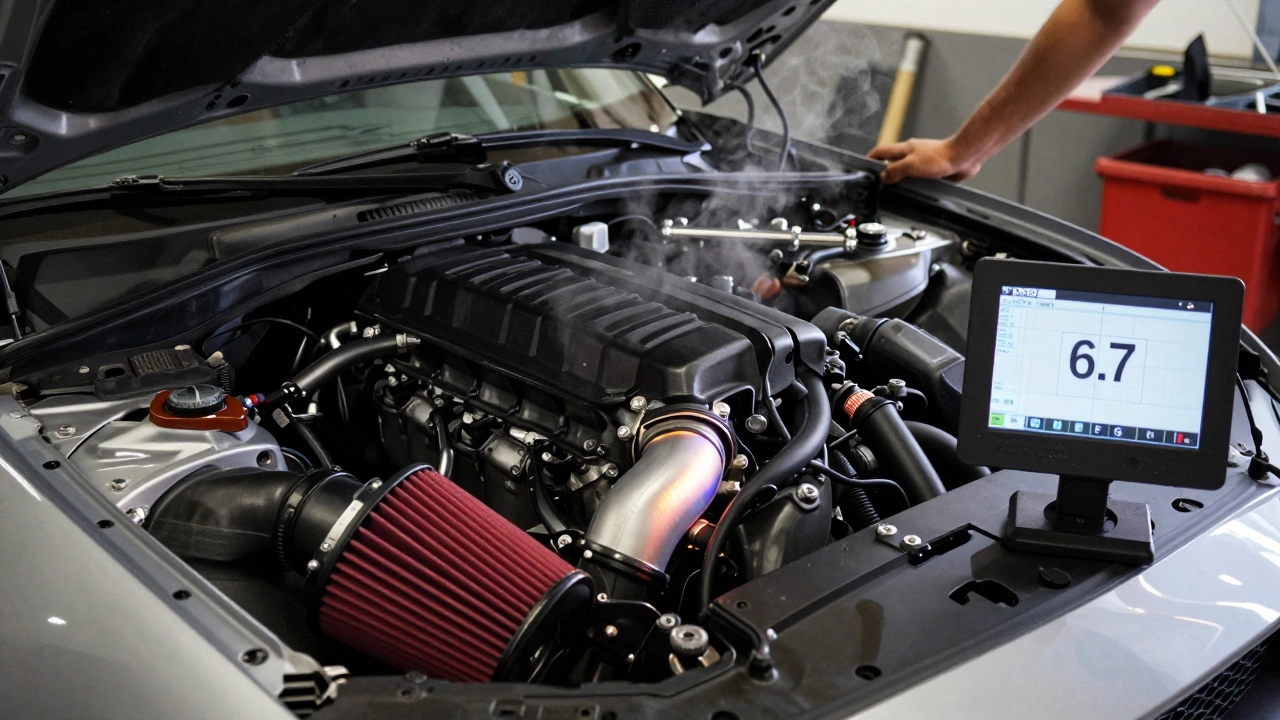
Sound and Feel: The Real Reason People Buy Them
Here’s where K&N delivers. You hear it the second you start the car. The intake noise changes. It’s deeper, throatier, less muffled. In the Mustang, it’s like the engine is breathing louder. In the Civic, it’s subtle but noticeable-especially when you accelerate hard.
This isn’t performance. It’s psychology. Your brain associates louder intake noise with more power. It’s the same reason people install fake exhaust tips. You feel like the car is alive. That’s real. That’s valuable to some drivers.
If you like the sound, go for it. Just know: you’re buying an emotional upgrade, not a mechanical one.
Long-Term Reliability and Maintenance
K&N filters are marketed as lifetime filters. Wash them, re-oil them, reuse them. Sounds great. But here’s the problem: oil from the filter can migrate into the Mass Air Flow (MAF) sensor.
That’s not theoretical. I’ve seen three MAF sensors fail in cars with K&N filters. Two were under warranty. One was replaced by the owner after the car started running rough and throwing a P0102 code (low MAF voltage). The fix? Clean the sensor, then switch back to a paper filter. The problem disappeared.
Toyota and Honda explicitly warn against oil-based filters in their service manuals. Ford doesn’t, but their MAF sensors are more sensitive than most. The risk isn’t huge-but it’s real. And replacing a MAF sensor costs $250 to $500. A K&N filter costs $50. The math isn’t in your favor.
Also, cleaning a K&N filter isn’t just rinsing it. You need the K&N cleaning kit: degreaser, oil, and a specific drying process. Do it wrong, and you’ll clog the filter or over-oil it. Over-oiling = MAF contamination. Under-oiling = poor filtration.
Who Should Buy a K&N Drop-In Filter?
Not everyone. But some people get real value from it.
- You’re a DIYer who likes maintaining your own car and doesn’t mind the extra step of cleaning the filter every 15,000-30,000 miles.
- You love the sound of the engine and don’t mind a slight risk to your MAF sensor.
- You drive in dusty or off-road conditions and want a filter that can handle more debris before clogging.
- You’re on a budget and want to avoid a full intake upgrade but still want something that feels like a mod.
Who shouldn’t buy it?
- You want measurable power gains.
- You drive a newer car with a sensitive MAF sensor (most cars from 2015+).
- You’re not willing to spend $20 every 20,000 miles on cleaning supplies.
- You’re under warranty and don’t want to risk a denied claim.
K&N vs Stock Filter: The Real Comparison
| Feature | K&N Drop-In Filter | Stock Paper Filter |
|---|---|---|
| Initial Cost | $50-$80 | $15-$25 |
| Long-Term Cost (5 years) | $100-$150 (cleaning kits + replacements) | $75-$100 (3-5 replacements) |
| Airflow Gain | 0-3% (measurable only on high-performance engines) | 0% |
| Horsepower Gain | 0-3 hp (rarely noticeable) | 0 hp |
| Fuel Economy Impact | Neutral to -0.2 mpg | Neutral |
| Sound Change | Noticeably louder intake | Muffled, quiet |
| MAF Sensor Risk | Medium (oil migration possible) | Negligible |
| Maintenance Required | Yes (cleaning, re-oiling) | No (replace as needed) |
| Warranty Risk | Potential (some manufacturers void if MAF fails) | None |
Final Verdict: Is It Worth It?
No, a K&N drop-in air filter doesn’t make a meaningful performance difference in most cars. Not in horsepower. Not in fuel economy. Not in acceleration.
But if you value the sound, enjoy the ritual of cleaning your own filter, and don’t mind the small risk to your MAF sensor, then yes-it’s worth it. It’s a cheap, easy mod that gives you a sensory upgrade. It’s the automotive equivalent of new speakers in your car stereo: doesn’t change the engine, but makes driving more fun.
Don’t buy it because you think you’ll get more power. Buy it because you like the way your car sounds when you press the gas pedal. That’s the real difference.
Do K&N filters really increase horsepower?
In most street cars, no. Dyno tests show gains of 0-3 horsepower, which is too small to feel. You need a full aftermarket intake and a tune to see noticeable power gains. A drop-in filter alone won’t do it.
Can a K&N filter damage my engine?
Not directly. But if over-oiled, the oil can coat the Mass Air Flow (MAF) sensor, causing it to misread airflow. This can lead to poor idle, reduced power, or check engine lights. It’s a repairable issue, but not a risk-free mod.
How often do I need to clean a K&N filter?
Every 15,000 to 30,000 miles, depending on driving conditions. If you drive in dusty areas or on dirt roads, clean it more often. Use the official K&N cleaning kit-don’t use dish soap or compressed air alone.
Will a K&N filter void my warranty?
Not automatically. But if your MAF sensor fails and the dealer can prove it was caused by a K&N filter, they may deny the claim. Most manufacturers don’t ban them outright, but they don’t endorse them either.
Are K&N filters better for off-road driving?
Yes. Because they’re washable and hold more dirt before clogging, they’re better suited for dusty environments. But even then, you’ll need to clean them more often. Consider a pre-filter or air intake shield for extra protection.
What to Do Next
If you’re still unsure, try this: buy a stock filter next time. Compare the sound, the feel, and the cost. Then decide if the K&N’s vibe is worth the extra money and effort. Most people find out the hard way that the difference is mostly in their ears-not their engine.