Car Detailing Cost & Time Estimator
Vehicle Details
Estimated Results
That feeling when you look at your car and see it covered in dust, bird droppings, and water spots is universal. It’s frustrating. But here is the good news: you don’t need to spend hundreds of dollars at a professional shop to get that showroom shine. You can detail your own car right in your driveway. The key isn't expensive equipment; it's using the right technique and the right products.
Detailing is more than just a quick rinse with a hose. It involves deep cleaning, polishing, and protecting every surface of your vehicle. Whether you have a daily driver or a weekend cruiser, learning how to detail your own car saves money and gives you pride in ownership. Let’s break down exactly how to do it properly, without scratching your paint or wasting time.
Gathering Your Essential Tools
Before you touch a drop of soap, you need the right gear. Most people make the mistake of using household sponges or dish soap. Please stop doing that immediately. Dish soap strips away wax and protective coatings, while kitchen sponges are often too abrasive for clear coats. Instead, invest in a basic car detailing kit that includes microfiber towels, a bucket with a grit guard, and car-specific shampoo.
- Buckets: Use two buckets. One for soapy water, one for rinsing your mitt. This prevents dirt from being dragged back onto your paint.
- Microfiber Mitts: These trap dirt inside the fibers rather than pushing it against the paint like a sponge does.
- Tire Brush & Wheel Brush: Wheels are the dirtiest part of your car. Never use the same cloth on your wheels as you do on your windows or body panels.
- Clay Bar: Think of this as exfoliation for your car. It removes embedded contaminants that washing alone can’t touch.
- Wax or Sealant: This is your final shield against UV rays and rain.
The Two-Bucket Wash Method
Washing is the foundation of detailing. If you skip this step or do it poorly, the rest of the process won’t matter. The goal here is to remove loose dirt without creating swirl marks-those tiny scratches that look like spiderwebs under sunlight.
- Rinse First: Start by rinsing your entire car with water to knock off loose dust and debris. Do not scrub yet.
- Work Top to Bottom: Start washing from the roof and work your way down. Gravity pulls dirt downward, so the lower panels will be cleaned last.
- The Grit Guard Trick: Place a grit guard in both buckets. When you rinse your wash mitt in the second bucket, the heavy dirt sinks to the bottom and stays trapped in the grid. This keeps your soapy water cleaner for longer.
- Sectional Washing: Wash one panel at a time (like the hood), then rinse that specific area before moving to the next. Don’t wait until the whole car is soapy before rinsing.
After washing, dry your car thoroughly using a large, plush microfiber drying towel. Patting is better than dragging to avoid friction marks. Make sure no water is left in door jambs or around badges, as these spots cause mineral stains if left to air dry.
Decontaminating the Paint
Even after a thorough wash, your paint might still feel rough to the touch. That’s because industrial fallout, tree sap, and brake dust are bonded to the surface. This is where the clay bar comes in.
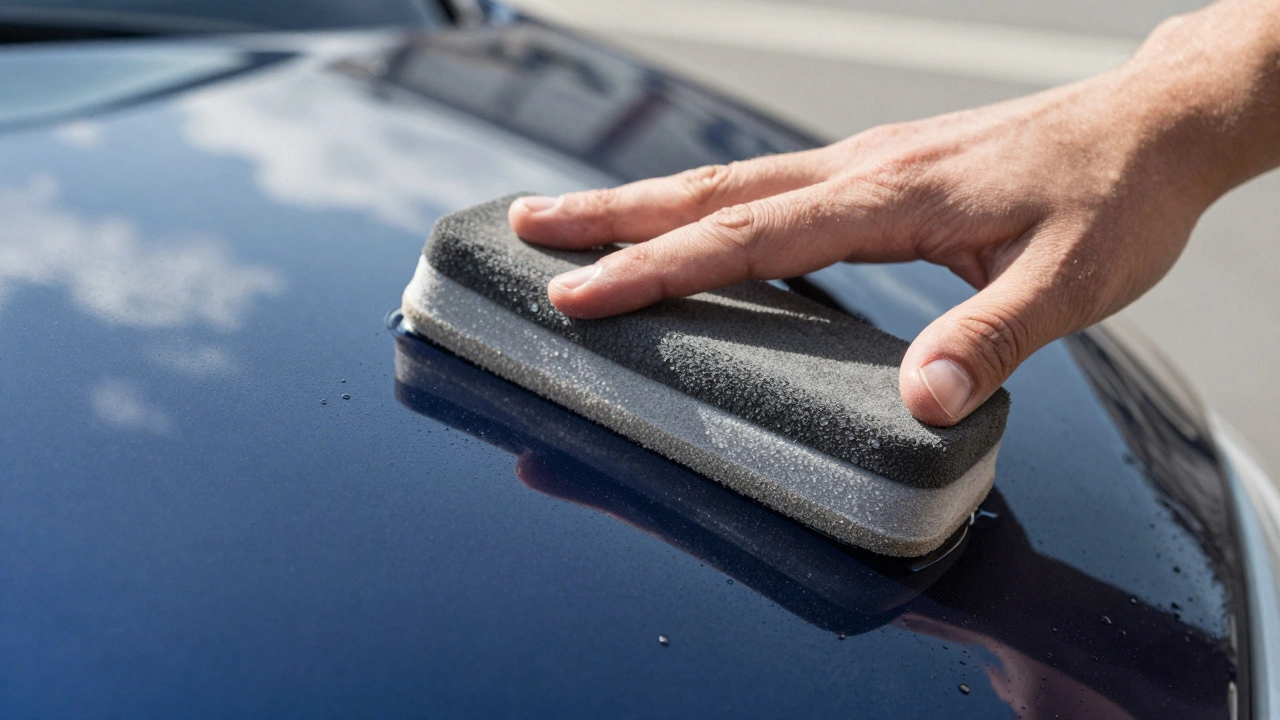
Apply a lubricant spray (or diluted car shampoo) to a small section of paint. Glide the clay bar back and forth gently. You’ll feel it catching on imperfections. As the clay picks up dirt, knead it to reveal a clean side. Repeat until the ball glides smoothly over the paint. Your car should now feel like glass. This step is crucial before applying any polish or wax, as trapping contaminants under wax will ruin the finish.
Polishing for Clarity
If your paint looks dull or has light scratches, polishing is the magic step. Polishing uses an abrasive compound to level out the clear coat, removing minor defects and restoring depth. For most DIYers, a dual-action polisher is safer than a rotary buffer, which can burn through paint if held too long in one spot.
Apply a small amount of polish to your pad and work on a 2x2 foot section. Move the machine slowly and overlap each pass. Wipe off the residue with a clean microfiber towel to inspect your work. If the scratches are gone and the gloss is improved, you’re ready for protection. Remember, less is more. Aggressive polishing removes layers of clear coat, so only polish when necessary.
Protecting Your Investment
This is the payoff moment. Applying wax or sealant locks in that shine and provides a barrier against the elements. Carnauba wax offers a warm, deep glow but lasts only about a month. Synthetic sealants last three to six months and provide stronger hydrophobic properties (water beading).
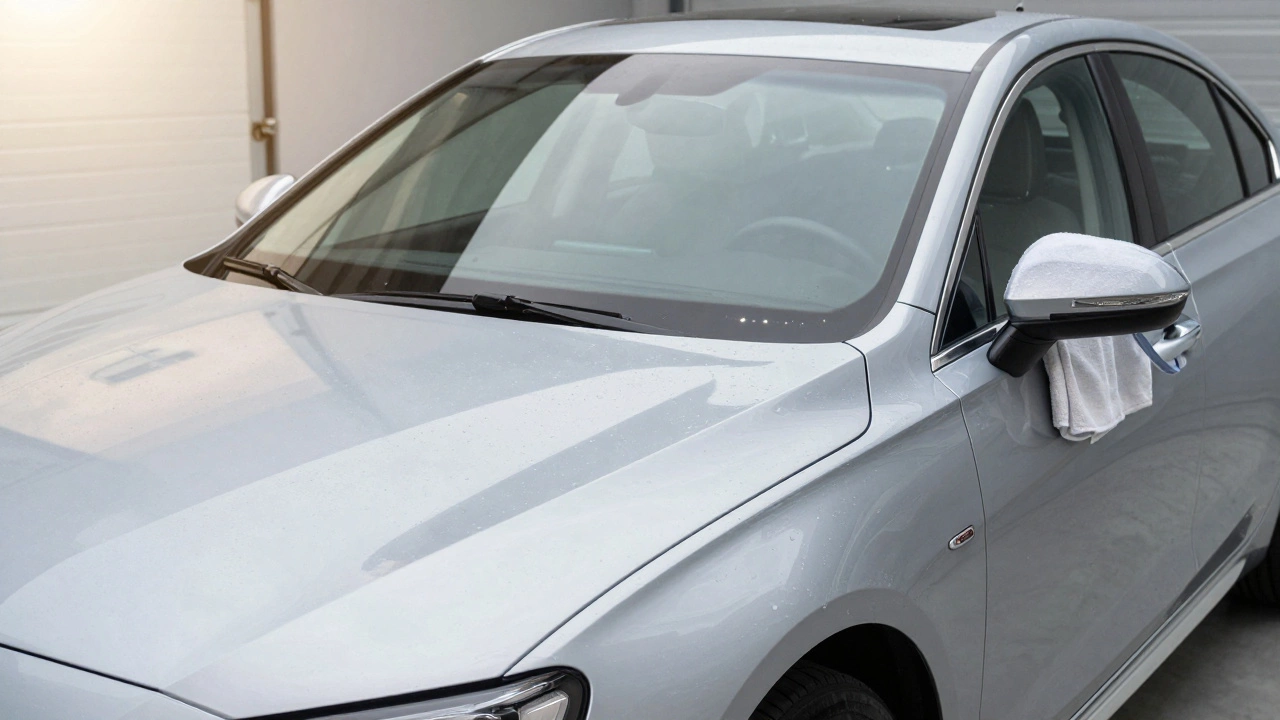
Apply the product in thin, even layers. Thick globs do not protect better; they just smear. Work in the shade to prevent the product from drying too quickly. Once the wax hazes over (usually 10-15 minutes), buff it off with a fresh, clean microfiber towel. The result? Water beads up and rolls off, taking dirt with it.
Interior Deep Clean
A shiny exterior means nothing if the interior smells like old gym socks. Start by vacuuming everything-seats, carpets, floor mats, and the trunk. Use a brush attachment to loosen dirt from fabric fibers.
For hard surfaces like the dashboard and door panels, use an all-purpose cleaner diluted with water. Apply it to a microfiber cloth, not directly to the surface, to avoid overspray. Avoid silicone-based dressings; they create a greasy film that attracts dust. Instead, opt for water-based dressings that give a natural satin finish.
Leather seats require special attention. Use a dedicated leather cleaner followed by a conditioner to prevent cracking, especially if you live in a hot climate like Adelaide. Finally, tackle the glass. Use a vinegar-water mix or a dedicated glass cleaner and a separate microfiber towel to ensure streak-free visibility.
| Product Type | Durability | Ease of Application | Best For |
|---|---|---|---|
| Carnauba Wax | 1 Month | Harder (dries fast) | Show cars, deep warmth |
| Synthetic Sealant | 3-6 Months | Easy | Daily drivers, water beading |
| Ceramic Coating | 2-5 Years | Difficult (requires prep) | Long-term protection, enthusiasts |
Maintaining the Shine
Detailing isn’t a one-time event; it’s a habit. To keep your car looking fresh between full details, follow these simple rules:
- Wash Regularly: Aim for every two weeks. Bird droppings and tree sap should be removed immediately as they eat into clear coat.
- Use Quick Detailers: Keep a spray bottle of quick detailer in your trunk. It adds a boost of shine and removes fingerprints on doors and handles.
- Park Smart: Whenever possible, park in a garage or under a tree to reduce UV exposure and bird activity.
- Check Tire Pressure: Properly inflated tires wear evenly and look better. Clean them monthly with a tire shine product for a uniform black appearance.
By following these steps, you transform your car from a dirty commuter to a well-maintained asset. It doesn’t take professional skills, just patience and the right approach. Next time you see that layer of dust building up, grab your mitt and get to work.
Can I use dish soap to wash my car?
No, you should never use dish soap on your car. Dish detergents are designed to cut through grease on plates, which means they strip away the wax and protective sealants on your car's paint. Over time, this leads to faded, dull paint. Always use pH-neutral car shampoo specifically formulated for automotive finishes.
How often should I detail my car?
A full detail, including claying and polishing, is recommended every 4 to 6 months. However, you should wash your car every two weeks to remove surface dirt. If you drive in harsh conditions, such as near construction sites or coastal areas with salt air, increase the frequency to monthly washes.
What is the difference between waxing and ceramic coating?
Wax is a temporary layer that sits on top of the paint, offering warmth and moderate protection for about a month. Ceramic coating is a liquid polymer that chemically bonds with the factory paint, creating a semi-permanent shield. Ceramic coatings last years and offer superior resistance to chemicals and UV rays, but they are much harder to apply correctly.
Do I need a clay bar if I wash my car regularly?
Yes. Regular washing removes loose dirt, but it cannot remove bonded contaminants like industrial fallout, rail dust, or tree sap. These particles embed themselves in the clear coat, making the paint feel rough. Claying removes these bonded contaminants, smoothing the surface before you apply wax or sealant.
Is it better to dry my car with a towel or let it air dry?
You should always dry your car with a high-quality microfiber drying towel. Air drying leaves water spots as the minerals in the water evaporate and bond to the paint. These spots can be difficult to remove later. Use a large, plush microfiber towel and pat the water away rather than dragging it across the surface to minimize friction.