Car Lowering Impact Calculator
Vehicle Configuration
Analysis Results
Select your vehicle configuration and click "Analyze Impact" to see how a 2-inch drop affects your driving experience.
Picture this: you pull into a parking lot, and your car sits just inches higher than the pavement. It looks aggressive. It looks planted. But then you hit that one speed bump on the way home, and your undercarriage scrapes metal against asphalt with a sound that makes your heart stop. Is lowering your car 2 inches a lot? For some cars, it’s a subtle tweak. For others, it’s a recipe for daily driving nightmares.
The answer isn’t a simple yes or no. It depends entirely on what you’re driving, how you drive, and what you expect from the change. A two-inch drop transforms the stance of a vehicle, but it also fundamentally alters its physics. Before you buy those cheap lowering springs or invest in a full coilover kit, you need to understand exactly what happens when you move your chassis closer to the ground.
The Visual Impact vs. Physical Reality
Visually, a two-inch drop is significant. On a sedan like a Honda Civic or a Toyota Camry, dropping the ride height by two inches fills the wheel wells nicely. It eliminates that "floating" look where there’s too much black plastic between the tire and the fender. The car looks wider, lower, and more purposeful. This is why many enthusiasts consider two inches the "sweet spot" for street aesthetics-it’s noticeable without looking ridiculous.
However, visual appeal doesn't pay for new subframes. Physically, two inches is a substantial reduction in ground clearance. Most stock sedans have about 5 to 6 inches of ground clearance at the center of the chassis. Dropping two inches leaves you with roughly 3 to 4 inches. That might sound like plenty, but remember that the lowest point isn't always the center. Often, it's the front splitter, the oil pan, or the differential mount. If your car has a low-slung front bumper lip, a two-inch drop can turn that lip from a styling cue into a scraping hazard on every driveway exit.
You also need to consider the approach angle. When you back up to a curb or park next to a high sidewalk, the rear bumper often becomes the limiting factor. A two-inch drop brings that bumper dangerously close to concrete curbs. One wrong move backing out of a tight space, and you’ll be dragging paint-or worse, cracking your bumper cover.
Ride Quality and Comfort Changes
Here is the part most people underestimate: lowering your car almost always stiffens the ride. If you use inexpensive lowering springs, the effect is drastic. These springs are made from thicker steel wire to support the weight of the car at a shorter length. Thicker wire means higher spring rates. Higher spring rates mean less compliance over bumps.
Imagine driving over a pothole. In stock form, your suspension absorbs the impact, compressing slightly to cushion the blow. With a two-inch drop via cheap springs, the suspension hits its limits faster. You feel every crack in the road. Passengers might complain about the harshness. Long drives become fatiguing because your body is constantly absorbing vibrations that the suspension used to filter out.
If you opt for quality coilovers instead, you can mitigate this. Coilovers allow you to adjust damping (the shock absorber stiffness) independently of the spring rate. You can choose softer valving to maintain comfort while still achieving the two-inch drop. However, even with good shocks, a lower car will feel firmer than stock simply because there is less travel available before the suspension bottoms out.
- Cheap Lowering Springs: Expect a bouncy, harsh ride. Bottoming out on moderate bumps is common.
- Quality Coilovers: Firmer than stock, but controlled and predictable. Better handling, less bounce.
- Air Suspension: The only way to get a two-inch drop and keep stock-like comfort, but expensive and complex.
Handling Dynamics and Suspension Geometry
This is where the engineering gets interesting. Lowering your car lowers its center of gravity. A lower center of gravity reduces body roll during cornering. This means your car will feel sharper and more responsive in turns. You won't lean as much when taking a curve at highway speeds. For drivers who enjoy spirited driving, this is a huge benefit. The car feels connected to the road.
But there’s a catch: alignment changes. When you drop a car by two inches, you alter the geometry of the suspension components. The control arms, which are designed to move in an arc, are now operating at the extreme bottom of their range. This causes several issues:
- Camber Gain: The wheels will tilt inward at the top. Excessive negative camber reduces tire contact patch, leading to uneven tire wear (specifically on the inside edge) and reduced grip in straight-line braking.
- Toe Changes: The toe angle may shift, causing the car to wander or pull to one side.
- Bump Steer: As the suspension compresses, the steering wheel may jerk unexpectedly because the tie rods are moving at a different rate than the control arms.
To fix these issues, you usually need more than just springs. You’ll likely need camber bolts or adjustable control arms to restore proper alignment. Without correcting the geometry, your tires will wear out prematurely, and your handling could actually become unpredictable rather than improved.
Ground Clearance and Daily Driving Risks
Let’s talk about the real-world consequences of a two-inch drop. Can you still drive your car daily? Yes, but with caveats. You need to become aware of your surroundings in a way you weren’t before.
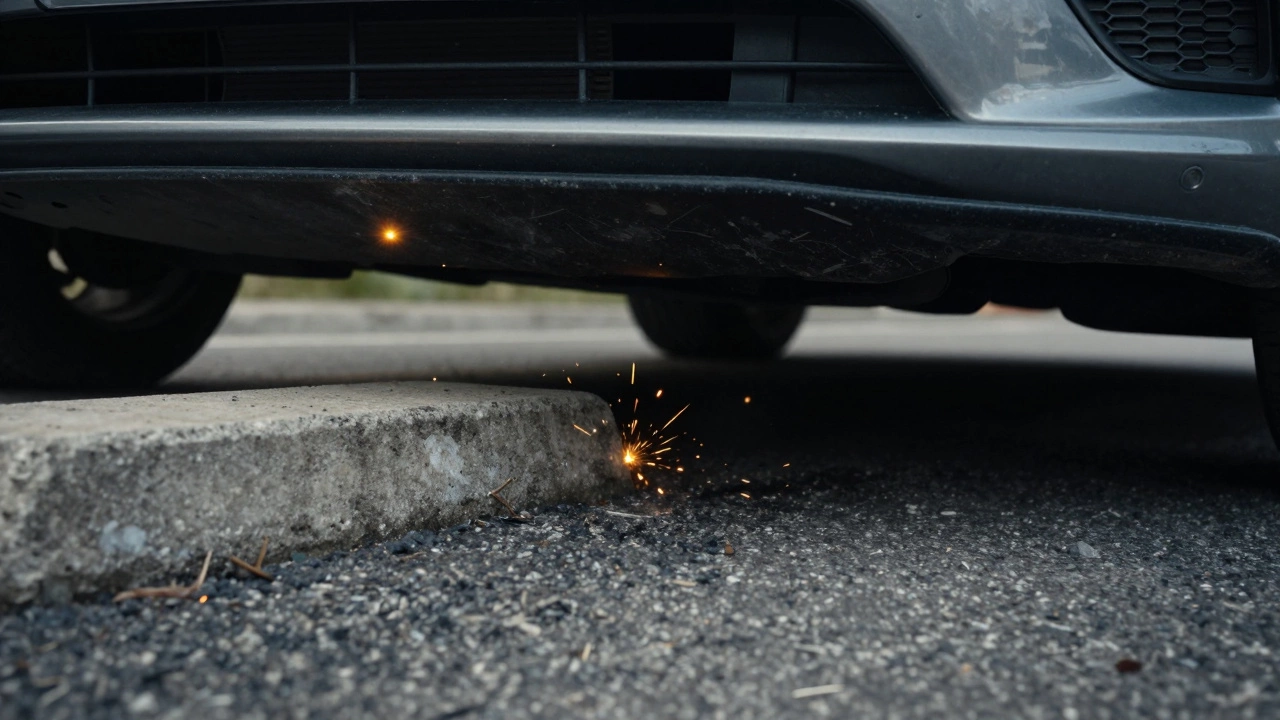
Speed bumps are the enemy. A standard speed bump might be 4 inches high. With only 3-4 inches of clearance, you are scraping the underside of your car on every single one. Over time, this damages the oil pan, exhaust system, and heat shields. Some owners install skid plates to protect vital components, but this adds weight and complexity.
Parking lots present another challenge. Many parking garages have steep ramps. A two-inch drop can cause the front or rear of your car to drag on the incline, especially if the load distribution isn't perfect. You’ll find yourself slowing down significantly on ramps, checking angles carefully. It’s not fun, and it defeats the convenience of owning a car.
Snow and ice are also factors. If you live in an area with heavy snowfall, a lowered car is risky. Plows pile snow high, and a two-inch drop might leave you stranded if you hit a deep drift. Traction can also suffer if your tires aren't properly aligned due to the camber issues mentioned earlier.
| Feature | Stock Suspension | 2-Inch Drop (Springs) | 2-Inch Drop (Coilovers) |
|---|---|---|---|
| Ground Clearance | High (~5-6 inches) | Low (~3-4 inches) | Low (~3-4 inches) |
| Ride Comfort | Soft, compliant | Harsh, bouncy | Firm, controlled |
| Cornering Stability | Moderate body roll | Reduced roll, poor geometry | Minimal roll, optimized geometry |
| Tire Wear | Even | Uneven (inside edges) | Even (if aligned correctly) |
| Daily Usability | Excellent | Poor (scraping risk) | Moderate (requires care) |
Choosing Between Springs and Coilovers
If you’ve decided that a two-inch drop is worth the trade-offs, the next decision is hardware. Cheap lowering springs cost $100-$300. They are easy to install but offer zero adjustment. Once they’re on, you’re stuck with whatever ride height and geometry results. They are prone to breaking if the material quality is poor, and they exacerbate alignment issues.
Coilovers, on the other hand, cost $800-$2,000+ for a set. They provide adjustable ride height, allowing you to fine-tune the stance. More importantly, they come with matched dampers (shocks) designed for the spring rates. This ensures the suspension works as a cohesive unit. While expensive, coilovers preserve handling integrity and reduce the risk of bottoming out compared to cheap springs.
For a daily driver, I recommend avoiding cheap springs unless you plan to correct the alignment immediately with camber kits. The combination of harsh ride and bad geometry makes them a false economy. Coilovers are an investment, but they deliver a safer, more predictable driving experience.
Legal and Insurance Considerations
In many regions, lowering a car by two inches is legal as long as the vehicle remains safe to operate. However, some jurisdictions require vehicles to pass inspection based on specific ride height standards. If your car scrapes excessively or has unsafe alignment, it may fail inspection.
Insurance companies generally don’t void policies for minor modifications like lowering springs. However, if you get into an accident and the insurer determines that the modification contributed to the damage (e.g., suspension failure due to poor quality parts), they might complicate the claim. Always disclose major modifications to your insurer.
Final Verdict: Is It Worth It?
Is lowering your car two inches a lot? Yes, it is a significant change. It transforms the look, feel, and usability of your vehicle. If you prioritize aesthetics and handling over absolute comfort and convenience, it’s a rewarding modification. But if you drive on rough roads, have kids who throw backpacks in the trunk, or live in snowy areas, think twice.
The key is balance. Don’t just drop the car and ignore the consequences. Invest in quality parts, get a professional alignment, and drive with awareness. Do that, and a two-inch drop can enhance your driving experience without ruining your daily life.
Will a 2-inch drop make my car uncomfortable?
Yes, likely. Lowering springs are stiffer than stock, leading to a harsher ride. Cheap springs bounce excessively. Quality coilovers offer a firmer but controlled ride, which is more comfortable than cheap springs but still less compliant than stock.
Do I need new alignment after lowering my car 2 inches?
Absolutely. A 2-inch drop changes suspension geometry, causing excessive negative camber and toe issues. Without correction, you’ll experience rapid tire wear and poor handling. Camber bolts or adjustable control arms are often necessary to restore proper alignment.
Can I still drive a lowered car in the snow?
It’s risky. Reduced ground clearance increases the chance of getting stuck in deep snow or scraping on plowed piles. Additionally, altered suspension geometry can affect traction if tires aren't properly aligned. If you live in heavy snow areas, avoid significant drops or use air suspension.
Are lowering springs cheaper than coilovers?
Yes, significantly. Lowering springs cost $100-$300, while coilovers range from $800-$2,000+. However, springs often require additional parts like camber kits ($100+) to fix alignment, narrowing the price gap. Coilovers offer better performance and longevity.
Will a 2-inch drop void my warranty?
Generally, no. Minor modifications like lowering springs don’t void the entire vehicle warranty. However, if the modification causes damage to related components (like suspension bushings or alignment systems), the manufacturer may deny coverage for those specific repairs. Check with your dealer first.