Suspension Upgrade Decision Tool
Answer the following questions to determine which suspension upgrade best fits your vehicle goals.
Your Recommendation
Waiting for input...Click "Analyze My Choice" to see if Lowering Springs or Coilovers are right for you.
You want your car to look aggressive and handle corners like it was born on a track. You’ve probably spent hours scrolling through forums, seeing photos of cars with that perfect stance. But when you get to the checkout page, you hit a wall: lowering springs or coilovers? It’s the most common debate in the car modification world. One is cheap and easy; the other is expensive and complex. Neither is objectively "better"-it depends entirely on what you want your car to do.
If you just want your car to look good and feel slightly sharper around town, lowering springs are likely all you need. If you plan to drive hard, adjust your ride height seasonally, or take the car to a track day, coilovers are the only real choice. Let’s break down exactly how these two systems work, what they cost, and which one actually fits your driving style.
What Are Lowering Springs?
Lowering springs are simply shorter, stiffer replacement coils designed to sit in place of your factory suspension springs. They don’t replace the entire shock absorber or strut assembly. Instead, they bolt into your existing setup. Because they are physically shorter than stock, they compress the suspension more, dropping the car’s body closer to the ground.
The primary goal here is aesthetic change with a side benefit of improved handling. By lowering the center of gravity, you reduce body roll during cornering. Most quality lowering springs drop a car between 1.5 inches (38mm) and 2.5 inches (64mm). Brands like Eibach, H&R, and Bilstein B10 Pro-Kit are industry standards because they tune spring rates specifically for each vehicle model, ensuring you don’t bottom out over every speed bump.
However, there is a catch. Since you are keeping your original shocks, those dampers were tuned for stock spring rates. Adding stiffer springs without changing the shocks can lead to a harsher ride. The shock might not be able to control the spring’s energy efficiently, resulting in bouncing or bottoming out if you hit a pothole at speed. It’s a trade-off: you gain looks and some grip, but you lose some comfort and damping precision.
What Are Coilovers?
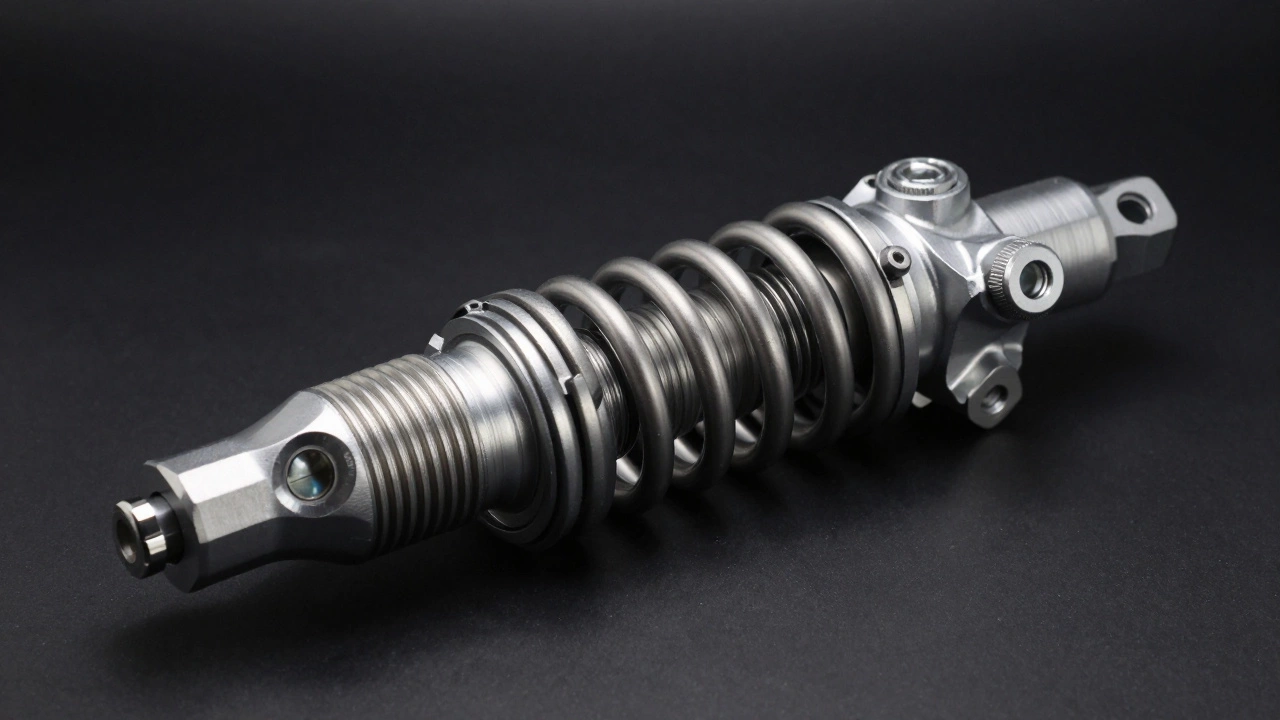
Coilovers (short for coil-over-shock) are complete suspension units that replace both your factory springs and shock absorbers. This is a total overhaul of the front and rear suspension geometry. A coilover system consists of a threaded sleeve, a spring perched on top of a damper, and adjustment knobs for height and damping.
The biggest advantage of coilovers is adjustability. You aren’t stuck with a fixed ride height. With the turn of a knob, you can raise or lower the car by several inches. This is crucial if you live in an area with varied road conditions or if you want to swap between street use and track days. Many coilovers also allow you to adjust compression and rebound damping, letting you fine-tune how the car reacts to bumps and weight transfer.
Think of it this way: lowering springs are like buying a new mattress for your bed. Coilovers are like buying a new bed frame, mattress, and adjustable base all together. You have full control over the setup. High-end brands like KW, BC Racing, and Tein offer systems that rival OEM performance while offering superior customization. However, this complexity comes with a higher price tag and installation difficulty.
| Feature | Lowering Springs | Coilovers |
|---|---|---|
| Ride Height Adjustment | Fixed (cannot adjust after install) | Fully adjustable via threads/knobs |
| Damping Control | Uses stock shocks (no adjustment) | New shocks with adjustable damping (on many models) |
| Cost Range | $200 - $600 AUD | $800 - $3,000+ AUD |
| Installation Difficulty | Moderate (DIY possible) | Hard (requires alignment shop) |
| Ride Comfort | Firm, potentially harsh | Tunable from soft to very firm |
| Best For | Daily drivers, aesthetics, budget builds | Track days, autocross, serious enthusiasts |
Performance and Handling Differences
When we talk about performance, we’re talking about how the car communicates with the road. Lowering springs improve handling by reducing the center of gravity. This means less body roll in corners. If you drive a sedan that feels floaty at highway speeds, lowering springs will make it feel planted and secure. However, because you’re relying on old shock absorbers, the car may still wander over rough patches. The springs push back against the motion, but the shocks might not stabilize the wheel quickly enough.
Coilovers solve this mismatch. Because the spring and shock are engineered to work together as a single unit, the damping is precise. You can set the damping to absorb small vibrations from the road while still controlling large movements during braking or cornering. This results in better tire contact with the pavement, which translates to faster lap times and safer emergency maneuvers. If you are doing autocross or track days, coilovers are non-negotiable. You need consistent performance, not a compromise.
Cost and Installation Realities
Let’s talk money. In Australia, a set of high-quality lowering springs from a brand like Eibach typically costs between $300 and $600 AUD. Installation is straightforward if you have basic tools and a jack. You remove the wheels, support the axle, unbolt the old springs, and bolt in the new ones. It’s a Saturday morning job for most DIYers. Afterward, you’ll need a wheel alignment, which costs around $100-$150 at a local shop.
Coilovers are a different financial commitment. Entry-level adjustable kits start around $800 AUD, but reputable mid-range brands like BC Racing or ST Automotive often run $1,500 to $2,500. Premium brands like KW Variant 3 can exceed $4,000. Installation is more involved. You often have to disassemble parts of the suspension to mount the new struts. More importantly, you cannot skip the alignment. Coilovers require precise camber and toe adjustments to function correctly. Expect to pay extra for a dynamic alignment service.
Comfort and Daily Drivability
Many people assume coilovers are always harder than lowering springs. That’s a myth. A well-tuned set of coilovers can be softer than stiff lowering springs. The key is the damping adjustment. If you set your coilovers to a softer compression setting, they will absorb bumps nicely. Lowering springs, on the other hand, are static. If you buy a sport-tuned spring, it’s going to be firm. Period. You can’t soften it up later.
If your car is your daily driver and you commute on roads with potholes, speed humps, and uneven surfaces, you need to be careful. Cheap lowering springs can cause premature wear on bushings and mounts because the geometry changes stress points differently. Coilovers allow you to raise the car slightly for winter or bad road conditions, preserving your undercarriage and suspension components. For pure daily comfort, some even argue that upgraded OEM-style shocks paired with mild lowering springs offer the best balance.

Which Should You Choose?
Your decision should come down to three factors: budget, usage, and desire for adjustability.
- Choose Lowering Springs if: You are on a tight budget, you primarily drive on city streets, you want a clean look without major mechanical changes, and you don’t plan to track the car. They are the perfect entry point into suspension upgrades.
- Choose Coilovers if: You want to dial in your car’s handling, you participate in track days or autocross, you want the ability to change ride height, or you are building a dedicated project car where performance is the priority.
Don’t fall into the trap of thinking coilovers are automatically "better." If you never adjust them, they’re just expensive fixed-height suspensions. Conversely, don’t underestimate lowering springs. For 90% of car owners who just want their car to look aggressive and handle slightly better, a quality set of lowering springs is the smart, cost-effective choice.
Common Mistakes to Avoid
One of the biggest errors people make is buying the cheapest springs available. Cheap springs often have inconsistent wire diameter and poor heat treatment. They can sag within months or even snap under stress. Always buy from reputable manufacturers that provide specific part numbers for your exact car model, year, and trim.
Another mistake is ignoring camber. When you lower a car, the top of the wheel tilts inward. This negative camber can cause uneven tire wear on the inside edge. With lowering springs, you might need camber bolts to correct this. With coilovers, you can often adjust the mounting plate to fix the angle. Ignoring this will eat your tires alive.
Finally, don’t forget about clearance. If you drop your car too much, you risk scraping your differential, oil pan, or exhaust on steep driveways or speed bumps. Measure your current ride height and choose a drop amount that keeps your car safe for your local roads. Adelaide has plenty of hills and older suburban streets with uneven paving; a 2-inch drop is usually the sweet spot for daily driving here.
Do I need new shocks if I install lowering springs?
Not necessarily, but it is recommended. Your factory shocks are tuned for stock spring rates. Stiffer lowering springs can overwhelm old shocks, leading to a bouncy or harsh ride. If your car has high mileage or worn shocks, replacing them with performance shocks (like Bilstein B4s) alongside lowering springs will significantly improve comfort and handling.
Can I adjust the ride height of lowering springs?
No. Lowering springs have a fixed length. Once installed, your ride height is set. If you find the car too low or too high, you must buy a different set of springs with a different drop specification. Coilovers, however, feature threaded sleeves that allow you to adjust height easily.
Will lowering my car void my warranty?
It depends on your country’s consumer laws and the manufacturer’s policy. In Australia, the Australian Consumer Law protects you, meaning a dealer cannot void your entire warranty just because you changed suspension parts unless they can prove the modification caused specific damage. However, they may deny claims related to suspension wear, steering components, or drivetrain issues linked to altered geometry.
How much does it cost to install coilovers?
Professional installation for coilovers typically ranges from $300 to $600 AUD, depending on the complexity of your vehicle’s suspension. This usually includes labor and a basic wheel alignment. DIY installation saves money but requires significant mechanical skill and proper tools like spring compressors and torque wrenches.
Are coilovers louder than stock suspension?
Yes, generally. Coilovers often use polyurethane bushings instead of rubber to reduce deflection and improve response. These bushings transmit more road noise and vibration into the cabin. Additionally, stiffer springs and tighter damping mean you hear more impacts from cracks and bumps. Expect a firmer, noisier ride compared to stock.