Headlight Upgrade Cost & Value Estimator
Financial Summary
Technical Warning
Quick Summary of the Trade-offs
- High Initial Cost: They are significantly more expensive to buy and replace than halogen options.
- Glare and Beam Pattern: Poorly installed LEDs can blind other drivers and create dangerous "dark spots" on the road.
The First Big Hit: The Cost of Entry and Replacement
Let's be honest: your wallet feels the difference immediately. If you're swapping out a burnt-out halogen bulb, you might spend ten dollars at a local auto shop and be done in five minutes. With LEDs, you're entering a different price bracket. High-quality LED replacements can cost five to ten times more than their traditional counterparts. But it isn't just the bulb. For many older cars, you can't just "plug and play." Because LEDs operate differently than filaments, you often need a CAN bus a network protocol used by cars to allow different electronic control units to communicate adapter. Without this, your car's computer thinks the bulb is dead because LEDs draw so little power, leading to that annoying flickering or the dreaded dashboard warning light. Then there is the issue of modularity. In a lot of modern vehicles, the LED is integrated into the entire headlight assembly. If a single diode fails or the plastic housing cracks, you aren't just replacing a bulb; you're replacing the entire Headlight Assembly the complete unit including the lens, bezel, and lighting elements. We're talking about a jump from a $20 fix to a $600 professional replacement. It's a tough pill to swallow when the light itself is supposed to "last a lifetime."The Second Big Hit: Light Scattering and Driver Glare
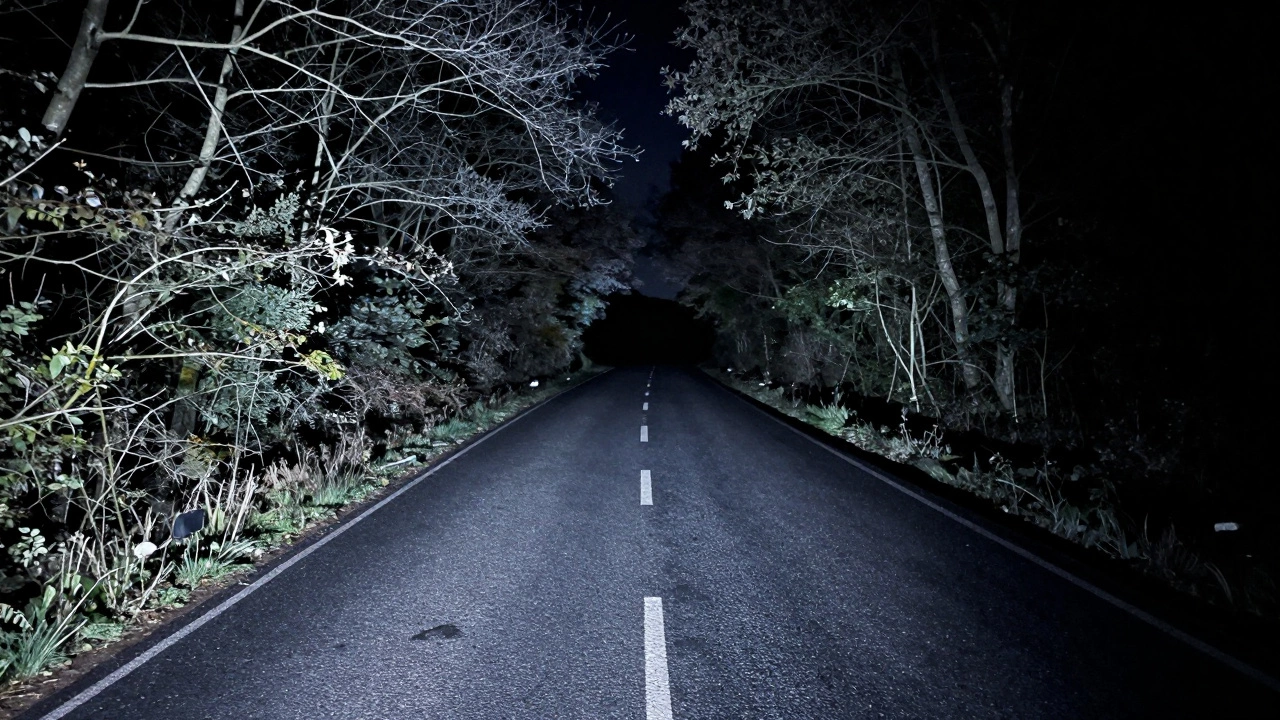
This is the part that actually affects road safety. A Halogen Bulb a type of incandescent lamp that uses a tungsten filament and halogen gas to produce a warm yellow light is designed with a specific filament shape that works perfectly with the car's reflectors. The light is thrown exactly where it needs to go: on the road, not in the eyes of the driver coming toward you. When you put an LED bulb into a housing designed for halogens, the physics change. LEDs emit light from a tiny point (the diode) rather than a long filament. If the LED chip isn't positioned at the exact same millimeter as the old filament, the light bounces off the reflector in random directions. This creates two dangerous scenarios:- The "Blinding" Effect: The light hits the opposite driver's eyes directly, causing momentary blindness. In a high-speed environment, two seconds of glare can be the difference between a safe pass and a collision.
- The "Dark Hole" Phenomenon: Because the light is scattering upward and outward, you actually get less light hitting the asphalt directly in front of you. You might see the trees on the side of the road beautifully, but you'll miss the deer stepping out from the brush because your beam pattern is fragmented.
Comparing LED, Halogen, and HID Lighting
To understand why these disadvantages exist, it helps to see how they stack up against the alternatives. HID (High-Intensity Discharge) lamps that use an electrical arc between two electrodes in a xenon gas-filled tube to produce bright light lamps, for example, offer a middle ground in terms of cost and brightness.| Feature | Halogen | HID (Xenon) | LED |
|---|---|---|---|
| Initial Cost | Very Low | Medium | High |
| Lifespan | Short (~1,000 hrs) | Medium (~2,000 hrs) | Very Long (15,000+ hrs) |
| Light Color | Warm Yellow | Blueish White | Crisp White |
| Power Draw | High | Medium | Low |
| Beam Precision | Excellent (OEM) | Good | Variable (High Risk of Glare) |
Dealing with Thermal Management
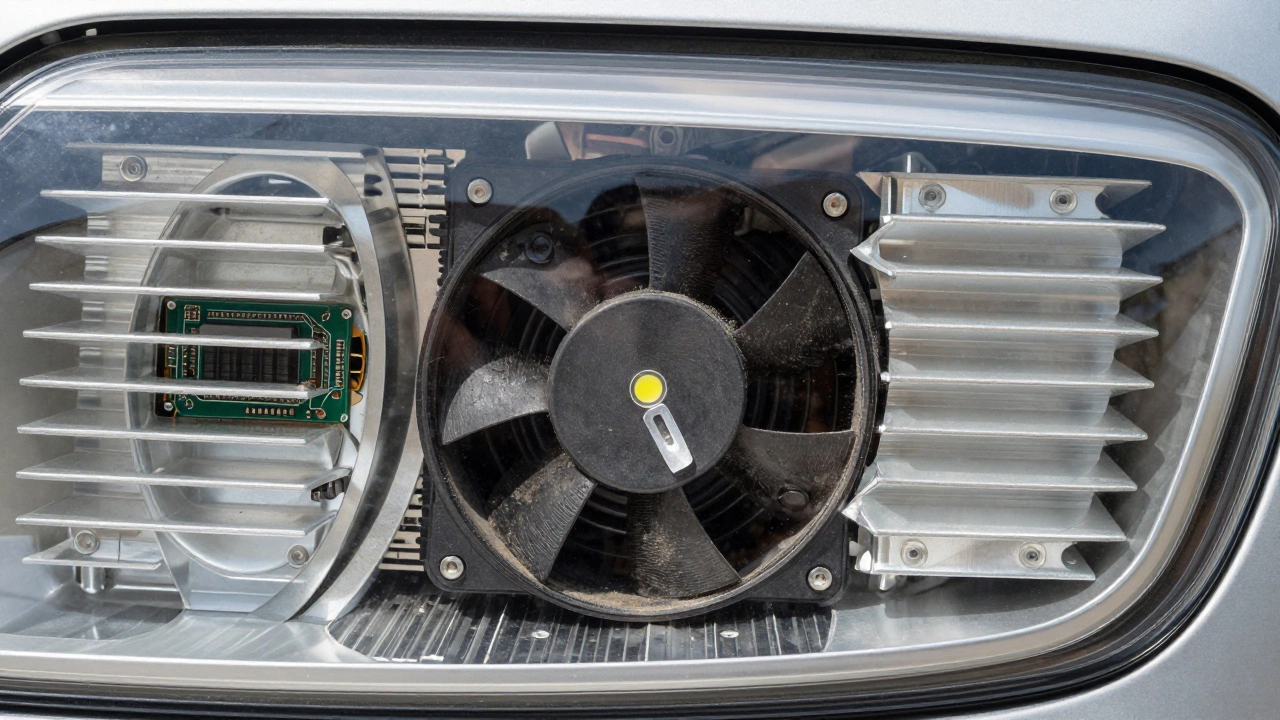
While most people focus on the light, the real battle for an LED is heat. This is a hidden disadvantage that often leads to premature failure. Unlike halogens, where heat is radiated forward through the lens, LEDs produce heat at the back of the bulb. If the heat isn't pulled away from the diode, the light will dim or the chip will burn out. This is why you see those massive heat sinks and tiny fans on the back of LED bulbs. These fans are another point of failure. If a fan dies, the bulb overheats and shuts down. If dust and road grime clog the fan, the brightness drops. You're essentially adding a computer cooling system to your car's lighting, which is just one more thing that can break over time.
Legal Hurdles and Inspections
Depending on where you live, putting LEDs in a non-LED housing might actually be illegal. In many regions, vehicle inspectors look for the specific "cutoff line" of the headlight beam. If your LED upgrade creates a scatter pattern, you'll fail your safety inspection. Furthermore, some insurance companies view aftermarket LED conversions as an "unapproved modification" if they result in a non-compliant beam pattern. While it seems trivial, the gap between "looks cool" and "is legal" is wide when it comes to automotive lighting. If you're choosing between a cheap set from an online marketplace and a certified brand, go for the brand. They actually engineer the diode placement to mimic the filament of the original bulb.Why do my LED headlights flicker when I turn them on?
This usually happens because your car's computer is performing a "bulb check." Since LEDs use significantly less power than the halogens they replaced, the computer thinks the bulb is blown and cuts the power, then tries again, creating a flicker. You can fix this by installing a CAN bus decoder or a load resistor to mimic the power draw of a halogen bulb.
Are LED headlights really brighter than halogen?
In terms of raw lumen output, yes. However, "brighter" doesn't always mean "better visibility." If the light is scattered (glare), you might see more light on the sides of the road, but the actual path in front of you might be less illuminated than with a properly focused halogen beam.
Do LED bulbs actually last forever?
Not forever, but much longer than halogens. While the diode itself can last 50,000 hours, the electronics (drivers) and cooling fans often fail much sooner. Cheap LEDs often burn out within a year due to poor heat management.
Can I use LEDs in my old car without changing the reflectors?
You can, but be careful. Since the reflectors were designed for a filament, the LED's point-source light will likely create glare. Look for bulbs that specifically claim to have a "filament-mimicking" design to minimize this effect.
Do LEDs drain the battery faster?
Actually, the opposite is true. LEDs are much more energy-efficient and draw less current from your electrical system than halogen bulbs, which can slightly reduce the load on your alternator.