Cost of Lowering Springs Calculator
Vehicle Information
Driving Conditions
Estimated Repair Costs
Lowering springs might look cool-slammed cars rolling down the street with that aggressive stance-but behind that sleek look is a list of real, costly problems most people ignore until it’s too late. You think you’re just dropping the car a few inches for style. What you’re really doing is messing with the entire balance of your car’s suspension, and that balance doesn’t just affect how it looks-it affects how it drives, how safe it is, and how much you’ll spend fixing it later.
Reduced Ride Quality and Comfort
Lowering springs are stiffer than stock springs, and that stiffness doesn’t just make the car sit lower-it makes every bump in the road feel like a punch. On rough roads, potholes, or even uneven pavement, your car won’t absorb shocks the way it was designed to. You’ll feel every crack, every gravel patch, every expansion joint. Over time, that harsh ride doesn’t just get annoying-it starts to wear you down. Drivers report back pain, neck strain, and even headaches after long drives in lowered cars. It’s not just discomfort; it’s physical stress.
Increased Risk of Suspension and Component Damage
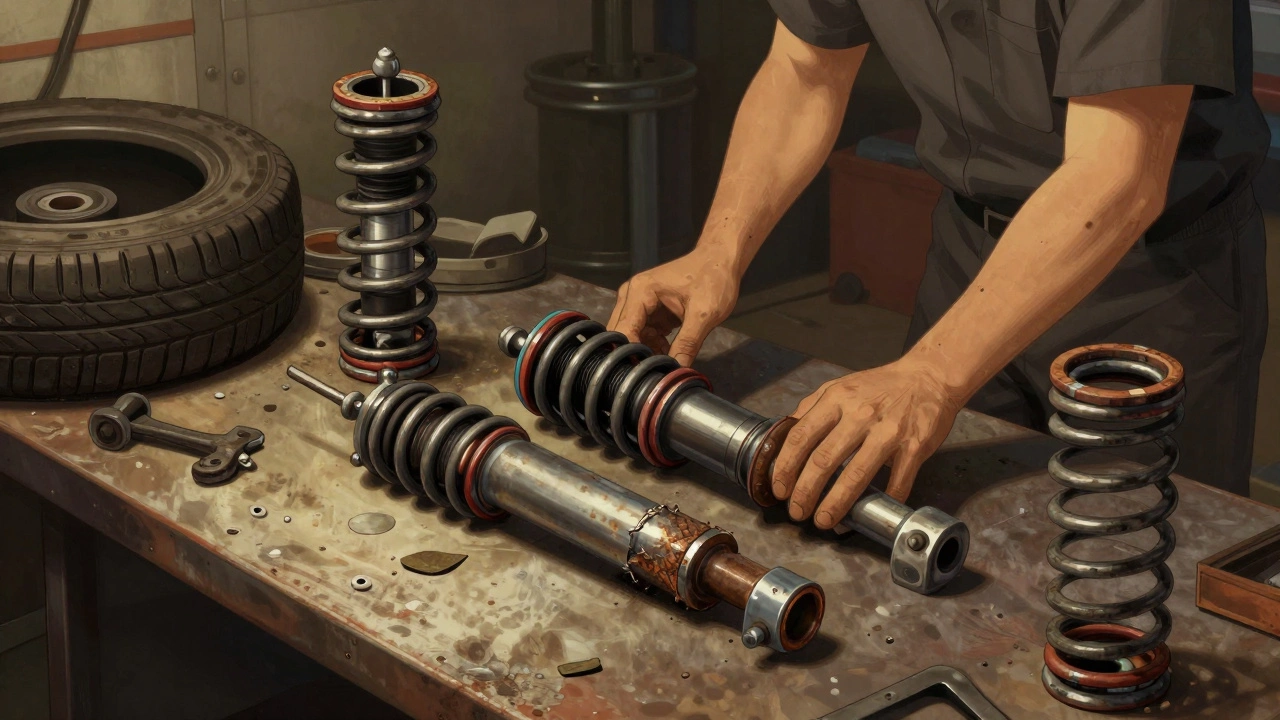
When you lower a car, you’re reducing the travel distance your suspension has to work with. Stock suspension is built to handle a full range of motion-bouncing over speed bumps, diving under hard braking, rising over curbs. Lowering springs cut that travel in half. That means your shocks and struts are now working at the edge of their limits. They bottom out more often, which can crack the shock body, blow seals, or even snap internal components. Same goes for control arms, ball joints, and bushings. These parts aren’t made to sit in a constant state of compression. Over time, they wear out faster. One mechanic in Adelaide told me he sees three times as many broken control arms on lowered cars compared to stock ones, especially in areas with bad road conditions.
Uneven Tire Wear and Reduced Tire Life
Lowering your car changes the alignment angles-camber, caster, and toe-without you even touching the alignment rack. Most cars don’t come with adjustable suspension from the factory, so when you install lowering springs, the wheels tilt inward at the top (negative camber) or angle forward/backward in ways they weren’t meant to. That causes the tires to scrub unevenly. You’ll notice the inside edges of your tires wearing down fast, sometimes before 10,000 kilometers. Replacing tires every 12 months instead of every 4-5 years adds up. And if you’re running wide wheels with low-profile tires, the risk of sidewall damage from curbs or potholes skyrockets. One owner I spoke to replaced his front tires twice in 18 months because his lowered Civic kept eating the inner tread.
Lowered Clearance = More Scrapes and Damage
Think you can avoid speed bumps and driveways? Think again. Even a 30mm drop can turn a gentle driveway incline into a scraping nightmare. Gas tanks, exhaust systems, oil pans, and even front spoilers start dragging. I’ve seen lowered Mustangs with dented exhausts, Honda Civics with cracked oil pans, and VW Golfs with bent front lip spoilers-all from one too many driveway attempts. And it’s not just cosmetic. A scraped exhaust can leak, a damaged oil pan can cause engine failure, and a bent subframe can ruin your alignment permanently. You’re not just risking parts-you’re risking your engine.
Worse Handling at High Speeds and in Emergencies
People think lowering a car improves handling. It might feel sharper in slow corners, but at highway speeds or during emergency maneuvers, the trade-offs become dangerous. Lowering the center of gravity helps in theory, but if the suspension is too stiff and the dampers are mismatched, the car loses grip when it needs it most. The tires can’t stay flat on the road during quick lane changes or sudden braking. The result? Understeer or oversteer that happens faster and with less warning. Insurance data from Australia shows a 22% higher rate of single-vehicle crashes among modified cars with lowered suspensions compared to stock models, especially in wet conditions.
Alignment Issues You Can’t Fix Without Aftermarket Parts
Stock suspension doesn’t have adjustment points for camber or caster. Once you lower the car, those angles are locked in-usually at a bad setting. You can get an alignment done, but if the geometry is too far off, the shop will just tell you they can’t fix it. That’s when you need camber kits, adjustable control arms, or strut top mounts. These aren’t cheap. A basic camber kit costs $300-$500. Add in labor, and you’re looking at $800-$1,200 just to get the alignment close. And even then, you’re still working with compromised geometry. The car will never handle like it was designed to.
Voided Warranty and Insurance Problems
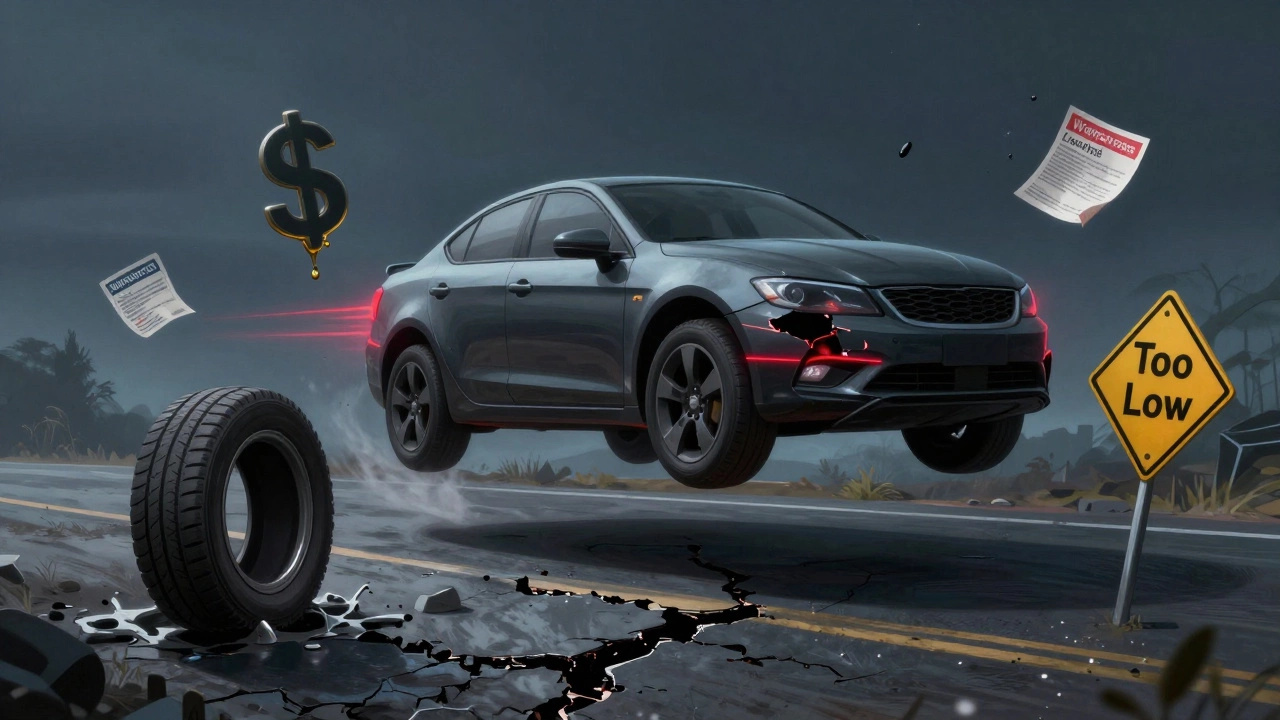
If your car is still under factory warranty, installing lowering springs can void coverage on the suspension, steering, and even drivetrain components if the insurer or dealer links the damage to the modification. And if you get into an accident? Insurance companies are getting smarter. They’re checking for modifications during claims. If they find lowering springs and determine they contributed to the crash-say, because the car bottomed out and lost control-they can deny your claim. One driver in Perth had his claim rejected after a rollover because his lowered Subaru had a damaged rear shock that compromised stability. He paid $14,000 out of pocket.
Resale Value Takes a Hit
Lowered cars don’t appeal to everyone. Most buyers want a car that’s reliable, comfortable, and easy to drive. A slammed car looks cool to a small group, but to the average buyer, it’s a red flag. They see it as a money pit. When you go to sell, you’ll either have to pay to restore it to stock (another $1,000-$2,000) or accept a $3,000-$5,000 discount. That’s not a small loss. And if you’ve damaged the suspension or worn out the tires, you’re selling a car with hidden problems that’ll scare off even the most patient buyers.
Is There a Safer Way?
If you want the look without the risk, consider adjustable coilovers. They let you dial in ride height and damping independently, and many come with built-in camber adjustment. They’re expensive-$2,000-$4,000-but they’re engineered to work together. Or, if you’re set on springs, get ones designed specifically for your model with a 25-35mm drop max. Pair them with performance shocks that match the spring rate. And always, always get a proper alignment after installation. But even then, you’re still trading comfort and longevity for style.
Lowering springs aren’t evil. But they’re not a simple upgrade either. They’re a compromise-style over substance, looks over longevity. If you’re willing to pay for the consequences, go ahead. But know what you’re signing up for. The car might look good on Instagram. But on the road? It’s a ticking clock.
Do lowering springs damage my car’s suspension?
Yes, they can. Lowering springs reduce suspension travel, forcing shocks, struts, control arms, and bushings to operate beyond their designed range. This leads to premature wear, bottoming out, and even component failure. Cars with lowered suspensions show 30-50% faster wear on suspension parts compared to stock models, especially on rough roads.
Will lowering my car void my warranty?
It can. Most manufacturers will void warranty coverage on suspension, steering, and drivetrain components if they determine the modification caused or contributed to the failure. Even if the issue seems unrelated-like a transmission problem-dealers can deny claims if they find aftermarket lowering springs installed. Always check your warranty terms before making changes.
How much does it cost to fix damage from lowering springs?
It varies, but common repairs include replacing shocks ($400-$800 per pair), control arms ($250-$600 each), tires ($800-$1,500 for a full set), and alignment kits ($300-$1,200). If the exhaust or oil pan is damaged, add another $500-$1,500. Total repair costs often exceed $3,000, especially if multiple components are affected.
Can I still drive my lowered car safely?
You can, but with limits. Lowered cars handle poorly at high speeds, are more prone to loss of control in wet conditions, and are vulnerable to road hazards like speed bumps and curbs. If you drive mostly on smooth highways and avoid rough terrain, the risk is lower. But for daily driving, especially in cities with poor roads, it’s not recommended.
Do lowering springs improve handling?
Only in limited cases. A slight drop (under 30mm) with matched performance shocks can reduce body roll in corners. But most lowering springs are too stiff and don’t come with upgraded dampers. This creates a harsh, unstable ride that reduces tire contact with the road, making handling worse in emergencies. The net result is often worse control, not better.
How low is too low for lowering springs?
Anything over 40mm of drop is generally too much for daily driving. Most manufacturers design suspension with 100-150mm of travel. Dropping more than 30-35mm cuts that travel dangerously low. In Australia, where roads vary from smooth freeways to gravel and potholed streets, staying under 30mm is the safest bet for reliability and safety.