Car Interior Cleaner Finder
Select surfaces to clean
Choose the interior surfaces you want to clean. Professional detailers use different products for different materials.
Why this matters
Using the right cleaner for each surface is crucial. One-size-fits-all products can cause damage, leave residue, or reduce protection. Professional detailers always use specific products for each material.
Recommended Cleaners
Ever wonder why your car’s interior looks like it just rolled off the lot-even after months of use? It’s not magic. It’s the cleaner detailers actually use. Most people grab whatever spray they find at the gas station, but that’s like using dish soap to wash your car’s paint. It might seem fine at first, but over time, it dulls, cracks, or leaves a sticky film. Professional detailers don’t guess. They pick cleaners based on material, residue, and long-term protection. Here’s what’s really in their spray bottles.
It’s Not One Cleaner, It’s a System
There’s no single magic spray that works on leather, vinyl, plastic, and fabric all at once. Detailers treat each surface differently. Think of it like skincare: you wouldn’t use the same product on your face and your feet. The same logic applies to your dashboard, seats, and door panels.
Most pros carry at least three types of cleaners:
- Non-oily, pH-neutral cleaners for hard plastics and dashboards
- Leather-specific conditioners with natural oils
- Water-based foam cleaners for fabric and carpets
They avoid anything with silicone, petroleum distillates, or heavy wax. Why? Because those leave a greasy shine that attracts dust and cracks over time. You might love how shiny your dash looks right after cleaning, but in six months, it’ll be brittle and covered in fingerprints.
What Detailers Actually Spray on Dashboards and Plastics
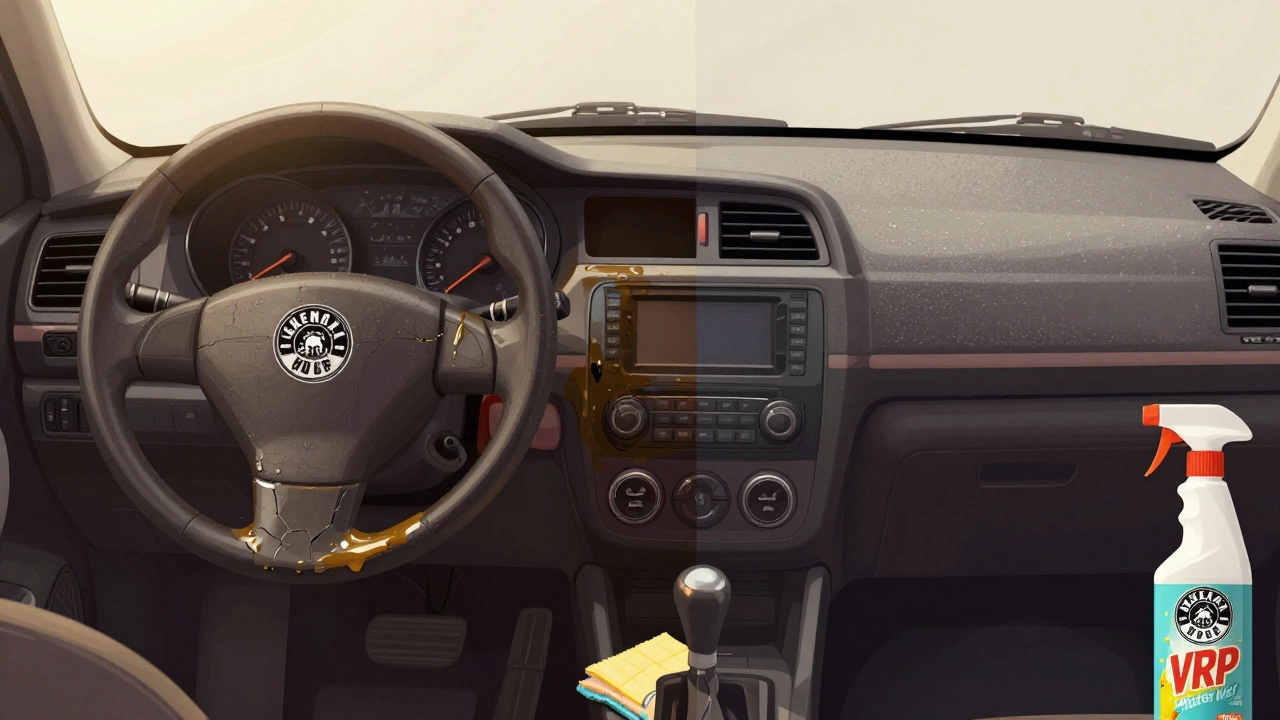
For hard surfaces-dashboard, center console, door trim-detailers reach for a non-silicone, water-based cleaner with a mild surfactant. Brands like Chemical Guys VRP a water-based, non-greasy vinyl and plastic restorer designed for automotive interiors, Meguiar’s Quik Detailer a multi-surface cleaner and protectant that leaves no residue, and 303 Aerospace Protectant a UV-blocking, non-greasy protectant originally developed for aerospace applications are staples.
Here’s how they use it:
- Wipe down the surface with a microfiber towel to remove loose dust.
- Lightly mist the cleaner onto a clean microfiber cloth-not directly on the surface.
- Gently wipe in small sections, following the grain of the plastic.
- Buff with a dry section of the towel to remove any haze.
Never spray directly onto the dash. It can seep into vents, buttons, or screens and cause damage. The cloth method gives you control. You’re not flooding the surface-you’re cleaning it.
Leather: It’s Not Just About Cleaning
Leather needs more than cleaning-it needs nourishment. Detailers don’t just wipe leather; they condition it. A good leather cleaner removes dirt and oils without stripping the natural fats. Then, they apply a conditioner with lanolin, beeswax, or natural oils to keep it soft and prevent cracking.
Top picks:
- Lexol Leather Cleaner a pH-balanced, non-toxic cleaner that removes grime without drying out leather
- Chemical Guys Butter Wet a water-based leather conditioner that restores suppleness without greasiness
- CarPro Cquartz Leather a ceramic-infused leather protector that resists stains and UV damage
Many detailers skip the “shiny” leather products. Those are usually silicone-based and create a plastic-like finish that peels. Real leather should look natural-rich, matte, and slightly dewy. If it looks like a vinyl couch, you used the wrong product.
Fabric and Carpets: Foam Is Your Friend
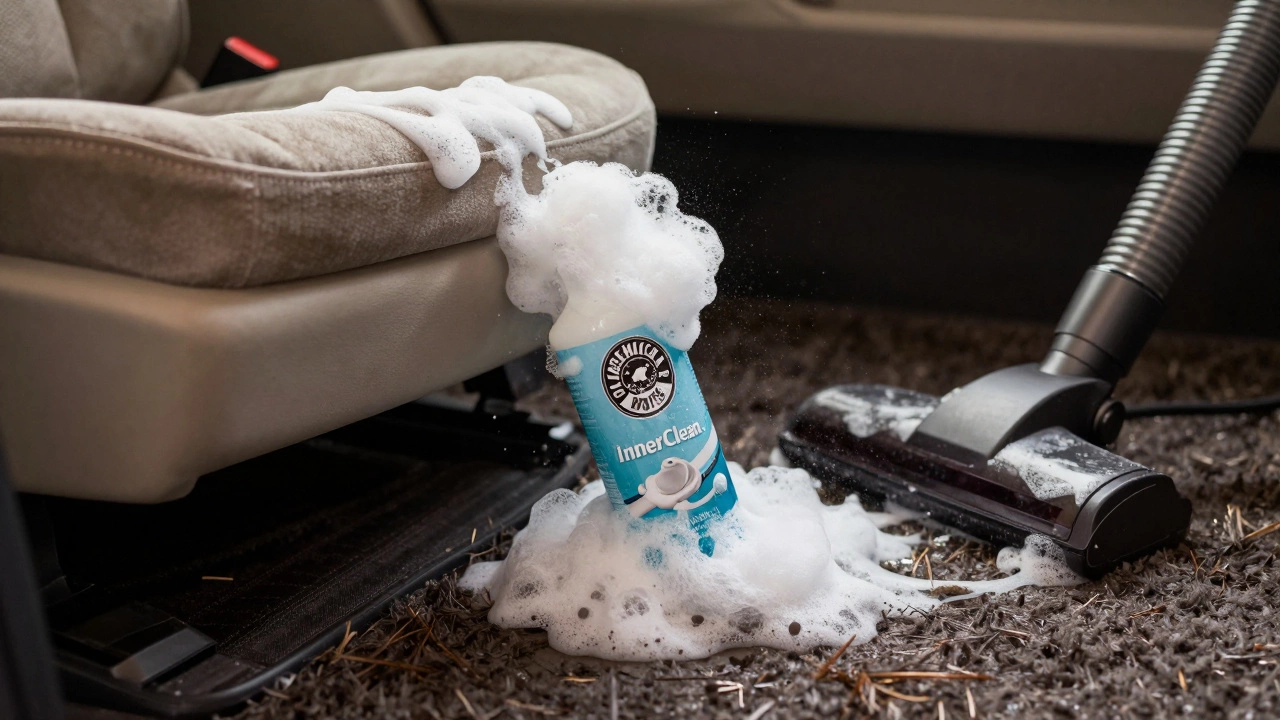
Spills, crumbs, sweat, and mud build up in fabric seats and floor mats. Detailers don’t scrub these with brushes-they use foam. A thick, water-based foam cleaner clings to fibers, lifts dirt without soaking the backing, and rinses cleanly.
Best foam cleaners:
- Chemical Guys Fabric Clean a heavy-duty, odor-free cleaner for stains and odors in upholstery
- Chemical Guys InnerClean a multi-surface foam cleaner designed for carpets, mats, and fabric
- Simple Green Pro HD a biodegradable, non-toxic cleaner trusted by professionals for tough stains
How they use it:
- Vacuum the area first to remove loose debris.
- Apply foam directly to the stain or soiled area.
- Let it sit for 2-5 minutes to break down grime.
- Agitate gently with a soft-bristle brush.
- Blot with a damp microfiber towel, then vacuum again.
Never soak fabric. Water that sits too long can cause mold, mildew, or backing damage. Foam gives you the cleaning power without the risk.
What to Avoid at All Costs
Some products are everywhere-Windex, all-purpose cleaners, baby wipes, even vinegar. They’re tempting because they’re cheap and familiar. But they’re dangerous for car interiors.
- Windex and ammonia-based cleaners eat away at plastic and tinted windows. They can crack dashboards and fog up screens.
- Alcohol-based wipes strip protective coatings and dry out leather and vinyl.
- Silicone sprays give instant shine but attract dust like a magnet. They also make surfaces slippery-dangerous on shifters or pedals.
- Household cleaners like bleach or Lysol are too harsh. They break down dyes and fibers.
One detailer in Adelaide told me he once had a customer bring in a car cleaned with baby wipes. The leather seats were cracking within three months. The wipes had no pH balance. They stripped the natural oils and left residue that trapped moisture.
Pro Tips: How to Make It Last
Cleaning is only half the battle. Protection is the other half.
- Apply a UV protectant after cleaning plastics. Sunlight is the #1 cause of dashboard cracking.
- Use a fabric protector like Scotchgard a durable, water-based fabric protector that repels spills and stains on seats and carpets. Reapply every 6 months.
- Wipe down surfaces weekly with a dry microfiber. Dust builds up fast, and it’s easier to remove before it turns to grime.
- Keep a small interior cleaning kit in your trunk: microfiber cloths, a brush, and a travel-sized bottle of your go-to cleaner.
Detailers don’t clean once a year. They maintain. That’s the secret. A car that looks new isn’t the result of one big clean-it’s the result of small, smart habits.
Real-World Example: A 2023 Toyota RAV4 Interior
Let’s say you’ve got a 2023 Toyota RAV4 with cloth seats, a black plastic dash, and leather-wrapped steering wheel. Here’s what a detailer would do:
- Vacuum all carpets and seats.
- Use Chemical Guys InnerClean foam on the carpets and fabric seats.
- Wipe the dash and center console with 303 Aerospace Protectant on a microfiber.
- Clean the leather wheel with Lexol Leather Cleaner, then condition with Chemical Guys Butter Wet.
- Apply Scotchgard to the fabric seats for long-term stain resistance.
- Buff everything with a clean towel.
Result? No shine, no stickiness, no smell. Just clean, protected surfaces that look factory-fresh.
| Surface | Recommended Cleaner | What to Avoid | Why It Works |
|---|---|---|---|
| Dash & Plastic | 303 Aerospace Protectant | Windex, silicone sprays | Blocks UV, no residue, non-greasy |
| Leather | Lexol Leather Cleaner + Butter Wet | Baby wipes, alcohol wipes | Removes dirt without drying, restores oils |
| Fabric & Carpets | Chemical Guys Fabric Clean | Household cleaners, vinegar | Deep-cleans without soaking, odor-free |
| Touchscreens | Microfiber cloth + distilled water | Any chemical spray | Scratch-free, no residue on sensitive displays |
Frequently Asked Questions
Can I use all-purpose cleaners on my car interior?
No. Most all-purpose cleaners are too harsh. They contain solvents that strip protective coatings, dry out plastics, and damage fabrics. Even if it looks clean, the material degrades faster. Stick to products made specifically for automotive interiors.
Is 303 Protectant the same as a cleaner?
No. 303 Aerospace Protectant is a protectant, not a cleaner. You need to clean the surface first with a mild detergent or dedicated interior cleaner. Then apply 303 to block UV rays and prevent cracking. Using it on dirty surfaces traps dirt and makes the finish cloudy.
How often should I clean my car interior?
Wipe down hard surfaces weekly with a dry microfiber. Do a full clean every 2-3 months, or more often if you have kids, pets, or drive in dusty areas. Leather should be conditioned every 3-4 months. Fabric seats benefit from a protectant every 6 months.
Why does my dashboard look cloudy after cleaning?
You probably used a silicone-based product or sprayed cleaner directly onto the surface. Silicone leaves a greasy film that attracts dust and looks hazy under sunlight. Always apply cleaners to a cloth, not the surface. Use non-silicone protectants like 303 for lasting clarity.
Can I use vinegar and water to clean my car interior?
Avoid it. Vinegar is acidic and can damage plastic, rubber, and dyes over time. It might remove a stain, but it will also break down the material’s finish. Detailers don’t use vinegar because it’s a short-term fix with long-term damage. Stick to pH-neutral automotive cleaners.
Next Steps
If your interior looks dull, sticky, or cracked, start with a proper clean-not a quick spray. Buy one trusted cleaner for each surface type: a non-silicone plastic restorer, a leather cleaner/conditioner, and a fabric foam. Use them the right way-on a microfiber cloth, not sprayed directly. Do it once, and you’ll see the difference.
Don’t wait for the cracks to show. Clean smart, and your car’s interior will outlast the paint.