Air Filter Selector Calculator
Your Vehicle Profile
Recommendation
Recommended Filter
Based on your inputs, we recommend using an OEM air filter.
Why this recommendation?
- Maximized engine protection
- No ECU reprogramming needed
- Emissions compliant in all regions
- Ideal for 12,000-15,000 mile replacement intervals
Most car owners never think twice about their air filter-until their engine starts running rough or fuel economy drops. But if you’re looking to squeeze more power out of your car or just want to make smarter maintenance choices, understanding the difference between OEM and performance air filters matters more than you think.
OEM air filters are designed for balance, not power
OEM stands for Original Equipment Manufacturer. These are the filters your car came with from the factory. They’re made to meet strict standards set by the automaker: cost-effective, long-lasting, and good enough at trapping dirt without choking airflow. Think of them as the default setting-reliable, predictable, and designed to keep your engine alive for 200,000 miles, not to make it faster.
Most OEM filters are made from pleated paper. They’re cheap to produce, easy to replace, and capture over 99% of particles as small as 5 microns. That’s great for dust, pollen, and road grit. But paper has limits. It gets clogged faster under heavy use, and airflow is restricted to protect the engine from damage. That’s why your car’s ECU is tuned around these filters-they’re part of the system, not an upgrade.
If you drive mostly on paved roads, stick to the city, and change your filter every 12,000 to 15,000 miles, an OEM filter is perfectly fine. It’s not a flaw-it’s intentional design. Automakers aren’t trying to limit performance. They’re trying to ensure reliability, emissions compliance, and warranty coverage.
Performance air filters prioritize airflow over filtration
Performance air filters-usually made from cotton gauze, foam, or synthetic materials-are built for one goal: let more air into the engine. More air means more oxygen, which means more fuel can be burned, which means more power. That’s the theory, anyway.
These filters are often reusable. You clean them with a special kit, oil them, and reinstall. Brands like K&N, AEM, and Injen dominate this space. They claim airflow gains of 10% to 20% compared to stock paper filters. In real-world tests, that translates to maybe 3 to 7 extra horsepower at the wheels on a naturally aspirated engine. On a turbocharged car, the gains can be more noticeable, especially when paired with a tune.
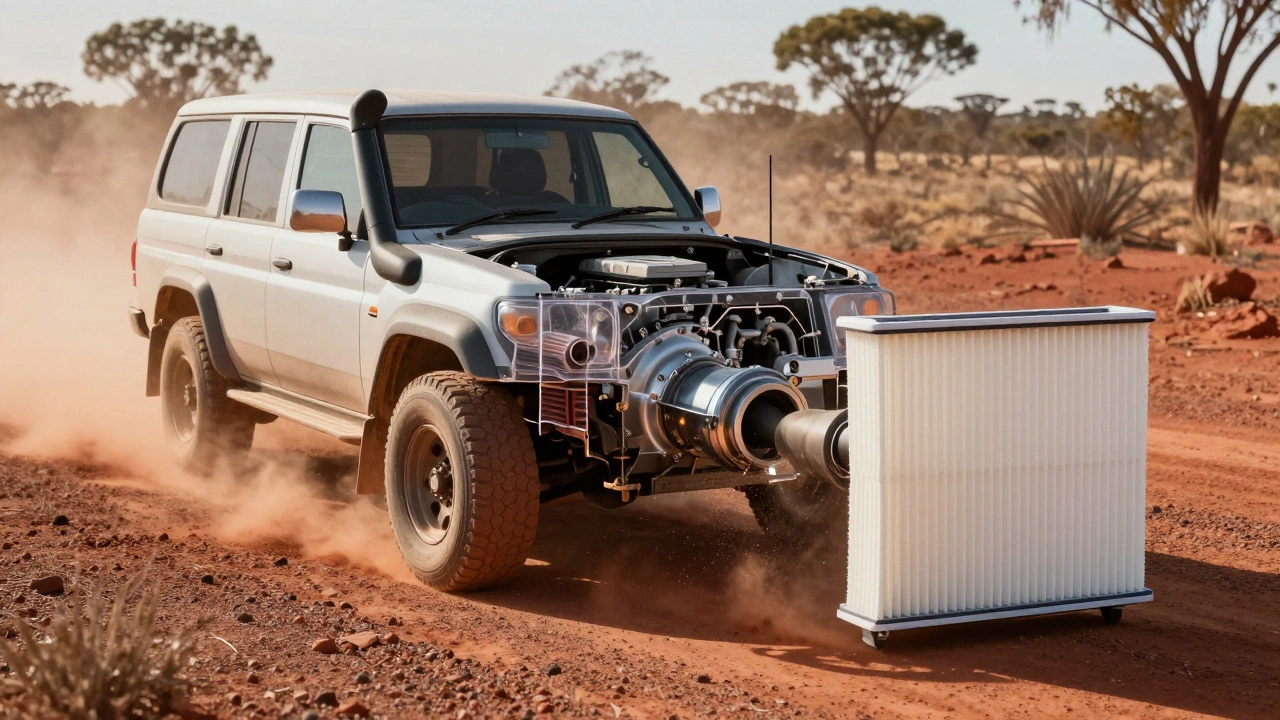
But here’s the trade-off: performance filters don’t trap dirt as well. Independent lab tests show they capture around 95% to 98% of particles, compared to OEM’s 99%+. That 1% to 4% gap might sound small, but in dusty environments-like outback roads in South Australia-it adds up. Over time, fine particles can work their way past the filter and into your intake tract, potentially scratching valves or clogging injectors.
Real-world performance gains are often overhyped
Don’t believe the YouTube videos claiming 30 horsepower gains from a $50 filter. That’s not how it works. A performance air filter alone won’t magically unlock hidden power. Engines are tightly calibrated systems. The ECU controls fuel delivery based on airflow sensors. If you install a filter that lets in more air, the ECU might not adjust fuel properly unless you reprogram it.
On a stock car with no other modifications, you’re likely to see a 1% to 3% improvement in throttle response-not horsepower. You might feel the engine breathe easier when you punch the gas, especially at higher RPMs. But you won’t notice it in daily driving. And you definitely won’t see a change in fuel economy. In fact, some users report worse mileage because the engine runs richer to match the extra air.
The real benefit? Consistency. Performance filters don’t clog as quickly. In dusty conditions, you might go 30,000 miles before cleaning yours, whereas an OEM filter might need replacing at 15,000. That’s a cost-saving over time-if you’re willing to do the maintenance.
Which one should you choose? It depends on your driving
If you drive a daily commuter in Adelaide’s suburbs, stick with OEM. You’re not racing. You’re not towing. You’re not running off-road. Your car was engineered to work with that filter. Changing it gives you no meaningful benefit and adds risk.
If you’ve modified your engine-added a cold air intake, upgraded the exhaust, or got a tune-then a performance filter makes sense. It’s part of a system. It’s not a standalone upgrade. It’s a supporting player. Without the rest of the mods, it’s like putting racing tires on a family sedan and expecting it to handle like a track car.
And if you drive on gravel roads, near construction zones, or in bushfire-prone areas? OEM is still safer. Performance filters can let in more fine ash and silica dust. That stuff doesn’t just hurt performance-it can wreck engines.
Cost and maintenance differences
OEM filters cost $15 to $40. You replace them every 12,000 to 15,000 miles. Simple. No tools needed. Just pop the box open, swap it out, close it up.
Performance filters cost $50 to $120 upfront. But they last 30,000 to 50,000 miles. You clean them every 15,000 to 25,000 miles using a $25 cleaning kit. That’s a long-term savings-if you don’t mess up the cleaning process.
Here’s where people go wrong: over-oiling. Too much oil clogs the filter and hurts airflow. Too little oil lets dust through. Follow the manufacturer’s instructions. Use only the recommended cleaner and oil. Don’t use WD-40. Don’t use motor oil. Don’t guess.
Also, don’t assume all performance filters are equal. Cheaper knockoffs from Amazon or eBay often use thin cotton or poor foam. They look like K&N but don’t perform like it. Stick with brands that publish filtration efficiency data and have real-world dyno results.
Warranty and emissions concerns
Installing a performance air filter won’t automatically void your warranty. But if your engine fails and the dealer finds a clogged MAF sensor or carbon buildup from poor filtration, they can deny the claim. They’ll say the aftermarket filter caused it.
In Australia, emissions standards are strict. Performance filters aren’t illegal, but they’re not certified for emissions compliance in all states. If you’re getting your car inspected or registered, some states require the original airbox and filter to be in place. Check your local regulations before swapping.
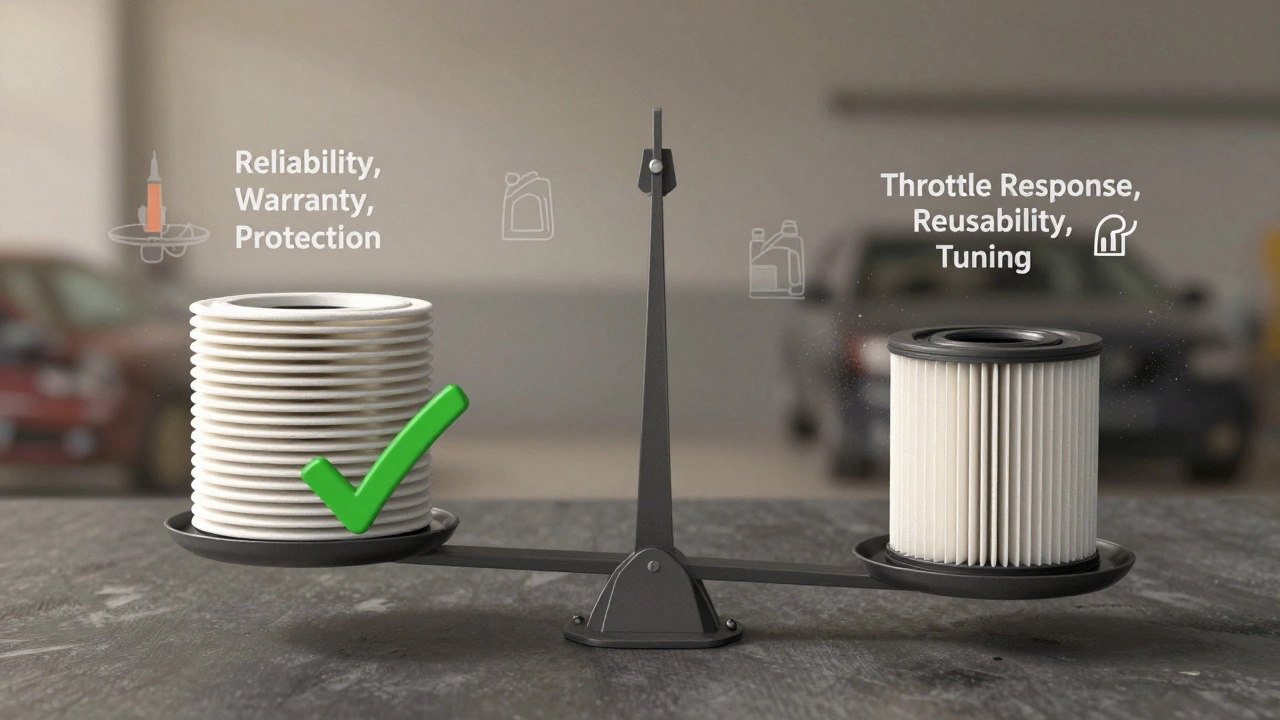
Bottom line: OEM for safety, performance for tuning
There’s no single right answer. But there is a right choice for your situation.
Choose OEM if you want:
- Maximum engine protection
- Simple, no-fuss maintenance
- Warranty peace of mind
- Reliability over performance
Choose performance if you want:
- A reusable filter that lasts longer
- More airflow for modified engines
- A slight throttle response boost
- And you’re willing to clean and maintain it properly
And if you’re still unsure? Keep the OEM filter. It’s not outdated. It’s engineered. And for most drivers, that’s enough.
Do performance air filters increase horsepower?
On a stock engine, performance air filters typically add 3 to 7 horsepower at the wheels-barely noticeable in daily driving. The real gain is improved throttle response. For bigger power, you need a full intake system, exhaust upgrades, and a tune. A filter alone won’t unlock hidden performance.
Are performance air filters worth the cost?
If you drive hard, modify your car, or live in dusty areas, yes. A reusable filter saves money over 100,000 miles. But if you drive gently on paved roads, the upfront cost isn’t justified. OEM filters are cheaper, more reliable, and just as effective for normal use.
Can a performance air filter damage my engine?
Yes-if it’s low quality or poorly maintained. Cheap filters let in more dirt. Over-oiling can clog the MAF sensor. And if you drive off-road or in bushfire smoke, even good performance filters can’t keep up. OEM filters are safer in extreme conditions.
Do I need to reprogram my ECU after installing a performance air filter?
Not always, but it helps. The ECU adjusts fuel based on airflow. A better-flowing filter can throw off the air-fuel ratio, especially under load. A tune ensures the engine runs optimally. Without it, you might get better throttle response but worse fuel economy or even misfires.
Can I use a performance air filter on a diesel engine?
Yes, but with caution. Diesel engines are more sensitive to dust because of high compression and turbochargers. Many diesel owners stick with OEM filters for better protection. If you do switch, choose a high-quality filter with proven filtration ratings and clean it more often in dusty environments.