LED Headlight Compatibility Checker
Answer these four quick questions to see if an LED retrofit is a good idea for your specific vehicle setup.
Key Takeaways
- LEDs in halogen housings often cause blinding glare for other drivers.
- Incorrect beam patterns can leave you with a "dark spot" right in front of your car.
- Cheap conversions can overload your car's electrical system.
- Legal restrictions in certain regions may lead to failed inspections.
The Reflector Problem: Why Housing Matters
To understand why you might want to skip the LED upgrade, you first need to know how your car throws light. Most older cars use Halogen is a type of incandescent lamp that uses a tungsten filament and a halogen gas to produce a warm, yellow light bulbs. These bulbs emit light in 360 degrees, which the curved mirror (the reflector) then bounces forward onto the road.
An LED is a semiconductor light source that emits light in a specific direction from a small diode chip, however, works differently. A diode is a point source of light. When you put a point source into a mirror designed for a large filament, the light doesn't bounce evenly. Instead, it scatters. You get "hot spots" of intense light and "dead zones" where there is no light at all. If your car has a simple reflector housing and not a Projector Lens, which is an optical component that focuses light into a precise, controlled beam with a sharp cutoff line, you are likely to create a dangerous amount of glare.
Blinding Other Drivers and the "Glare Zone"
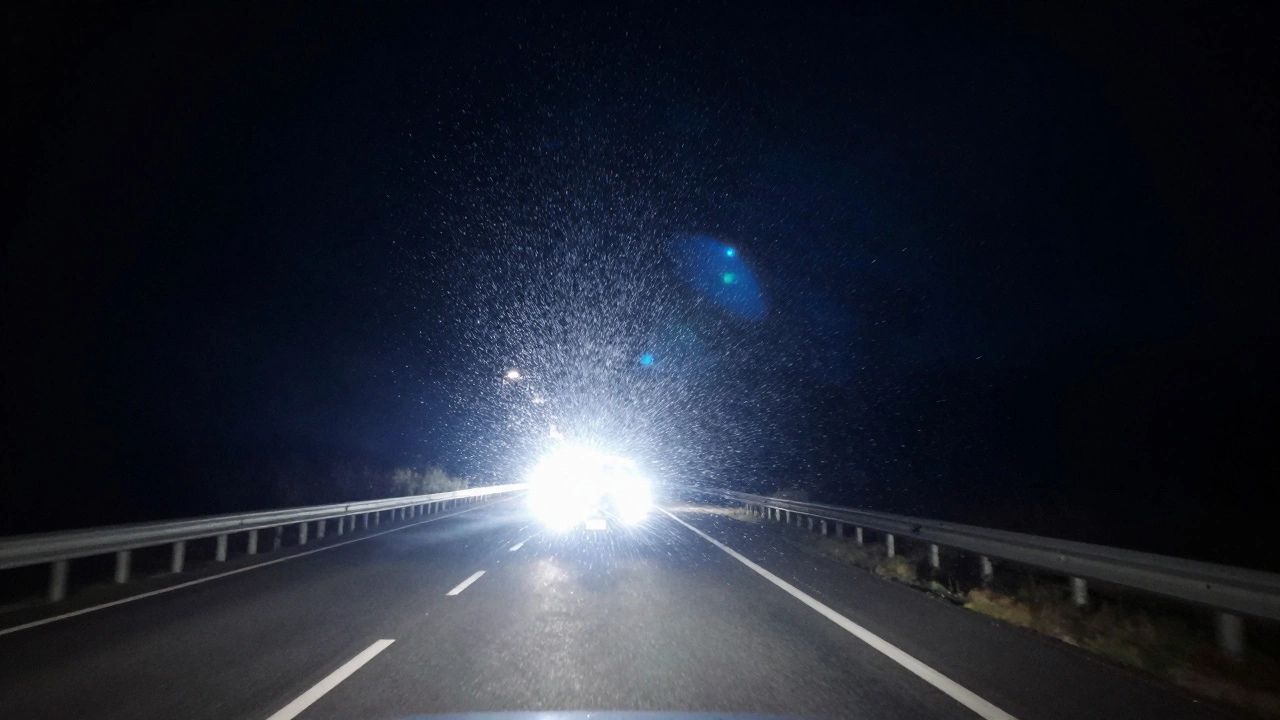
Ever been blinded by a car coming toward you, even though they aren't using their high beams? That is often the result of a poor LED headlights conversion. Because the light isn't focused, it bleeds upward and outward. This is called a "scattered beam pattern." While you might see more light on the edges of the road, you're effectively flashing your high beams at everyone you meet.
This isn't just a matter of being polite; it's a safety risk. When you blind an oncoming driver, you're essentially blinding yourself to their reactions. If they swerve or brake suddenly because they can't see, you're the one in the line of fire. In a housing designed for halogens, the light is meant to stay below a certain horizontal line. LEDs often ignore that line entirely.
The Electrical Strain and Heat Management
Many people assume LEDs are "plug and play." While the plug might fit, the electrical needs are different. Some cheap LED kits require external drivers or resistors to prevent the car's computer from thinking the bulb is burnt out (the dreaded "bulb out" warning). If these components are low-quality, they can overheat or cause a short circuit.
There is also the issue of heat. While we think of LEDs as "cool" because they don't emit heat forward, the back of the LED chip-where the electronics are-gets incredibly hot. High-end LEDs use Heat Sinks, which are passive cooling components usually made of aluminum that dissipate thermal energy away from the diode, or small fans. If your headlight housing is cramped, there isn't enough airflow for these fans to work. Over time, this heat degrades the LED, leading to a shift in color (turning blue or purple) or a total failure of the diode.
| Feature | Halogen (Original) | LED Retrofit (Cheap) | Factory LED Projector |
|---|---|---|---|
| Beam Control | Balanced/Predictable | Scattered/Glare-heavy | Precise Cutoff |
| Light Color | Warm Yellow (~3000K) | Cool White (~6000K) | Bright White/Blue |
| Installation | OEM Standard | Plug-and-Play (Risky) | Integrated System |
| Driver Safety | Safe | Potentially Dangerous | Optimal |
Legal Hurdles and Inspection Failures
Before you buy a kit, check your local laws. In many regions, including parts of Europe and several US states, replacing a halogen bulb with an LED in a non-LED housing is technically illegal. Why? Because the bulbs aren't DOT Approved, which refers to the Department of Transportation standards that ensure automotive lighting meets specific safety and brightness regulations.
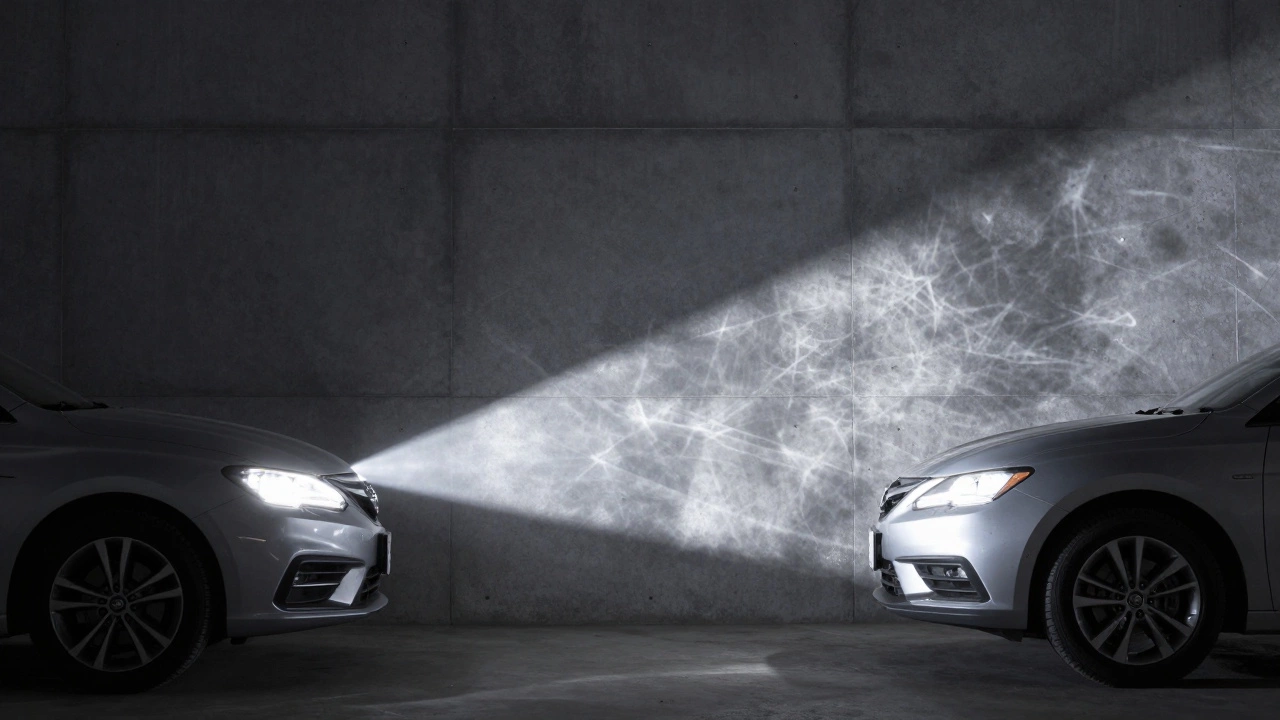
If you take your car in for an annual safety inspection, the technician will likely put your car against a wall to check the beam pattern. If the light is scattering and there is no clear "cutoff line," you will fail. You'll then be forced to spend more money swapping back to the original bulbs you threw away six months ago. It is a frustrating cycle that many enthusiasts overlook in the excitement of a "modern look."
When You Should Actually Stick to Halogen
So, when is it a bad idea to upgrade? Here is a quick checklist. If any of these apply, leave your current bulbs alone:
- You have a reflector-style headlight: If you see a big curved mirror inside the light, don't use LED drop-ins.
- You drive primarily in heavy rain or fog: The cool white light of an LED (6000K+) reflects off water droplets and fog much more than the warm yellow of halogen. This creates a "white wall" effect, making it harder to see the road during a storm.
- Your budget is under $50: Cheap LEDs are almost always poorly engineered, meaning they have no beam control and fail quickly.
- You don't have room for fans: If there is no space behind the bulb for a cooling fan, the LED will burn out prematurely.
Better Alternatives for More Light
If you're desperate for better visibility but realize LEDs aren't the answer, you have options. First, look into High-Performance Halogens, which are upgraded halogen bulbs that use specialized gases or thinner filaments to produce more lumens while remaining legal. They are a direct replacement and won't blind other drivers.
If you're willing to spend more, consider a full housing swap. Instead of replacing the bulb, replace the entire headlight unit with a Projector Headlight Assembly. This replaces the mirror with a lens and a shield, allowing you to use LEDs safely because the light is focused into a tight, useful beam. It's a more expensive route, but it's the only way to get the LED benefit without the safety risks.
Will LED bulbs make my car look newer?
Yes, they provide a clean, white light that mimics modern luxury cars. However, aesthetics shouldn't come at the cost of safety. Without the right housing, that "new look" comes with a dangerous beam pattern.
Do LED headlights really last longer than halogens?
In theory, yes. The diode itself can last tens of thousands of hours. In practice, cheap LED retrofits often fail much sooner because their cooling fans break or the driver circuit burns out due to heat build-up in a cramped halogen housing.
Can I use LEDs for my fog lights instead?
It is generally safer in fog lights since they are aimed very low, but it's still not ideal. White LED light penetrates fog poorly compared to yellow light. For fog, a dedicated yellow LED or halogen is actually more effective.
Why do some LED bulbs have a "cutoff line" and others don't?
The bulb itself doesn't create the line; the housing does. A projector lens uses a physical metal shield to block light from going upward. A reflector housing just bounces light everywhere, which is why a standard LED bulb in a reflector creates a mess of light.
Will adding LEDs drain my battery?
Actually, LEDs typically draw less current than halogens. The risk isn't battery drain, but rather electrical compatibility. Some cars use a pulse-width modulation (PWM) system to check for bulbs; LEDs can confuse this system, triggering a dashboard warning light.
Next Steps for Your Lighting Upgrade
If you're still unsure, the best thing to do is a "wall test." Park your car ten feet from a flat wall at night with your current lights. Notice where the light stops. If you install LEDs and the light now reaches the top of the wall or spreads wildly to the sides, you've created a glare hazard. At that point, your best move is to switch back to high-output halogens or invest in a full projector assembly.
For those driving older vehicles in rainy climates, stick to a warm color temperature (around 3000K to 4000K). While the stark white of a 6000K LED looks great in a driveway, it's a nightmare in a downpour. Prioritize the beam pattern over the brightness, and you'll keep yourself and everyone else on the road much safer.